

37. Kevin Bass
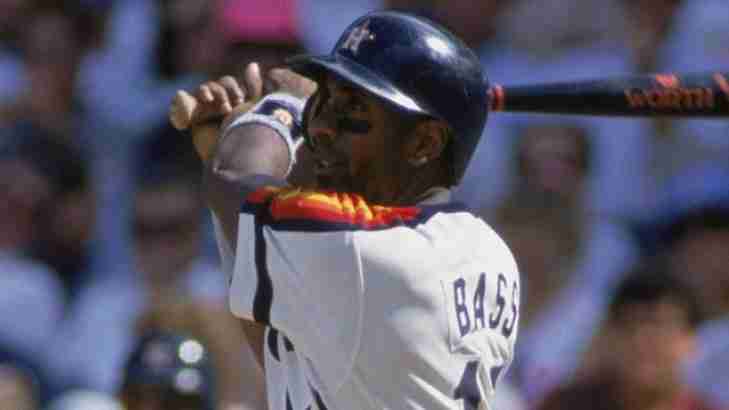
Kevin Bass joined the Houston organization in late 1982 via a trade with the Milwaukee Brewers, a move that sent veteran Don Sutton to the American League in exchange for the young, switch-hitting outfielder. After spending his first few seasons in South Texas as a developing part-time player, he broke through as a full-time starter in 1985 and quickly became the definitive versatile threat of the "Orange Force" era.
Between 1985 and 1987, he recorded three consecutive seasons with at least 140 hits, 15 home runs, and 15 stolen bases. In the ’86 campaign, he had a career-high .311 batting average and a .364 on-base percentage. He showed the organization that he was a foundational star by earning his first All-Star selection and finishing seventh in the NL MVP voting.
His first departure following the 1989 season was a matter of seeking stability; the Astros refused to include a no-trade clause in their offer, leading Bass to sign a three-year deal with his hometown San Francisco Giants. However, after stints in the Bay Area and with the Mets, he realized that the Astrodome was the environment that best fit his game. He returned to Houston in early 1993. Even in a reserve role during this second run, he was efficient, batting .310 during the strike-shortened 1994 season.
He played one more MLB season with the Baltimore Orioles, and as an Astro, compiled 990 hits, a .278 batting average, and 102 stolen bases.
45. Ken Caminiti
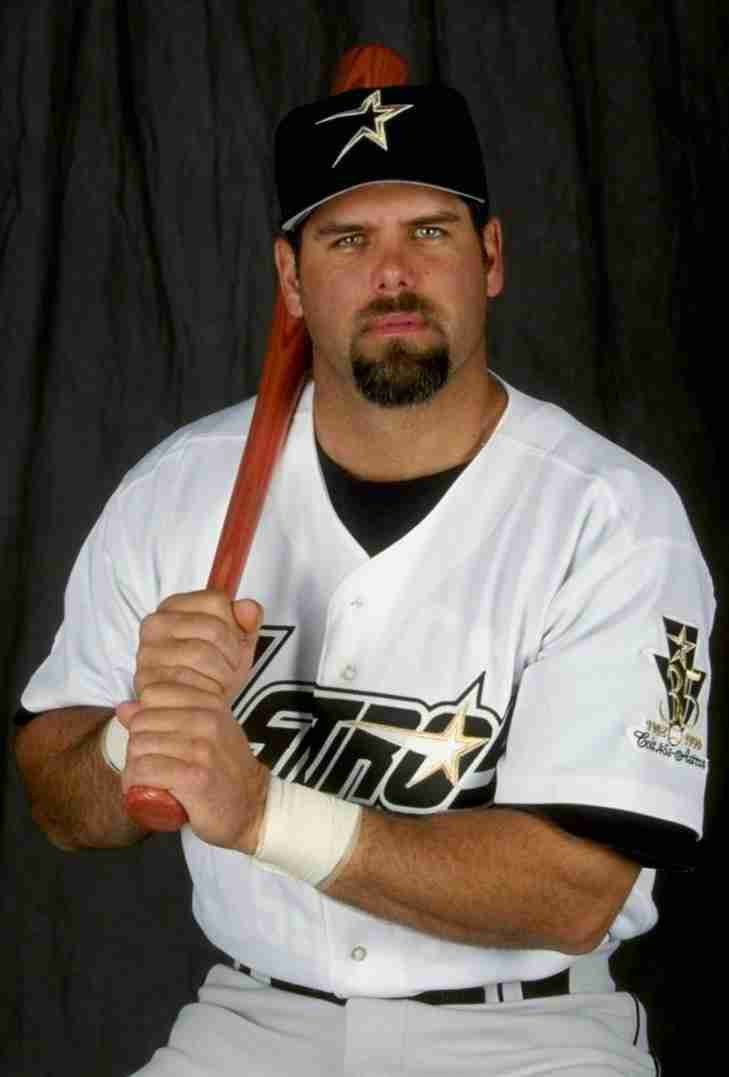
A third-round selection in 1984, Ken Caminiti was a physically imposing third baseman with a specialized defensive range and a throwing arm that some thought could be legendary.
Debuting for the Astros in 1987, Caminiti might have won an MVP in San Diego later in his career, but his run in Houston can not be forgotten. In 1994, he earned his first career All-Star selection and his first Gold Glove Award, batting .283 with 18 home runs in the strike-shortened season. From 1989 to 1991, he appeared in at least 152 Games, but following the 1994 season, everything was about to change.
Caminiti was part of a 12-player trade to San Diego. With the Astros, Caminiti compiled 1,034 hits and 103 home runs.
32. Turk Farrell
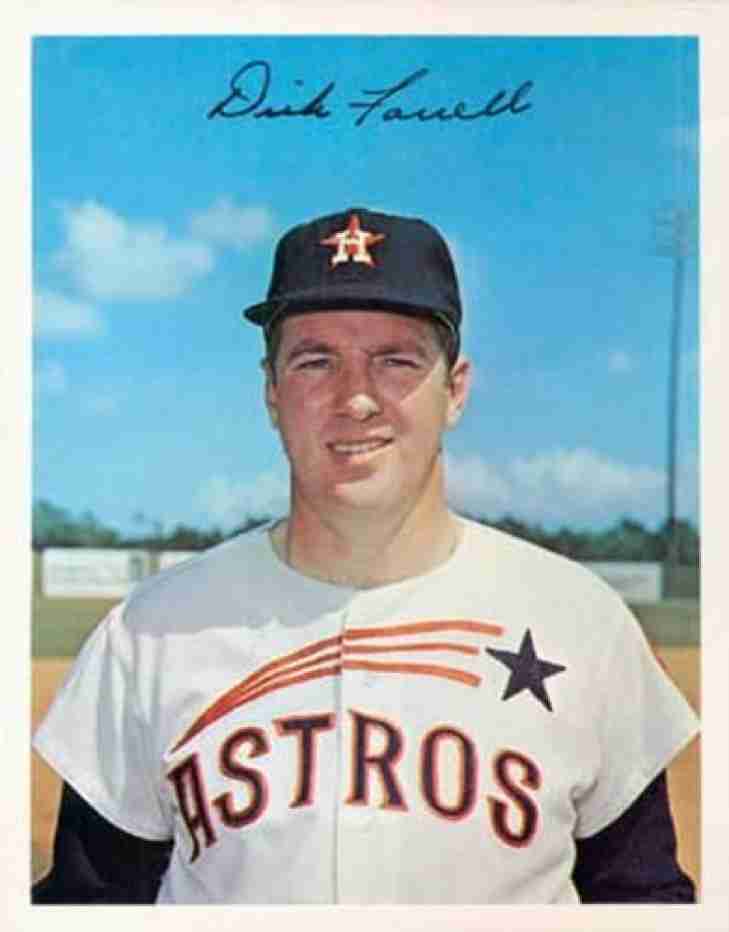
Turk Farrell joined the Houston organization in late 1961 as a foundational pick in the expansion draft, a high-velocity right-hander whom the club plucked from the Dodgers with the 40th overall selection. After years of serving as a "wild child" reliever for the Phillies and Dodgers, he was immediately transitioned into a starting role for the inaugural Colt .45s
Farrell logged over 240 innings in his debut season with the club. He surged into the spotlight in 1962, earning selections to both All-Star Games that year and finishing with a 3.02 ERA, ranking among the league's elite. This period of rapid growth served as the essential lead-in to his status as the "face" of the early Houston staff.
Through the 1962 through 1965 campaigns. During this stretch, he evolved into a perennial All-Star, representing Houston in the Midsummer Classic three times (1962, 1964, and 1965). He famously made history in April 1965 by starting the first-ever game in the newly opened Astrodome, surrendering a home run to Mickey Mantle that stood as the first indoor longball in major league history. He was Houston’s workhorse, recording three seasons with at least 198 innings pitched while wearing the Houston colors. Despite a losing record that reflected the struggles of an expansion roster, he possessed a focused intensity that saw him strike out 203 batters in 1962, a franchise record that stood until the arrival of the next generation of aces.
Farrell had a reputation for being a fierce competitor who refused to back down. Between 1962 and 1967, Farrell was a statistical standout for the Colt .45s and Astros, amassing 53 wins and over 1,000 innings of work. He reached a peak for veteran-like poise in 1963, winning a career-high 14 games despite pitching for a team that finished 33 games under .500.
In 1967, Farrell returned to the Philadelphia Phillies, leaving behind a 53-64 record, 716 strikeouts, and three All-Star selections.
29. Roger Clemens
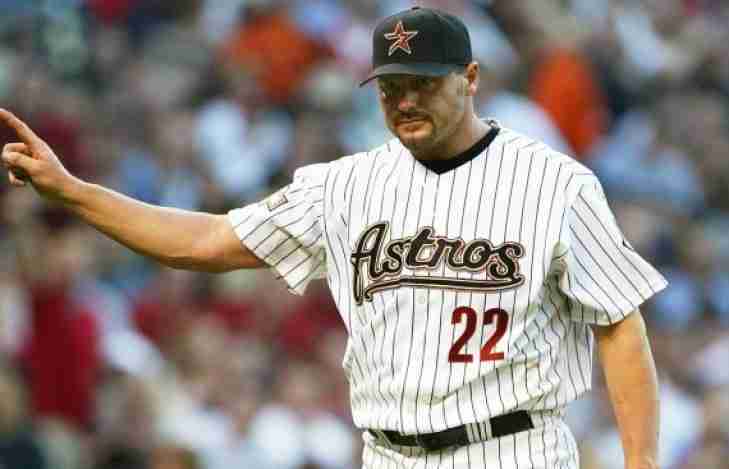
Roger Clemens joined the Houston organization in early 2004 as a high-profile free agent, a move that stunned the baseball world and brought the most decorated pitcher of his generation back to his adopted hometown. After a brief "retirement" following his tenure in New York, he signed a one-year deal to pitch alongside his close friend Andy Pettitte, instantly transforming the Astros from a contender into a World Series threat. For three seasons in a Houston uniform, he served as the veteran-like presence at the top of the rotation, proving that even in his forties, he could dictate the terms of a game through a high-velocity repertoire and a legendary competitive drive.
After arriving in Spring Training with the eyes of the city upon him, he demonstrated a specialized ability to defy the typical aging curve of a power pitcher. He surged out of the gate with a 9-0 start, showing the organization that he was still a foundational ace. during that 2004 campaign. That summer, he evolved into the premier starter in the National League, recording an 18-4 record and a 2.98 ERA. He showed the organization that he was a foundational winner, winning his record-breaking seventh Cy Young Award and becoming one of the few pitchers to secure the hardware in both leagues. He possessed a rare, durable quality that saw him strike out 218 batters over 214 innings and lead Houston to within one game of the World Series.
He followed this up in 2005 with perhaps his most impressive statistical outlier, leading the major leagues with a microscopic 1.87 ERA and a league-best 2.87 FIP, finishing third in the Cy Young voting at age 42. Following the 2006 season, he eventually returned to New York to finish his career.
With the Astros, Rocket compiled a 38-18 record, a 2.40 ERA, and 505 strikeouts in 539 innings of work.
31. Ken Forsch
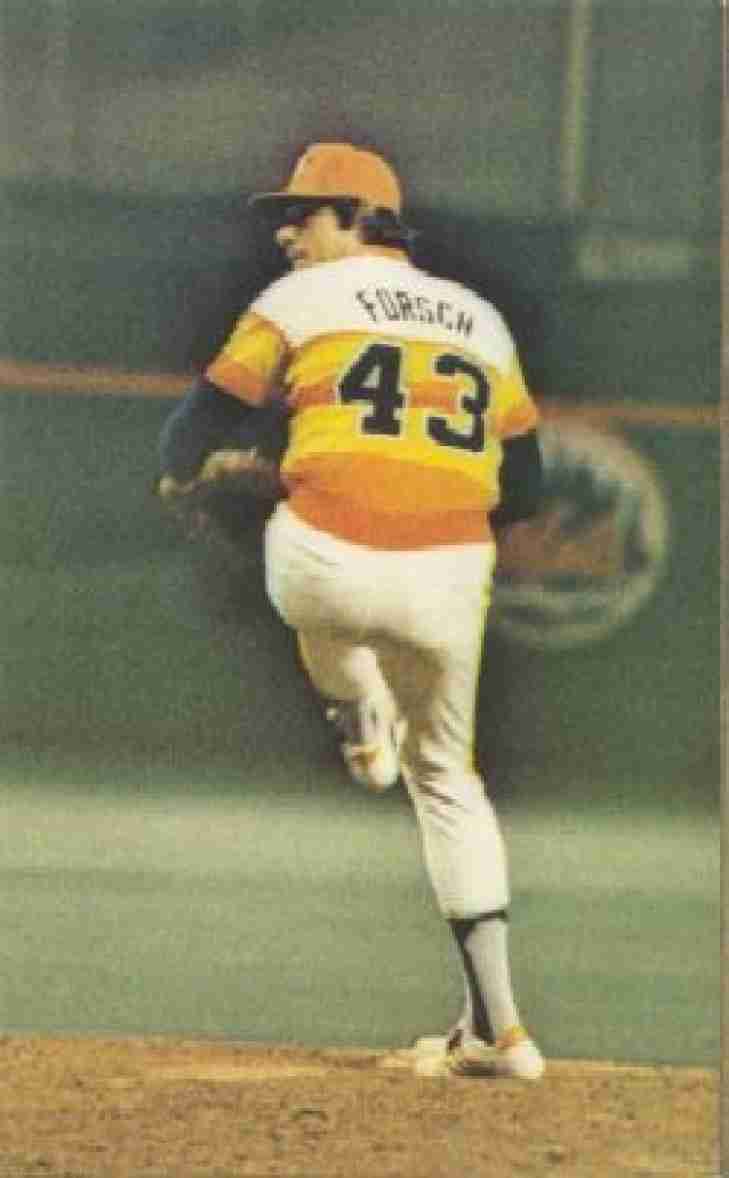
Ken Forsch joined the Houston organization as an 18th-round selection in the 1968 draft out of Oregon State, a versatile right-hander who would spend over a decade alternating between the rotation and the bullpen.
Making his debut in late 1970, Forsch served as a primary starter for his first four seasons, and he transitioned into the role of a premier late-inning weapon by 1974. He earned an All-Star selection in 1976 as the club's closer, recording 19 saves and a microscopic 2.15 ERA. This period of growth served as the essential lead-in to his return to the rotation in 1979, showing that his veteran-like poise allowed him to shift back into a starting role without missing a beat. He famously punctuated this transition by tossing a no-hitter against the Atlanta Braves in his very first start of the 1979 season, a historic feat that joined him with his brother, Bob, as the only siblings to both throw no-hitters. That summer, he evolved into one of the most difficult pitchers to reach base against in the National League, leading the circuit with a 1.069 WHIP and a league-best 1.77 walks-per-nine innings.
He remained a model of offensive prevention during the 1980 run, helping the "feared four" rotation of Ryan, Richard, and Niekro secure the franchise’s first division title, but the next year, he was traded to the California Angels. Forsch compiled a 78-81 record and 50 saves for Houston.
26. Shane Reynolds
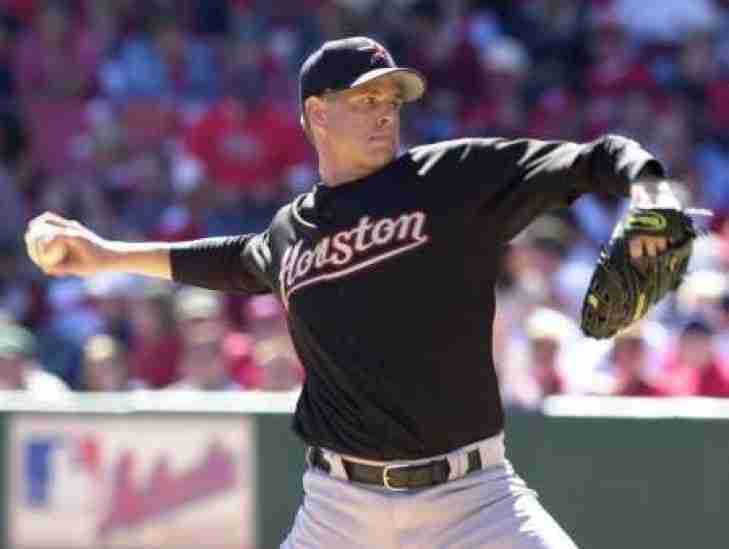
Shane Reynolds joined the Houston organization as a third-round selection in the 1989 draft out of the University of Texas, a pitcher whose career was ultimately defined by a fanatical work ethic and a transformative winter spent in Venezuela. Initially a "so-so" prospect with power mechanics but average velocity, he completely reinvented his delivery under the guidance of pitching guru Brent Strom. For eleven seasons in a Houston uniform, he served as the most reliable rotation anchor of the "Killer B's" era.
The climb toward Reynolds’ peak in the late nineties was a study in steady, high-frequency output and elite physical conditioning. After making his debut in 1992 and establishing himself as a permanent fixture by 1994, he evolved into the tactical leader of the Houston staff. By 1996, he had officially seized the role of an ace, winning 16 games and striking out over 200 batters for the first time. This period of rapid ascent served as the essential lead-in to his most dominant run, showing that when a pitcher pairs a devastating split-finger fastball with focused intensity on the strike zone, he can become a perennial Cy Young contender. Between 1998 and 1999, he led the National League in games started twice and became a primary catalyst for three consecutive division titles.
Reynolds’ journey reached a historic peak of efficiency during the 1999 campaign. That summer, he demonstrated a specialized ability to minimize free passes, leading the National League with a microscopic 1.4 BB/9 and a league-best 5.32 strikeout-to-walk ratio. He showed the organization that he was a foundational winner, recording 16 victories and helping the Astros secure their final division crown at the historic Astrodome. He possessed a rare, durable quality that allowed him to toss over 230 innings in back-to-back seasons, providing the steady-state production required to keep Houston at the summit of the National League Central. This era of dominance culminated in his first and only All-Star selection in 2000, a well-deserved recognition for a decade of under-the-radar excellence.
After a 2002 season derailed by back surgery, Reynolds actually re-signed with the Astros for 2003 with the full intention of being in their rotation. However, in the final week of Spring Training, the Astros front office decided to go in a younger direction and abruptly released him on March 27.
With the Astros, Reynolds compiled 103 wins, 1,309 strikeouts, and was inducted into the Astros Hall of Fame in the 2019 inaugural class.
10. Mike Scott
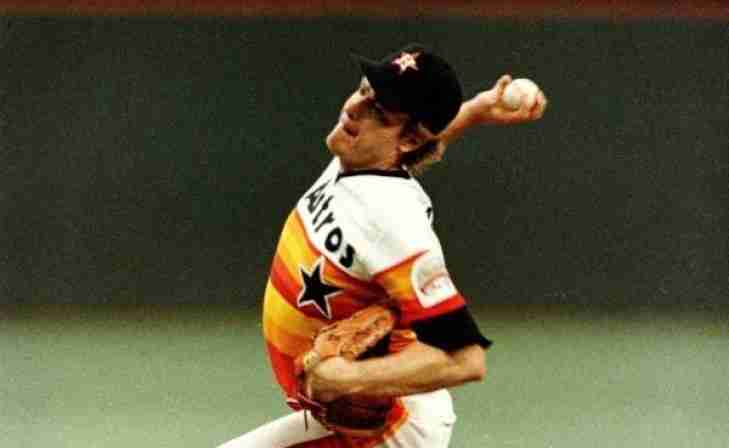
In the mid-1980s, the Houston Astros possessed a psychological weapon that reduced the best hitters in the National League to a state of visible frustration. Mike Scott, armed with a split-finger fastball that seemed to defy the laws of physics, transformed from a struggling former prospect into a high-velocity force of nature. For a five-year stretch in the heart of the "Astrodome era," he wasn't just the ace of the staff; he was a tactical anomaly who could end a game—or a division race—entirely on his own terms.
Scott’s tenure in Houston was defined by a historic metamorphosis during his legendary 1986 campaign. That summer, he authored a statistical outlier season of such profound dominance that he swept nearly every major pitching category, leading the National League in ERA (2.22), strikeouts (306), and WHIP (0.923). The hallmark of his mastery occurred on September 25, 1986, when he became the only pitcher in major league history to throw a no-hitter in a division-clinching game. He didn't just secure the NL West title; he suffocated the Giants in a 2-0 masterpiece that served as the final exclamation point on his Cy Young Award-winning season.
However, months later, he had an even bigger moment. During the 1986 NLCS against the Mets, Scott’s efficiency bordered on the supernatural, pitching two complete-game victories and allowing only a single run across 18 innings. He struck out 19 batters and walked just one, leaving the eventual world champions so demoralized that he was named the NLCS MVP, becoming the first player in history to win the honor while playing for the losing team. Had the series reached a Game 7, Scott’s presence on the mound was widely considered a foregone conclusion for a Houston victory, a testament to the high-leverage fear he instilled in his opponents.
While 1986 was his masterpiece, Scott remained a model of professional resilience as the decade closed. He surpassed the 200-strikeout plateau again in 1987 and reached a new personal high, where, in 1989, he led the league with 20 wins and finished as the Cy Young runner-up.
Scott declined rapidly after retiring two years later, but a year later, the team retired his number 33. Scott compiled 110 wins and 1,318 strikeouts, and the Astros inducted him into the inaugural class of the Astros Hall of Fame in 2019.
19. Joe Niekro
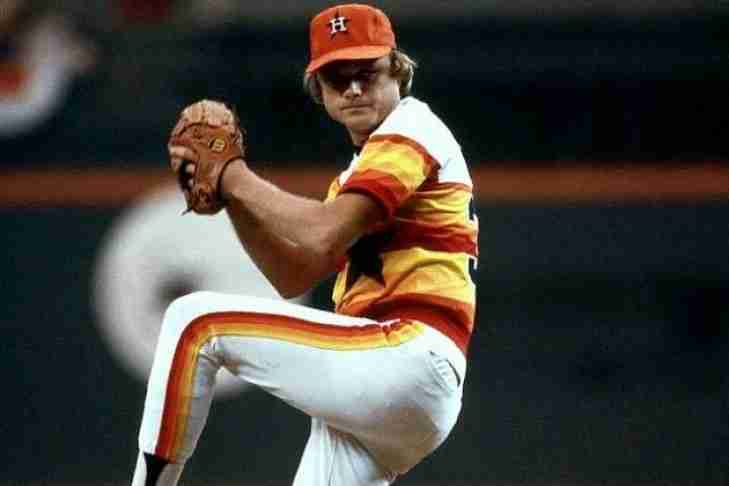
Joe Niekro arrived in Houston as a veteran seeking a second act, a pitcher who had spent nearly a decade wandering through the league before finding the perfect environment for his specialized knuckleball. While he began his journey in the shadow of his Hall of Fame brother, Phil, it was in the climate-controlled air of the Astrodome where Joe truly mastered the butterfly-like motion of his signature pitch. For eleven seasons, he served as the durable anchor of the Houston rotation, proving that a player could reach a career-defining breakout well into his thirties.
Niekro’s rise in Houston began as a low-risk acquisition in 1975, but he reached a new gear of consistency once he fully committed to the knuckleball as his primary weapon. He moved from a swing-man role into a front-line starter, signaling a transition from a journeyman to a premier National League outlier. He possessed a focused intensity that allowed him to thrive in the pitcher-friendly confines of the Dome, where the lack of wind gave his specialized pitch an even more unpredictable break. By the late seventies, he had established himself as a high-frequency winner, a style that culminated in a historic two-year run of dominance.
The heart of his time in Houston came during the 1979 and 1980 campaigns. In 1979, Niekro authored a career year, winning 21 games and earning his first All-Star selection while finishing second in the Cy Young voting. He followed that performance with another 20-win season in 1980, finishing fourth in the Cy Young race and providing the veteran-like poise that helped guide the Astros to their first-ever division title. He showed the organization that a pitcher could lead a staff through guile and movement rather than raw velocity, eventually recording 144 wins in a Houston uniform.
Everything culminated in a decade-long run of reliability that saw him surpass 1,100 strikeouts and become the franchise's all-time leader in wins before his departure. However, the natural evolution of the roster led to a change in direction during the 1985 season, when he was traded to the New York Yankees to join his brother.
In 2019, the Astros inducted him into their inaugural Hall of Fame class.
15. J. R. Richard

J.R. Richard was a force of nature on the mound, a 6' 8" titan who possessed a velocity that felt like a localized atmospheric event. In an era where the radar gun was just becoming a standard part of the game’s lexicon, Richard was the gold standard for raw, unadulterated power. For a decade in Houston, he wasn't just a starter; he was a phenomenon who terrified hitters with a 100-mph heater and a slider that moved like a ghost.
Richard’s arrival in Houston in the early 1970s was a slow-burning evolution, as he worked to harness a lightning-bolt arm that often lacked direction. He reached a pivotal breakthrough in 1976, his first 20-win season, where he finally combined his massive frame with a repeatable delivery. That summer, he struck out 225 batters and threw 291 innings, signaling a transition from a wild prospect to the most feared arm in the National League. He possessed a focused intensity that allowed him to thrive in the high-pressure environment of the Astrodome, where his speed seemed even more lethal against the backdrop of the "Eighth Wonder of the World."
The middle of his tenure saw him reach an unrivaled gear of dominance. In 1978 and 1979, Richard became the first right-hander in National League history to record back-to-back 300-strikeout seasons. He led the league in punchouts both years, and in 1979, he reached a career-high mark for efficiency, leading the NL in both ERA (2.71) and FIP (2.21). He was a model of physical resilience, routinely pitching deep into games and finishing in the top five of the Cy Young voting. He showed the organization that a pitcher could become a franchise pillar by simply being too fast for the modern hitter to comprehend.
Everything seemed to be building toward a historic 1980 campaign. Richard started the All-Star Game and looked poised to lead the Astros to their first-ever postseason berth, carrying a 10-4 record and a microscopic 1.90 ERA into late July. However, the trajectory of his career reached a tragic and sudden final punctuation when he suffered a stroke during a warm-up session at the Astrodome. The medical emergency effectively ended his time on the mound at just 30 years old, leaving the baseball world to wonder what a full career of his "flamethrowing" ability might have looked like.
He left the game with 107 wins and 1,493 strikeouts, a statistical footprint that felt incomplete yet remained legendary. The story in Houston reached its rightful conclusion in 2019 when the Astros inducted him into the inaugural class of their Hall of Fame.
12. Nolan Ryan

Nolan Ryan’s arrival in Houston in 1980 was a homecoming that doubled as a massive free-agent statement. At 33, an age when most power pitchers are bracing for a decline, the Texas native returned to his roots to become the highest-paid player in the game. While he had already established himself as a strikeout king with the Angels, his nine-season run with the Astros proved he was a physical outlier whose professional resilience could defy the standard aging curve.
Ryan’s tenure in Houston began with an immediate high-leverage impact, as he helped anchor the rotation of the 1980 squad that captured the franchise's first division title. In the strike-shortened 1981 season, he led the National League with a 1.69 ERA and threw his record-breaking fifth no-hitter against the Dodgers. He possessed a specialized, high-velocity fastball that remained elite well into his late thirties, a style that allowed him to maintain a steady-state dominance over National League hitters who had never seen anything quite like his "Express."
In 1983, Ryan surpassed Walter Johnson to become the all-time strikeout leader, a moment that cemented his status as a franchise pillar. While his win-loss records were often victims of poor run support, most notably in 1987 when he led the league in ERA (2.76) and strikeouts (270) but finished with only eight wins, his focused intensity never wavered. He was a model of high-frequency strikeout production, leading the league in punchouts twice as an Astro and finishing in the top five of the Cy Young voting on two occasions.
The final chapters of his Houston story reached a frustrating plateau in 1988. Despite still being a premier draw and a productive arm, contract disputes with owner John McMullen led to Ryan’s departure for the Texas Rangers following the season. He left the organization with 106 wins and 1,866 strikeouts, having proven that a veteran-like poise and a 100-mph heater could coexist for nearly a decade. He showed the world that a player's second act can be just as legendary as the first, leaving a statistical footprint that eventually forced the club to acknowledge his permanence in their history.
The story in Houston reached its final punctuation in 1996 when the Astros retired his number 34, followed by his induction into the inaugural class of the Astros Hall of Fame in 2019. He showed the organization that when you have the heart of a competitor and the arm of a phenomenon, you don't just play for a team, you become the identity of the entire state.
In Houston, Ryan compiled 106 wins, 1,866 strikeouts, and a 3.13 ERA across nine seasons.
25. Billy Wagner
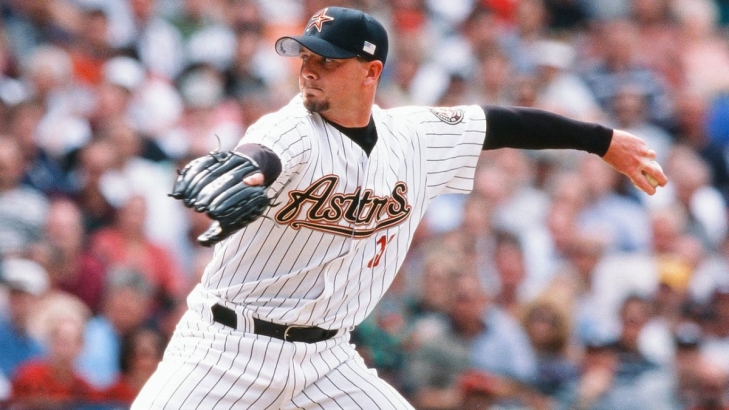
Billy Wagner joined the Houston organization as a first-round selection in the 1993 draft out of Ferrum College, a high-velocity left-hander who defied his smaller stature with a triple-digit fastball. After a rapid three-year ascent through the farm system, where he transitioned from a starter to a late-inning specialist, he debuted in late 1995 and quickly established himself as one of the most intimidating presences in the National League, and for nine seasons in a Houston uniform, he served as the definitive anchor of the bullpen.
After making a brief, scoreless debut in the 1995 postseason, he spent the next few summers refining a triple-digit heater that seemed to defy the laws of physics. By 1996, he had officially seized the closer's role, striking out 67 batters in just over 50 innings and proving that his transition from a starter was a masterstroke by the Houston front office.
Wagner’s journey in an Astros jersey reached a historic peak of efficiency during the 1999 campaign. That summer, he evolved into the premier relief weapon in the sport, recording 39 saves and a staggering 1.57 ERA, striking out 124 hitters in just 74.2 innings of work. He won the Rolaids Relief Man of the Year Award and finished fourth in the Cy Young voting, a rare feat for a closer. He possessed a focused intensity that saw him earn the first of three All-Star selections with the club.
Between 1996 and 2003, Wagner was a statistical standout, serving as the high-leverage bridge between the Astrodome era and the team’s move to its new retractable-roof home. He reached a peak for individual dominance in 2003, recording a career-high 44 saves while maintaining a 1.78 ERA. Despite a significant elbow surgery in 2000 that would have slowed a lesser athlete, he returned with his high-velocity delivery intact, eventually amassing 225 saves and a 1.039 WHIP while wearing the colors of Houston.
Everything culminated in a 2003 trade to the Philadelphia Phillies, an exit that followed a public disagreement with team management regarding the club's payroll and direction, departing with a legacy of 694 strikeouts in just 464.1 innings.
3. Jose Altuve
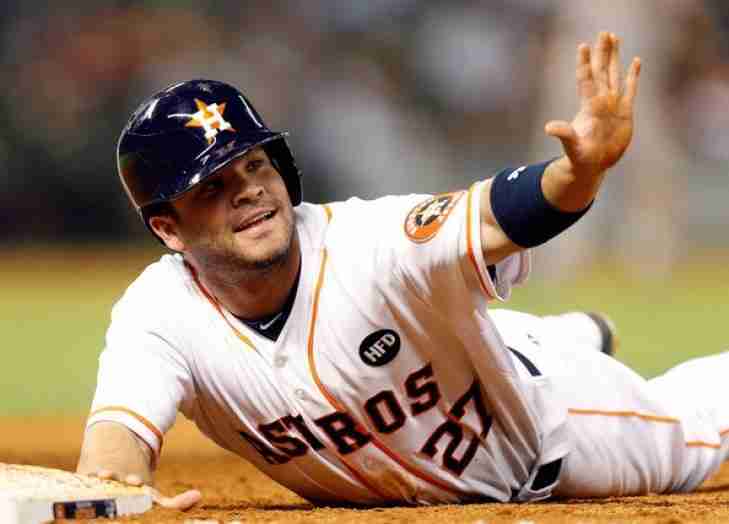
If Jeff Bagwell and Craig Biggio built the foundation of the Houston Astros, Jose Altuve is the man who raised the banners. Standing just 5'6", the Venezuelan second baseman has spent his entire career defying every physical expectation placed upon him, evolving from a "free agent" afterthought into the definitive superstar of the most successful era in franchise history. For over a decade, Altuve has served as the sparking plug of the Houston offense, a hitting machine whose blend of contact, power, and speed has rewritten the organization's record books and cemented his status as a future Hall of Famer.
Altuve’s journey in Houston was defined by an immediate and relentless offensive efficiency. After arriving in 2011, he quickly established himself as a model of high-frequency production, capturing three American League batting titles and leading the league in hits for four consecutive seasons starting in 2014. In 2017, a summer in which he hit .346 with 204 hits and 24 home runs to secure the American League MVP award. He served as the tactical engine of the squad that captured the franchise's first World Series title, proving that his specialized ability to put the barrel on any pitch made him the most dangerous high-leverage threat in the sport.
The middle chapters of his tenure were marked by professional resilience, as he adapted as the league began to shift. While his batting average fluctuated, his power profile expanded, leading to multiple 30-home-run campaigns. He authored a spectacular "renaissance" season in 2022, a year in which he hit .300 with 28 home runs and earned his sixth Silver Slugger Award. He was the emotional heartbeat of the 2022 championship run, providing the veteran poise required to secure his second World Series ring. He showed the city that even as the roster around him changed, his focused intensity remained the one constant in the Houston clubhouse.
The final seasons of his current arc, spanning 2024 and 2025, were a testament to his longevity and his place in the historical record. In 2024, he remained a premier force, batting .295 with 185 hits and earning his ninth All-Star selection. By the time the 2025 campaign concluded, Altuve had navigated through a more inconsistent year, splitting time between second base and left field while hitting .265, but he still managed to blast 26 home runs and cross the 300-stolen base threshold. He finished 2025 with 2,388 career hits, moving ever closer to the 3,000-hit plateau that would mirror his predecessor, Craig Biggio.
Through the 2025 season, Altuve has compiled 255 home runs and 325 stolen bases while securing an MVP and two World Series titles.
28. Glenn Davis
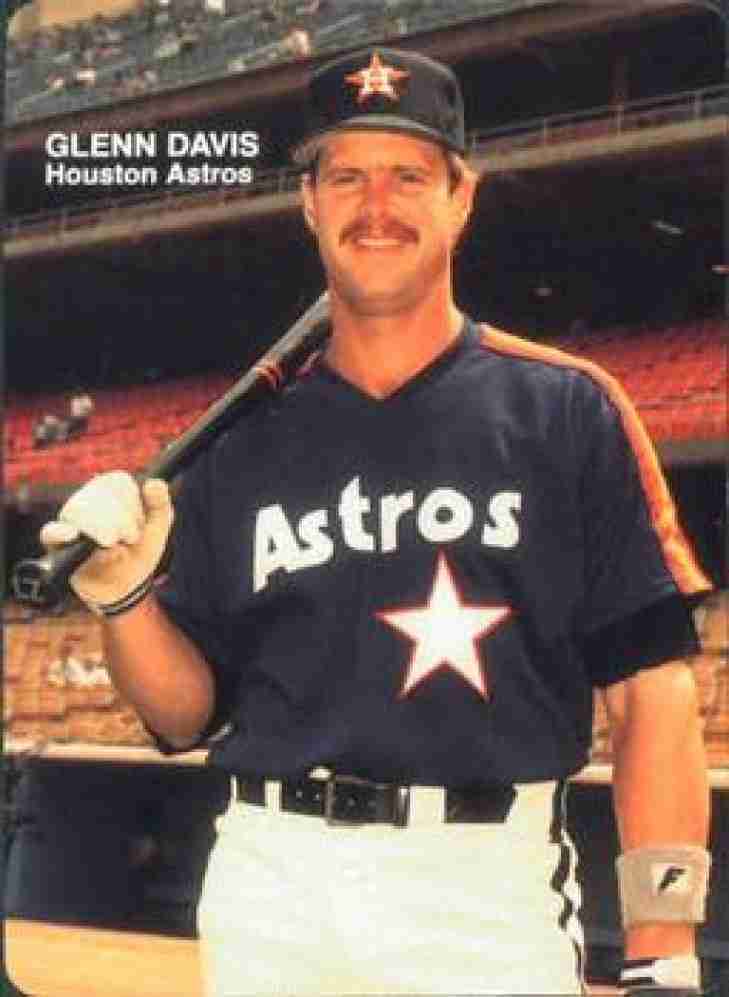
Glenn Davis joined the Houston organization as a first-round selection in the 1981 secondary draft out of Manatee Junior College, a powerful right-handed hitter who had already turned heads in the Cape Cod League. After a prolific minor-league apprenticeship in which he clubbed 71 home runs, he debuted in late 1984 and quickly became the definitive "Big Bopper" of the Astrodome.
He spent the first half of 1985 in the Pacific Coast League before receiving a permanent call-up in June to replace an injured Terry Puhl. He demonstrated a specialized ability to conquer the "dead air" of the Astrodome, clouting 20 home runs in just 100 games, a franchise rookie record at the time. This period of rapid growth served as the essential lead-in to his most dominant years, during which he finished fifth in the NL Rookie of the Year balloting.
Davis’ journey reached a historic peak of individual and team success during the 1986 campaign. That summer, he evolved into one of the most feared hitters in the National League, recording a career-high 31 home runs and driving in 101 runs. He demonstrated a specialized ability to deliver in the clutch, famously hitting a solo home run in his first-ever postseason at-bat to provide the only run in a Game 1 victory over the Mets in the NLCS. He showed the organization that he was a foundational star, winning the Silver Slugger Award and finishing as the runner-up in the NL MVP voting. He possessed a focused intensity that saw him lead the club to a division title, providing the power production required to balance out the team’s elite pitching staff.
Between 1985 and 1990, Davis was a statistical standout, becoming the first Astro to record six consecutive seasons with at least 20 home runs. He reached a peak for raw power in 1989, clouting a career-high 34 home runs and earning his second All-Star selection. He possessed a specialized ability to drive the ball out of the expansive Astrodome, a feat that earned him top-ten MVP finishes in three separate seasons.
In a blockbuster trade following the 1990 season, the Astros sent their franchise slugger to the Baltimore Orioles in exchange for Steve Finley, Pete Harnisch, and Curt Schilling. Davis compiled 166 home runs and 544 RBIs as an Astro.
21. Don Wilson
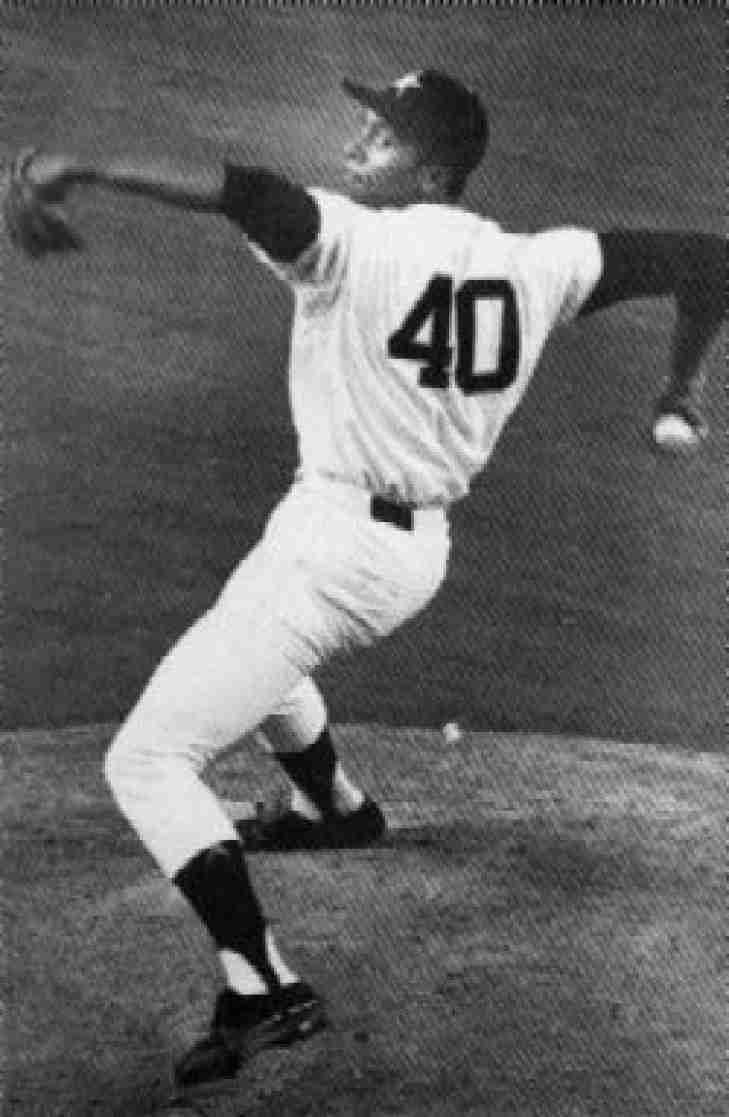
Don Wilson first made his mark in Houston as a fireballing right-hander who defined the early power-pitching identity of the franchise. After signing with the organization in 1964 and quickly climbing the minor league ladder, he joined the big league roster for good in 1967.
Wilson’s impact in a Houston uniform reached a historic peak early in his journey. In 1967, as a 22-year-old rookie, he secured a place in franchise lore by tossing the first no-hitter ever recorded in a domed stadium, striking out 15 Atlanta Braves. This performance signaled a transition from a young prospect to a premier league force who specialized in overpowering hitters. He showed the organization that he was a foundational piece of the staff, proving his consistency by repeating the feat two years later with a second no-hitter against the Reds in 1969.
Between 1968 and 1972, Wilson was a statistical force, recording double-digit wins every single year and earning an All-Star selection in 1971. He reached a career peak for workload during that span, twice surpassing 260 innings pitched and maintaining a focused intensity that led to 1,238 career strikeouts. Despite the early Astros' offensive struggles, he maintained a 104-92 record, providing steady production that anchored the rotation alongside Larry Dierker.
At just 29 years old and still in the prime of his professional life, Wilson passed away alongside his family due to carbon monoxide poisoning in their garage. The loss sent a shockwave through the city, leading the organization to retire his number 40 that spring as a final punctuation on his immense contribution. In 2019, he was inducted as part of the inaugural Astros Hall of Fame class.
20. Terry Puhl
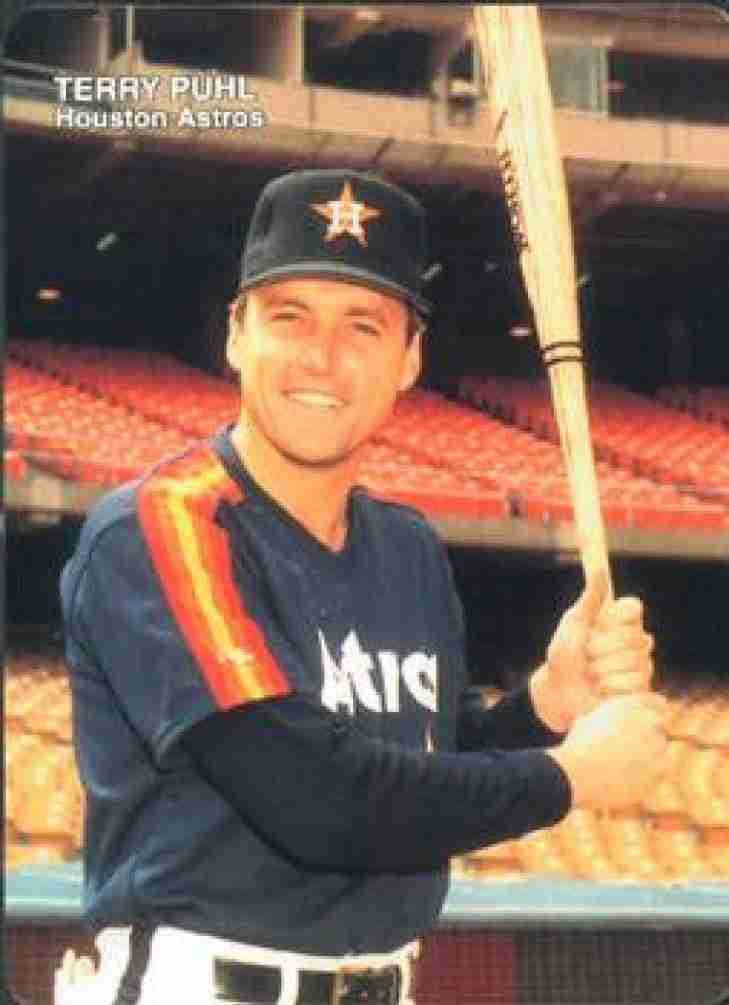
From Melville, Saskatchewan, Terry Puhl became a cornerstone of the Houston outfield for over a decade, carving out a career defined by defensive brilliance and high-speed efficiency. Signing with the Astros as an undrafted free agent, the Canadian-born standout became a fixture during the franchise’s first real era of contention.
During his first full season in 1978, at just 21 years old, he secured an All-Star selection by batting .289 and showcasing a disciplined approach that belied his age. This initial splash signaled his transition into a premier table-setter for a club that prioritized speed and contact. He swiped 32 bases that summer and proved he could be a foundational piece for a team on the verge of its first postseason appearance.
The bulk of his Houston years were characterized by consistent, all-around production during a decade of elite defensive play. Between 1979 and 1984, Puhl was a statistical force of reliability, recording six seasons with at least 20 stolen bases and twice surpassing the 150-hit plateau. He reached a career peak for high-stakes performance during the 1980 National League Championship Series, where he set a then-record with ten hits in a five-game series. Despite a lack of traditional power, he contributed with a career batting average of .280 in a Houston uniform and provided the leadership required of a veteran.
Everything culminated in a fourteen-year run that saw him amass 1,357 hits and 226 stolen bases for the organization. He eventually finished his professional journey with a brief stint in Kansas City in 1991, but his identity remained firmly rooted in the Bayou City. In 2022, the Astros inducted him into their Hall of Fame.
1. Jeff Bagwell
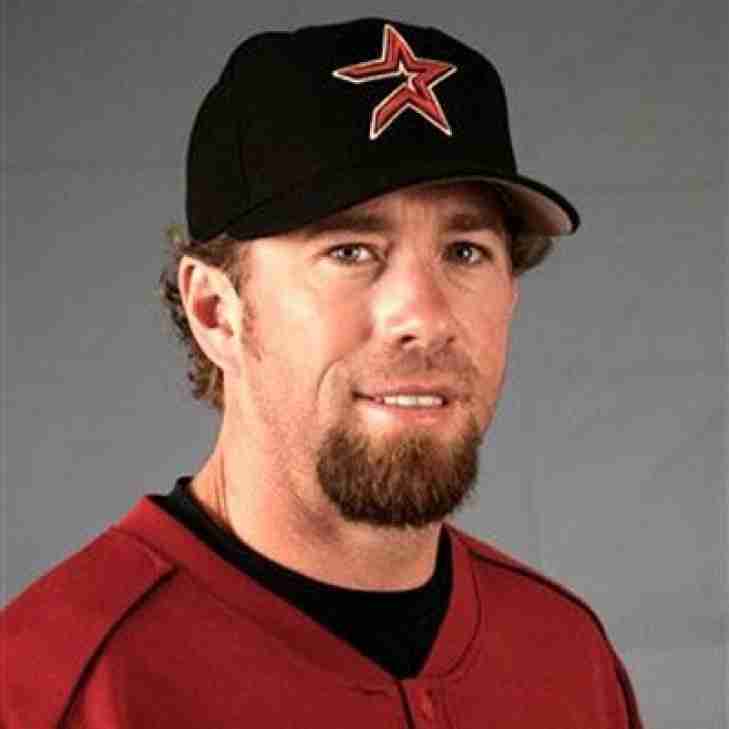
While Jeff Bagwell eventually entered the Hall of Fame in 2017, a call many felt was years overdue, his legacy in Houston was never in doubt. For fifteen seasons, he stood as the definitive identity of the Astros, transforming a scuffling franchise into a perennial powerhouse alongside his "Killer B" partner, Craig Biggio. Though his journey began in the Boston organization, the trade that brought him to Texas for reliever Larry Andersen remains the ultimate cautionary tale in baseball history, as the Red Sox surrendered a future immortal for fifteen games of bullpen help.
Bagwell made his presence felt immediately in 1991, capturing the Rookie of the Year award with 163 hits and a .294 average. He possessed a specialized, low-crouch batting stance that generated immense torque, a craftsmanship that allowed him to overcome the cavernous dimensions of the Astrodome. His best year came during the strike-shortened 1994 campaign, authoring a season so dominant that he was the unanimous selection for National League MVP. That summer, he led the league in runs (104), RBIs (116), and a staggering .750 slugging percentage, proving that he was the most efficient offensive force in the sport.
The most profound aspect of his tenure was a model of high-frequency excellence that defied the traditional aging curve. Bagwell authored six consecutive seasons from 1996 to 2001 where he recorded at least 30 home runs, 100 RBIs, 100 runs, and 100 walks—a feat of all-around production that remains a historic outlier. He was a tactical engine in the middle of the order, blending elite power with a sophisticated eye that earned him over 1,400 career walks. He served as the primary driver for six postseason appearances, utilizing his veteran poise to lead the club through the most successful era in its first forty years.
Beyond his legendary bat, Bagwell brought a professional resilience to the field that was equally impactful on the basepaths and in the dirt. He remains the only first baseman in major league history to record 400 home runs and 200 stolen bases, a testament to a specialized athleticism that caught opponents off guard. Defensively, he was a technician who earned a Gold Glove in 1994 and consistently ranked among the league leaders in assists for his position. He proved that a player could become a franchise pillar by mastering every facet of the game, providing a high-leverage presence that defined the "Killer B’s" era.
His presence in Houston was defined by a quiet, focused intensity and a loyalty that saw him spend his entire fifteen-year career in one uniform. Even as a chronic shoulder condition began to erode his ability to throw, he willed himself back for one final act during the 2005 season. He served as the emotional heartbeat of the squad that finally captured the franchise's first National League pennant, providing the veteran leadership required to navigate the road to the World Series.
With the Astros, Bagwell compiled 449 home runs, 2,314 hits, and a .408 on-base percentage while winning the 1994 MVP and 1991 Rookie of the Year.
The organization provided the final punctuation on his career by retiring his number 5 in 2007 and inducting him into the inaugural class of the Astros Hall of Fame in 2019.
5. Cesar Cedeno
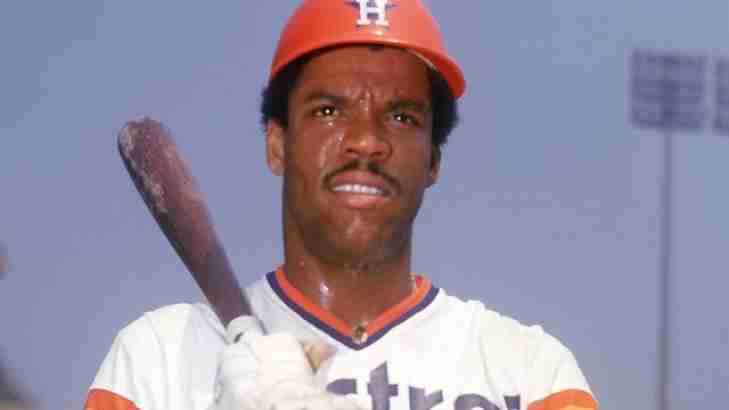
The arrival of Cesar Cedeño in Houston during the summer of 1970 felt like a glimpse into the future of baseball. A teenage prodigy from the Dominican Republic, Cedeño didn't just play center field; he patrolled it with an electric, high-speed elegance that drew immediate comparisons to the game's greatest icons. Before the term "five-tool player" became a common refrain, Cedeño was living it in the Astrodome, combining a lightning-quick bat with a defensive range that seemed to shrink the furthest reaches of the outfield.
After a strong rookie showing, he orchestrated a historic run of production starting in 1972. That year, he became only the second player in major league history to join the 20/50 club, blasting 22 home runs while swiping 55 bases. He didn't just touch that milestone; he owned it, repeating the feat in 1973 and 1974. He was a model of specialized athleticism, leading the league in doubles twice and serving as the primary offensive spark for a franchise finding its footing in the 1970s.
His game was a relentless, high-frequency aggression on the basepaths and in the field. Cedeño was a fixture among the league's elite runners, putting together six consecutive seasons with at least 50 stolen bases. His defensive craftsmanship was equally profound, earning him five straight Gold Gloves for a center field display that was as flashy as it was efficient. He possessed a rare ability to impact the game in every phase, ranking in the top five of the National League for offensive bWAR four times.
In 1981, he was traded to the Cincinnati Reds, marking the end of a twelve-year journey that saw him evolve from a "Super Nova" prospect into one of the most decorated players in club history. He departed as the franchise’s all-time leader in stolen bases at the time, a title that reflected a career built on speed and technical excellence.
With the Astros, Cedeño compiled 1,659 hits, 487 stolen bases, and 163 home runs while winning five Gold Gloves. The organization provided the final punctuation on his legacy in 2020 by inducting him into the Astros Hall of Fame.
4. Lance Berkman
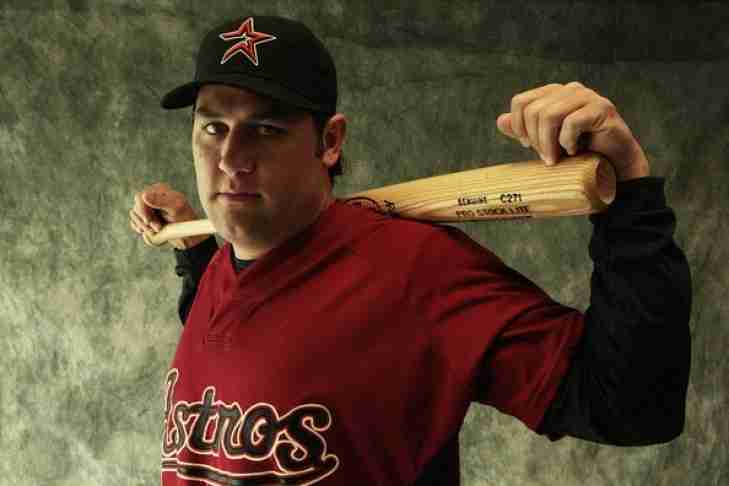
When Lance Berkman broke into the Houston lineup at the turn of the millennium, he joined a roster already defined by two titans of the game. Yet, rather than simply filling a supporting role, the switch-hitting outfielder—affectionately dubbed "Big Puma”, carved out a legacy that stands shoulder-to-shoulder with any great in franchise history.
Berkman’s decade in Houston showed elite production from both sides of the plate. After a 1999 debut, he locked in his status as a perennial force by 2001, hitting .331 and leading the league with 55 doubles. This was the first of five seasons in which he would finish in the top 10 of the MVP voting as an Astro. He wasn't just a power threat; he was a model of disciplined hitting, frequently surpassing the .400 mark in on-base percentage and batting over .300 four times. Whether he was launching one of his 326 home runs or utilizing his keen eye to anchor the middle of the order, he operated with a calm that belied his massive impact on the scoreboard.
The most profound aspect of his tenure was his ability to carry the torch as the franchise transitioned through different eras. While he shared the stage with Bagwell and Biggio during the club's 2005 World Series run, Berkman eventually became the primary engine of the Houston offense. He delivered five seasons with at least 30 homers and five campaigns with over 100 RBIs, including a spectacular 2006 season in which he drove in a career-high 136 runs. He possessed a specialized skill set that allowed him to move from the outfield to first base without losing a step, providing the flexibility the organization needed to remain competitive throughout the 2000s.
Though his journey took him to New York and eventually to a championship in St. Louis, his heartbeat remained in Texas. He proved his loyalty to the organization by signing a ceremonial one-day contract in 2013, ensuring he would officially retire in the same uniform in which his career began.
With the Astros, Berkman compiled 1,648 hits, 326 home runs, and 1,090 RBIs while earning five All-Star selections.
The organization provided the final punctuation on his Houston career in 2020 by inducting him into the Astros Hall of Fame.
2. Craig Biggio
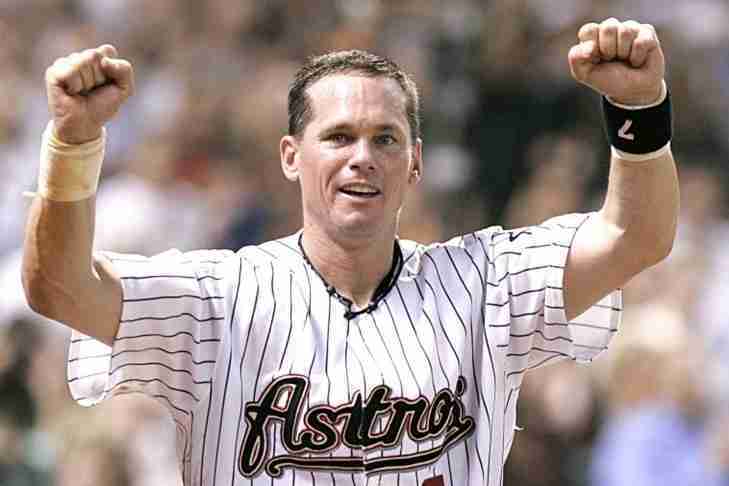
While Jeff Bagwell provided the raw power for the "Killer B’s" era, Craig Biggio served as the relentless engine, a player whose two-decade tenure in Houston was a study in extraordinary versatility and blue-collar grit. From his early days behind the plate to his Gold Glove years at second base and even a tactical move to the outfield, Biggio approached every transition with a workmanlike approach that prioritized the team's needs over his own comfort. He played the game with a "dirty helmet" intensity that made him the soul of the organization, eventually becoming the first player to enter Cooperstown with an Astros cap on his plaque.
Biggio’s journey was defined by a rare willingness to reinvent himself to prolong his value. He arrived in 1988 as a speedy catching prospect, but the organization’s decision to move him to second base in 1992—designed to preserve his legs and maximize his leadoff potential- proved to be a stroke of genius. He was a model of specialized athleticism, becoming the only player in baseball history to earn All-Star nods and Silver Sluggers at both catcher and second base. During the mid-90s, he emerged as a premier force, collecting four consecutive Gold Gloves and leading the National League in stolen bases in 1994.
The hallmark of his craftsmanship was a unique ability to influence the game through sheer tenacity. Biggio was a master of the "hit-by-pitch," often crowding the plate with a specialized elbow pad that would eventually find its way to the Hall of Fame. He reached a statistical summit in 2005 when he broke the modern-day record for being hit by a pitch, a testament to his focused intensity and refusal to yield an inch to opposing hurlers. This gritty on-base ability, combined with a franchise-record 668 doubles, made him a high-frequency run-scorer who twice led the National League in that category.
Beyond the individual milestones, Biggio’s presence was the tactical foundation for the most successful period in the club's first forty years. He served as the primary catalyst for six different postseason runs, utilizing his veteran poise to lead the Astros to their first-ever World Series appearance in 2005. He possessed a rare, high-leverage durability, appearing in over 2,800 games for the organization and maintaining a standard of excellence that never wavered through three distinct positional shifts.
The narrative in Houston reached a historic conclusion in 2007, a summer defined by his entry into the 3,000-hit club. On a magical night at Minute Maid Park, he reached the hallowed plateau with a seventh-inning single, punctuating a career that saw him become the standard-bearer for loyalty in the modern era. He departed as the organization’s all-time leader in games, hits, runs, and doubles, leaving behind a resume that is unmatched in its breadth and longevity.
With the Astros, Biggio compiled 3,060 hits, 414 stolen bases, and 291 home runs while earning four Gold Gloves across 20 seasons.
The organization provided the ultimate punctuation to his legacy by retiring his number 7 in 2008 and inducting him into the inaugural Astros Hall of Fame class in 2019.
11. Jim Wynn
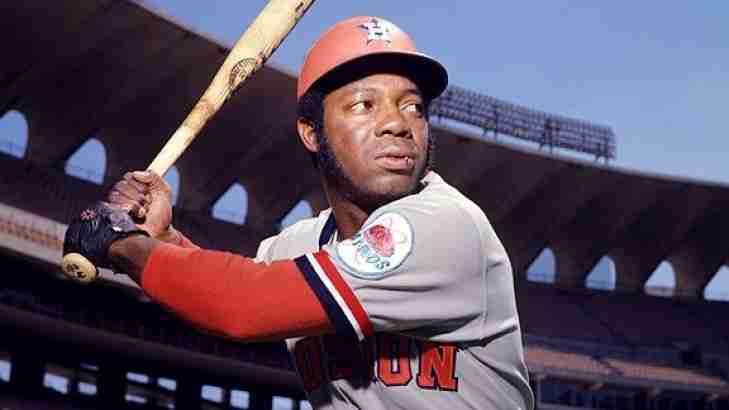
Jimmy Wynn’s career in Houston is a masterclass in why raw box scores can be deceiving. Standing only 5’ 9”, the man they called the “Toy Cannon” spent a decade launching high-frequency drives into the deepest reaches of the cavernous Colt Stadium and the Astrodome—parks that were notorious graveyards for power hitters. While his batting averages often hovered in the .250 range, modern evaluation has revealed a player who was decades ahead of his time, a specialized weapon who valued the walk and the long ball long before they became league-wide standards.
Wynn’s ascent in Houston began in 1963 with the Colt .45s, but it was the move to the Astrodome in 1965 that defined his professional resilience. In an era when "small ball" was the tactical norm, he defied the "Dome" in 1967 by launching 37 home runs—a staggering total for a park where the ball simply didn't carry. He combined this specialized power with elite speed, swiping 16 bases and providing the expansion franchise with its first legitimate superstar. He wasn't a contact specialist; he was a model of efficiency who forced pitchers to navigate a tiny strike zone that he protected with a focused intensity.
The center of his residency was marked by a 1969 campaign that served as a statistical outlier for the decade. That season, Wynn led the National League with 148 walks. While his .269 average appeared modest to contemporary eyes, his on-base percentage soared to .436, proving that he was one of the most difficult outs in the game. He followed this with another high-frequency power surge in 1970, hitting 27 homers and stealing 24 bases. He showed the organization that a player could become a franchise pillar simply by refusing to expand the zone, a steady-state approach that kept him at the top of the league's OPS leaderboard for years.
The final chapters of his Houston tenure saw a gradual decline in batting average, but the "Toy Cannon" remained a dangerous outlier until his departure. Even as injuries began to take a physical toll, he managed 20 home runs and 91 walks in 1972, maintaining a professional poise during a period where the Astros were struggling to find a supporting cast. He was eventually traded to the Dodgers following the 1973 season, leaving the Lone Star State with 1,291 hits and 223 home runs, numbers that would have been significantly higher had he played in a hitter-friendly environment.
The story in Houston reached its final punctuation in 2005 when the organization retired his number 24, followed by his induction into the Astros Hall of Fame in 2019.
