

8. Alex Bregman
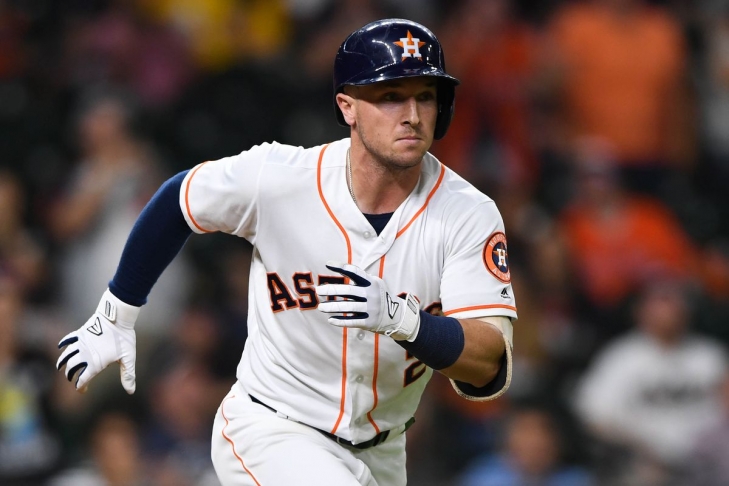
When Alex Bregman took over the hot corner in Houston, the franchise didn't just gain a gold-glove defender; they inherited a psychological edge. A player defined by a relentless, almost obsessive preparation, Bregman arrived mid-2016 and immediately injected a sense of high-stakes swagger into the lineup. He wasn't just a cog in the machine; he became the ignition switch for the most successful era in the organization's history.
His best period occurred during the 2018 and 2019 campaigns, finishing in the top five of the MVP voting in back-to-back summers. The 2019 season remains a monument to his craft: a .296 average punctuated by 41 home runs and a staggering 112 walks. He didn't just out-slug the competition; he out-thought them, leading the major leagues in walks while maintaining a specialized ability to deliver the soul-crushing hit when the leverage was at its peak. This two-year stretch solidified his status as a premier run-producer, amassing a combined 16.0 bWAR that few infielders in the modern game have matched.
The most defining aspect of his game, however, is his transformation into a postseason titan. Bregman’s fingerprint is visible on every major milestone of the Astros’ dynasty, from his walk-off single in the 13-12 thriller of the 2017 World Series to his steady-state defense during the 2022 championship run. He possessed a professional resilience that allowed him to thrive under the harshest scrutiny, serving as the clubhouse’s vocal leader as it navigated multiple deep playoff runs. Whether he was famously staring down a pitcher after a home run or providing the tactical adjustments needed to solve an elite closer, he competed with a grit that made him the face of Houston’s relentless winning culture.
Following the 2024 season, Bregman signed a lucrative three-year deal with the Boston Red Sox. Bregman compiled 1,132 hits, 191 home runs, and 663 RBIs while winning two World Series titles as an Astro.
9. Justin Verlander
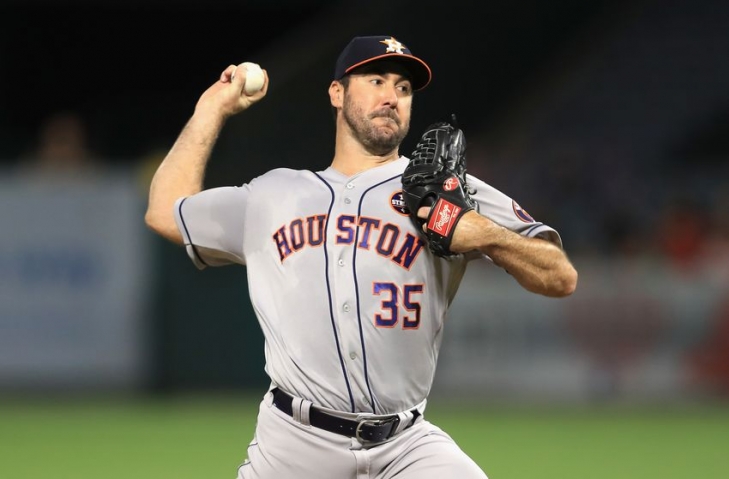
When Justin Verlander stepped off a plane in Houston in the final minutes of August 2017, the trajectory of a franchise shifted instantly. Many across the league viewed the veteran as a spent force whose best days remained in the rearview mirror of a decorated Detroit tenure. Instead, Verlander treated the trade as a career rebirth, evolving from a Motown workhorse into the strategic cornerstone of a Houston dynasty. He arrived as a mercenary hired to hunt a ring and left as a statistical titan who orchestrated a dominant late-career arc in the history of the mound.
Verlander’s initial stay in Houston was a masterclass in high-leverage efficiency. He hit the ground running with a 5-0 record following the trade, but it was the 2017 postseason where he reached a historic apex. During the ALCS against the Yankees, he delivered a clinical performance to earn MVP honors, serving as the primary engine for a squad that finally secured the city’s first World Series title. He proved he was no "rent-a-player," following that triumph with a 2018 campaign where he led the league in strikeouts and WHIP, narrowly finishing as the Cy Young runner-up.
The most profound chapter of his first run unfolded in 2019, a season so far an outlier that it defied his age. Verlander captured the Cy Young Award by leading the American League in wins (21), innings (223), and a microscopic 0.803 WHIP. He possessed a specialized ability to maintain triple-digit velocity deep into games, providing the veteran-like poise required to lead the Astros back to the Fall Classic. Even after a significant elbow injury and Tommy John surgery sidelined him for the bulk of two years, he authored an "impossible" 2022 comeback. That summer, he didn't just return; he dominated, leading the circuit in wins (18) and a staggering 1.75 ERA to claim his third Cy Young and anchor the club to a second championship.
The second act of his Houston story began with a dramatic mid-season return in 2023. After a brief dalliance with the Mets, Verlander was traded back to the Astros to stabilize a rotation eyeing another deep October run. He stepped back into the clubhouse with a focused intensity, helping the club navigate a tight divisional race and secure another postseason berth.
His journey in Houston concluded with a scintillating 73-28 record, a winning percentage that borders on the mythical. He departed as a two-time champion and a two-time Cy Young winner in an Astros uniform, leaving behind a legacy of power pitching that redefined the expectations for a modern ace.
16. George Springer
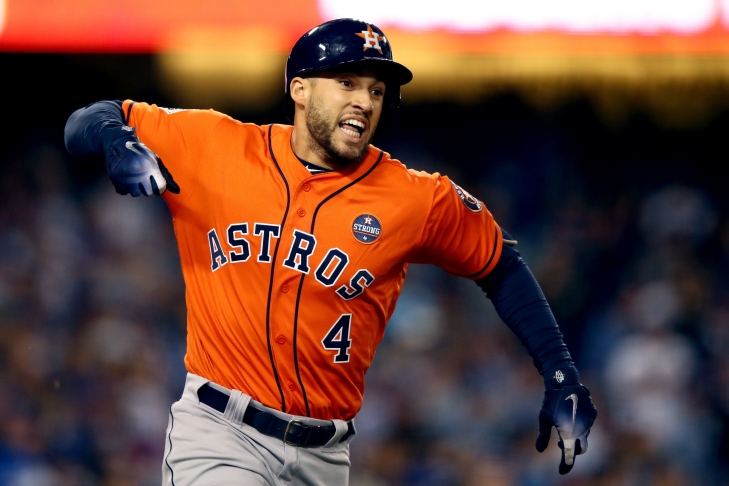
George Springer didn't just join the lineup; he ignited it. For seven seasons, he served as the primary engine at the top of the order, a player whose combination of leadoff power and a fearless defensive approach redefined the center-field position during the most successful era in Astros history.
In 2014. As a rookie, he reached a staggering gear early, launching 20 home runs in just 78 games and signaling a transition from a top-tier prospect to a franchise pillar almost immediately. He possessed a focused intensity that made him a nightmare for pitchers trying to settle into a rhythm, as he became one of the most dangerous leadoff hitters in the game. By 2016, he proved his physical resilience by leading the American League in plate appearances, a high-frequency workload that saw him hit 29 home runs and provide the steady-state production the rebuilding club required.
The middle of his tenure reached a definitive career peak in 2017. That summer, Springer blasted 34 home runs, earned his first All-Star nod, and secured a Silver Slugger Award. However, his true professional high point occurred in October. During the 2017 World Series, he authored a historic performance, hitting five home runs and driving the Astros to their first championship. He was named the World Series MVP, a statistical outlier of a series that cemented his legacy as a big-game performer who thrived when the lights were brightest. He followed this with two more All-Star campaigns in 2018 and 2019, showing the organization that he could maintain elite efficiency year after year.
The final chapters of his Houston story were marked by a veteran-like consistency even as he navigated minor injuries. In 2019, he reached an unrivaled mark for personal power, hitting 39 home runs in only 122 games and leading the team back to the Fall Classic. He showed the world that when he was at the top of the card, the Astros were nearly impossible to beat. However, the reality of free agency brought a shift in 2021, as Springer chose to take his talents to the Toronto Blue Jays. He departed the Lone Star State with 178 home runs and a .491 slugging percentage, leaving as the emotional heart of a dynasty.
With the Astros, Springer compiled 178 home runs, three All-Star selections, and the 2017 World Series MVP.
13. Carlos Correa
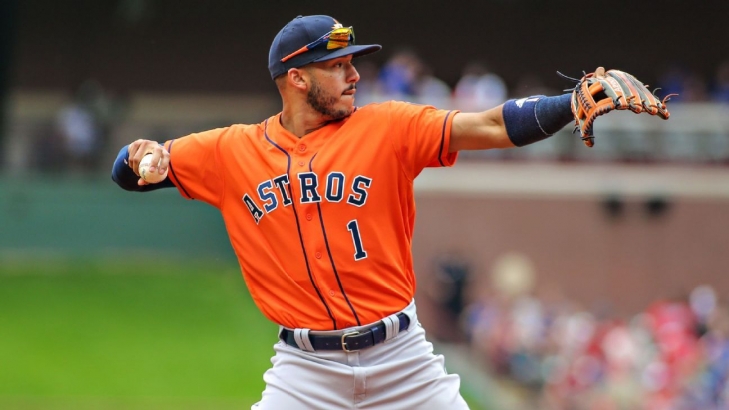
Carlos Correa arrived in Houston as the ultimate symbol of a rebuilding era, carrying the weight of being the first overall pick in 2012. He didn't just meet those expectations; he shattered them with a professional poise that suggested he was born for the high-leverage moments of October. For seven seasons, Correa was the defensive and emotional heartbeat of the most successful run in franchise history, a specialized talent whose combination of range, arm strength, and middle-order power turned the shortstop position into a source of constant advantage for the Astros.
Correa’s ascent began with an immediate high-frequency impact in 2015. After being called up in June, he sprinted to the AL Rookie of the Year award, launching 22 home runs and signaling a transition from a prospect to a franchise pillar in just 99 games. He followed this with a relentless run of production, hitting 20 or more homers in each of the next two seasons while maintaining a batting average over .275. In 2017, Correa batted a career-high .315 and earned an All-Star nod while serving as the emotional engine of the Astros' first World Series championship.
The middle chapters of his residency were marked by a frustrating series of physical setbacks, as back and rib injuries led to a declining plateau in availability between 2018 and 2020. However, in 2021, his final year before reaching free agency. That season, he provided a masterclass in two-way dominance, hitting 26 home runs and leading the entire American League in defensive bWAR (2.9). He finished fifth in the MVP voting and secured both a Gold Glove and a Platinum Glove, proving that when healthy, his craftsmanship in the field was the gold standard of the game.
The story in Houston took a dramatic turn after the 2021 season when Correa’s talents traveled north to Minnesota in free agency. While many assumed the chapter was closed, the reality of the 2025 season brought a stunning homecoming. With the Astros looking to solidify their infield for another championship run, they orchestrated a high-leverage trade to bring Correa back to the Lone Star State. He arrived mid-season to a hero’s welcome, immediately reclaiming his spot at shortstop and helping the club navigate a pressurized playoff race.
As the 2026 season begins, Correa stands as a veteran-like bridge between the championship runs of his youth and the franchise’s current aspirations. He has returned to the city where his legacy began, proving that a player’s connection to a fanbase can survive even a multi-year absence. He showed the organization that when you have the heart of a competitor and the discipline of an elite athlete, you don't just fill a position—you anchor a culture.
The Houston Astros announce their franchise Hall of Fame plans
As most of the regular visitors to Notinhalloffame.com are aware we are (very) slowly putting together our top 50 players of every franchise in the “Big 4” of North American sports. After that is completed we will take a look at how each organization honors their past players and executives.
As such, it is very newsworthy to us that the Houston Astros have announced during their FanFest that their physical Hall of Fame will open in Home Run Alley at the start of the 2019 season. The Astros, who have been around for 57 seasons and won their first World Series in 2017. The first Hall of Fame Class will comprise of 16 members and they will be officially inducted on the weekend of Aug 2-4. All of the members of the new class will be introduced in a pregame ceremony on August 3, prior to their home game against the Seattle Mariners.
The inaugural Houston Astros Hall of Fame Class consists of:
Bob Aspromonte (1962-67): Known affectionately in Houston as “Aspro”, Aspromante was taken third overall in the Expansion Draft and was an original Colt 45. With the distinction of being the first ever batter in franchise history, he would also record the first Hit and Stolen Base for the team. A member of the Colt .45’s/Astros for seven seasons, Aspromante was the team’s starting Third Baseman and recorded 925 Hits and would twice lead all National League Third Basemen in Fielding Percentage.
Jeff Bagwell (1991-2005): The Rookie of the Year in 1991, Jeff Bagwell played his entire career with Houston where he would be named to four All Star Games and was named the National League MVP in 1994. A three time Silver Slugger, the First Baseman crushed 449 Home Runs with 1,401 RBIs and a Slash Line of .297/.408/.540. Bagwell entered the Baseball Hall of Fame in 2017 and became the second person to enter as an Astro.
Craig Biggio (1988-2007): Craig Biggio made history in many ways for the Houston Astros as he was the first (and only) player to collect 3,000 Hits for the team and in 2015 was the first man to wear a Astros cap in the Hall of Fame. An All Star seven times, Biggio had power (291 Home Runs), speed (414 Stolen Bases) and excellent defensive versatility as he played Catcher, Second Base and Outfield for the team. He was also a four time Gold Glove recipient.
Jose Cruz (1975-87): Cruz played 13 seasons for Houston where in 1983 he would lead the National League in Hits. He had 1,937 overall for Houston where he also had 138 Home Runs with 288 Stolen Bases and a .292 Batting Average. Cruz was also an All Star twice, the first of which in 1980 would see him finish third in MVP voting.
Larry Dierker (1964-87): Dierker pitched for the Astros for 13 years where he went 137 and 117 with 1,487 Strikeouts and two All Star Game appearances. From 1997 to 2001 Dierker was the Astros’ Manager where he had a record of 435 and 348 and was named the Manager of the Year in 1998. He also served as a Broadcaster for the team for 18 years.
Gene Elston (1962-86): Elston was the voice of the team for the first 25 years of the franchise’s existence. In 2006 he was honored with the Ford C. Frick Award by the Baseball Hall of Fame for his contributions to Baseball broadcasting.
Milo Hamilton (1985-2012): Like Elston, Hamilton was also recognized by the Baseball Hall of Fame with the Ford C. Frick Award for excellence in Baseball Broadcasting.
Joe Morgan (1963-71 & 1980): Morgan was a two time All Star with Houston where he first played from 1963 to 1971. He would afterward more famously join Cincinnati where he would help them win two World Series and was named the MVP twice before returning in 1980 for one season. Overall with Houston he would be a two time leader in Walks with 972 Hits, 219 Stolen Bases and 72 Home Runs.
Joe Niekro (1975-85): Niekro is at present the winningest Pitcher in Astros history with 144 Wins. An Astro for 11 seasons, Niekro would have back to back 20 Win seasons in 1979 and 1980 where his 21 Wins in ’79 would give him the league lead. He finished 2ndand 4thin Cy Young respectively those two seasons and he would also strikeout 1,178 batters with Houston.
Shane Reynolds (1992-2001): Reynolds was named to the All Star Team in 2000 and in the season before he was the NL leader in BB/9 and SO/BB. Reynolds overall record in Houston was 103 and 86 with 1,309 Strikeouts.
J.R. Richard (1971-1980): Known for his blazing fastball, J.R. Richard led the NL in Strikeouts in both 1978 and 1979 with 1,493 K’s overall in his 10 year career, which was all with Houston. In those two aforementioned seasons he finished 4thand 3rdin Cy Young Award voting and he retired with a 107 and 71 record.
Nolan Ryan (1980-88): The all-time Strikeout King of Major League Baseball accrued 1,866 of his career 5,714 as a member of the Houston Astros. While playing there, he would win the ERA title twice and had a record of 106 and 94 with a pair of All Star Games. Ryan was chosen for the Baseball Hall of Fame in 1999 and he serves as an Executive Advisor for the team.
Mike Scott (1983-91): Scott would win the Cy Young Award in 1986 and he made history by throwing a no-hitter in the team’s division clinching win. While he could not pitch his team into the World Series, he went 2 and 0 over 18 Innings with a 0.50 ERA earning him the NLCS MVP despite Houston failing to beat the New York Mets. Scott went 110 and 81 with 1,318 Strikeouts over his nine seasons in Houston.
Jim Umbricht (1962-63): Umbricht was an original Houston Colt .45 after being chosen from the Pittsburgh Pirates in the Expansion Draft. He would finish 21 Games in 1962 but received a cancer diagnosis in the offseason and underwent surgery in March of 1963. Miraculously, he made the opening day roster and pitched the season but the cancer was never cured and by November of that year it had spread to his chest and was diagnosed as uncurable but showed amazing courage until the end. He would die on April, 8. 1964.
Don Wilson (1966-74): Wilson played all nine of his seasons with the Houston Astros where he was an All Star in 1971 and had a record of 104 and 92 with 1,283 Strikeouts. Wilson passed away in 1975 due to carbon monoxide poisoning in his garage and it is believed that he died while intoxicated and it was not a suicide.
Jimmy Wynn (1963-73):Arguably the most underrated player in Baseball, Jimmy Winn played the first 11 of his 15 seasons of his career with the Astros. “The Toy Cannon” was an All Star in 1975 and had 1,291 Hits with 223 Home Runs as an Astro.
In the future, the Astros Hall of Fame Committee will meet annually to determine each new member. Their plan is to induct one or two members each year. At present the Committee consists of Reid Ryan (President of Business Operations), Mike Acosta (Team Historian), Craig Biggio (Former player and current Special Assistant to the GM), Bill Brown (Former Broadcaster and current Astros Community Outreach Executive), Gene Dias (VP of Communications), Larry Dierker (Former Player and Broadcaster), Bob Dorrill (President of the Houston Chapter of SABR), Marian Harper (VP of Foundation Development), Alyson Footer (MLB.com National Correspondent), Brian McTaggart (Astros Beat Writer) and Mike Vance (Baseball and Houston Historian).
We here at Notinhalloffame.com would like to congratulate all of the members of the inaugural class of the Houston Astros Hall of Fame for earning this prestigious honor.
50. Bob Knepper
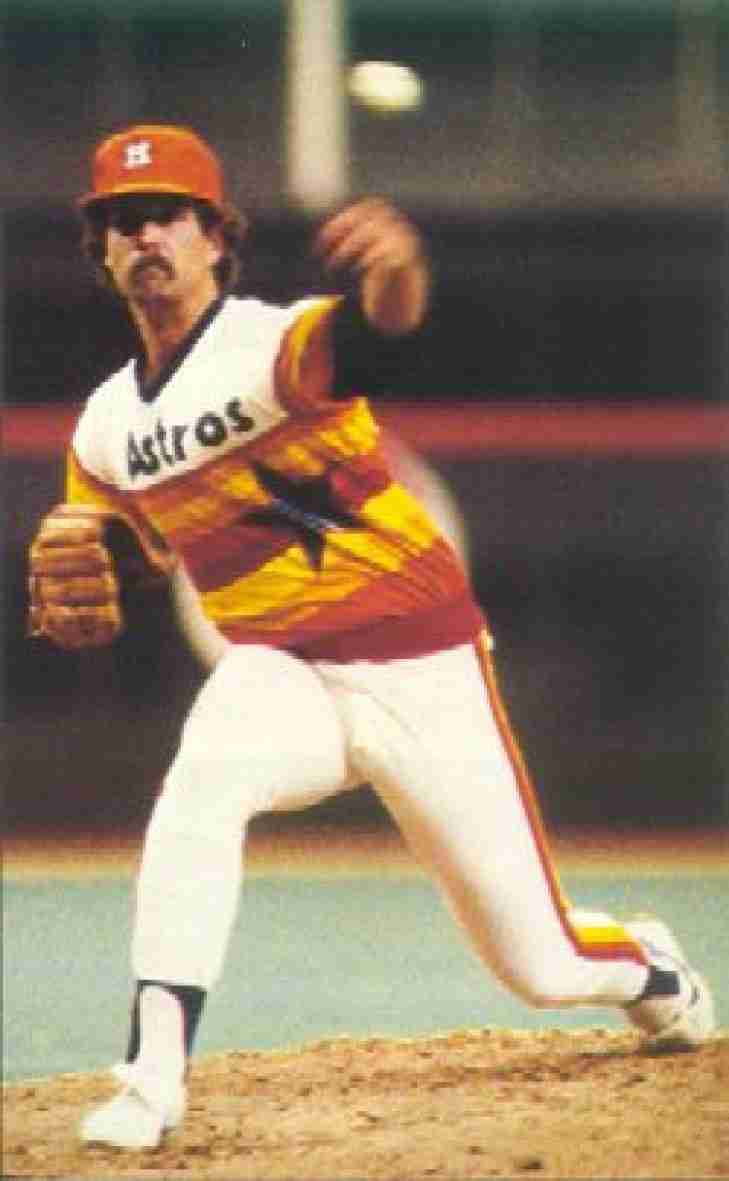
Bob Knepper arrived in the Houston organization via a trade with the San Francisco Giants in late 1980, a left-hander whose high-ceiling talent had once saddled him with some of the heaviest expectations in the sport. While Knepper did not match those expectations, his nine-year run as an Astro was solid.
During the 1981 strike-shortened season, he finally flashed the potential that once earned him those lofty Koufax comparisons. That summer, he demonstrated a specialized ability to suppress runs, leading the National League with a 1.060 WHIP and recording a career-best 2.18 ERA. He showed the organization he was a foundational professional by earning the 1981 NL Comeback Player of the Year award and helping the staff to an NLDS appearance.
Between 1982 and 1985, Knepper made at least 30 starts in three of those four seasons, highlighted by a 15-win campaign in 1984, where he logged 224 innings. The 1986 campaign represented the peak of individual recognition and postseason drama for Knepper. That summer, he recorded 17 wins and tied for the National League lead with five shutouts, earning a spot on the All-Star team. He showed the organization he was a foundational winner by tossing a gem in Game 3 of the 1986 NLCS, though he is equally remembered for the high-leverage heartbreak of Game 6 against the Mets.
Knepper’s skills eroded after 1986, and he was released midway through the 1989 season. With Houston, Knepper had a 93-100 record, 946 strikeouts, and 31 complete games.
The Top 50 Houston Astros of All-Time are now up
We return to the world of Baseball with the Houston Astros and that we believe are Top 50 players ever from that organization.
We encourage you to see the complete list here, but for those who can’t wait, here are the top five Houston Astros of all-time:
1.Jeff Bagwell
2. Craig Biggio
3. Lance Berkman
4. Cesar Cedeno
5. Jose Cruz
This won’t be the last of this, as we have the Detroit Lions up next.
As always, we thank you for your support and look for your input!
48. Danny Darwin
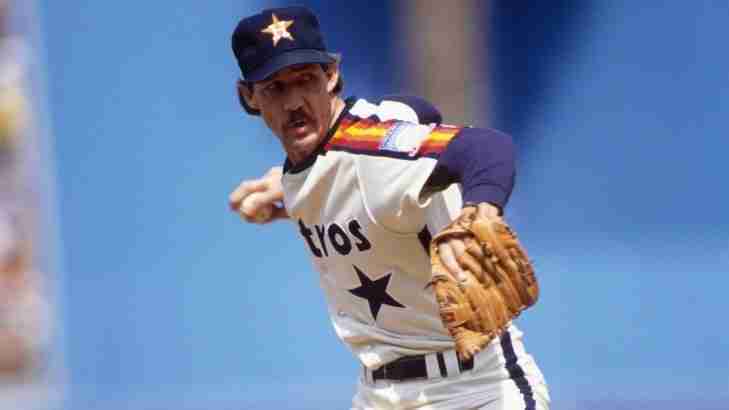
Danny Darwin arrived in the Houston organization via a mid-1986 trade from Milwaukee, providing an immediate spark for the division-winning "Mike Scott Era" staff. Known by the chilling nickname "Dr. Death" for his intense competitive fire and willingness to protect his teammates, Darwin spent six seasons in the Space City across two different stints.
The best season of Darwin’s Astros run was in 1990. That summer, he demonstrated a specialized ability to dominate in any capacity, appearing in 48 games but making only 17 starts. He showed the organization he was a foundational ace by leading the National League with a 2.21 ERA and a major league-best 1.027 WHIP, making him the third Astro in five years to claim the league's ERA crown. This specialized "swingman" dominance earned him the 1990 Houston Astros MVP award.
His first tenure was defined by high-frequency reliability; between 1986 and 1990, he provided the club with nearly 700 innings of quality work while primarily neutralizing right-handed hitters. After leaving for a four-year contract in Boston, everything culminated in a brief, nostalgic return in 1996. Acquired from the Pirates in a July trade, the 40-year-old veteran showed the organization he was still a professional by helping the club during the final two months of the season, recording his final three wins in a Houston uniform to finish his Astros career with a combined 47-35 record.
49. Mike Cuellar
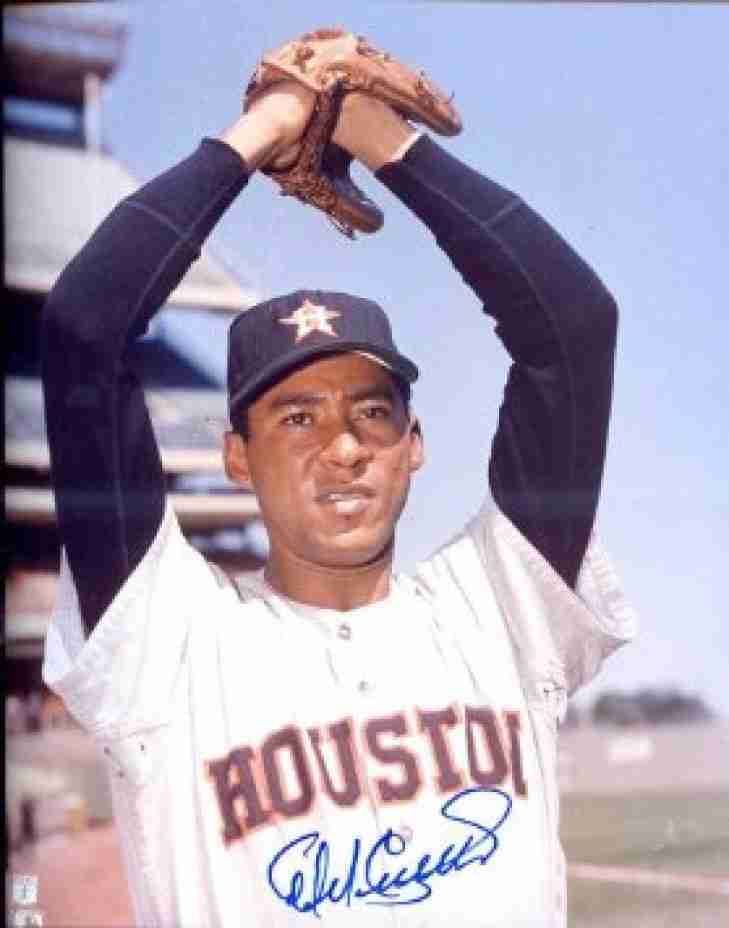
Mike Cuellar arrived in the Houston organization in mid-1965 via a trade with the St. Louis Cardinals, a crafty left-hander who had spent years searching for a permanent home in the Major Leagues. While he would later become a legend in Baltimore, it was in the Space City where he truly refined his specialized repertoire, most notably a darting screwball that baffled National League hitters.
Cuellar reached his first peak of individual efficiency during a brilliant 1966 campaign. That summer, he demonstrated a specialized ability to suppress runs, recording a 2.22 ERA that ranked second in the National League only to the legendary Sandy Koufax. He showed the organization he was a foundational professional by throwing over 200 innings and proving that his frequent use of the screwball made his fastball appear significantly faster than its actual velocity.
The season after, Cuellar recorded a career-high 16 wins and was selected to his first career All-Star Game, where he tossed two shutout innings in Anaheim. He showed the organization he was a foundational workhorse by leading the staff with 16 complete games and recording a career-best 203 strikeouts. Despite a dip in run support during the 1968 season, he remained highly effective, maintaining a specialized 2.74 ERA and providing a veteran presence for a young rotation that included Larry Dierker and Don Wilson.
Cuellar’s stay in Houston ended in a 1968 trade to the Baltimore Orioles in exchange for Curt Blefary. The move, often cited as one of the most lopsided in Astros history, was driven by a desire for more offensive production in Houston, but it also allowed Cuellar to reach his ultimate potential, during which he won the 1969 Cy Young Award and a World Series title.
As an Astro, Cuellar had wins, 557 strikeouts, and a 2.74 ERA.
42. Denny Walling
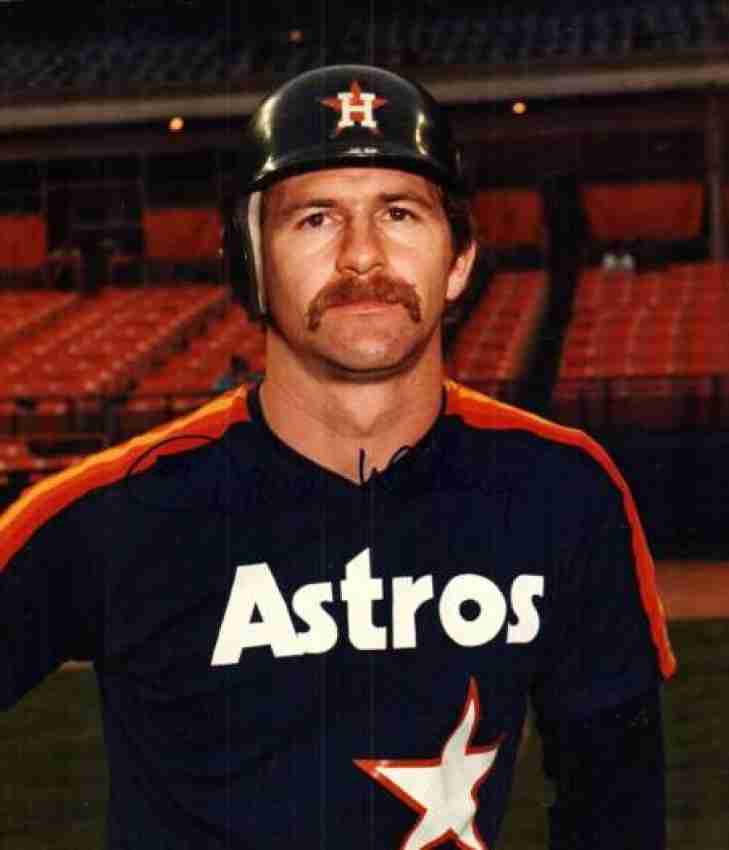
Denny Walling arrived in Houston via a trade with the Oakland Athletics in 1977, a left-handed hitter whose versatility and bat-to-ball skills would make him a permanent fixture in the Astrodome. While he never fit the mold of a traditional everyday starter, he carved out a niche as one of the most effective situational weapons in the National League.
In 1980, Walling proved himself on the national level. While he appeared in 100 regular-season games, his most iconic moment came in Game 3 of the 1980 NLCS against the Philadelphia Phillies. In the bottom of the 11th inning with the bases loaded, Walling demonstrated a focused intensity by delivering a walk-off sacrifice fly to score Rafael Landestoy, giving the Astros a 2–1 series lead. He followed this in the early eighties by continuing to provide specialized situational hitting, notably batting .327 in 1979 and maintaining a reputation for "good wood" as a premier pinch-hitter.
In 1986, Walling helped the Astros win the division title. Beyond his career-high .312 average and 13 home runs, he showed the organization he was a foundational winner during Mike Scott’s historic no-hitter on September 25. Walling provided the only run support needed that day with a solo home run, a tactical strike that clinched the National League West title for Houston.
Walling left the club in a late-season trade in August 1988, as the Astros found themselves in a tight pennant race with the Los Angeles Dodgers. Seeking to bolster their starting rotation for the final stretch, Houston traded Walling to the St. Louis Cardinals in exchange for veteran pitcher Bob Forsch.
In Space City, Walling had 726 hits, 340 RBIs, and a .280 batting average.
34. Mike Hampton
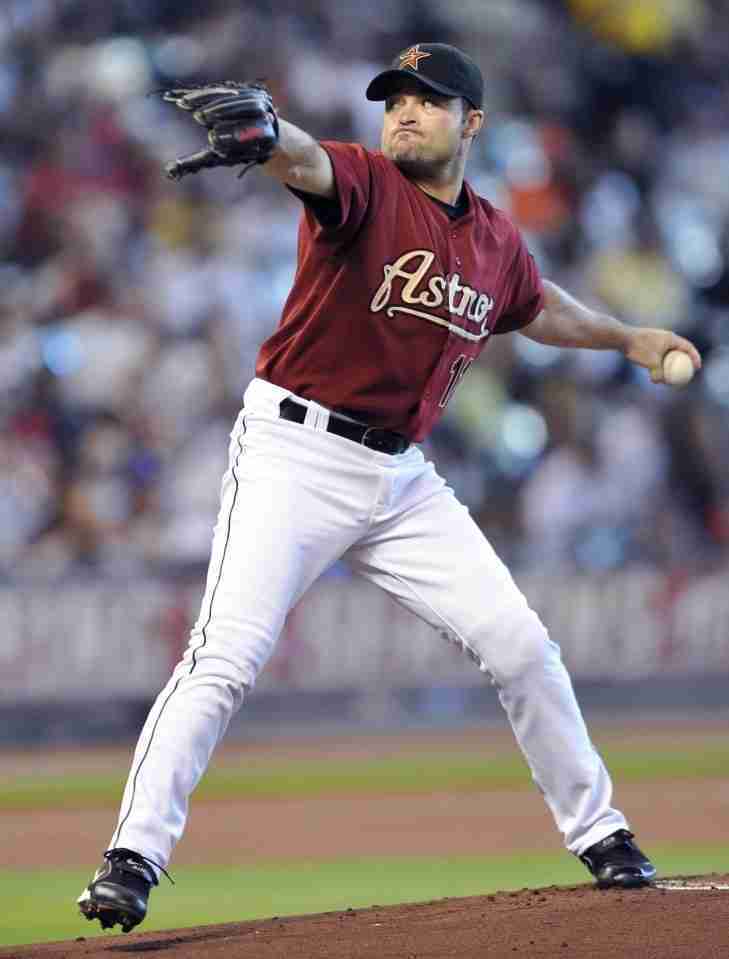
Mike Hampton joined the Houston organization in late 1993 via a savvy trade with the Seattle Mariners, a deal that sent outfielder Eric Anthony to the Mariners in exchange for the young southpaw. A versatile athlete who would eventually become one of the greatest hitting pitchers of his era, he initially cut his teeth as a reliever before moving permanently into the rotation in 1995.
The ascent to Hampton’s peak in 1999 was a study in persistent, year-over-year refinement. After establishing himself as a reliable mid-rotation arm in the mid-nineties, he evolved into the tactical leader of the Houston staff during their run of three consecutive division titles. By 1997, he had officially seized a role as a frontline winner, recording 15 victories and maintaining an ERA under 4.00 for the fourth straight season. This period of steady growth served as the essential lead-in to his historic 1999 run, showing that when a pitcher aligns elite ground-ball induction with veteran-like poise, he can become a perennial Cy Young contender.
In 1999, he was among the most successful pitchers in baseball, recording a staggering 22-4 record and a 2.90 ERA. He demonstrated a specialized ability to eat innings, leading the league in wins and finishing as the runner-up to Randy Johnson in the Cy Young voting. He showed the organization that he was a foundational winner by earning his first All-Star selection and the first of five consecutive Silver Slugger Awards, famously batting .311 during his final year in a Houston uniform.
Despite that monster year, Hampton only had one year left in his contract, and the Astros traded him to the New York Mets. Hampton compiled a 76-50 record, 715 strikeouts, and the 1999 NL wins title as an Astro.
43. Rusty Staub
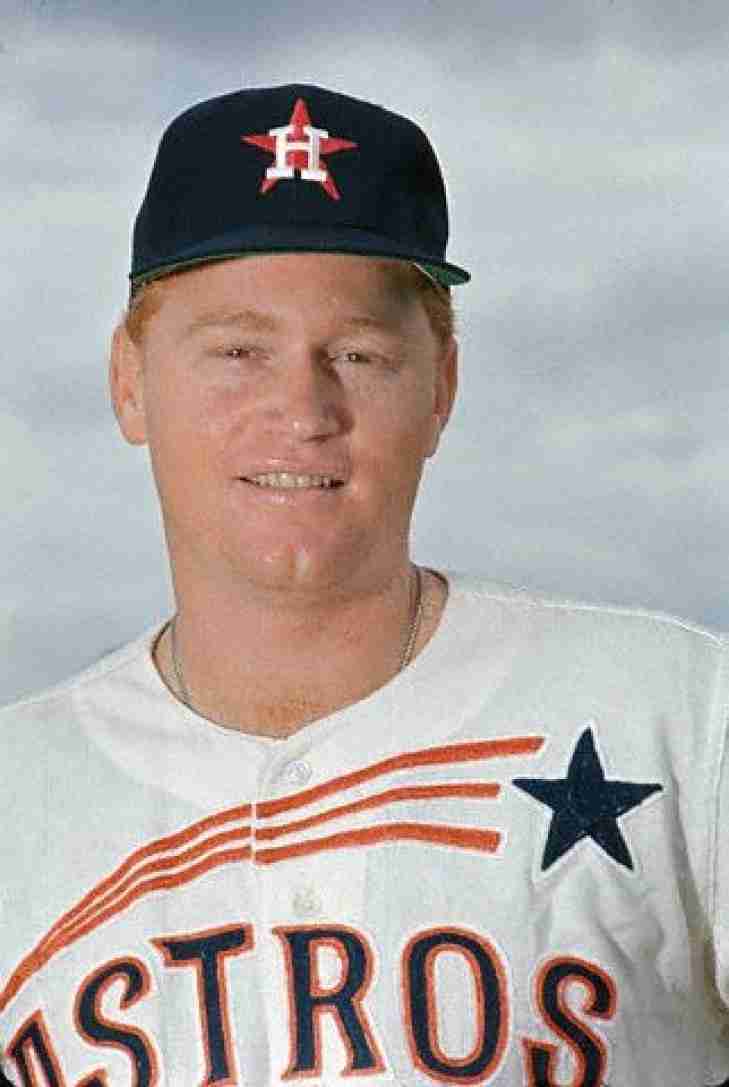
Rusty Staub arrived in the organization as a teenager in 1963, debuting for the Houston Colt .45s before the franchise even transitioned into the Astrodome. Known for his shock of red hair and a sophisticated left-handed swing, he quickly evolved from a young prospect into the team’s first genuine offensive threat.
Seemingly improving every season, Staub had a coming-out party in 1967, where he led the National League with 44 doubles and recorded a career-high .333 batting average. He showed the organization he was a foundational superstar by earning the first of his back-to-back All-Star selections and finishing the year with 182 hits. Despite the cavernous dimensions of the dome, he maintained a high-frequency of extra-base hits, proving that his line-drive approach was a tactical success against any pitching staff.
The final stretch of his Houston tenure was defined by unwavering offensive volume. Between 1966 and 1968, Staub recorded at least 150 hits each season, providing the steady production required for a developing expansion club. While his defensive range in the outfield prevented him from reaching a higher tier of overall value, his bat remained a constant.
Before the 1969 season, Staub was traded to the Montreal Expos. The move, a swap for Donn Clendenon and Jesús Alou, was driven by a contract dispute with Houston management and a tactical desire to shake up the roster. With the Astros, Staub compiled 792 hits, 115 doubles, and two All-Star selections.
38. Dave Smith
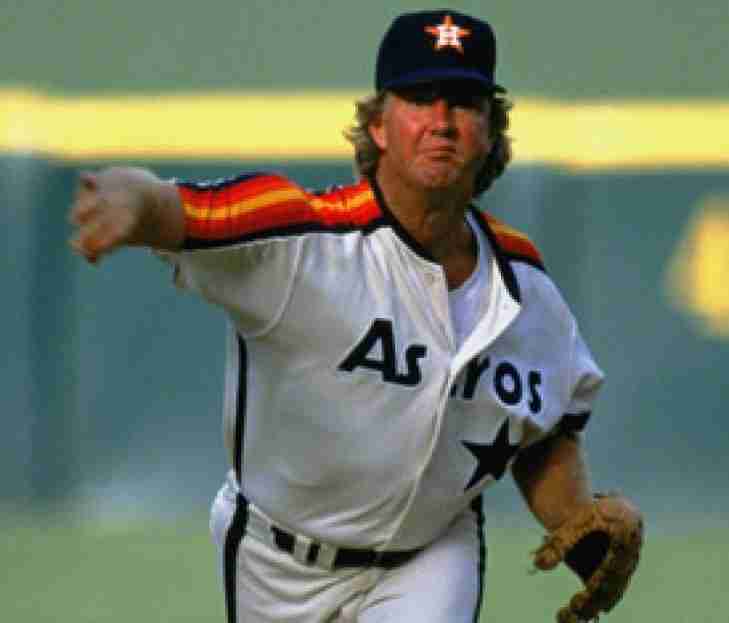
Dave Smith joined the Houston organization as an eighth-round selection in the 1976 draft out of San Diego State, a right-handed reliever who would eventually become the definitive bridge between the "Orange Force" era and the "Killer B’s.”
Debuting in 1980, he became the primary setup man during the 1980 division-title run, and he evolved into the team's full-time closer by 1985. He demonstrated a focused intensity that saw him record six consecutive seasons with at least 20 saves, a franchise record for consistency at the time. This period of rapid growth served as the essential lead-in to his status as a perennial All-Star, showing the organization that his sinker-slider repertoire was the perfect weapon to navigate the high-leverage pressures of the Astrodome.
In 1986, he evolved into one of the premier relievers in the sport, recording 33 saves and a microscopic 2.73 ERA to help lead the Astros to the NLCS. He showed the organization that he was a foundational winner by earning his first All-Star selection that summer, finishing the year as one of the league's most difficult pitchers to reach base against. He possessed a rare, durable quality that saw him record six seasons with a WHIP under 1.100, providing the steady-state production required to stabilize the back end of the Houston rotation for over a decade. He followed this with a second All-Star nod in 1990, when he saved 23 games with a career-best 1.89 ERA, proving his skill was as sharp at the end of his tenure as at the beginning.
Smith departed for the Chicago Cubs in 1991 as a free agent. With the Astros (1980–1990), Smith compiled a 53-47 record, 199 saves, and a 2.53 ERA.
47. Steve Finley
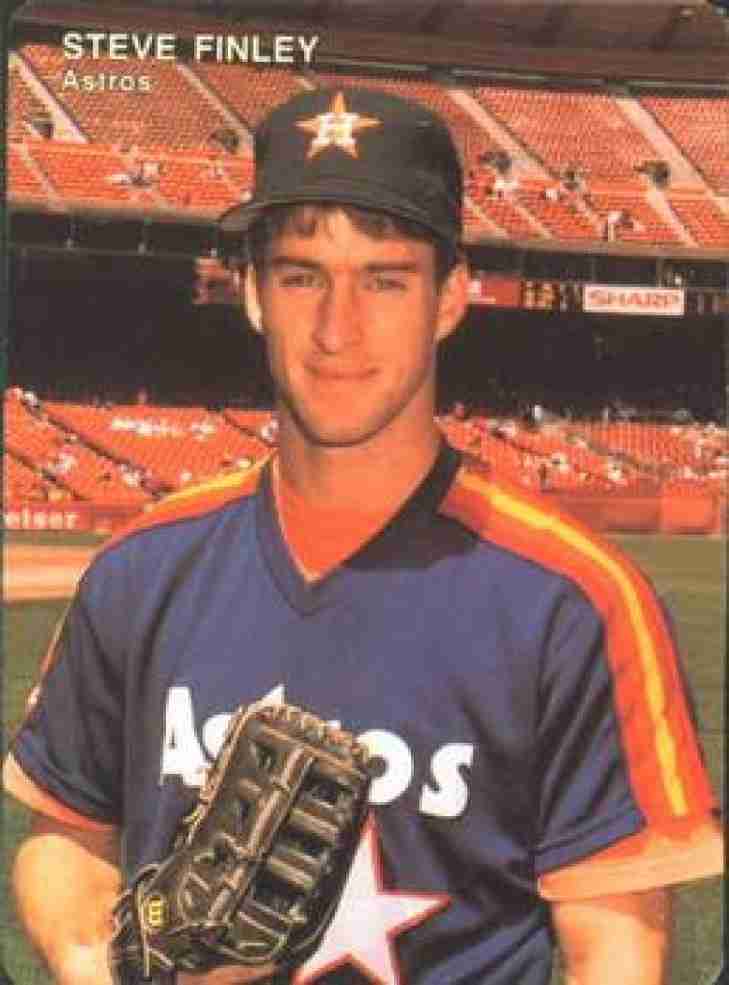
Steve Finley arrived in the Houston organization via a January 1991 blockbuster trade with the Baltimore Orioles, a deal that famously sent slugger Glenn Davis to the AL in exchange for Finley, Pete Harnisch, and a young Curt Schilling. While he had been a promising speedster in Baltimore, Finley evolved into a premier all-around threat in the National League.
Finley took over as the starting centerfielder in 1991 Spring Training, and in his second season with the Astros, Fonley used the vast dimensions of the Astrodome to his advantage, recording 13 triples and a career-high 44 stolen bases by appearing in all 162 games and recording 177 hits, finishing the year with a career-high 5.7 bWAR.
His tenure in Houston was equally defined by his specialized defensive quality in center field. While he would later gain national recognition for winning five Gold Gloves with other clubs, he actually recorded his highest career defensive efficiency in Houston, tallying a 5.0 dWAR over his four seasons with the club. Even as his power numbers remained modest compared to his later "30-homer" seasons, he remained a high-frequency contributor, leading the league in triples again in 1993 with 13.
Houston was, however, in the process of rebuilding. Finley was part of a massive 12-player trade to the San Diego Padres in December 1994, the same transaction that sent Ken Caminiti west. Finley compiled 595 hits, 110 stolen bases, and a 5.0 dWAR as an Astro.
27. Dallas Keuchel
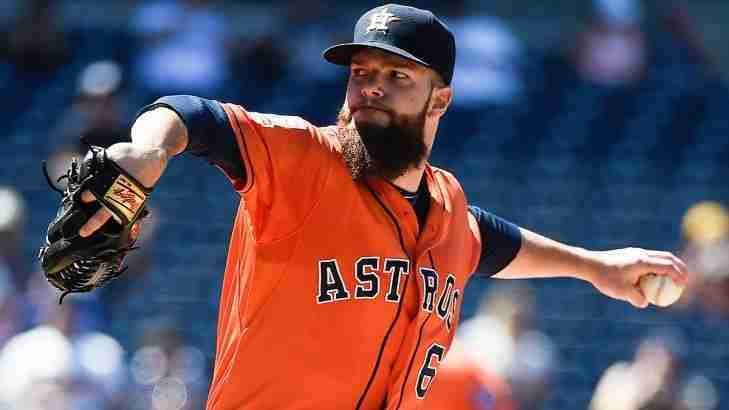
Dallas Keuchel joined the Houston organization as a seventh-round selection in the 2009 draft out of the University of Arkansas, a left-hander whose path to the big leagues was defined by a rapid three-year climb through the minors alongside fellow prospects Jose Altuve and J.D. Martinez. After debuting in 2012, he transitioned from a struggling young starter into the definitive ground-ball specialist of the American League, providing a specialized sinking fastball that few hitters could elevate.
The climb toward Keuchel’s historic 2015 peak was a study in high-frequency improvement and tactical refinement. After enduring a difficult introduction to the majors, he evolved into a frontline starter by 2014, earning his first of five career Gold Glove Awards for his elite defensive reliability. This period of rapid growth served as the essential lead-in to his most dominant run, showing that when a pitcher pairs a pinpoint changeup with focused intensity at the bottom of the strike zone, he can become a perennial award contender. By 2015, he had officially seized the role of the league’s premier southpaw, becoming a primary catalyst for the Astros' first postseason appearance in a decade.
That summer, he demonstrated a specialized ability to dismantle opposing lineups, recording a 20-8 record and a 2.48 ERA while leading the American League in wins and innings pitched. He showed the organization that he was a foundational winner, winning the Cy Young Award and finishing fifth in the MVP voting, a testament to his status as a certified ace. He possessed a rare, durable quality that allowed him to toss three complete games and two shutouts, providing the steady-state production required to turn Houston into a powerhouse. While he battled through injuries in the following years, he returned to All-Star form in 2017, posting a 14-5 record and a 2.90 ERA to help secure the franchise’s first-ever World Series title.
After amassing a 76-63 record and 945 strikeouts while wearing the Houston colors, Keuchel rejected a qualifying offer from the club, leading to a long wait on the open market due to draft-pick compensation rules. He eventually signed a one-year deal with the Atlanta Braves in June 2019.
24. Bob Watson
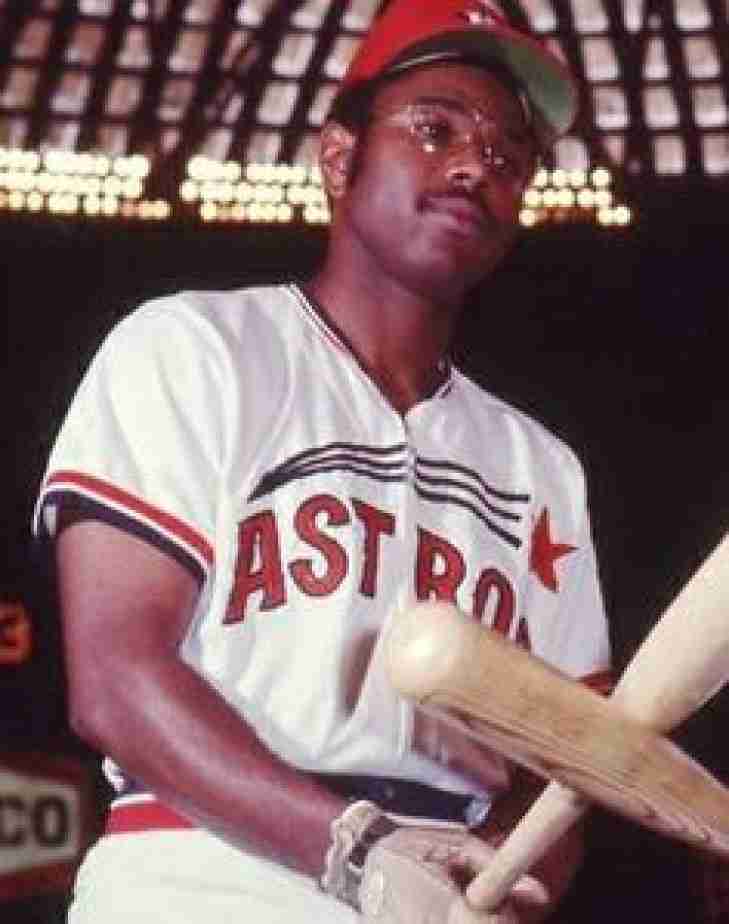
Bob Watson joined the Houston Astros in early 1965 as an amateur free agent out of Los Angeles Harbor College, a signing that eventually provided the expansion franchise with its most consistent offensive force of the 1970s. After navigating a difficult minor league path marked by the challenges of the segregated South, he debuted in 1966 and gradually transitioned from a part-time catcher and outfielder into the definitive anchor of the lineup.
Watson’s journey in an Astros jersey reached a historic peak of efficiency during the mid-1970s. He demonstrated a focused intensity on the craft of hitting that saw him become a perennial fixture among the National League’s batting leaders, recording a career-high .324 average in 1975. That same season, he secured a unique place in baseball lore by scoring the one-millionth run in Major League history, famously sprinting from second base on a Milt May home run to beat out a rival runner in another city by mere seconds. He showed the organization that he was a foundational star, earning All-Star selections in 1973 and 1975.
Between 1971 and 1977, Watson was a statistical standout, exceeding 150 hits in six consecutive campaigns and driving in over 100 runs in back-to-back years. He possessed a specialized ability to drive the ball into the gaps, recording 241 doubles as an Astro. Despite defensive limitations that saw him move from the outfield to first base to preserve his offensive output, he remained a model of durability, eventually amassing 1,448 hits, batting .297, and 139 home runs while wearing the Houston colors.
Watson was traded to the Boston Red Sox in 1979, and he achieved greater success as an executive in New York. He left the organization with a legacy that was formally immortalized with his induction into the Astros Hall of Fame in 2020.
39. Dickie Thon
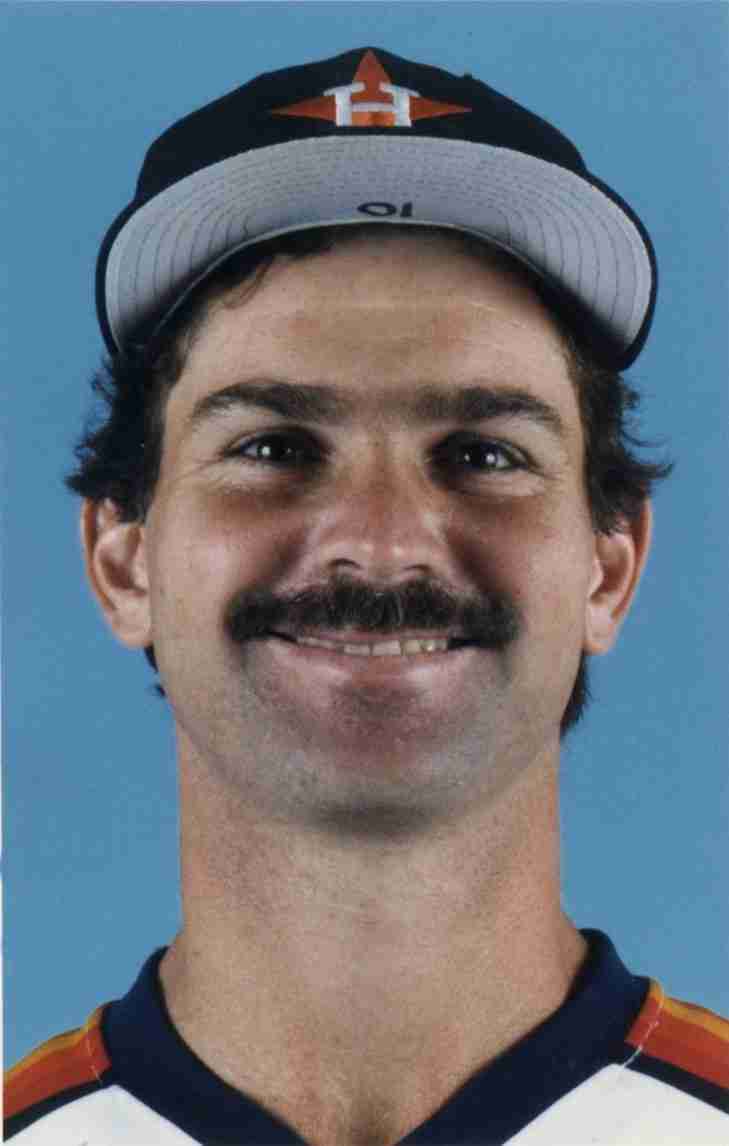
Dickie Thon joined the Houston organization in late 1980 via a trade with the California Angels, a move that brought the young, high-ceiling infielder to South Texas in exchange for pitcher Ken Forsch. After a transitional year in 1981, he seized the starting shortstop job and quickly evolved into one of the most dynamic all-around players in the National League.
The climb toward Thon’s peak in 1983 was a study in rapid, high-frequency impact. That summer, he demonstrated a specialized ability to dominate both sides of the ball, emerging as the premier shortstop in the senior circuit. He surged to a career-high .286 batting average with 20 home runs and 79 RBIs, power numbers that were virtually unheard of for his position in the early eighties. He led the National League in bWAR for position players (7.4) and secured both an All-Star selection and a Silver Slugger Award. This period of explosive growth served as the essential lead-in to a seventh-place finish in the NL MVP voting. It looked like this was the rocket to dominance in Space City, but that was not meant to be.
During the first week of the 1984 campaign. In an early-season game against the Mets, he was struck in the face by a Mike Torrez fastball, an injury that resulted in a fractured orbital bone and permanent damage to his peripheral vision. He demonstrated a focused intensity by attempting several comebacks, showing the organization a legendary level of grit as he fought to regain his timing at the plate. However, he possessed a rare, vulnerable quality following the incident; despite a courageous return, the depth perception required to hit elite pitching was never fully restored. He remained a model of defensive efficiency, recording a 6.7 defensive bWAR during his Houston tenure, but his offensive ceiling had been cruelly lowered.
Between 1985 and 1987, Thon was a statistical standout for his glove work, providing the steady-state veteran-like poise needed to stabilize the infield during the 1986 division-title run, but in 1988, he was traded to San Diego. As an Astro, Thon compiled 492 hits, a .270 batting average.
44. Hunter Pence
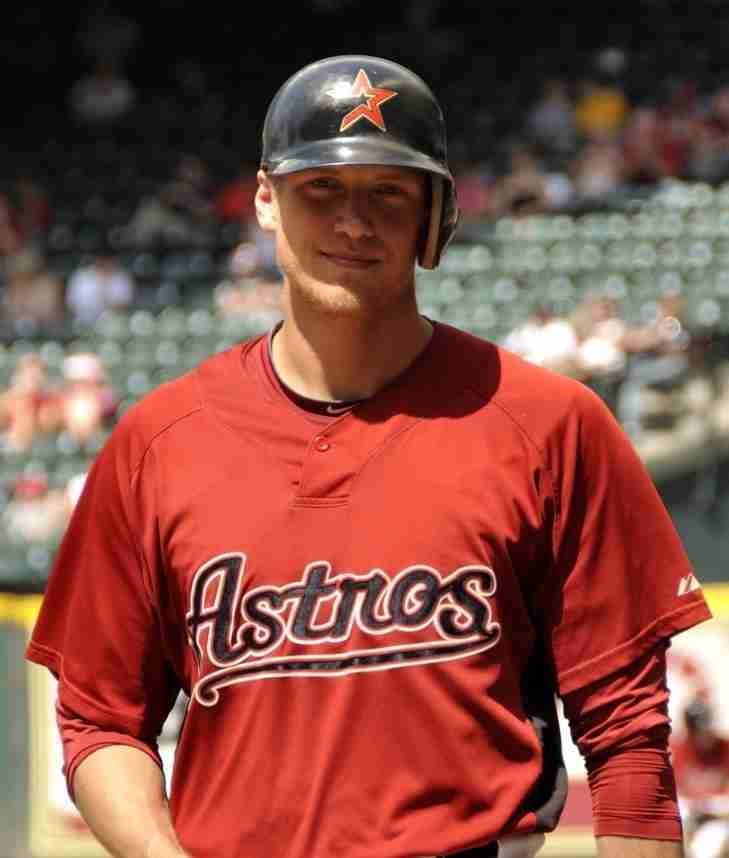
Hunter Pence arrived in the Houston organization as a second-round pick in 2004 out of the University of Texas at Arlington, a player whose unorthodox, high-energy style of play immediately stood out. He debuted in 2007 and wasted no time making an impact, finishing third in the National League Rookie of the Year voting despite playing only 108 games.
Between 2008 and 2010, he reached a level of consistency that few in the league could match, recording three consecutive seasons with at least 25 home runs and 160 hits. He showed the organization he was a foundational superstar by earning his first All-Star selection in 2009, a year in which he hit .282 and drove in 92 runs. His value was enhanced by his durability, as he played in at least 156 games in each of his three full seasons as the starting right fielder.
The 2011 campaign represented the peak of Pence’s efficiency and individual recognition in Houston. Before the trade deadline, he was batting a career-high .308 and had already earned his second All-Star nod, but he was traded in July that year to the Philadelphia Phillies for four players.
Pence compiled 777 hits, 103 home runs, and two All-Star selections.
40. Richard Hidalgo
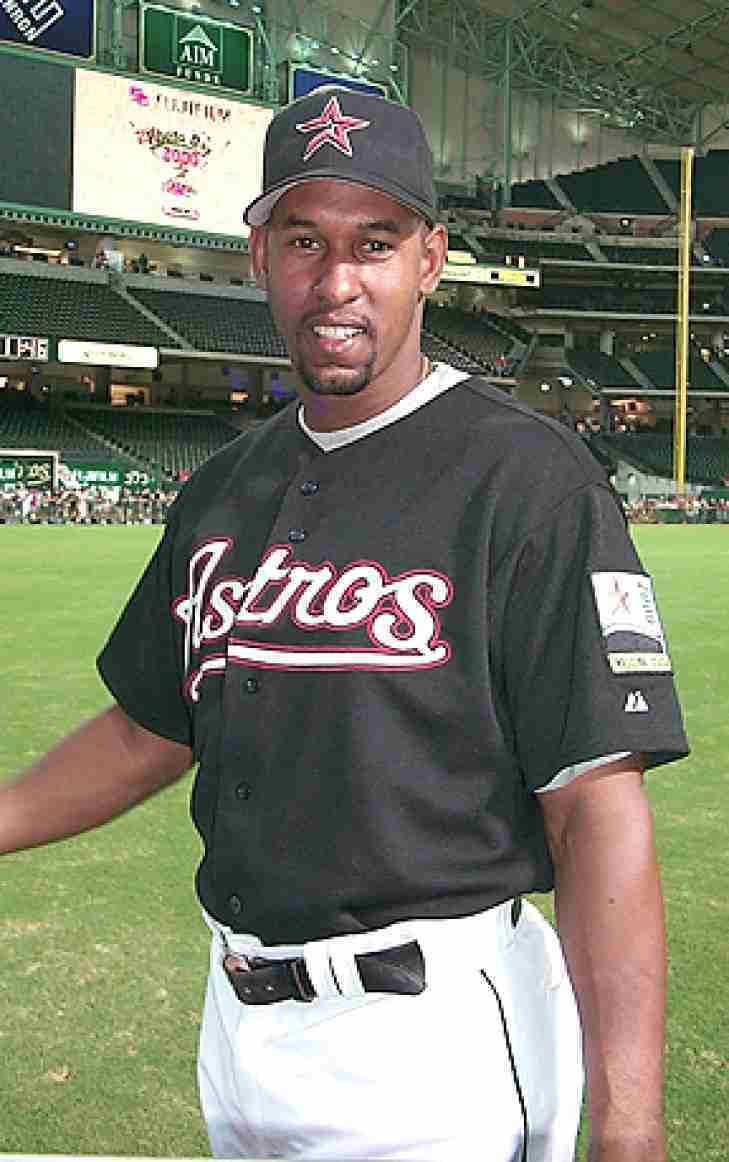
Richard Hidalgo arrived in the Houston organization as an amateur free agent in 1991, a highly touted prospect with a physical profile that promised both power and a cannon for an arm. He debuted in 1997 and had his breakout in 2000. That year, he belted 46 home runs and recorded 122 RBIs while maintaining a .314 batting average. He showed the organization he was a foundational superstar by posting a massive 1.028 OPS, a performance that earned him a top-20 finish in the MVP voting and solidified his place alongside the "Killer B’s" in the Houston lineup.
The subsequent years of his Astros run were defined by a struggle to replicate that season as a series of knee injuries began to sap his lower-half explosiveness. Despite the physical setbacks, he remained a high-frequency contributor, recording 28 home runs and 80 RBIs in 2003. He showed the organization he was a foundational professional by pairing his offensive flashes with a specialized defensive reputation, particularly an elite throwing arm from right field that forced baserunners across the league to hold their positions.
The run in Houston ended in a June 2004 trade to the New York Mets, as the Astros sought to shake up their roster during a sluggish start to the season. He left behind frustrated potential but still had 134 home runs and a .287 batting average while wearing the star.
35. Doug Rader
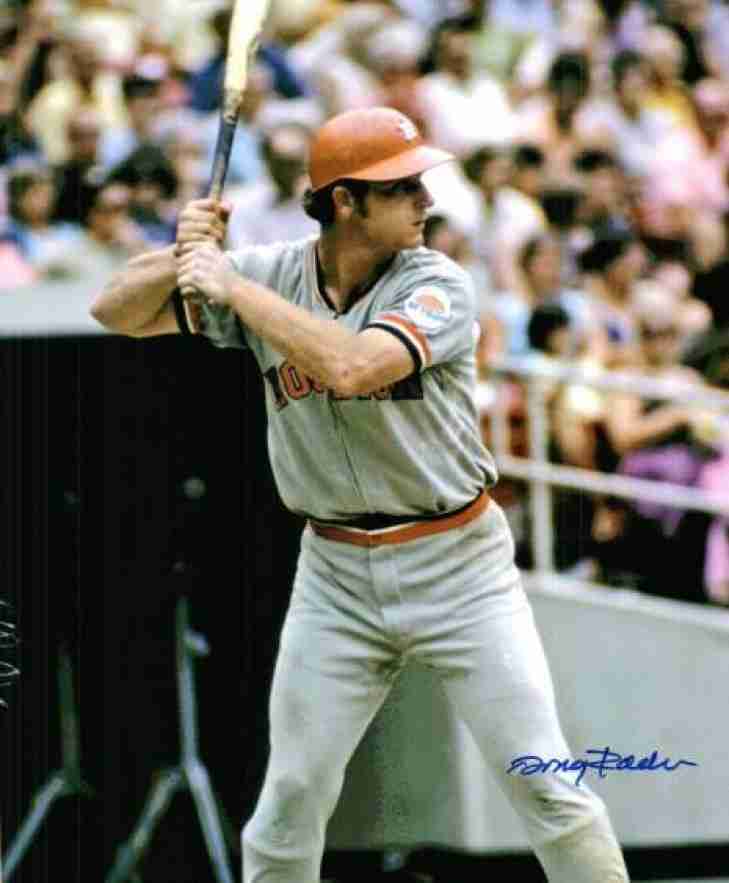
Doug Rader joined the Houston organization in 1965 as an amateur free agent out of Illinois Wesleyan, a fiery, red-headed infielder who would quickly become one of the most colorful characters in franchise history. He debuted in the summer of 1967 and spent the next year establishing himself as the definitive solution at third base.
After taking over the starting role in 1968, he evolved into the premier defensive third baseman in the National League. He demonstrated a focused intensity that saw him secure five consecutive Gold Glove Awards between 1970 and 1974, effectively turning the left side of the infield into a "no-fly zone" for opposing hitters. During the 1970 and 1972 campaigns. In 1970, he enjoyed a breakout summer with the bat, recording a career-high 25 home runs and driving in 87 runs to complement his first Gold Glove. He showed the organization that he was a foundational winner by following that up in 1972 with a 22-homer season and a career-best 90 RBIs, which ranked seventh in the National League. He possessed a rare, durable quality that enabled him to play at least 150 games over four different seasons.
Rader was traded to San Diego after the 1975 season, and as an Astro, he compiled a .250 batting average, 128 home runs, and five consecutive Gold Glove Awards.
