


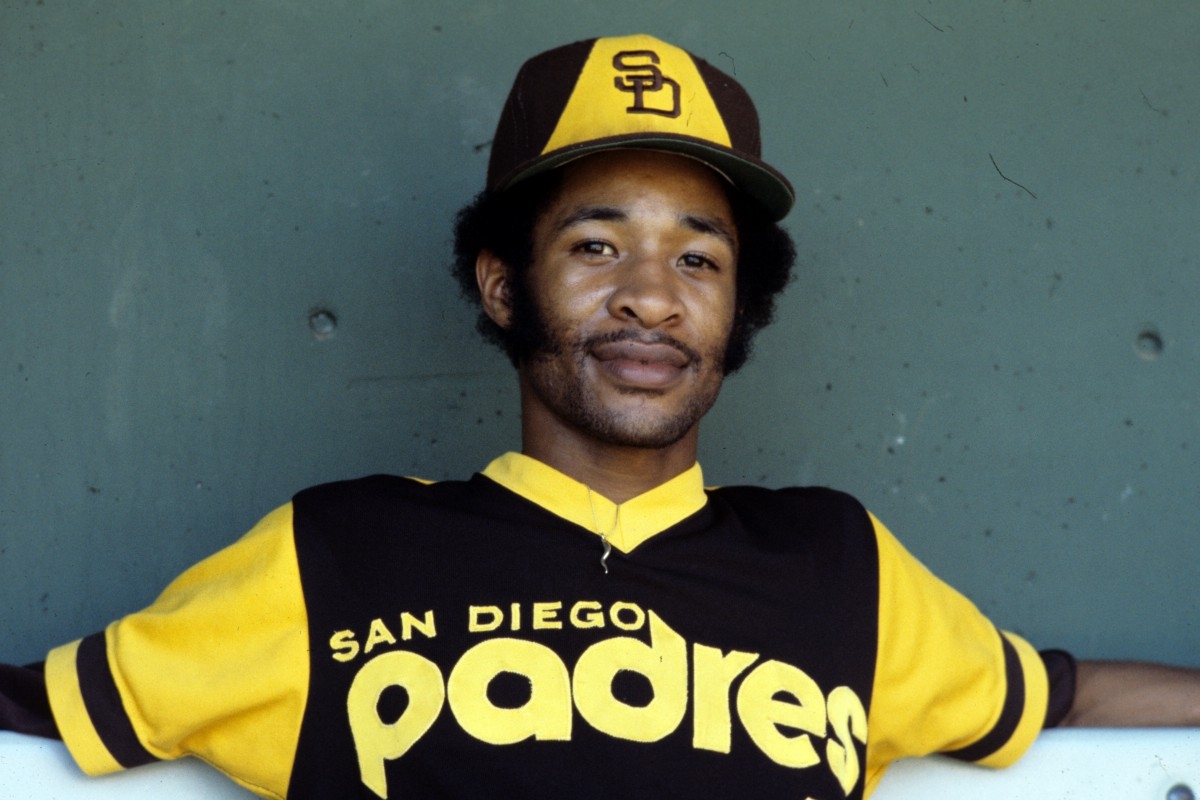


When we look at baseball history over the long haul, it’s easy to fall into the trap of hindsight bias, viewing a legend's career only through the lens of their ultimate success. Many fans forget that Osborne Earl Smith originally flourished on the lush fields of Southern California. Drafted by the San Diego Padres in 1977, this exceptionally agile shortstop didn’t need years in the minors; he jumped straight onto the major league stage, showcasing a uniquely daring and acrobatic style of infield defense. However, reflecting on his career honestly means acknowledging both sides—during his impactful but brief four-year stint in San Diego, he was a figure of both admiration and debate. While his incredible display of athleticism delighted local fans, his inconsistent and low-efficiency batting caused significant concern within the front office, ultimately leading to a historic trade that the organization would regret for many years.
His impressive debut in 1978 truly stands out as a remarkable highlight in his local history. Smith transformed aggressive contact and base running into powerful tools, hitting an admirable .258, stealing 40 bases, and even executing his signature pre-game backflip to finish as the near runner-up for the National League Rookie of the Year award. He consistently dominated opposing running attempts, leading all National League shortstops with a record-breaking 621 assists in 1980, and earning back-to-back Gold Glove Awards in 1980 and 1981. Modern analytics strongly support his outstanding defensive skills during this peak period; he led the entire league with a fantastic 3.8 defensive bWAR in 1980, proving he was an elite defender even before turning twenty-six.
To be fair, when considering his place on the franchise leaderboard, we need to acknowledge the significant offensive leaks that greatly impact his local ranking. After his rookie season, his hitting performance sharply declined, becoming a real challenge. Smith's batting average fell to a disappointing .211 in 1979—famously beginning the summer with an tough 0-for-32 streak—before posting fairly unimpressive numbers of .230 in 1980 and .222 in 1981. Over his 583 games for San Diego, he maintained a challenging .231 batting average, along with a low on-base percentage (.295) and a relatively insignificant .278 slugging percentage.
Management was deeply concerned about the idea that the light-hitting shortstop might never be able to handle the rigors of major-league pitching over time. This worry grew more intense, leading to a sense of desperation for a better player. Things reached a boiling point during a very heated and public contract dispute after the 1981 season. During this tense period, his agent famously placed a newspaper ad, seeking other opportunities for his client. With their relationship completely broken, the team decided to part ways in December 1981. They made a bold move by trading the young shortstop to the St. Louis Cardinals in exchange for Garry Templeton, marking a significant change for both teams.
The Padres thought they were selling high on a one-dimensional hitter; however, Cardinals manager Whitey Herzog unlocked Smith's offensive potential, helping him adjust his swing. Smith amassed over 2,400 career hits, becoming a top leadoff hitter and winning a 1982 world title. He left the Padres with 516 hits, 64 doubles, and 147 stolen bases, primarily known for his early defensive prowess.
While his eventual walk toward the Cooperstown rafters in 2002 features a St. Louis cap on his plaque, the foundational brilliance of "The Wizard" was undeniably forged right on the San Diego infield.

Comments powered by CComment