


Committee Chairman
49. Pete Reiser
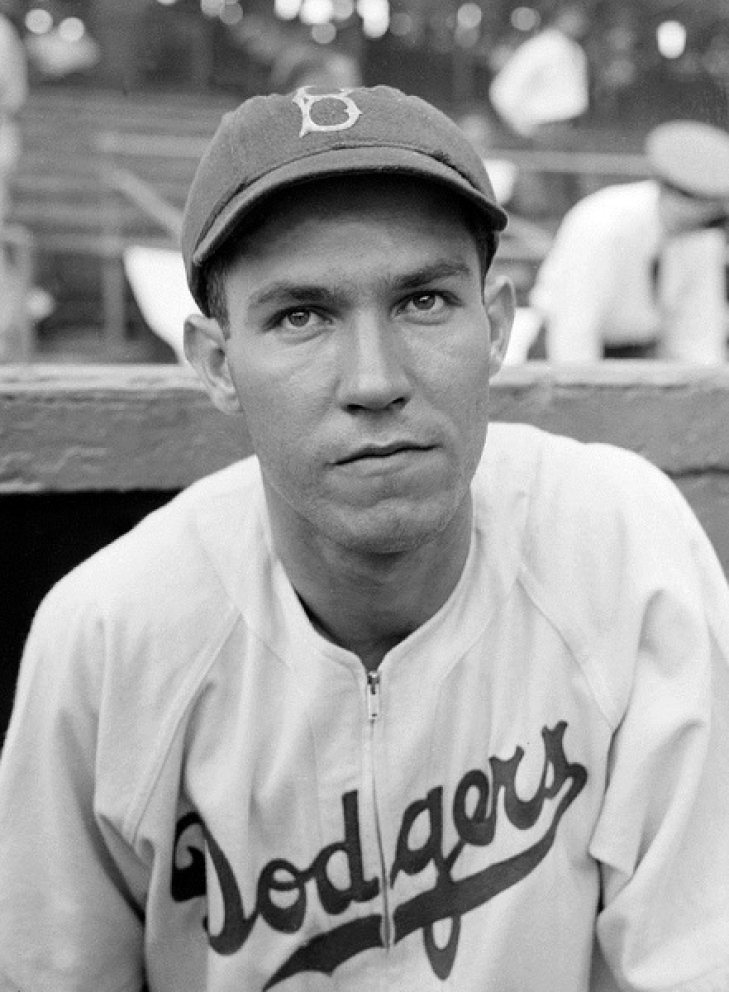
In the late 1930s, Branch Rickey (then with the Cardinals) had built an intricate, sprawling farm system. To circumvent rules limiting how many players a team could control, Rickey "hid" prospects by moving them between various minor league clubs he secretly owned or controlled. Landis, who despised the farm system and saw it as a form of "chain-gang" baseball that suppressed player wages and mobility, launched a massive investigation.
MLB Commissioner Kennesaw Mountain Landis ruled that the Cardinals were illegally controlling dozens of players. He issued a "blanket emancipation," declaring 74 Cardinals prospects, including a young Pete Reiser, to be free agents. Despite being declared a free agent, Reiser was still a Rickey favorite. Rickey didn't want to lose him, so he allegedly struck a "gentleman’s agreement" with Larry MacPhail, the GM of the Dodgers. MacPhail would sign Reiser for $100, "stash" him in the Dodgers' system for a year, and then trade him back to the Cardinals once the heat from Landis died down.
However, Reiser spent a year in the minors for Brooklyn, his talent became undeniable. During Spring Training in 1940, Reiser was so explosive that the Dodgers' veteran players and manager Leo Durocher reportedly refused to let MacPhail trade him away, though Rickey himself would take over the administrative reins of the Dodgers in 1943.
Reiser spent a year in the minors for Brooklyn, and his talent became undeniable. During Spring Training in 1940, Reiser was so explosive that the Dodgers' veteran players and manager Leo Durocher reportedly refused to let MacPhail trade him away.
In 1941, at merely 22 years of age, Reiser attained an exceptional peak of achievement by authoring a remarkable season, during which he led the National League in batting average (.343), runs (117), doubles (39), triples (17), and slugging percentage (.558). He demonstrated comprehensive mastery of the game, finishing second in the Most Valuable Player (MVP) voting to his teammate, Dolph Camilli, an outcome that many baseball historians considered a significant oversight, considering Reiser’s league-leading 8.0 Wins Above Replacement (bWAR). During that summer, he reached a distinguished plateau of stardom, guiding the Dodgers to the Fall Classic and cementing his reputation as the premier player in the senior circuit.
The season after, Reiser was on track for another batting title, but disaster struck in the form of crashing face-first into the outfield wall at Sportsman’s Park. The concussion marked a turning point; he returned days later, but his ability to track the ball was compromised. Although he still made the All-Star team, he never regained his 1941 peak. His "fighting spirit" was both his greatest asset and his undoing.
Like many ballplayers, Reiser served his country in World War II, but he returned to Ebbets Field significantly changed. Although he continued to show great effort, often crashing into walls and sustaining multiple fractures, he took a pivotal step in his career when traded to the Boston Braves. He left Brooklyn with 666 hits and a .306 batting average.
46. Mike Griffin
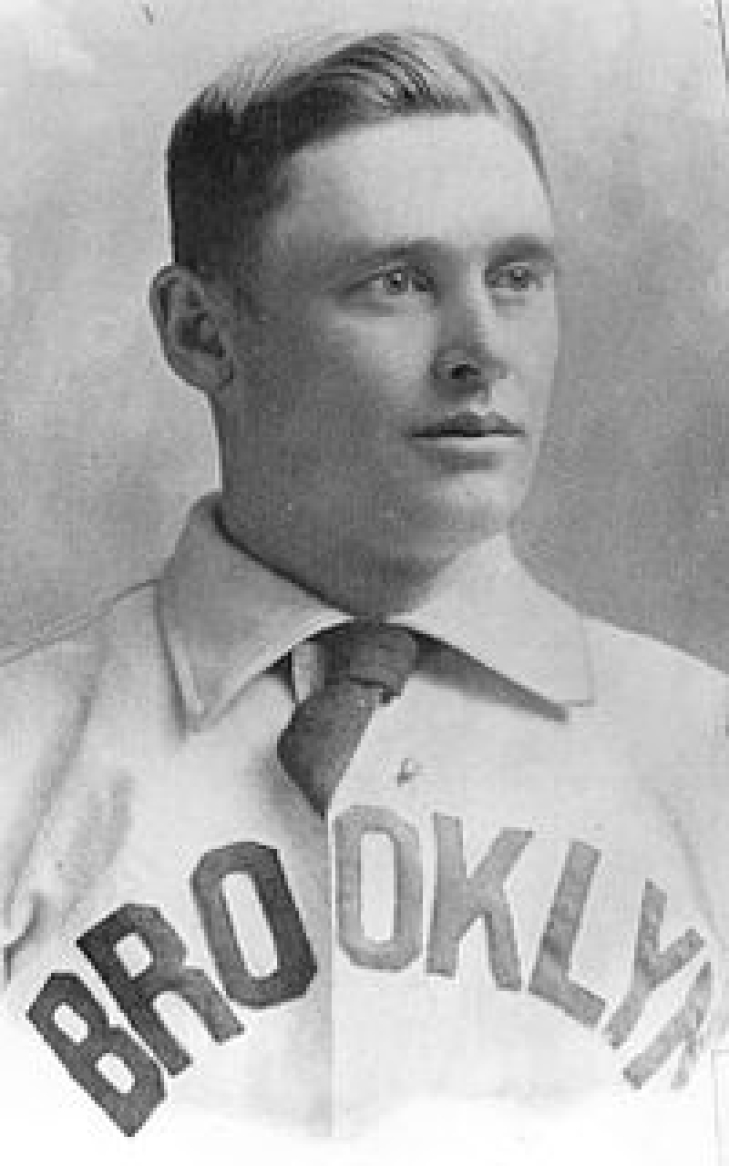
Mike Griffin arrived in Brooklyn in 1891, a seasoned 26-year-old outfielder who had already established himself as a premier run-scorer and a defensive vacuum in center field. While his journey in the borough began after a stint in the short-lived Players' League
In his inaugural season in Brooklyn, Griffin attained a remarkable level of situational hitting, leading the National League with 36 doubles and recording a career-high 65 stolen bases. He demonstrated comprehensive mastery of the outfield, earning recognition as one of the finest defensive center fielders of his era, while establishing a statistically significant pattern of consistent high-volume performance. He reached a level of durability that enabled him to score over 100 runs in nearly every full season he played in Brooklyn, proving to be the primary catalyst for a team that depended on his ability to generate runs from the top of the batting order.
Griffin's impressive 1894-1898 run saw him batting at least .300 for five seasons, peaking at .358 in 1894. He became a key player, team captain, and briefly interim manager in 1898. As good as he was, Griffin would have one of the most acrimonious exits in baseball history.
After the 1898 season, Griffin was surprised when the organization finalized a "syndicate" merger with the Baltimore Orioles, ending his playing days. He refused to sign a contract with new manager Ned Hanlon for less than his previous $3,500. His contract was sold to Cleveland and St. Louis, but Griffin decided his career was over. He ended his career by winning a $2,300 lawsuit against Brooklyn for breach of contract, a symbolic victory at age 33.
His end with Brooklyn was not pretty, but his play was solid, with a .305 Batting Average, 1,168 Hits, and 264 Stolen Bases.
42. Burt Hooton
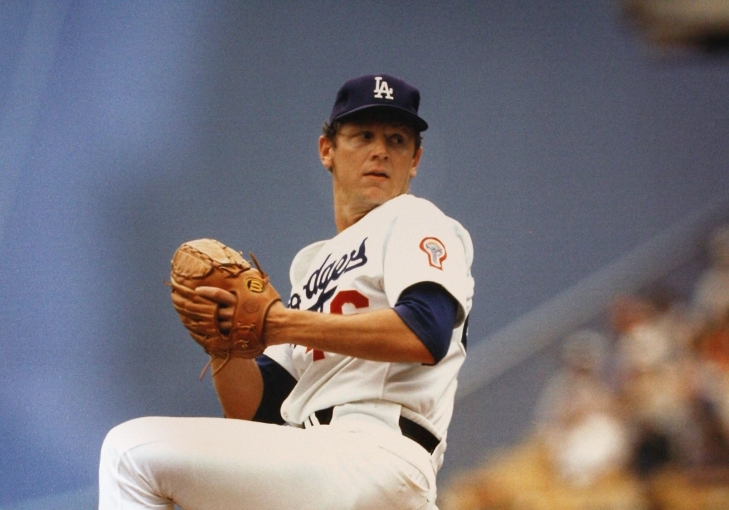
Burt Hooton cut his teeth with the Chicago Cubs, making their parent club in 1971, but struggles at Wrigley led to the hurler being traded to L.A. early in the 1975 Season. If you are to go by traditional statistics, this was the most fantastic year of Hooton's career, as he went 18 and 9, the best Winning Percentage in the National League.
After a winless start in Chicago in 1975, Hooton reached new heights after being traded to the Dodgers. He posted an 18-7 record with a 2.82 ERA, winning his last 12 decisions to break a franchise record held by Sandy Koufax. He demonstrated total command of the National League that summer, showing his breaking ball was key for a contending staff. By 1978, he was Cy Young runner-up with a career-high 19 wins and a 2.71 ERA.
Hooton reached a historic postseason high during the 1981 championship run. While he peaked in individual production in 1978, his 1981 tenure was marked by a ‘clutch' gene. He led one of the most dominant post-seasons, earning his only All-Star and reaching a peak in October. He was named NLCS MVP after pitching 14.2 scoreless innings against Montreal and sealed his success with a win in the World Series against the Yankees. Hooton was a steady rotation mainstay, with a calm, 'Happy' demeanor that helped him thrive in October.
As his high-velocity years began to transition into a specialized relief role, he reached a high-leverage crossroads and departed for the Texas Rangers as a free agent. With Los Angeles, Hooton had a 3.14 ERA with 112 Wins against 84 Losses.
44. Preacher Roe
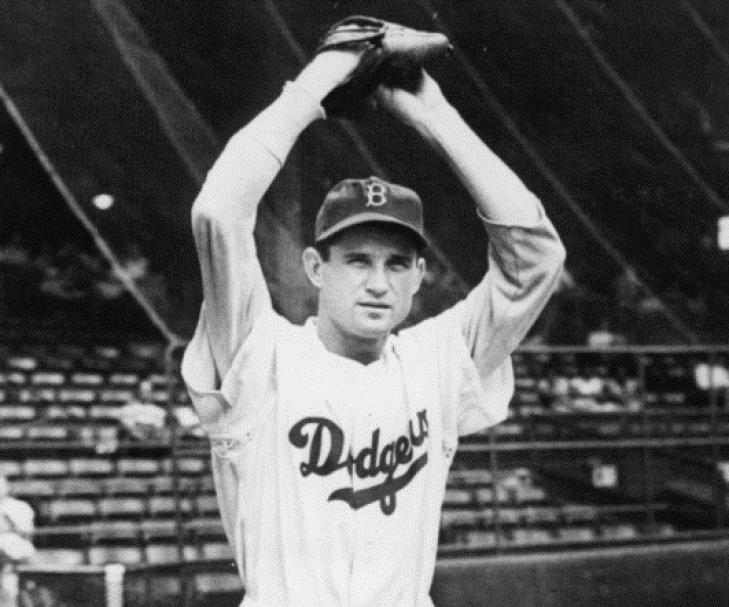
An All-Star with the Pirates in 1945, Elwin “Preacher” Roe made the most of his belated opportunity with the depleted World War II roster, but when the Majors were replenished, the next two years saw his ERA balloon over five, though likely this was the result of the after-effects of a fractured skull he suffered from a fight while refereeing a high school basketball game. Now over 30, it appeared that Roe’s run in the Majors would end shortly, but Dodgers GM, Branch Rickey, had other ideas.
Roe achieved incredible success in Brooklyn, being selected as an All-Star four years in a row from 1949 to 1952. During this time, he truly dominated the senior circuit, especially in 1951 when he had an outstanding season, going 22-3. His remarkable .880 winning percentage that summer is still one of the highest ever for a 20-game winner in modern history, earning him a well-deserved fifth place in the NL MVP voting.
Roe truly shined during some of the most exciting moments in the postseason, reaching new heights of confidence and skill. He was a dependable part of the World Series rotation, especially remembered for his outstanding performance in Game 2 of the 1949 World Series where he pitched a six-hit shutout against the Yankees. Although the Dodgers didn’t win the championship during his time, Roe finished with a commendable 2-1 postseason record and a strong 2.54 ERA, showing he was a clutch performer when it mattered most. His special "money pitch" and veteran experience made him a great partner to the fast-throwing Don Newcombe and Carl Erskine, helping to keep the Dodgers a formidable team in October.
Age and fatigue began to catch up to the 39-year-old left-hander, and the organization finalized a trade that sent him to the Baltimore Orioles, though he never did play for the club. As a Dodger, Roe owned a scintillating 93-37 record, a winning percentage (.715), a 3.12 ERA, and 610 strikeouts.
