


Committee Chairman
48. Kevin Brown

Kevin Brown's arrival in Los Angeles in 1999 marked a historic milestone as the first player in Major League Baseball to be awarded a contract exceeding $100 million. This extensive seven-year agreement, which transitioned him from San Diego to Chavez Ravine, was predicated on the expectation that he would be the pivotal element in securing a championship. Although the period known as the "Kevin Brown Era" is often viewed through the prism of the substantial financial investment and a series of injuries, the right-hander demonstrated a high level of efficiency that, when he was healthy, rendered him one of the most formidable sinkerball pitchers in franchise history.
Back in 1999, Brown hit a peak in his workload, pitching a season with 18 wins and over 250 innings, a true testament of his mastery in the National League. He demonstrated incredible control, striking out 221 batters and finishing sixth in the Cy Young voting. The following year, in 2000, he reached new heights of efficiency, capturing the ERA Title with an impressive 2.58 and leading the league in WHIP at 0.99. Throughout this exciting period, he was a key player, surpassing the 200-strikeout mark in consecutive years and proving once again that he was a formidable force in the game.
Brown faced a tough crossroads mid-contract. Between 2001-2002, injuries like chronic back, elbow, and shoulder problems led to a decline in durability. Once a key player, he only won 10 games in 2001 and just 3 in 2002, with a 4.81 ERA. During this period, focus shifted from his sinker to his salary, and fan expectations grew frustrated as the team missed the postseason.
In 2003, Brown had his final full season with the Blue, posting a 14-9 record with a 2.39 ERA. He was a key part of the rotation, earning his second All-Star selection and finishing in the top ten in ERA. However, that winter, the organization changed direction, and Brown was traded to the Yankees for Jeff Weaver and prospects.
Brown compiled a 58-32 record, a 2.83 ERA, and 784 strikeouts as a Dodger, which, while decent, earns him a spot here, will always be associated with a contract that his body couldn’t live up to.
Notinhalloffame NHL Cup Standings Update (90)
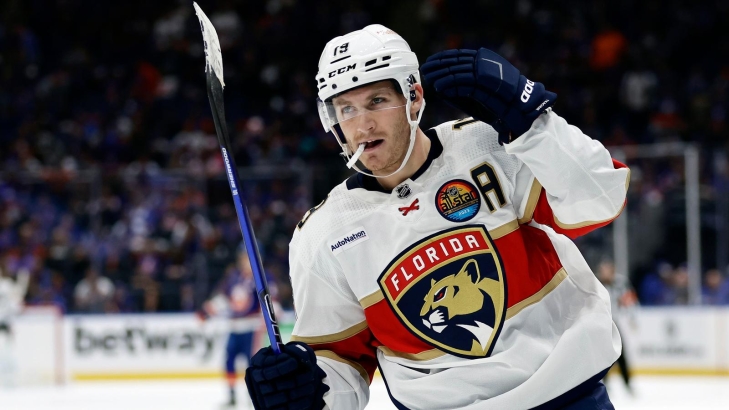
If you are a regular visitor at Notinhalloffame.com, you know that we created the Notinhalloffame NHL Cup, where in every regular season game, we award points (5-4-3-2-1) to the top five performers. This is the second year that we have done this, and Edmonton’s Connor McDavid won the first one.
To keep everyone regularly in the loop this time, we have decided to give regular updates, starting at when the first player cracked 40 Points, and tell all of you the top ten. We will this going forward with every update as the first player breaches the elevated ten-point threshold afterward.
Here is the current top ten, based on the first player to breach 90 Notinhalloffame Cup Points:
1. Connor McDavid, Edmonton Oilers. 90 Cup Points: 47 Games, 39 G, 47 A, 86 P, +2, 9.9 PS. (#1 on last update)
There are a lot of stories at the near-halfway mark of the 2022/23 NHL Season, with one of the top ones being Connor McDavid running away with every major statistical category. Last year’s Notinhalloffame NHL Cup winner is extending his lead and he is currently the league-leader in Goals (39), Assists (47), Points (86) and Point Shares (9.9).
2. David Pastrnak, Boston Bruins. 79 Cup Points: 45 Games, 35 G, 28 A, 63 P, +25, 8.7 PS. (#2 on last update)
The Bruins are one of the NHL’s top teams and Pastrnak is their top scorer. The Bruins star is averaging 1.40 Points per Game, slightly more than his First Team All-Star campaign in 2019-20. He currently is leading the NHL in Shots (217).
3 (Tie). Mikko Rantanen, Colorado Avalanche. 75 Cup Points: 43 Games, 31 G, 25 A, 56 P, +9, 7.0 PS. (#3 on last update)
Rantanen remains at #3, and is also in the top ten in Goals and Points, while leading the NHL in Even Strength Goals (26). The Avs star has 1.28 PPG, the highest of his career.
3 (Tie). Brayden Point, Tampa Bay Lightning. 75 Cup Points: 44 Games, 27 G, 22 A, 49 P, +7, 5.9 PS. (#6 on last update)
Point is having a good year, and is a point-per-game player, there are still quite a few players with higher point tallies than the Tampa Center. Saying that, Point has been the most clutch player for the Lightning, and a reason we love this process!
5. Jason Robertson, Dallas Stars. 71 Cup Points: 47 Games, 31 G, 32 A, 63 P, +29, 8.8 PS. (#4 on last update)
Robertson is on pace to shatter last season’s 41-38-79 output, and the fourth-year player is now the undeniable top dog of the Stars lineup.
6. Jack Hughes, New Jersey Devils. 70 Cup Points, 45 Games, 29 G, 27 A, 56 P, +14, 7.1 PS. (#5 on last update)
Hughes explodes back into the top ten, ranked higher in Cup Point standings than he has ever been. He is already tied with Points total (56) from last season.
7. Auston Matthews, Toronto Maple Leafs. 68 Cup Points: 44 Games, 24 G, 27 A, 51 P, +20, 6.2 PS. (#7 on last update)
Matthews is the defending Hart winner but he is not on the PPG pace he was last year, though when Toronto wins, the odds are that he was the biggest reason why. Is this season a disappointment so far for Matthews?
8. Leon Draisaitl, Edmonton Oilers, 66 Cup Points: 45 Games, 27 G, 45 A, 72 P, +4, 7.7 PS. (Not on last update)
The 2020 Hart Trophy winner returns to the top ten and gives the Oilers two players in the upper-tier.
9. Matthew Tkachuk, Florida Panthers, 63 Cup Points: 44 Games, 24 G, 34 A, 58 P, +9, 6.5 PS. (not on last update)
Matthew’s brother, Brady was once in the top ten, but this his first time here this season.
10 (Tie). Jake Oettinger, Dallas Stars. 62 Cup Points: 34 Games, 20-7-4, 2.26 GAA, .924 Save Percentage, 7.3 PS. (not on last update)
In his third season, Oettinger is playing the best hockey of his life.
10 (Tie). Connor Hellebuyck, Winnipeg Jets. 62 Cup Points: 35 Games, 22-12-1, 2.43 GAA, .923 Save Percentage, 8.1 PS. (not on last update)
A former Vezina winner, Hellebuyck is a contender for that trophy this year.
Minnesota’s Kirill Kaprisov, Boston’s Linus Ullmark, Pittsburgh’s Sdney Crosby and Washington’s Alex Ovechkin fell off the top ten.
Our next update will occur when the first player breaks 100 Cup Points.
RIP: David Crosby
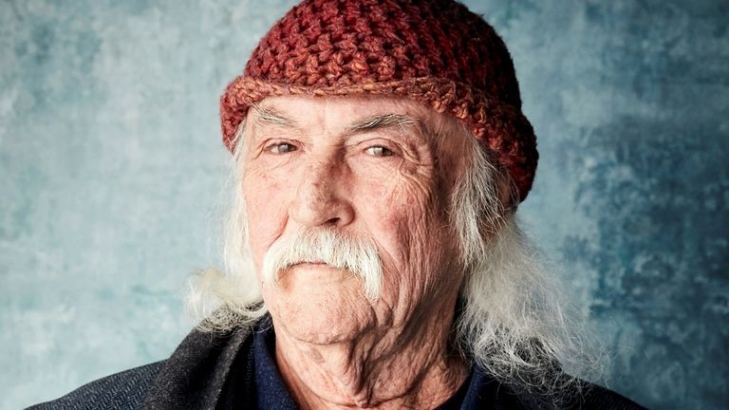
Rock and Roll lost one of the great ones today with the passing of David Crosby. He was 81.
A founding member of the Byrds, Crosby was an integral part of the group, playing guitar, and providing harmonies to the band that gave us hits such as “Turn Turn Turn”, and “Eight Miles High”. Forced out of the group by Roger McGuinn, Crosby formed a supergroup with Steven Stills and Graham Nash; Crosby, Stills and Nash, which was later joined by Neil Young.
The beloved songwriter was known as much for his issues with drugs as he was for his music, but he battled through, and earned two spots in the Rock Hall, one with the Byrds, and one with CSNY.
We here at Notinhalloffame.com would like to extend our condolences to the fans, family and friends of David Crosby.
45. Mike Scioscia
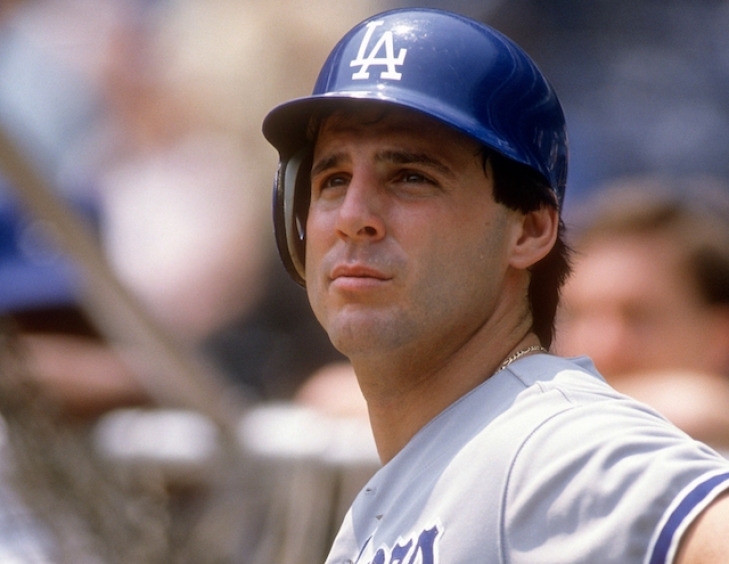
A first-round draft pick in 1976, Mike Scioscia was a catcher who would eventually define the position for an entire generation of Dodgers fans. Known for his legendary toughness and a specialized ability to block the plate, he operated as the undisputed field general for manager Tommy Lasorda. Across 13 seasons in Chavez Ravine, he would wear only one uniform as a player.
Scioscia showed incredible dedication when he learned Spanish to connect better with the young star Fernando Valenzuela. This special bond was a key factor during the exciting "Fernandomania" of 1981, as the rookie catcher helped Valenzuela navigate a remarkable season that earned both the Cy Young Award and Rookie of the Year honors. Scioscia’s deep understanding of the game was evident in his catching career, with 1,395 games, a franchise record that still holds, and his impressive durability and skill in pitch-calling.
Scioscia shined brightly during the 1988 postseason, a memorable highlight in his career. Known more for his reliable contact than power, he created a legendary moment in Game 4 of the NLCS against the New York Mets. When the Dodgers were trailing in the ninth inning against Dwight Gooden, Scioscia hit a special two-run home run that tied the game and set the stage for a thrilling 12-inning victory. This exciting swing sparked the team's path to winning the World Series over the Athletics. During this time, he also gained significant individual recognition with two All-Star selections in 1989 and 1990.
Scioscia retired after the 1993 season with 1,131 hits and 446 RBIs. Following his playing career, he became a successful manager, earning two Manager of the Year Awards and leading the Angels to a World Series victory in 2002.
