


Committee Chairman
From Kick-Off to Full-Time: A Complete Guide to Understanding Live Football Betting

Unlike in the case of pre-match betting, where you have to pick a winner prior to the beginning of the match, live betting enables you to watch what happens in the match and then bet depending on that. This is because there are changing odds, which give you a chance to win the bet. At the same time, you can select different kinds of bets during the 90-minute duration of the match. This is thrilling and profitable for you, but it is risky too. This article will give you all the information regarding live football betting, bet options, and things you should do at different stages of the match. It might be useful for you, especially if you want to use ufabet Access (ทางเข้าufabet).
What Is Live Football Betting?
Live football betting refers to the process of making a bet on a football game that is in progress. As the match continues, the odds will continue to change depending on how the match is going, what remains in terms of time, and how the score looks at that point. Mostly, punters tend to bet on various aspects like the next goal scorer, result of the match, total number of goals, etc.
How Live Football Betting Works
Beyond the screen, data suppliers monitor the events that occur during a game and provide this information to the pricing engines. The pricing engines calculate new probabilities following each major event and then display new odds in a matter of seconds. Markets may go on pause following a goal, penalty, or sending off to allow data verification. It should be kept in mind by punters that the price displayed reflects the current state of affairs at a moment in time and not future developments.
Popular Live Football Markets
|
Market |
What You Predict |
Best For |
|
Match result (1X2) |
Win, draw, or loss from the current score |
Beginners |
|
Next goal |
Which team scores next, or no goal |
Fast-paced decisions |
|
Over/Under goals |
Total goals above or below a line |
Tempo-based reading |
|
Asian handicap |
Result after a goal advantage is applied |
Evenly matched games |
|
Corners and cards |
Event counts within a time window |
Players who follow match flow |
|
Both teams to score |
Whether each side finds the net |
Open, attacking games |
Betting Through the Phases of a Match
Kick-Off to 30 Minutes: Reading the Rhythm
The first section is that of observing. Players position themselves on the pitch. Aggressive tactics emerge. Early predictions could be heavily influenced by only one chance. Many individuals who are experienced gamblers usually choose to just observe during this period. They observe which team has possession of the ball and which is in control of scoring zones.
30 Minutes to Half-Time: Spotting Trends
Tactical tendencies become clearer with time. Do not focus only on the number of shots that will be taken. Also, it is important to consider the quality of each shot made by both teams. Teams may have injured players or players who received yellow cards, so take this into account. During half-time, you have the chance to analyze your choices and avoid rash decisions.
Second Half to 75 Minutes: Substitutions and Momentum
The coaches experiment, add new players, and expect new results. Usually, the bets on next goal and over/under markets become the most volatile during such periods. Tired players and new tactics can increase the chance of having late goals. Nevertheless, this is already reflected in odds.
Final 15 Minutes to Full-Time: High Speed, High Risk
But the odds are not constant during this period. The additional time makes everything unpredictable. It is now when cash out starts to look attractive; however, it comes with a price tag. In such moments, one needs to remain calm and thoughtful.
An Original Insight: The Scoreboard Misleads More Than It Informs
Most people who bet focus on the current score, but the score is just one sign. A team with a 1-0 lead after a lucky bounce could still be under a lot of pressure. A team behind may be making better chances to score. Looking at other clues, like where shots come from, how players are spaced at the back, and who gets swapped out, gives you a better idea of what is really going on. The people running things also see the same numbers. So, the goal is not to beat their thinking but to make calm, smart choices with the facts you have.
|
With live football betting, one is assured that everything will matter, and one will get the latest information and an opportunity to bet through different media. What one needs to do is remain patient and realistic and set some limitations for themselves. One must learn how to understand the odds based on the situation in the game. Consider the game not only by looking at the result but the whole game as well. Take a break when you feel frustrated. One must consider different things while choosing the Football Website (เว็บบอล). |
How Kupu178 Builds Player Trust Through Security Features That Most Platforms Skip
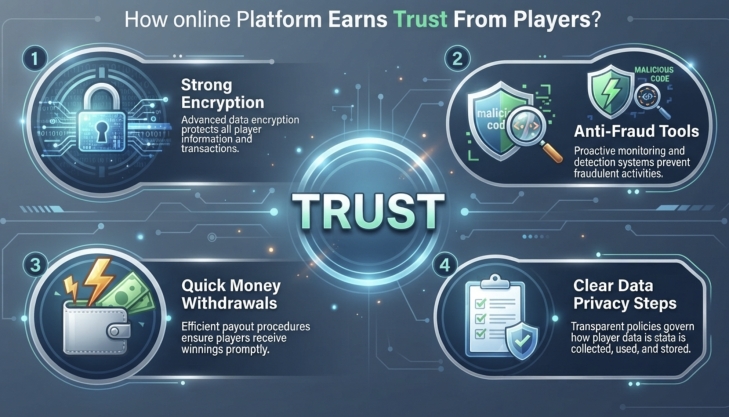
Kupu178 builds trust with people by using top-end end-to-end encryption. It checks for fraud fast and has tight rules to keep your data safe. The platform puts strong security first, before simple offers or deals. This means the site is good for keeping your money and data safe. You can feel sure that your payout will come on time.
The Evolving Landscape of Digital Security in Gaming
In a world where online change is quick, getting trust from users is key for websites. A lot of typical online places care mainly about how the site looks or show many ads to people. But real success comes from having strong main systems. The people who use these sites now understand tech better. They see that looking nice is not much help if the systems are out of date or do not protect them.
When people use a site like kupu178, they want fast answers and to feel safe. Digital game sites deal with lots of small buys, key data, and quick moves every hour. If there is not a strong backup, these sites can let users get hurt by someone taking their login, stealing their info, or causing slow payments because of someone bad. To keep real trust, the sites must do more than simple checks. They need deep layers of safety that work behind the scenes.
1. End-to-End Encryption Protocols That Exceed Industry Standards
Most basic gaming platforms use simple SSL certificates. This shows HTTPS in the browser. But now, there are more cybersecurity threats than before. These setups need Transport Layer Security (TLS 1.3). They also need data encryption that is stored right on the hardware.
Modern Cryptographic Standards
When data travels between a player's device and the server, every group of that data must be fully scrambled with strong cryptography. Now, most systems use AES-256 (Advanced Encryption Standard) to do this. This standard is trusted by many big banks and military groups around the world.
- Zero-Knowledge Architecture: The system uses crypto tools, salt, and hashes to mix up user credentials and identity info. Because of this, even the admins can't read the raw passwords.
- Encrypted Session Tokens: Players get session tokens that are encrypted and only last a short time. These tokens keep attackers from getting into sessions or using tricks like CSRF.
- Secure API Endpoints: All the internal microservices talk with each other only through mTLS channels in both directions. This keeps data from leaking between server clusters.
According to technical research, using zero-trust methods and checking tokens as soon as possible can stop more than 80% of unwanted entries to digital platforms.
2. Advanced Multi-Factor Authentication (MFA) and Biometric Protection
Simple passwords can't keep accounts safe anymore. ATO attacks can happen when hackers use tools to try many stolen passwords. They take passwords from other sites and use them on popular websites to get in.
Smart platforms can help you remove this problem. They use sign-in systems that change and fit what people do. These systems can see what you do in your account and then respond to it.
- Behavioral Analytics Engine: The system watches device fingerprints, where you log in, and IP ranges. If an account logs in from a network that does not look normal, extra steps to prove who you are will start.
- Time-Based One-Time Passwords (TOTP): Working with authenticator apps helps stop people from using SMS codes. This is because SMS codes can still be hit by SIM-swapping tricks.
- Biometric Integration: Mobile apps use device hardware like Apple FaceID or Android Fingerprint. This makes sign-in easy and it can’t be shared with others.
3. Real-Time Anti-Fraud Systems and Automated Anomaly Detection
Encryption keeps data safe as it goes from one spot to another. Real-time threat engines guard the way things work when you play. Some old operators still check things by hand hours after a bet or transaction. New security systems now use computer models that read thousands of data signals every second.
Algorithmic Threat Prevention
Fraud takes place when something is not like it should be. This can show up early, before the site has a big issue with safety. Automated systems always look at how each session is used. They also see how fast people pay, and how often they change their IPs.
|
Threat Vectors Targeted |
Traditional Verification |
Advanced Security Engine |
|
Credential Stuffing |
Static password locks |
Dynamic IP throttling & CAPTCHA triggers |
|
Payment Velocity Attacks |
Delayed manual ledger review |
Instant automated velocity caps |
|
Bot Manipulation |
Periodic account audits |
Behavioral mouse/touch telemetry analysis |
|
Identity Impersonation |
Basic photo upload checks |
AI-driven document verification & liveness testing |
By using ongoing monitoring, any strange activity will get flagged fast. It is set aside right away. This helps keep user wallet balances safe. There is no break for players who play as they should.
4. Transparent Data Privacy and Regulatory Compliance
Data security is not just about stopping hackers from outside. It is about how the business gets, keeps, and uses player records in the right way. A trusted platform sees data privacy as a key right for users, not just something the law tells them to do.
When companies follow global rules like the European Union’s General Data Regulation (GDPR), they make sure user data is handled well. This helps top digital ecosystems keep high standards for everyone.
Key Privacy Safeguards
- Minimal Data Policies: The personal ID papers that are taken during Know Your Customer (KYC) onboarding are kept on offline servers that are not together with other data. The papers are removed when law says they must be.
- Strict Consent Controls: Users have simple ways to set what marketing they want, cookie tracking, and who can see their profile. This helps people feel sure about how things work and have control.
- Regular Third-Party Security Audits: Outside cybersecurity teams come in to look for weak spots and make tests on the systems. They find and fix new risks before bad actors can get to them.
5. Instant Payment Routing and Isolated Treasury Management
A big sign that you can trust a platform is seeing how it deals with money. People want to know that the money in their account is safe. It should be kept in its own place. The money should be ready for you to use or take out whenever you want.
Fund Segregation Infrastructure
Trusted operators keep player money safe in bank accounts that are not mixed with the company’s own accounts. This means player balances stay safe. The money is not used for company costs or changes.
Automated payout gateways help things go faster. When you ask to take out money, automated checks look at your status, details for taking out money, and rules against money laundering in just a few seconds. After these checks, the money goes right to the bank or e-wallet you picked, with no random wait times.
Players who want a safe way to use the system, game pages, or payment sites can see live server status at https://kupu178.com/. This helps you get the real links for your games.
Frequently Asked Questions (FAQ)
What makes Kupu178's security features superior to standard platforms?
The platform puts in different security steps that work together. These steps include zero-trust setups for keeping things safe, hardware data locks with several layers, and all-day fraud watching. The platform also uses tools that check money stuff on their own, so there is no need for people to do it. The platform helps stop slowdowns and soft spots in the system.
How does multi-factor authentication (MFA) protect my account?
MFA asks for two things to know it is you before you get in. Most of the time, it uses your account password and a code that changes by time from an app. This stops someone from getting in, even if they get your password from another place. They need the timed code to get into your account.
Why is fund segregation vital for player safety?
Fund segregation means money from players is put in accounts that stay separate from what the company uses for day-to-day costs. This keeps your money safe. It also makes sure the money is there when you want to take it out.
How can I verify that I am logging into the official portal?
Always make sure to see that your browser shows the HTTPS lock. You need to look for the correct address of the website. Make sure it matches the real platform. This keeps you safe from fake websites and scams.
Conclusion
Building real user trust in the digital age means you need strong systems. Many platforms aim to get more users fast. But top companies do extra and make sure that every part stays safe. They use TLS 1.3 encryption, changing multi-factor authentication, AI to catch cheating, and strong rules for data privacy. Kupu178 uses all these to raise the safety bar. By putting good security systems first, you know players will have a smooth and clear experience that stays safe each time they sign in.
Our All Time Top 50 Indianapolis Colts have been revised to reflect the 2025 Season

Yes, we know that this is taking a while!
As many of you know, we at Notinhalloffame.com are slowly generating the top 50 of each major North American sports team. That being said, we maintain and update our existing Top 50 lists annually. We are pleased to present our post-2025 revision of our top 50 Indianapolis Colts.
As for all of our top 50 players in football, we look at the following:
1. Duration and Impact.
2. Traditional statistics and how they finished in the National Football League.
3. Advanced Statistics.
4. Playoff performance.
5. Their respective legacy on the team.
6. How successful the team was when he was there.
7. Respecting the era in which they played.
Criteria 1-4 will make up the lion’s share of the algorithm. Please note that we have implemented this for the first time. This has changed the rankings all throughout the board.
Last year, the Packers went 8-9 and missed the playoffs. Only one new entrant made our Top 50.
As always, we present our top five, with no changes occurring.
1. Peyton Manning
2. Johnny Unitas
3. Gino Marchetti
4. Jim Parker
5. Marvin Harrison
You can find the complete list here:
Of note, Quenton Nelson remained at #15 despite another good season.
The new entrant is three-time Pro Bowl Running Back Jonathan Taylor, who debuts at a stellar #36.
We thank you for your continued support of our lists on Notinhalloffame.com.
Our All Time Top 50 Green Bay Packers have been revised to reflect the 2026 Season

Yes, we know that this is taking a while!
As many of you know, we at Notinhalloffame.com are slowly generating the top 50 of each major North American sports team. That being said, we maintain and update our existing Top 50 lists annually. We are pleased to present our pre-2026 revision of our top 50 Detroit Lions.
As for all of our top 50 players in football, we look at the following:
1. Duration and Impact.
2. Traditional statistics and how they finished in the National Football League.
3. Advanced Statistics.
4. Playoff performance.
5. Their respective legacy on the team.
6. How successful the team was when he was there.
7. Respecting the era in which they played.
Criteria 1-4 will make up the lion’s share of the algorithm. Please note that we have implemented this for the first time. This has changed the rankings all throughout the board.
Last year, the Packers went 9-7-1 and made the playoffs, though they were bounced by the Chicago Bears in the opening round. With a team with such a storied history, there were no new entrants or elevations, but nevertheless, we always acknowledge that we looked at the past season.
As always, we present our top five, with no changes occurring.
1. Aaron Rodgers
2. Brett Favre
3. Don Hutson
4. Forrest Gregg
5. Bart Starr
You can find the complete list here:
We thank you for your continued support of our lists on Notinhalloffame.com.
