


Site Admin
10. Eddie Cicotte
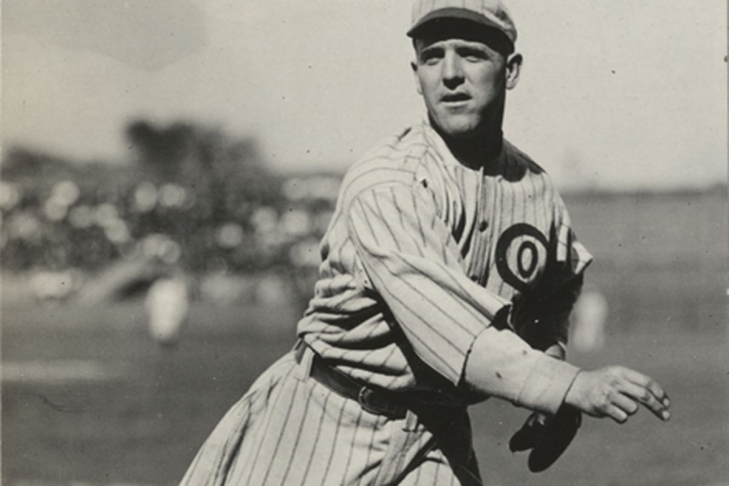
When Eddie Cicotte arrived in Chicago during the 1912 season, he was viewed as a talented but erratic castoff from the Boston Red Sox. Management in Boston had grown tired of his inconsistency, but the change of scenery provided the spark for one of the great pitching transformations of the Deadball Era. Cicotte became a true student of the craft, perfecting the knuckleball and later adding a "shine ball" and a spitball to a repertoire that kept hitters in a state of permanent confusion. By 1913, he was already emerging as a premier arm, posting a microscopic 1.58 ERA and proving that his Boston struggles were firmly in the rearview mirror.
The pinnacle of Cicotte’s journey arrived in 1917, when he reigned as the undisputed king of the American League. He spearheaded the White Sox’s march to a World Series title by leading the league in wins (28), ERA (1.53), and innings pitched (346.2). He was a metronome of efficiency, capping the year with a dominant performance in the Fall Classic against the Giants. At that moment, Cicotte was more than just a pitcher; he was the primary architect of a Chicago juggernaut that looked poised to dominate the decade.
However, the narrative took a dark, irreversible turn in 1919. Despite a spectacular regular season where he won 29 games and led the Sox back to the World Series, Cicotte became the first domino to fall in the Black Sox conspiracy. Driven by resentment toward owner Charles Comiskey's frugal salary practices, Cicotte famously took the mound in Game 1 and hit the leadoff batter, the signal to the gamblers that the fix was on. While he would actually pitch well in a Game 7 victory, his early-series performance and uncharacteristic fielding lapses in Game 4 helped seal the team's fate.
The final chapter was a brief, haunting coda. Cicotte returned in 1920 and pitched at an elite level, winning 21 games as if the scandal weren't looming over his head. But the reckoning arrived before the season could even conclude. Following his grand jury confession, Cicotte was banned for life from Major League Baseball, along with seven of his teammates. He left the South Side with 156 wins and a 2.25 ERA, statistics that would normally point toward Cooperstown but instead serve as a reminder of a legacy traded away. He arrived as a Red Sox castoff searching for a home and left as a ghost of the game, a master of deception who ultimately fooled no one but himself.
9. Minnie Minoso
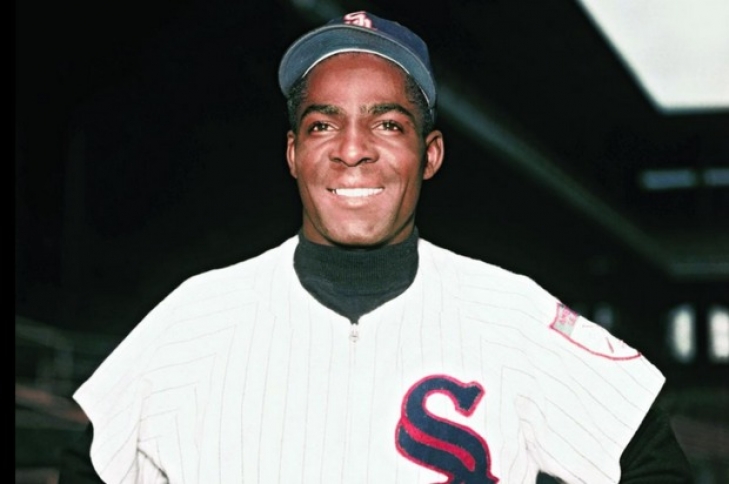
In terms of iconic figures, would have been wrong if we placed Minnie Minoso at number one? Clearly, we didn't, but the native of Havana, Cuba, will always be one of the most revered athletes in the history of Chicago.
8. Nellie Fox
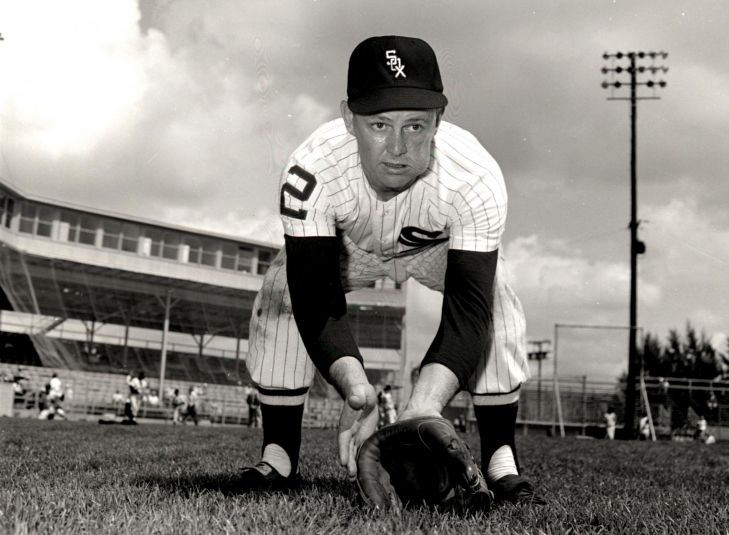
When the White Sox sent Joe Tipton to the Philadelphia Athletics in exchange for Nellie Fox following the 1949 season, they weren't just making a trade; they were altering the course of their franchise history. While Tipton faded into obscurity, Fox arrived on the South Side and immediately set up a permanent residence at second base. He was a small man with a giant wad of tobacco in his cheek and a bottle-shaped bat that he used to torment American League pitchers for the next fourteen years. He didn't just play for the Sox; he personified the scrappy, high-octane brand of baseball that became the team's trademark.
The middle chapter of Fox’s career saw him evolve into a certifiable hitting machine. From 1951 to 1961, he was an annual fixture at the All-Star Game, a high-contact specialist who led the league in hits four separate times. He was the most difficult man in the sport to strike out, a bat-control wizard who once went nearly 100 consecutive games without fanning. The pinnacle of his tenure arrived in 1959, a magical season where Fox captured the American League MVP award and willed the White Sox to their first pennant in forty years. Though the team fell short in the World Series, Fox remained untouchable on the big stage, batting a blistering .375 in the Fall Classic.
Defensively, Fox was the gold standard of his era. While the Gold Glove award didn't exist for the first half of his career, he dominated every defensive metric available, eventually claiming three of the trophies once they were established in 1957. He led the league in fielding percentage six times and was the master of the double play, serving as the defensive anchor for a pitching staff that relied on his vacuum-like range. He played with a durable, blue-collar intensity that made him the most beloved figure on the South Side, missing only a handful of games over a twelve-year span.
The final walk toward the exit came in 1963, when his legendary residency in Chicago finally concluded. Seeking a fresh start in the National League, Fox headed south to join the Houston Colt .45s, where he would provide veteran leadership for the young expansion club in his final two seasons. He left the White Sox with 2,470 hits in a Sox uniform and a reputation as the ultimate competitor. His journey to Cooperstown was a long one, finally culminating in a posthumous induction in 1997, nineteen years after the team hoisted his number 2 to the rafters. He arrived as an unheralded trade piece and left as the permanent face of South Side grit.
7. Eddie Collins
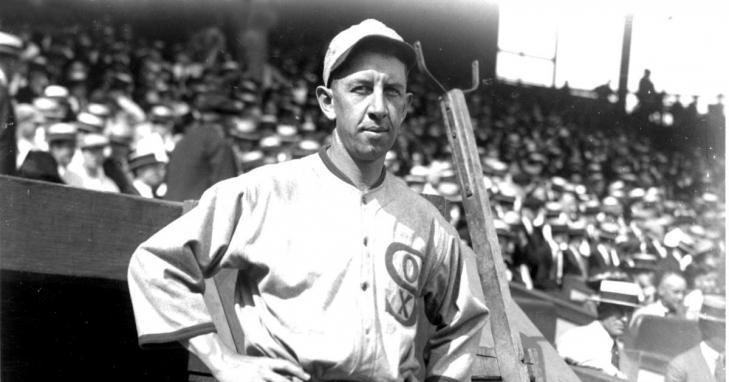
When Eddie Collins stepped off the train in Chicago in 1915, he was the most expensive piece of baseball real estate in the country. The White Sox had shelled out a staggering $50,000 to pry him away from the Philadelphia Athletics, essentially buying the reigning American League MVP to anchor their infield. Collins didn't just meet the lofty expectations; he redefined them. He arrived as a finished product—a cerebral, high-contact second baseman who played the game like a grandmaster moving chess pieces.
His early years in Chicago were defined by championship efficiency. Collins was the tactical engine of the 1917 World Series team, hitting over .300 and providing the veteran poise that helped the Sox claim the title. He was the rare player who could dominate a game without hitting a home run, using his elite speed and a preternatural ability to read a pitcher's delivery. By the time 1919 rolled around, he had helped guide the team back to the Fall Classic, but he was about to enter a nightmare he hadn't bargained for.
As the Black Sox scandal unfolded and the integrity of the franchise collapsed around him, Collins stood as a solitary island of reputational safety. He was one of the few stars completely untouched by the "fix," a fact that allowed him to serve as the bridge between a disgraced past and an uncertain future. While the team was decimated by lifetime bans, Collins responded by entering the most prolific offensive stretch of his career. Beginning in 1920, he embarked on a seven-year run where he refused to bat lower than .324, peaking with a sensational .372 campaign. He became a human metronome, turning the second base bag into his personal office and accumulating 2,007 hits in a Sox uniform.
The final chapter of his Chicago tenure saw him take on the mantle of player-manager, attempting to steer a gutted organization back toward respectability. While the teams of the mid-20s lacked the depth of his early championship squads, Collins remained an elite performer well into his late 30s. He eventually departed after the 1926 season to return to Philadelphia, leaving behind a .331 career average and a legacy of unwavering professionalism. When he was inducted into Cooperstown in 1939 as part of its fourth-ever class, it was a tribute to a man who arrived as a $50,000 gamble and left as the ultimate symbol of South Side stability.