

2. Harmon Killebrew
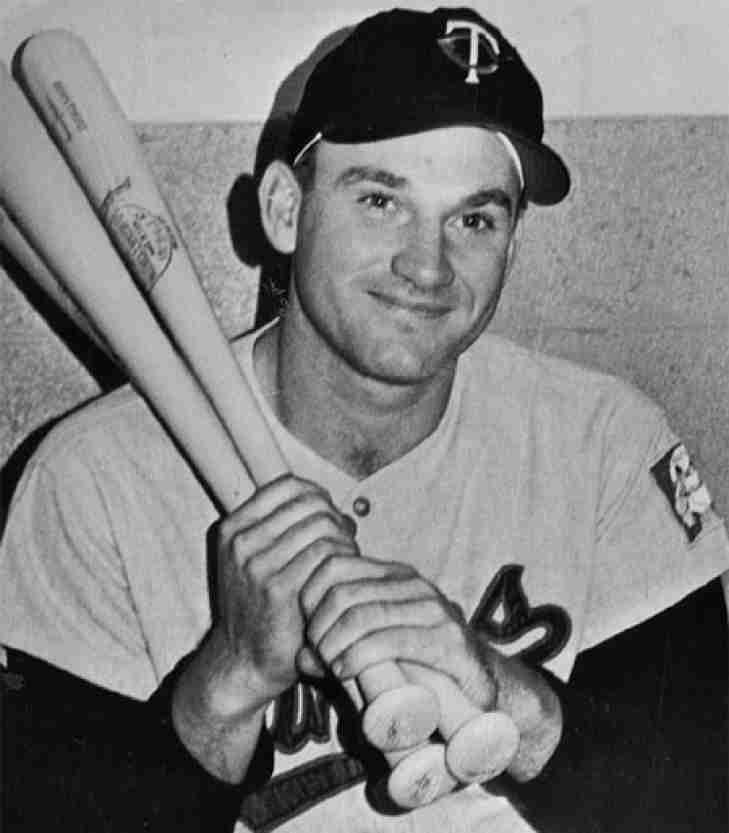
Harmon Killebrew arrived in Washington, D.C. in 1954 as a prized "Bonus Baby," a teenager whose raw strength was so prodigious that MLB rules forced him to stay on the big-league roster before he was technically ready for the assignment. While he spent his first few seasons navigating a slow, deliberate apprenticeship, the Senators' front office's patience eventually yielded one of the most feared power threats in the sport's history.
Killebrew had a breakout 1959 season that validated years of patience. After becoming the starting third baseman in Washington, he led the American League with 42 home runs and earned his first of thirteen All-Star selections. He proved a reliable mainstay capable of carrying a lineup, a trend that continued after the franchise moved to Minnesota in 1961. This period established a high-quality baseline, as he became the first player to hit 40+ home runs in a season eight times, a rare power achievement.
Killebrew hit his peak in 1969, setting the standard for Twins’ offense. That summer, he demonstrated patience and power, winning AL MVP with league-leading home runs (49), RBIs (140), and walks (145). His disciplined approach earned him a .427 OBP, showing he's more than a slugger. This dominance made him a superstar, supporting the Twins' first AL West division title.
Over his career, he was a tactical nightmare for pitchers, capturing six home run titles and finishing in the top five of the MVP voting six times. While he was never a traditional contact hitter, he demonstrated specialized value to the organization by drawing walks, leading the league in walks four times. His impact with the Senators/Twins with 559 home runs and 1,540 RBIs marks that reflect a lifetime of heavy lifting in the middle of the order.
Killebrew was inducted into the Baseball Hall of Fame, a fitting capstone to a journey that saw him become the first player in franchise history to have his number retired. He was also part of the inaugural Twins Hall of Fame Class in 2000.
1. Walter Johnson
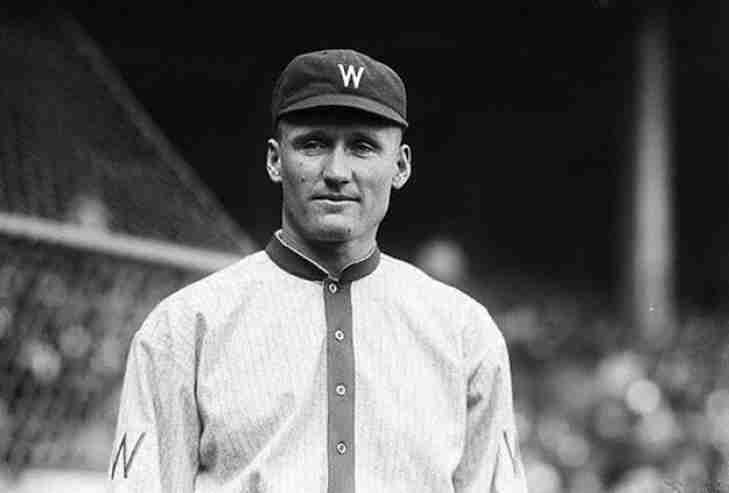
Walter Johnson came to Washington in 1907 as a raw, hard-throwing right-hander from the Idaho semi-pro leagues, possessing a sidearm delivery that produced a velocity the baseball world had never seen. Known as "The Big Train," he remained a loyal mainstay for a franchise that often struggled to provide him with adequate support.
Between 1910 and 1919, Johnson demonstrated a historic mastery of the American League, recording ten consecutive 20-win seasons. He reached a historic peak in 1913, authoring a season that many consider the greatest in pitching history; he won 36 games and posted a staggering 1.14 ERA, earning his first American League MVP Award. This run of dominance turned him into a national icon, as he led the league in strikeouts in eight of those ten years.
Johnson attained a legendary apex of performance late in his career, demonstrating that his technical expertise was equally formidable as his early-career intensity. In 1924, at the age of 36, he led the Senators to their inaugural American League pennant by securing his second Most Valuable Player (MVP) Award and leading the league in wins (23), earned run average (2.72), and strikeouts (158). He culminated this professional zenith with a distinguished performance in the 1924 World Series, appearing as a relief pitcher in Game 7 to hold the Giants scoreless across four extra innings. This high-pressure victory secured the sole world championship in Washington's original franchise history, thereby consolidating his position as the quintessential hero of the nation’s capital.
Johnson accumulated stats that remain virtually untouchable on the franchise leaderboards. He remains the all-time leader for the Senators/Twins organization in almost every significant category, including 417 wins, 3,509 strikeouts, and a record 110 shutouts. He tossed over 5,900 innings and completed 531 of his starts.
In 1936, Johnson was elected as one of the "First Five" inaugural members of the Baseball Hall of Fame, and he has a claim as one of the best hurlers of all time.
10. Camilo Pascual
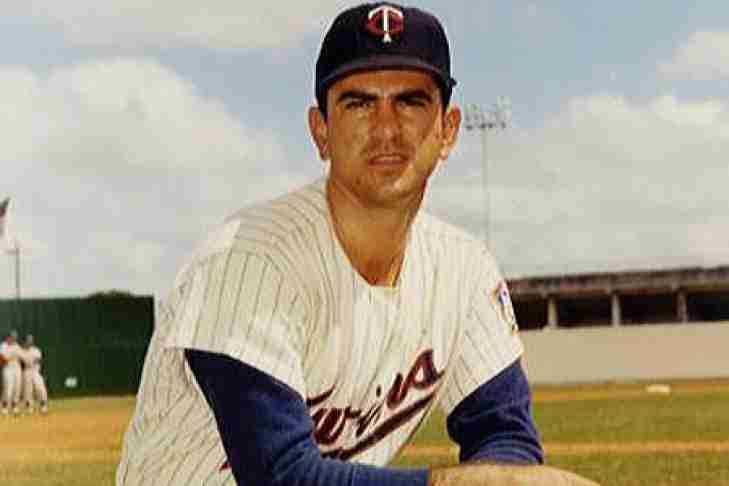
Camilo Pascual reached the Majors with Washington in 1954 at age 20, known for his back-arching windup and a devastating curveball that Ted Williams called the "most feared" in the American League for nearly twenty years.
Between 1954 and 1958, Pascual showcased a specialized ceiling as a strikeout threat, although his win-loss record was often affected by the team's poor performance. In 1959, he reached a career peak, leading the American League with 17 complete games and 6 shutouts, earning his first of seven All-Star nominations.
After the franchise moved to Minnesota in 1961, Pascual enjoyed a three-year period of dominance that remains a significant benchmark in team history. He led the American League in strikeouts for three straight seasons (1961–1963) and achieved consecutive 20-win seasons. In 1963, he went 21-9 with a 2.46 ERA and led the AL in complete games for the third time. During this peak, he was a reliable, high-volume pitcher whose durability enabled him to pitch over 240 innings each year, making him a specialized ace for the Twins as they grew into a pennant contender.
In 1966, the final year of his primary tenure, he transitioned into a veteran role. Before that, he played a crucial part in the 1965 World Series team. Although an injury caused him to miss much of that championship summer, he made his mark on team history on April 27, 1965, by hitting a grand slam, one of the rare pitchers to do so.
Ironically, he was traded to the second incarnation of the Washington Senators in 1967, thus ending his stay in the Twin Cities. Pascual went 145-141 for the franchise, fanning 1,885 Strikeouts. The Twins inducted him into their franchise Hall of Fame in 2012.
6. Tony Oliva
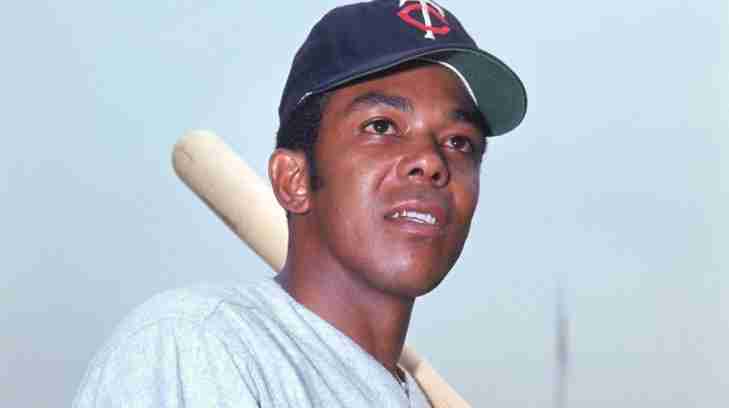
A young outfielder from Cuba, Tony Oliva, came to the Twin Cities, carrying a sweet left-handed swing that would soon become the envy of the American League. While he faced the immense challenge of adapting to a new country and language, he allowed his bat to do the talking, transitioning from a raw prospect into one of the most naturally gifted hitters the sport had ever seen.
In 1964, Oliva showcased mastery of the plate to win Rookie of the Year, leading the league in batting average (.323), hits (217), and doubles (43). He quickly became a key player, defending his batting crown in 1965 and helping the team win its first Minnesota pennant. This early success marked the start of a career with eight consecutive All-Star selections from 1964 to 1971, providing a high-quality offensive presence.
During the late 1960s and early 1970s, he led the league in hits five times. In 1966, he won a Gold Glove in right field while again leading in hits. In 1971, he won his third batting title (.337) and led in slugging percentage, despite playing through pain. This run made him a perennial MVP candidate, with runner-up finishes in 1965 and 1970, cementing his status as a superstar.
A series of knee injuries drastically changed his career, forcing him to adapt. After a severe injury in 1971 nearly ended his career, he demonstrated resilience by becoming the Twins' first Designated Hitter in 1973. Despite limited mobility, he remained a key hitter, with over 90 RBIs in his first DH season and serving as a veteran presence. He left Minnesota with 1,917 hits, 220 home runs, and a .304 batting average, showcasing consistent excellence beyond his physical limits.
Oliva was honored with his number 6 retirement in 1991. He demonstrated that true greatness lies in maintaining elite production through adversity, leading to his induction into the first Twins Hall of Fame in 2000. In 2022, he was finally inducted into the Baseball Hall of Fame via the Golden Days Era Committee.
4. Kirby Puckett
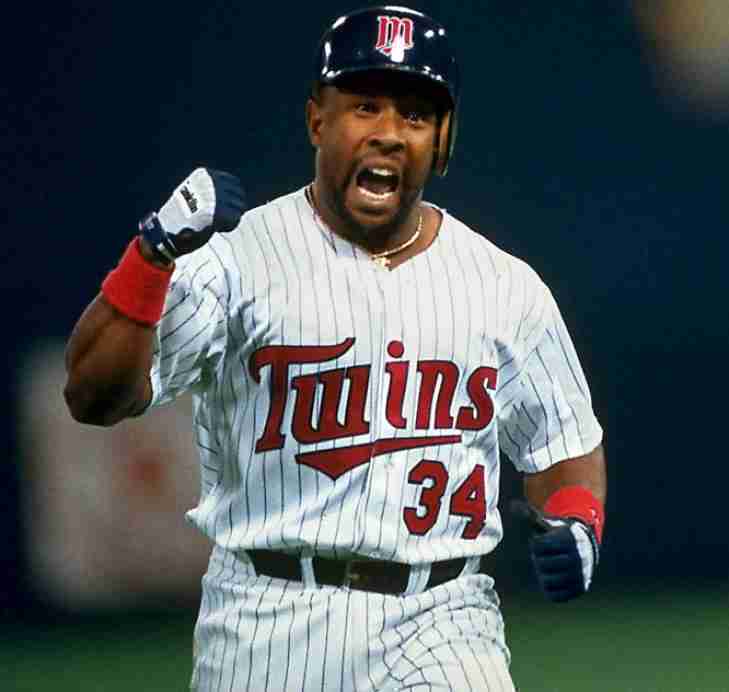
Kirby Puckett arrived in Minnesota in 1984 as a compact, energetic center fielder who famously recorded four hits in his major league debut. While his husky 5'8" frame defied the traditional mold of a speed-first outfielder, he quickly evolved into the most iconic and beloved figure in the history of the Twin Cities. For twelve seasons, all spent in a Twins uniform, he provided a brand of high-volume hitting and Gold Glove defense, standing as the definitive catalyst behind the franchise's two world championships and the undisputed heart of the organization during its most successful era.
After showcasing his talent with a 200-hit campaign in 1986, Puckett proved his skill at spotting gaps, leading the American League with 207 hits in 1987. He quickly became a key player and the emotional driving force of a team that stunned baseball by winning the 1987 World Series. This early period set a strong foundation for his career, marked by contagious enthusiasm and a particular talent for performing in crucial moments.
In 1991, Puckett achieved remarkable individual and team success, with a postseason performance that became legendary in Minnesota. During Game 6 of the World Series, facing elimination, he famously told his teammates to "jump on his back." He demonstrated exceptional all-around skill by making a leaping catch at the fence to prevent a home run and then hitting a walk-off homer in the 11th inning to send the game to a Game 7. This streak of excellence transformed him into a national icon, solidifying his legacy with a second world championship and a 1989 Batting Title, when he achieved a career-high batting average of .339.
His tenure featured a remarkable accumulation of hardware that reflected his dominance on both sides of the ball. Between 1986 and 1995, he was a perennial All-Star selection, earning six Gold Gloves for his defensive mastery in center field and six Silver Slugger Awards. He left behind a statistical footprint in Minnesota that includes 2,304 hits and a stellar .318 career batting average. While his career was tragically cut short in 1996 by a sudden loss of vision due to glaucoma, he had already amassed a lifespan of achievement that made him the franchise leader in hits, doubles, and total bases at the time of his retirement.
In 2001, when Puckett was inducted into the Baseball Hall of Fame on his first year of eligibility, it served as a final punctuation on a journey that saw him remain a "Lifer" in Minnesota. He walked away from the game as a high-caliber legend, honored with the retirement of his number 34 in 1997. Puckett was also part of the inaugural Twins Hall of Fame Class in 2000
3. Rod Carew
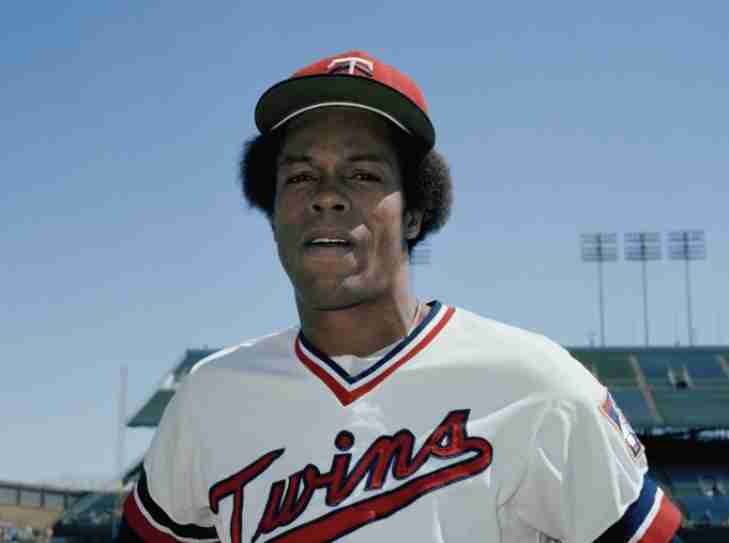
Rod Carew was a Panamanian-born infielder whose crouched stance and elite hand-eye coordination immediately baffled American League pitching. While he debuted as a second baseman, his evolution into a technical master of the strike zone saw him become the most prolific pure hitter of his generation.
Debuting in 1967, Carew quickly made a significant impact on MLB. He won the 1967 American League Rookie of the Year Award, showing his immediate influence on the game. He earned his first of twelve straight All-Star selections as a Twin. Carew established himself as a consistent professional, winning his first batting title in 1969 with a .332 average and helping Minnesota secure the first American League West title. This early period marked the beginning of a career where he would hit over .300 every season after his second year with the Twins.
During his Minnesota years, Carew established himself among the sport's legends. Between 1972 and 1975, he won four straight American League batting titles, joining Ty Cobb as the only players to lead the league in hitting for three or more straight seasons. He remained a technical marvel, hitting .364 in 1974 despite lacking home run power. Even during his transition from second to first base in late 1975, his offensive production stayed strong; in 1976, he narrowly missed a fifth straight title, finishing just .002 behind George Brett and setting a personal best with 49 stolen bases.
Carew reached his apex in 1977. That season, he showcased a mastery of the plate to flirt with the .400 mark deep into the calendar, eventually finishing at .388, the highest average in the majors in twenty years. He led the league in hits (239), runs (128), and triples (16), while also winning the American League MVP Award. His high-caliber production that year included sweeping the batting, on-base percentage, and OPS titles.
Carew’s career in Minnesota ended after a tumultuous 1978 season due to a strained relationship with Twins owner Calvin Griffith, who made offensive remarks. Carew vowed not to play for the team again. In 1979, he was traded to the California Angels in a deal that included Ken Landreaux. He continued his success there, achieving his 3,000th hit against the Twins.
In 1991, he was inducted into the Baseball Hall of Fame in his first year of eligibility. He remains a professional icon in Minnesota, with his number 29 retired by the organization in 1987. He proved that true greatness lies in the relentless pursuit of the hit, a journey that culminated in his induction into the inaugural Twins Hall of Fame Class in 2000.
Carew compiled 2,085 hits, seven batting titles, and the 1977 American League MVP.
7. Bert Blyleven
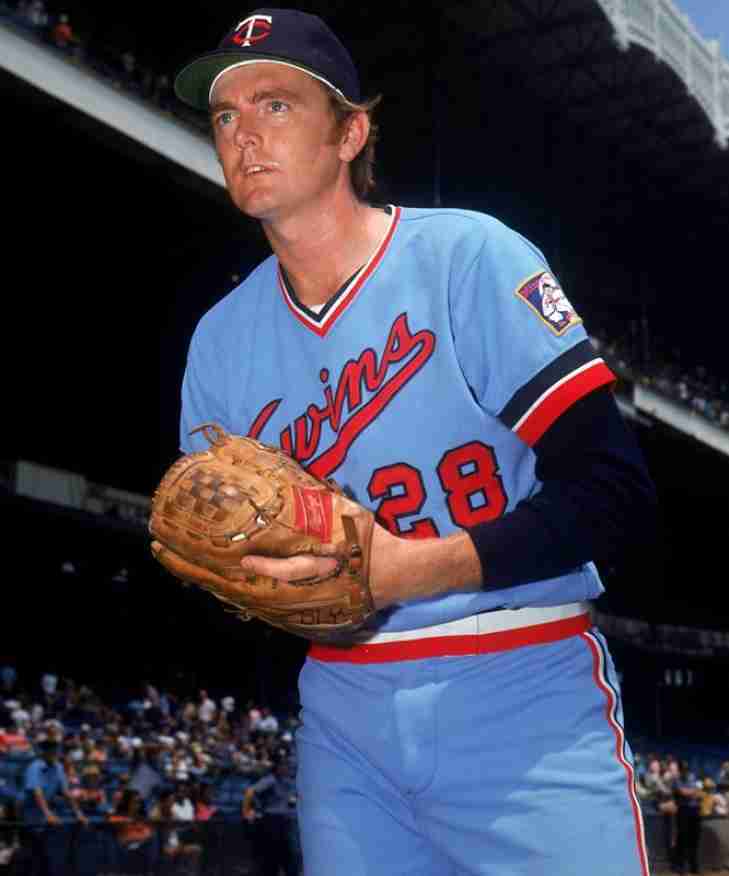
One of the most durable pitchers in baseball history, Bert Blyleven’s MLB career began in 1970 as a 19-year-old phenom, armed with a curveball so sharp it was said to buckle the knees of even the most seasoned veterans. While he spent time in five other cities during his 22-year journey, his heart and his most dominant statistical stretches belonged to the Twin Cities.
From the very start, Blyleven proved he had what it takes at the major league level, winning 10 games and earning the Rookie Pitcher of the Year honors. Between 1970 and 1973, he consistently showcased a strong command of his skills, averaging 16 wins per season. His first Twins career highlight came in 1973 when he delivered an outstanding season: winning 20 games, leading the league with 9 shutouts, pitching 325 innings, and setting a team record with 258 strikeouts. During this time, he was a true workhorse, known for his remarkable efficiency in the American League.
His first exit from the club in 1976 was defined by a clash with ownership. Frustrated by salary negotiations with Calvin Griffith and a perceived lack of run support, Blyleven’s residency became strained. On June 1, 1976, just days after being booed by the home fans during a contract dispute, he was traded to the Texas Rangers in a six-player blockbuster. He famously threw a no-hitter in his final start for Texas before beginning a journey that took him to Pittsburgh and Cleveland, winning a World Series ring along the way, but on the 1985 Trade Deadline, he was back in a Twins uniform, completing a season where he was third in Cy Young voting.
In 1986, Blyleven recorded his 3,000th career strikeout in a Twins uniform. The season after, he served as the specialized anchor for the rotation that delivered the franchise’s first World Series title in Minnesota. While he famously surrendered a high volume of home runs during this stretch, his ability to log nearly 270 innings and strike out nearly 200 batters proved he was still a valuable asset.
After the 1988 season, he was traded to the California Angels, which would be his last stop in the Majors. With the Twins, he had a 149-138 record, a 3.28 ERA, and 2,035 strikeouts. In 2011, he was inducted into the National Baseball Hall of Fame on his 14th ballot and saw his No. 28 retired by the Twins.
5. Joe Mauer
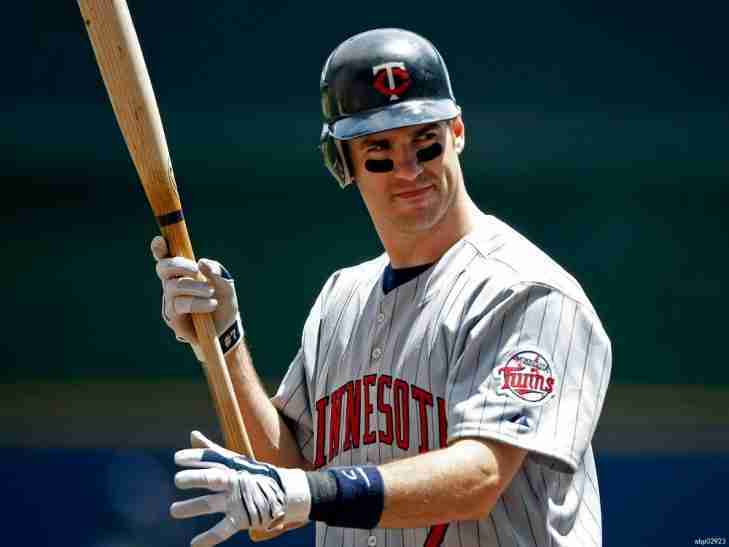
Joe Mauer was the ultimate hometown hero, a St. Paul native selected with the number one overall pick in the 2001 draft who famously chose the diamond over a future as a major college quarterback. While the expectations of a "local boy" can often be a burden, he spent the next fifteen seasons surpassing every metric of success established for the position.
Debuting for the Twins in 2004, Mauer demonstrated specialized hitting by becoming the first catcher in American League history to win a batting title (.347). In 2006, Mauer again demonstrated specialized hitting by becoming the first catcher in American League history to win a batting title (.347). He followed that with another crown in 2008, proving to be a professional mainstay who could consistently outperform the league’s best hitters while handling the physical rigors of the catching position. This early stretch established a high-quality floor, making him the most disciplined hitter in the Junior Circuit.
In 2009, despite missing the first month of the season, he showcased a mastery of the plate to lead the league in batting average for a third time, hitting a career-high .365. He swept the triple-slash categories by leading the league in on-base percentage (.444) and slugging percentage (.587), earning a near-unanimous American League MVP Award. He became the only catcher in history to win three batting titles, a feat of high-volume hitting that solidified his status as a premier superstar. During this peak, he also showed the organization a specialized defensive value, capturing three consecutive Gold Glove Awards for his elite work behind the dish.
His career saw a notable shift late in his career, as he moved to first base in 2014 due to concussion issues. Although he transitioned from catching, he stayed a key player and a top table-setter for the Twins. His Minnesota stats include 2,123 hits and a .306 batting average, indicating consistent performance over the years. His knack for hitting for average, combined with a stellar .388 OBP, kept him in the team’s strategic core until he retired after the 2018 season.
The organization retired his number 7 in 2019 and inducted him into the Twins Hall of Fame in 2023. A year later, Mauer reached the ultimate summit as a first-ballot Baseball Hall of Famer in 2024.
Torii Hunter to the Minnesota Twins HOF
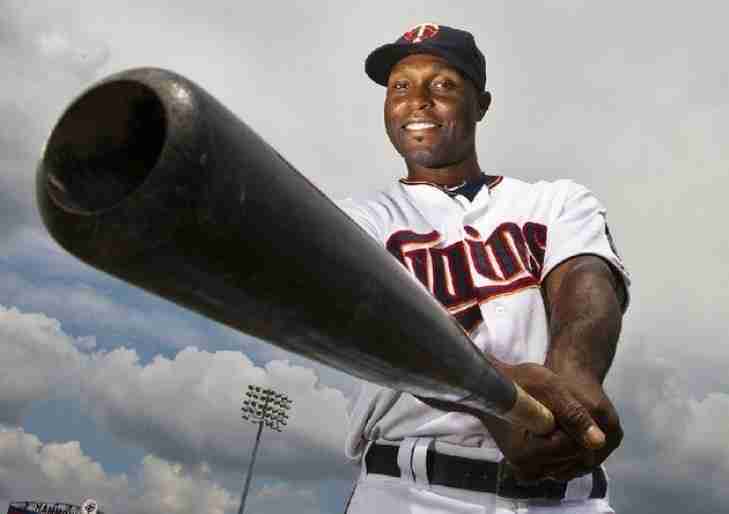
Torii Hunter sent twelve of his nineteen seasons with Minnesota; his first eleven and the final one of his career. As a Twin, he was an All Star twice and a Gold Glove winner seven times. His overall numbers in Minnesota saw him accumulate 1,323 Hits, 214 Home Runs, a .268/.321/.462 Slash Line and a bWAR of 26.2.
Hunter will not be entering alone as he will be joined by John Gordon, who broadcasted Minnesota games from 1987 to 2011.
To enter the Twins Hall of Fame, a player needs to receive 60 percent of the 66 member committee, which consists of media members, former players and Twins officials. Hunter received all 66 votes. Gordon’s path to election came through the 23 member Veteran’s Committee.
Torri Hunter becomes the 19th player to be inducted, and the selection of Hunter and Gordon marks the first inductees since 2013. Former Second Baseman, Chuck Knoblauch was scheduled to be inducted in 2014, but the Twins revoked that upon being charged with assaulting his ex-wife.
We here at Notinhalloffame.com would like to congratulate the latest class of the Minnesota Twins Hall of Fame.
Torii Hunter Retires: HOFer?
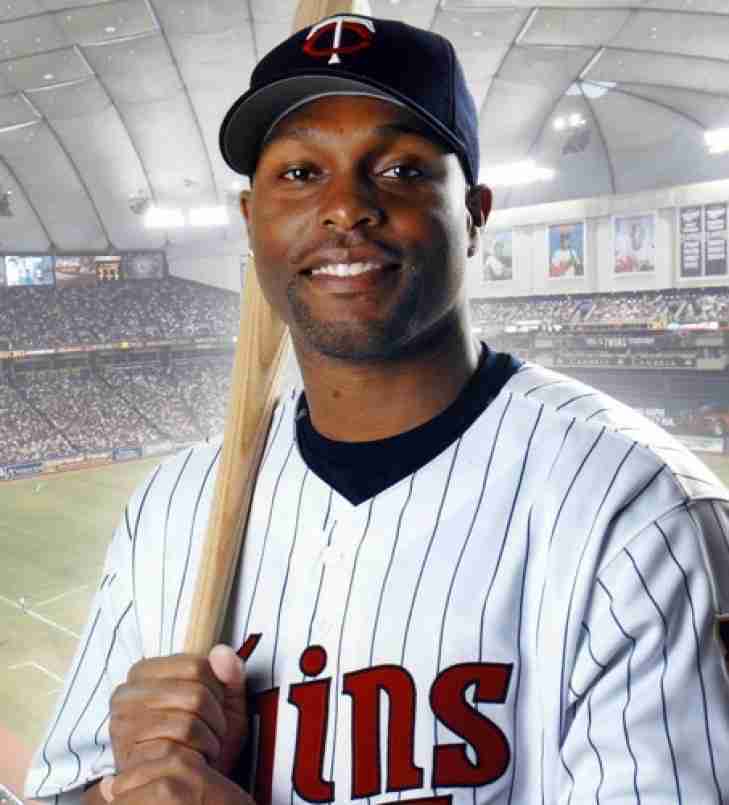
From Hunter’s Instagram account:
“My family and I feel as though the time has come to close the door on this chapter in my life. I've been married to the game for many years and now it is time to start a new chapter. I have learned a lot during this journey, and I appreciate the opportunity that God has given me to play this great game. Some will say that I am retiring from baseball; but I will say that I am transitioning, because BASEBALL will be a part of my life forever.”
Hunter would also tell a local newspaper that he did not want to be a distraction and go on a farewell tour.
He retires in Minnesota, with the club where it all began. He would make his MLB debut in 1997 (though only in one game) and would work his way to the regular lineup as the Twins’ starting Center Fielder in 1999. Each year would seemingly see an increase in production both with his bat and his glove.
In 2001, Hunter would win his first of his nine Gold Gloves and would have three top five finishes in Defensive bWAR. Hunter would show some pop with his bat, blasting 353 Home Runs in his career and having two seasons where he had over 100 RBIs.
Hunter would go to five All Star Games, two as a Twin, two as an Angel and one as a Detroit Tiger. The outfielder, who finished his career with 2,452 Hits and a career bWAR of 50.0 returned to Minnesota last season where he successfully bookends his career in the Twin Cities.
You know what we do here next right? We ask if he is a Hall of Famer of course!
While Hunter has a decent bWAR, his JAWS line of 40.6 falls well below the 57.2 that the average Centerfielders in the Hall of Fame have, though it should be noted he is higher than five of them, though sabremetrics such as this are being taken more and more into account. Hunter never won a World Series, only finished in the top ten in MVP voting once and is not in the top seventy-five all time in any offensive category.
We suspect that he will struggle to get past the first ballot for Cooperstown, but he should be a lock for the Minnesota Twins Hall of Fame in the future.
We here at Notinhalloffame.com would like to wish Torii Hunter the best in his post playing career.
56. Johan Santana

For a seven-year period, Johan Santana was regarded as one of the top Pitchers in Baseball, where he won the American League Cy Young Award Twice, winning the ERA Title three times and leading his league in WHIP four years in a row.
As great as Santana was, his career was relatively short for a Hall of Fame Pitcher (12 Seasons), and those who look for statistical accumulation (and many voters do), won’t find it with Santana, whose 139 Wins and 1,988 Strikeouts do not measure up to a lot of those already in Cooperstown.
Still, his career bWAR of 50.7 is excellent, and since he led the National League in that category three times, how can he not be at least considered by even those who worship traditional statistics? One thing is for sure: the results of Santana’s votes have been fascinating!
