

Our All Time Top 50 Miami Marlins have been revised to reflect the 2025 Season

Yes, we know that this is taking a while!
As many of you know, we at Notinhalloffame.com are slowly generating the top 50 of each major North American sports team. That being said, we maintain and update our existing Top 50 lists annually. We are pleased to present our pre-2026 revision of our top 50 Miami Marlins.
As for all of our top 50 players in baseball, we look at the following:
1. Duration and Impact.
2. Traditional statistics and how they finished in the Major League Baseball.
3. Advanced Statistics.
4. Playoff performance.
5. Their respective legacy on the team.
6. How successful the team was when he was there.
7. Respecting the era in which they played.
Criteria 1-4 will make up the lion’s share of the algorithm. Please note that we have implemented this for the first time. This has changed the rankings all throughout the board.
Last year, the Marlins won 79 games and finished third in the National League East. Despite the franchise’s relatively brief existence, there were no new Marlins, with the exception of two players returning under the new algorithm.
As always, we present our top five, which saw changes due to the new algorithm.
1. Giancarlo Stanton
2. Hanley Ramirez
3. Josh Johnson
4. Miguel Cabrera
5. Luis Castillo
You can find the entire list here.
Of note, Cabrera and Castillo flipped the #4 and #5 spots.
Active Pitcher, Sandy Alcantara, remains at #7.
Due to the changing algorithm, Antonio Alfonseca and Pat Rapp returned to the list at #48 and #49, respectively.
This took out Edgar Renteria and Jesus Luzardo from the list.
We thank you for your continued support of our lists on Notinhalloffame.com.
Our All Time Top 50 Miami Marlins have been revised to reflect the 2024 Season.

Yes, we know that this is taking a while!
As many of you know, we at Notinhalloffame.com are slowly generating the top 50 of each major North American sports team. That being said, we have existing Top 50 lists and consistently look to update them when necessary and based on necessity. As such, we are delighted to present our post-2024 revision of our top 50 Miami Marlins.
As for all of our top 50 players in baseball, we look at the following:
1. Advanced Statistics.
2. Traditional statistics and how they finished in the National League.
3. Playoff accomplishments.
4. Their overall impact on the team and other intangibles that are not reflected in a stat sheet.
Please note that our algorithm has changed, which yielded minor changes throughout the baseball lists.
Last year, the Marlins continued their losing ways as a small market team and sold off assets before they became high-priced. Nevertheless, there was one new entrant based on the 2024 campaign, and of course, that player is no longer in Miami.
As always, we present our top five, which had no changes.
3. Josh Johnson
You can find the entire list here.
Staring Pitcher Sandy Alcantara remains at #7.
Jazz Chisholm, who is now a New York Yankee, went up nine spots to #31.
Pitcher Tanner Scott enters at #39.
Luis Arraez, who was traded early in the year, went up two spots to #43.
Jesus Luzardo comes in at #49.
We thank you for your continued support of our lists on Notinhalloffame.com.
41. Tanner Scott
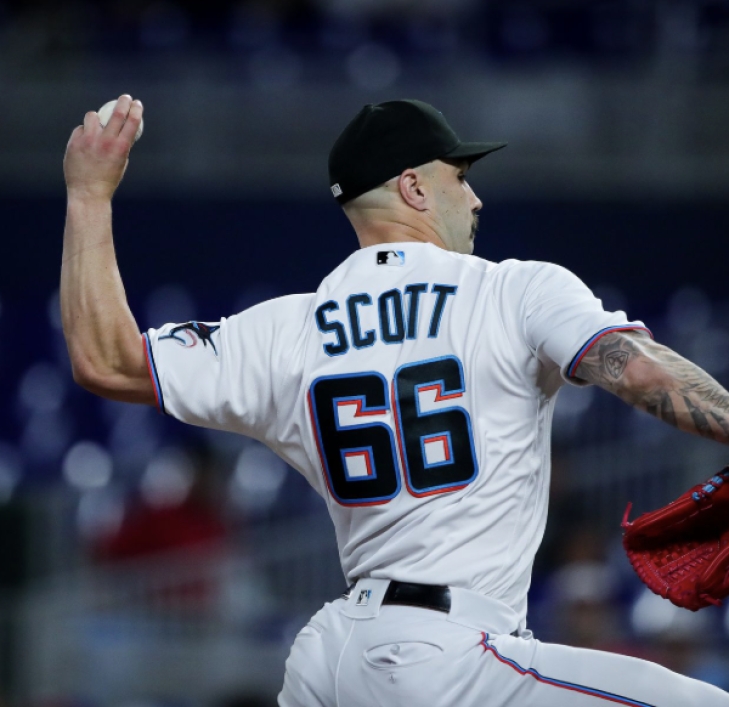
Tanner Scott had five nondescript seasons with the Baltimore Orioles before he was traded to the Marlins, where he had the best run of his career.
His first season in Miami (2022) was largely consistent with his previous endeavors; however, in the subsequent season, the control he had been striving for throughout his career fully manifested. In 2023, Scott achieved an extraordinary level of statistical impact, posting a 9-win campaign and an impressive 2.31 ERA. He demonstrated comprehensive mastery in high-pressure situations, leading the National League in both Win Probability Added (WPA) and Championship Win Probability Added (cWPA). He became the first left-handed reliever in the franchise's history to accumulate 100 strikeouts in a single season, thereby establishing himself as the principal force behind a bullpen that propelled the Marlins into an unexpected postseason appearance.
During the 2024 season, he had a stellar first half, posting a 1.18 ERA and earning his first All-Star selection. He was a key ninth-inning reliever with 18 saves before the break. However, as the organization entered a rebuilding phase, Scott’s time in South Florida ended. On July 30, 2024, the Marlins traded him to the San Diego Padres for a four-prospect package.
Scott had an overall 19-15 record with a 2.70 ERA and 50 Saves for Miami.
Our All-Time Top 50 Miami Marlins have been revised to reflect the 2023 Season

Yes, we know that this is taking a while!
As many of you know, we here at Notinhalloffame.com are slowly generating the 50 of each major North American sports team. That being said, we have existing Top 50 lists out and we always consistently look to update them when we can and based on necessity. As such, we are very happy to present our post 2023 revision of our top 50 Miami Marlins.
As for all of our top 50 players in baseball we look at the following:
1. Advanced Statistics.
2. Traditional statistics and how they finished in Major League Baseball.
3. Playoff accomplishments.
4. Their overall impact on the team and other intangibles not reflected in a stat sheet.
Last year, the Marlins made the playoffs but did not go very far as they were eliminated in the first round. There were two new entrants, and one elevation.
As always, we present our top five, which saw no changes:
3. Josh Johnson
You can find the entire list here.
Of note, former Cy Young winner, Sandy Alcantara remained at #7.
The only elevation was Jon Berti, who climbed to #34 from #50. The new entries are Jazz Chisholm and Luis Arraez who debut at #41 and #44 respectively.
We thank you for your continued support for our lists on Notinhalloffame.com.
42. Luis Arraez
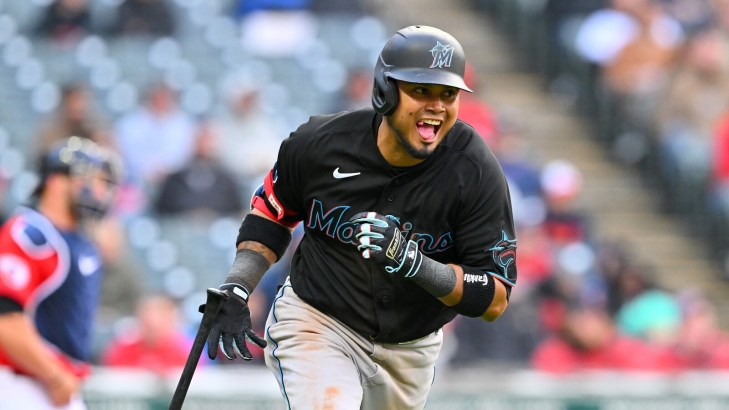
We are very aware that Luis Arraez has only been with Miami for one year, but as we have said before:
The Marlins have not been around long.
They don’t keep good players when it is time for them to get paid.
Luis Arráez arrived in Miami in early 2023 with a specialized task: prove that his American League batting title wasn't a product of the Twin Cities climate. Acquired in a high-leverage swap for Pablo López, Arráez operated with a bat-to-ball precision that hasn't been seen in South Florida since the days of Luis Castillo.
Arráez spent much of the summer flirting with a .400 batting average, a chase that electrified the local fanbase and put the Fish in the national spotlight. While he finalized the season at a still-staggering .354, he secured the National League Batting Title, making him the first player in modern history to win back-to-back batting crowns in different leagues. He showcased a total command of the strike zone, recording 203 hits and finishing eighth in the MVP voting while guiding Miami to a surprise postseason appearance.
Beyond the raw average, Arráez reached a unique plateau of contact consistency. He recorded only 34 strikeouts in 617 plate appearances, a foundational asset that stabilized the top of the Marlins' order and earned him his second Silver Slugger. Even with a modest total of 10 home runs, he maintained an impressive .861 OPS, proving that elite bat control could generate high-end offensive value without relying on the long ball.
Arraez would win another Batting Title in 2024, but most of that was as a San Diego Padre, as he was traded early in the season.
It was a brief stay, but it was a good one!
33. Jazz Chisholm
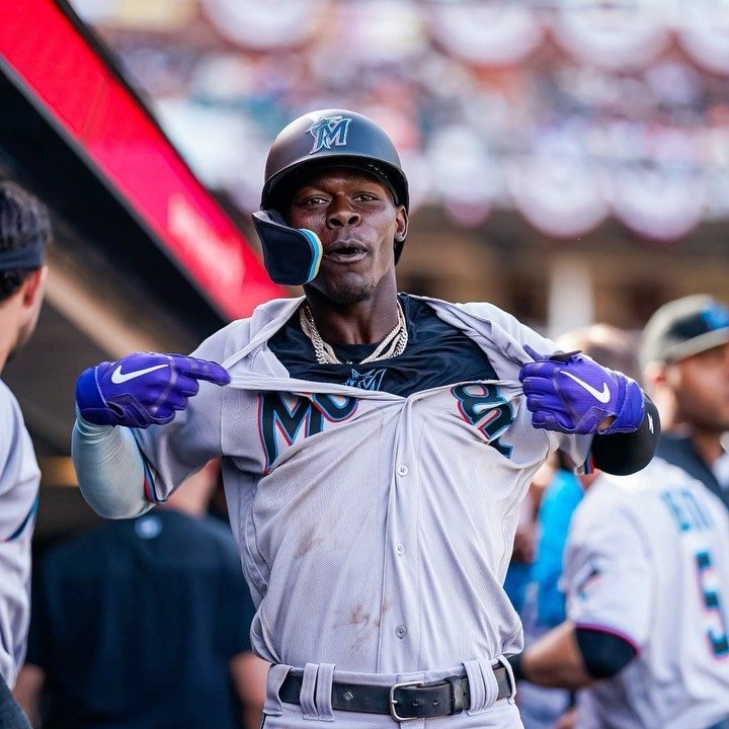
Traded from the Arizona Diamondbacks while still in the minors, Jazz Chisolm was a flashy shortstop from the Bahamas who immediately became the face of the franchise's new era. With his signature blue hair and explosive athleticism, he operated as one of the most electric performers in the game, blending home-run power with elite speed.
In 2021, during his first full season, Chisholm achieved a level of production that few young players reach, hitting 18 home runs and stealing 23 bases. He demonstrated complete command of the second base position and established himself as a key asset for the team's future. By 2022, he reached a new personal best, delivering an outstanding first half that earned him the starting second baseman spot for the National League in the All-Star Game. However, his season was cut short by a lower back stress fracture, which marked a sudden end to what was shaping up to be a historic year.
Chisolm’s versatility was displayed by moving to center field to accommodate the team's roster changes. Despite navigating localized turf toe and oblique injuries that limited him to 97 games, he remained a professional mainstay of the offense, producing 19 home runs and 22 stolen bases. He was on his way to another 20-20 season in 2024, but that would be completed as a New York Yankee, as he was traded during the season.
He amassed 362 Hits and 81 Stolen Bases with the Marlins.
Our All-Time Top 50 Miami Marlins have been updated to reflect the 2022 Season
Yes, we know that this is taking a while!
As many of you know, we here at Notinhalloffame.com are slowly generating the 50 of each major North American sports team. That being said, we have existing Top 50 lists out and we always consistently look to update them when we can and based on necessity. As such, we are very happy to present our post 2022 revision of our top 50 Miami Marlins.
As for all of our top 50 players in baseball we look at the following:
1. Advanced Statistics.
2. Traditional statistics and how they finished in the National League.
3. Playoff accomplishments.
4. Their overall impact on the team and other intangibles not reflected in a stat sheet.
Last year, the Marlins were not able to make the playoffs, and we had one new entrant and one huge ranking jump.
As always, we present our top five, which was not affected by the last season:
3. Josh Johnson
You can find the entire list here.
Cy Young winner, Sandy Alcantara had a monstrous jump from #30 to #7.
Third Baseman, Brian Anderson, moved up from #31 to #29.
Pitcher, Pablo Lopez, who is now with the Minnesota Twins, climbed from #49 to #32.
Jon Berti is the only debut, and he enters at #48.
We welcome your input and comments and as always, we thank you for your support.
35. Jon Berti
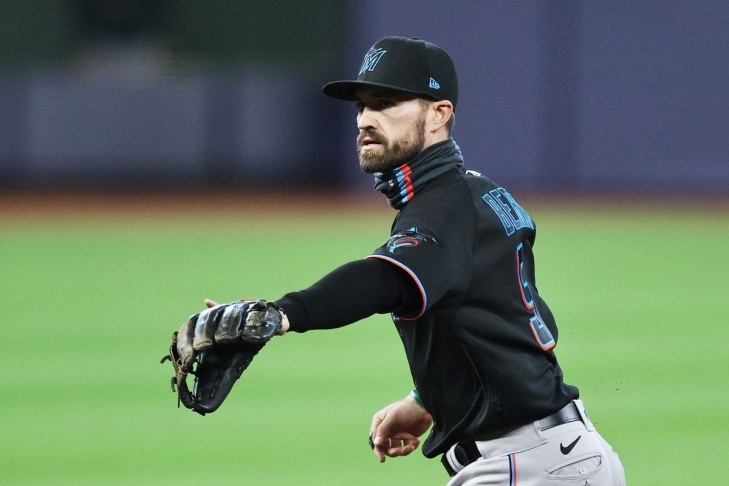
Jon Berti arrived in Miami in 2019 as a baseball journeyman, a 29-year-old minor league veteran who had spent seven seasons working through Toronto's system for a brief appearance in the majors. When the Marlins signed him to a minor league contract, they envisioned a "super-utility" player; what they gained was someone who would eventually carve his name into the franchise record books. Over five seasons in South Florida, he became the ultimate versatile player, offering defensive flexibility and blazing speed that became hallmarks of the Marlins' gritty identity during a rebuilding period.
While he didn’t possess the traditional power of a corner infielder or the high-volume hitting of a primary starter, he made up for it with a unique kind of chaos on the bases. He was a regular for Don Mattingly, moving effortlessly among the outfield, second base, and third base, keeping the roster flexible. By 2022, he reached an unexpectedly high level of efficiency, leading the entire National League with 41 stolen bases in a season. This was a historic anomaly. Berti arguably became the most unlikely stolen base leader in the history of the game, achieving this despite playing in only 102 games.
Berti's 2022 campaign was defined by not just the number of steals but their boldness. He famously swiped second, third, and home in one inning, thrilling Miami fans. In 2023, he had his best offensive year with 114 hits and a .294 average, helping the Marlins reach the postseason.
Berti was traded to the New York Yankees before the 2024 season.
Our All-Time Top 50 Miami Marlins are up
Yes, we know that this is taking a while!
As many of you know, we here at Notinhalloffame.com are slowly generating the 50 of each major North American sports team. We have a new one to unveil today, that of the Miami Marlins.
Along with the Colorado Rockies, the Florida Marlins came into existence in 1993, although they have been far more successful than their expansion counterparts.
The Marlins won the Pennant in only their fourth year of existence, but surely, they could not beat the New York Yankees for the World Series! Florida did precisely that, shocking the world, and then they surprised everyone by conducting a fire sale, dismantling the team, and starting from scratch.
Florida again built a good team in 2003 and once again befuddled the baseball world by winning their second World Series. True to form, they repeated what they did after 1997 by cost-cutting and getting rid of the parts that won it for them.
Since that time, the Marlins changed their team name to the Miami Marlins but have remained to operate as a small market team.
Our Top 50 lists in Baseball look at the following:
1. Advanced Statistics.
2. Traditional statistics and how they finished in the National League.
3. Playoff accomplishments.
4. Their overall impact on the team and other intangibles not reflected in a stat sheet.
Remember, this is ONLY based on what a player does on that particular team and not what he accomplished elsewhere and also note that we have placed an increased importance on the first two categories.
This list is updated up until the end of the 2021 Season.
The complete list can be found here, but as always, we announce our top five in this article. They are:
3. Josh Johnson
We will continue our adjustments on our existing lists and will continue developing our new lists.
Look for our more material coming soon!
As always, we thank you for your support.
37. Livan Hernandez
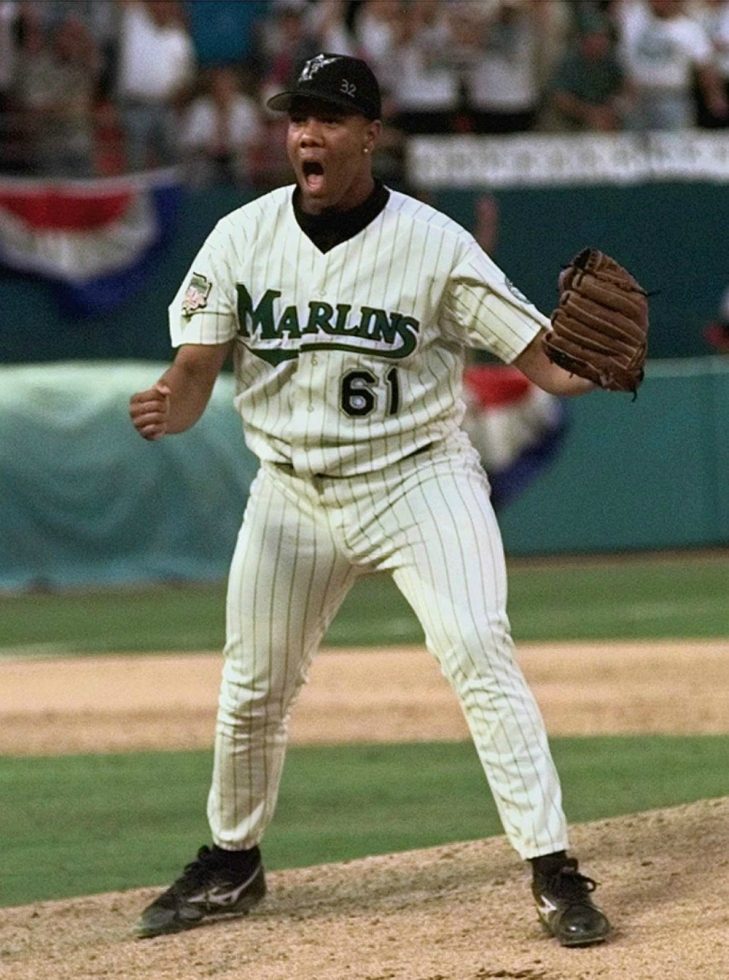
One of the most fascinating people to rank on a list of all-time Marlins is Liván Hernández, the star of the 1997 Playoffs.
Liván Hernández arrived in South Florida in 1996 as a figure of immense political and athletic intrigue, having defected from Cuba just a year earlier. While he possessed a high-velocity arm and a signature "slow" curveball, his residency in Miami was ultimately defined by a singular, lightning-strike October that transformed him from a rookie prospect into a postseason immortal.
After a solid 1997 regular season with a 9-3 record and a 3.18 ERA, Hernández reached a career highlight in the playoffs. He delivered one of the franchise's most memorable performances in Game 5 of the NLCS, striking out a record 15 Atlanta Braves in a complete-game performance. This achievement earned him the NLCS MVP award, but he continued to excel. Hernández demonstrated complete command during the Fall Classic, winning two additional games against Cleveland to secure the World Series MVP, becoming only the fourth player to earn both honors in the same season.
Following a grueling 1998 campaign in which he logged a career-high 234.1 innings, Hernández’s efficiency began to waver, and the organization finalized a trade sending him to the San Francisco Giants in July of 1999. Hernandez would have greater individual success with the Expos/Nationals, representing them in the All-Star Game twice. As a Marlin, Hernandez had a record of 24-24, with a 4.39 ERA and 333 Strikeouts. Notably, he was also an excellent defensive player and an above-average hitting Pitcher, accumulating 35 Hits with a .222 Batting Average for the team.
32. Pablo Lopez
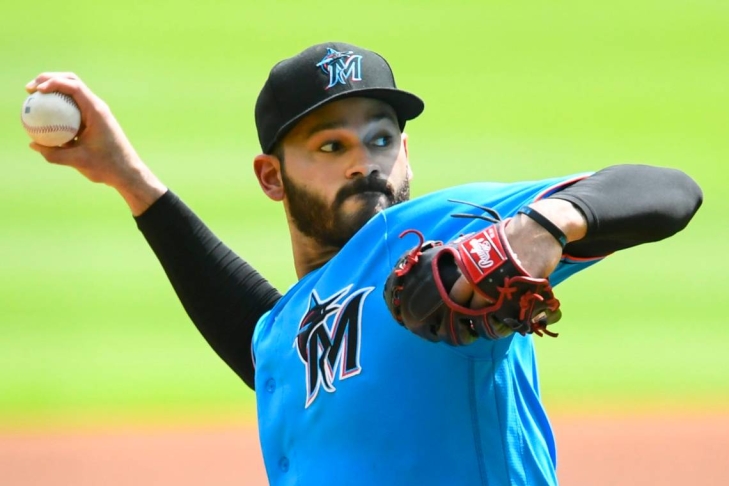
Pablo López joined Miami in 2017 as a minor league signing from the Seattle Mariners. Over time, he became one of the most technically proficient starters in the franchise’s recent history. Renowned for his composure and an exceptional changeup, the Venezuelan right-hander served as a dependable part of the rotation during a time of organizational change.
After making his debut in 2018, López spent several seasons refining his repertoire while navigating shoulder issues that limited his availability. He truly arrived during the shortened 2020 campaign, authoring a 3.61 ERA and providing the stability that helped the Marlins secure a rare postseason berth. By 2021, he proved that his command was a foundational asset, most notably on July 11 when he reached a historic milestone by striking out the first nine batters of a game against the Braves, setting a new Major League record.
In 2022, his first full, healthy campaign, he showcased command of the mound with 32 starts, 180 innings, 10 wins, a career-high 174 strikeouts, and a 3.75 ERA. He was efficient early in the season, leading the league in ERA at one point and emerging as a co-ace with Sandy Alcántara.
With the organization in need of offensive impact, the Marlins finalized a high-profile trade in January 2023, sending López to the Minnesota Twins in exchange for reigning batting champion Luis Arráez. He had a 28-31 record, a 3.94 ERA, and 439 strikeouts for the Marlins.
48. Antonio Alfonseca
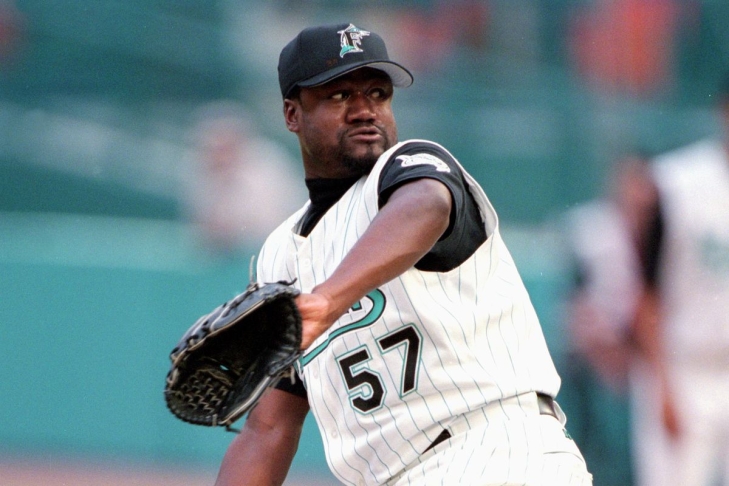
The Marlins plucked Antonio Alfonseca, a right-handed prospect plucked from the Montreal Expos organization in the minor league phase of the draft. While he was physically unique, possessing six fingers on each hand due to polydactyly, he operated on the mound with a heavy, specialized sinker that made him one of the most polarizing closers of his era.
In 1997, Alfonseca achieved team success as a rookie with 6.1 scoreless postseason innings, helping the Marlins win their first World Series. He demonstrated mastery of his sinker in subsequent years, reaching a career-high in 2000, with 45 saves that summer, earning the Rolaids Relief Man Award. Despite a rise in ERA (4.24) and WHIP (1.51), he was a high-leverage clutch pitcher, often escaping trouble to secure wins.
The following year, Alfonseca recorded 28 saves in 2001 despite back pain. In early 2002, the organization traded him to the Chicago Cubs in a six-player trade including Matt Clement and Dontrelle Willis. He would, however, return in 2005 for one final brief stint.
Alfonseca had 102 Saves for the Marlins and finished 193 Games.
50. Josh Willingham
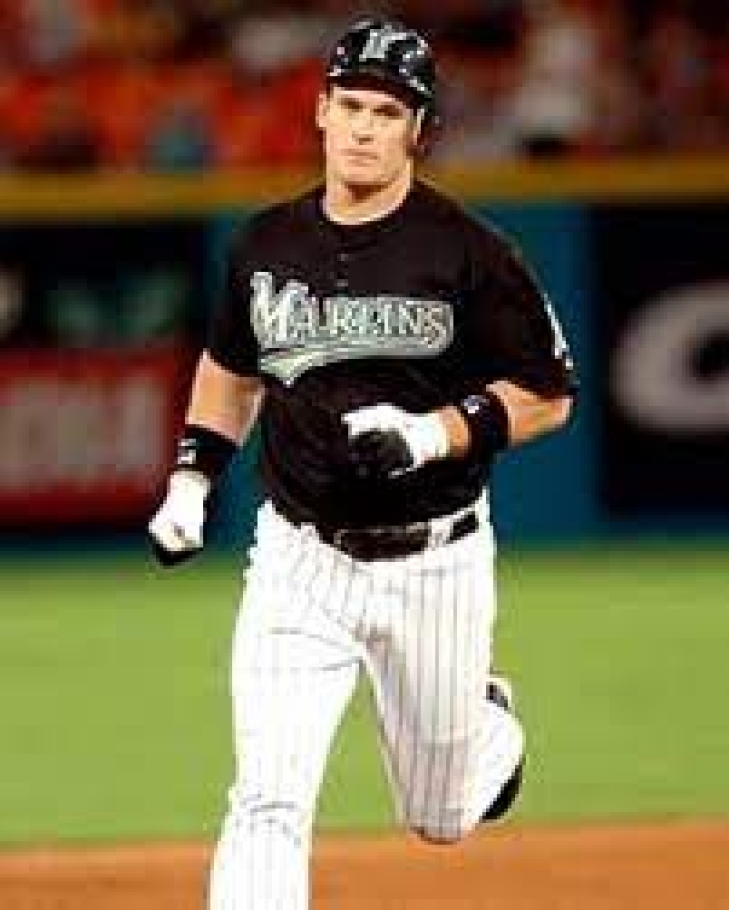
Josh Willingham, an unnoticed 17th-round pick, initially played as a middle infielder before switching to catcher to speed up his journey to the majors. He later established himself with the Marlins as a power-hitting outfielder.
Following a brief debut in 2004 and a localized setback due to a forearm fracture in 2005, Willingham attained the pinnacle of individual recognition during the 2006 season. Elevated to the starting left field position amidst a significant roster overhaul of the team, he authored an impressive rookie campaign, recording 26 home runs and 74 RBIs. He demonstrated complete command of the strike zone, finishing ninth in the National League Rookie of the Year voting, thereby establishing himself as a pivotal presence in the middle of the lineup.
In 2007, Willingham demonstrated that his rookie year was not a fluke. He embarked on another high-impact campaign, hitting 21 home runs and achieving a career-high 89 RBIs. He was a consistent professional whose value was rooted in a specialized "throwback" work ethic and a concise, powerful swing that performed well in the humid Florida climate. However, his progression in the 305 faced a critical juncture in 2008. A localized shoulder injury and knee problems restricted him to only 102 games, resulting in a decline in his home run tally to 15.
Miami dealt him to Washington after the 2008 Season, and Willingham collected 378 Hits with a .266 Batting Average as a Marlin.
46. Henderson Alvarez
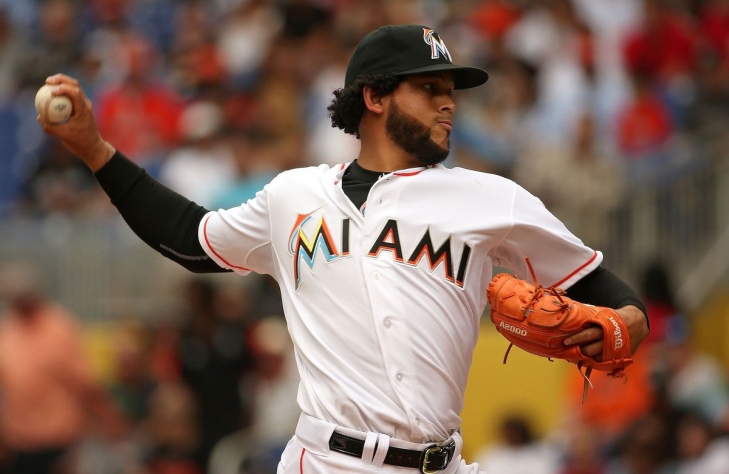
Henderson Alvarez arrived in Miami as a central piece of the massive 2012 trade with Toronto, a young right-hander with a heavy sinker and a flair for the dramatic. While his residency in South Florida was ultimately cut short by the recurring fragility of his shoulder, he operated with a specialized efficiency that made him, for a brief window, the most dominant arm in the rotation.
After missing the first half of 2013 due to shoulder inflammation, Alvarez achieved his peak performance on the season's last day. He delivered a masterful no-hitter against the Detroit Tigers, a remarkable feat that ended with him in the on-deck circle as the Marlins secured a 1-0 victory on a walk-off wild pitch. That afternoon, he demonstrated complete control over his sinker, requiring only 99 pitches to set a new record.
In 2014, Alvarez was an All-Star who finished with a 12-7 record and a 2.65 ERA. Known for efficiency, he led the National League with three shutouts and had an elite ability to induce ground balls. During his peak, he was a reliable starter, ranking sixth in NL ERA, showing he was more than a one-time success. He set a historic record by becoming the first MLB pitcher to throw three consecutive shutouts in interleague play.
After being named the 2015 Opening Day starter, the recurring shoulder problems ended his season after just four ineffective starts. The organization declined to offer him a contract for 2016, and while he reached a brief plateau of a comeback with the Phillies in 2017, his high-velocity era was effectively over. With the Marlins, Alvarez had an even record of 17-17 with a 3.28 ERA.
49. Pat Rapp
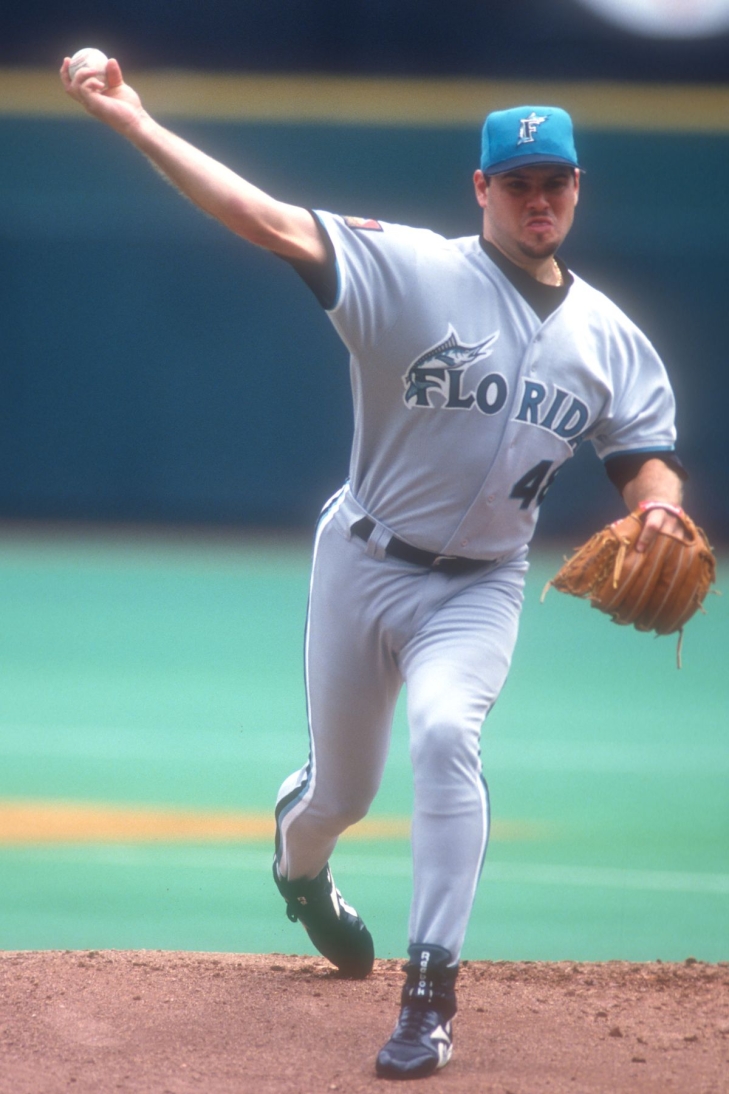
Pat Rapp arrived in South Florida in 1993, a right-handed starter from the Giants in the expansion draft to help build the Marlins’ rotation. Though he later became a journeyman across leagues, he demonstrated durability during the franchise’s early years, providing essential support for a growing expansion team.
Rapp had his best season in 1995, posting a 14-7 record and an excellent 3.44 ERA. He demonstrated complete control of the mound on September 18, 1995, when he authored a one-hit shutout against the Rockies at Coors Field, a rare achievement that remains one of the most dominant pitching performances in the ballpark’s high-altitude history.
Following a poor 1996 season, he was traded back to San Francisco during the 1997 Season, with Rapp going 37-43 with the Marlins.
38. Preston Wilson
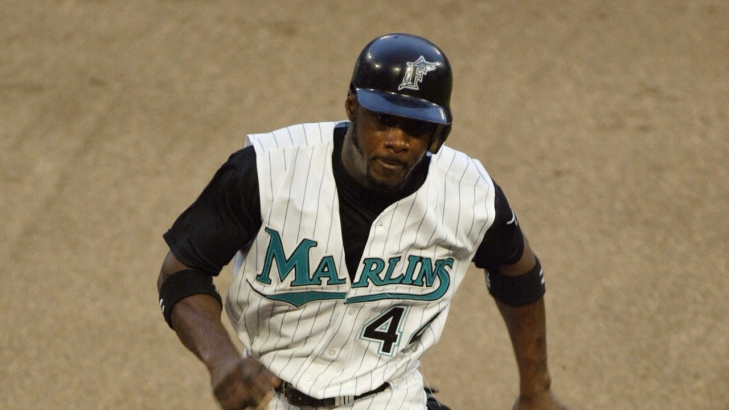
Preston Wilson arrived in South Florida in 1998, a centerpiece of the blockbuster trade that sent Mike Piazza to New York. As a former High School Player of the Year and a first-round talent, he carried the expectations of a franchise cornerstone during a period of massive transition for the Marlins.
No pressure, right?
After a brief coffee break in 1998, Wilson earned the starting center field position in 1999 and produced one of the team's most impressive rookie seasons. He hit .280 with 26 home runs, finishing as the runner-up for the National League Rookie of the Year award. He soon became a key player, demonstrating a unique talent for hitting to all fields while keeping the speed that kept him dangerous on the bases.
In the 2000 season, Wilson achieved a peak in individual performance. He joined the exclusive 30/30 club by hitting 31 home runs and stealing 36 bases, while also driving in 121 runs. Although he led the National League in strikeouts with 187, just short of the then record, his ability to produce runs was a key strength for the Marlins. He maintained this momentum into the 2001 and 2002 seasons, each with 23 home runs, confirming that his power was a consistent presence in the lineup.
In the 2002 off-season, Wilson was traded to the Colorado Rockies as part of a six-player deal. Wilson had 104 Home Runs, 87 Stolen Bases, and 549 Hits with the Marlins.
40. Alex Gonzalez
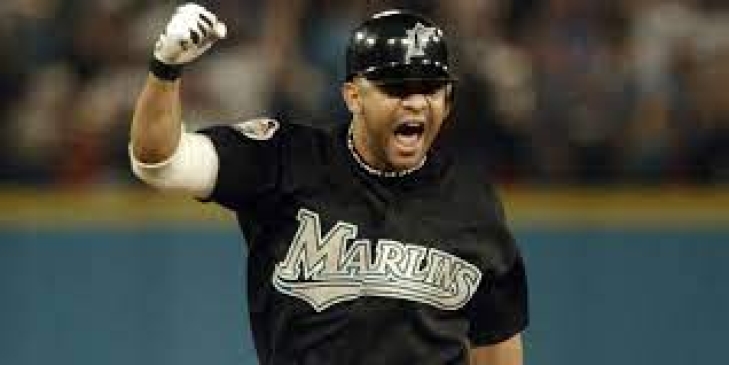
Alex Gonzalez arrived in Miami in late 1998, stepping into a clubhouse still smelling of the championship champagne from the year before, and the fire sale that followed. He was the young, slick-fielding prospect meant to solidify the shortstop position for a new era of Marlins baseball.
In 1999, Gonzalez quickly rose to success, making the All-Star Team as a 22-year-old rookie. He combined gap power and defensive range that the organization believed would make him a star. However, early on, a key flaw emerged: complete resistance to the walk. That season, he had a career-high 155 hits but a low .291 OBP due to his inability to reach base via walks, affecting his stats for the rest of his career.
Gonzalez celebrated a remarkable highlight in the 2003 World Series. His regular season featured consistent offense, with 18 home runs and 33 doubles, but his true legacy was cemented in Game 4. With the series at a critical point, he delivered a dramatic moment by hitting a walk-off home run in the 12th inning off Jeff Weaver, tying the series at two games each. This pivotal moment was a key factor in the Marlins' surprising victory over the Yankees.
Although Gonzalez hit a career-high 23 home runs in 2004, his defensive performance was inconsistent, with only one season in Florida where his Defensive bWAR exceeded 1.0. His power was balanced by high strikeout rates and ongoing discipline issues at the plate, resulting in a career Marlins bWAR below 2.0. He was traded to Boston after the 2005 season and accumulated 788 hits for the Fish.
31. Brad Penny
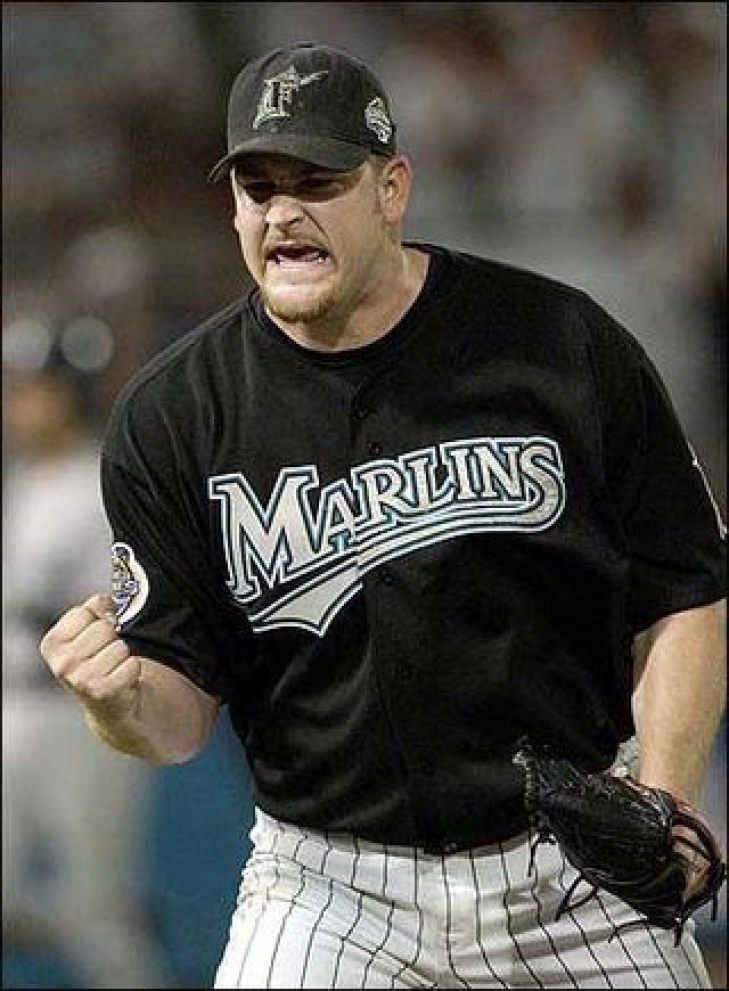
Traded to the Marlins while still in the minors with Arizona, Brad Penny proved himself a hard-throwing right-hander with a commanding mound presence. He quickly went from prospect to reliable starter. Although he later became an All-Star in Los Angeles, his time in Miami was marked by consistent pitching that helped secure the franchise's second championship.
In 2000, Penny became a regular in the rotation, and by 2001, he proved he belonged with a 3.69 ERA and a personal best of 154 strikeouts over 205 innings. During these early seasons, he served as a consistent presence despite roster changes. By 2003, he had established the dependability essential for a deep playoff run, ending the regular season with 14 wins and helping Florida secure a Wild Card spot.
The best story of Penny’s career in South Florida was the 2003 World Series. During baseball’s biggest stage, Penny started and won both Game 1 and Game 5. He was a giant of efficiency in those two outings, allowing only five runs over 14 innings (a 3.21 ERA) and outdueling David Wells and José Contreras. While he wasn't named the MVP of the series, his two victories were the foundational pillars that allowed the Marlins to secure their second World Series title in six games.
He was traded to the Dodgers at the 2004 Trade Deadline but returned for a brief stop a decade later, though he did not play much in his second run. With the Marlins, he had a record of 50-43 with a 4.12 ERA and 583 Strikeouts.
.
47. Al Leiter
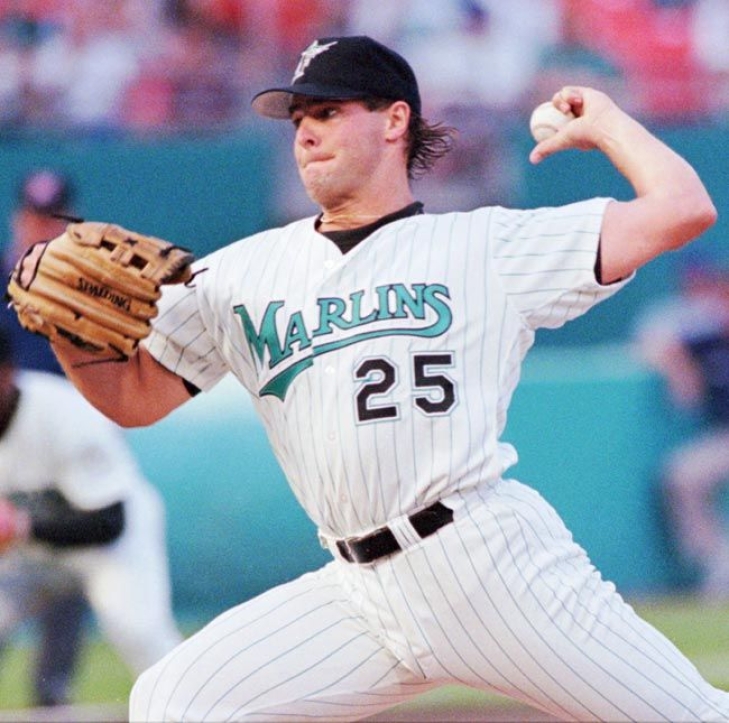
Oft-injured with the Toronto Blue Jays, Al Leiter bolted from the Jays as a Free Agent in 1996 for the sunnier skies of Florida. It was there that he was finally healthy and showed what he was capable of all along.
In 1996, he had his most successful year in professional baseball, posting 16 wins and a career-low ERA of 2.93. On May 11, he demonstrated exceptional command of the mound by pitching a no-hitter against the Rockies, a significant milestone for the young franchise. That summer, he achieved a historic milestone by earning his first All-Star selection, demonstrating that when in optimal health, his specialized "cutter" and high-velocity pitches were among the most effective in the senior circuit.
Leiter reached his peak in team success during the 1997 championship. His regular-season stats dipped, 11 wins and an ERA over 4.30, but he was a key part of Jim Leyland’s rotation. He became a postseason hero in the 1997 World Series, notably pitching six innings of two-run ball in Game 7 against Cleveland, helping the Marlins stay competitive for a late-inning rally.
Like so many 1997 Championship Marlins players, Leiter was part of the biggest baseball fire sale until the team did it again after their 2003 Title. He was traded to the Mets, though he returned as a Free Agent for an ineffective year in 2005.
With the Marlins, Leiter won 30 Games against 28 Losses with a 4.07 ERA.
45. Mark Kotsay
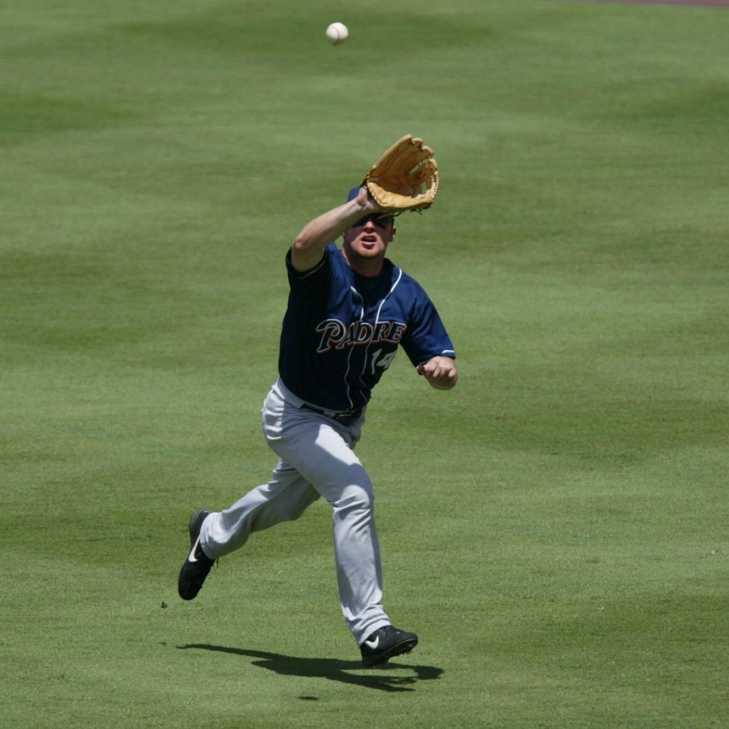
Mark Kotsay came to South Florida in 1997 as the top amateur, after winning the Golden Spikes Award and College World Series at Cal State Fullerton. Drafted ninth in 1996, he quickly reached the majors in under a year.
In 1998, Kotsay excelled defensively, leading all Major League outfielders with 20 assists. He had a strong, cannon-like arm that discouraged baserunners. Despite team struggles after the veteran purge, Kotsay's rookie season was impressive, batting .279 with 11 home runs and a 3.9 bWAR, the highest on the team. He demonstrated complete control of center field, showing that his amateur skills translated well to the professional level.
Kotsay plateaued in offensive efficiency over the next two summers. In 2000, he achieved a career-high .298 average, 12 home runs, and 19 stolen bases. Just days before Opening Day in 2001. In a move that shocked the fanbase, the organization finalized a trade that sent Kotsay to the San Diego Padres in exchange for Matt Clement and Eric Owens.
Kotsay compiled 439 hits, 31 home runs, and a .282 batting average as a Marlin.
