

The Pro Football Hall of Fame Revisited Project: 1971 Final VOTE
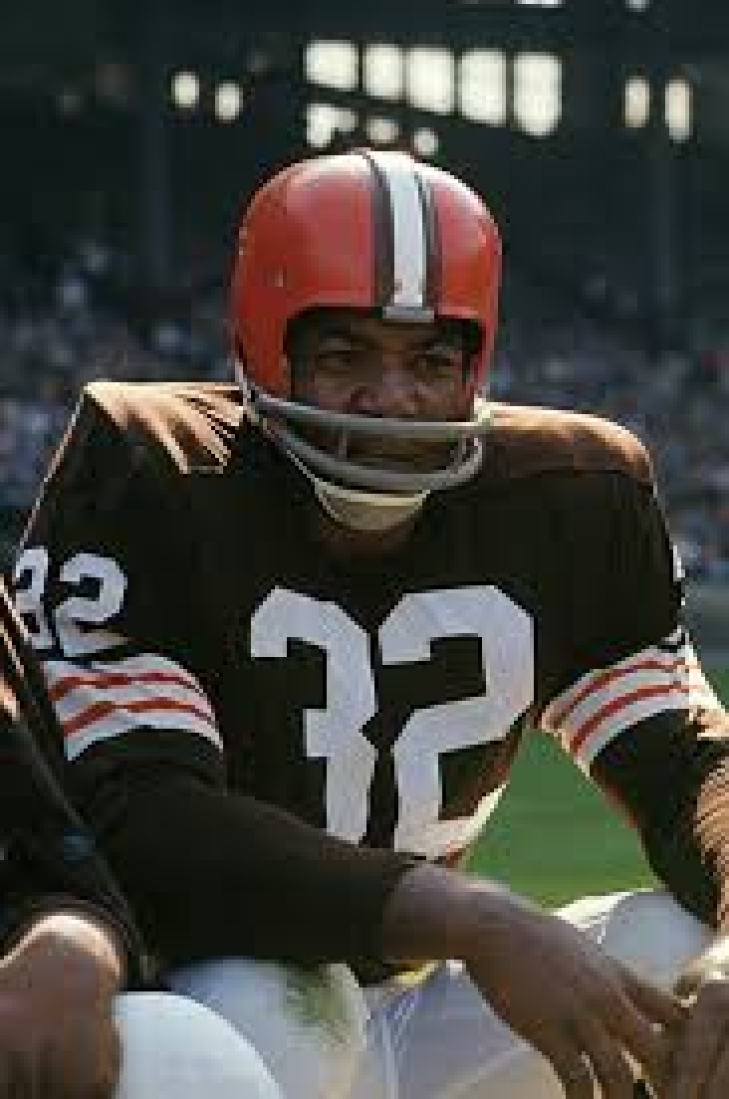
1971 Pro Football Hall of Fame Revisited Project Class.
Here we are! Again!!
If you have been following our Pro Football Hall of Fame Revisited Project, you know we have asked the rhetorical question: What if the PFHOF began in January 1946?
After soliciting and obtaining a passionate group of football fans and historians, we sent out a ballot for a Preliminary Vote, in which we asked each voter to give us 25 names as their semi-finalists and 5 in the Senior Pool. We then asked the group to vote for their 15 Finalists in the Modern Era and 3 in the Senior Category. The final stage was to vote for their five Modern Era inductee and one Senior inductee.
This is the result of the 26th official class;
Below are the final results of this project based on 31 votes.
Remember that the group took a vote in “1970”, and we have reverted to the top five candidates entering the Hall, PROVIDING THEY MAKE 50% of the vote. This will be put to a vote again in “1973”.
This is for the “Modern Era”
*Bold indicates they have been elected to the Pro Football Hall of Fame Revisited Class of 1971:
|
Player |
Year of Eligibility |
Vote Total |
|
Jim Brown FB |
1 |
31 |
|
Dick “Night Train” Lane DB |
1 |
28 |
|
Joe Schmidt LB |
1 |
23 |
|
Hugh McElhenney HB |
2 |
17 |
|
Rosey Brown T |
1 |
16 |
|
Mike McCormack T-G |
4 |
6 |
|
Pat Harder FB |
13 |
5 |
|
Alan Ameche FB |
6 |
5 |
|
Marshall Goldberg FB |
18 |
4 |
|
Charlie Conerly QB |
5 |
4 |
|
Billy Howton E-FL |
3 |
4 |
|
Bucko Kilroy G-MG-T-DT |
11 |
3 |
|
Ward Cuff WB-QB-HB |
19 |
2 |
|
Bill Osmanski FB |
19 |
2 |
|
Gene Lipscomb DT |
4 |
2 |
This is for the “Senior Era”,
*Bold indicates they have been elected to the Pro Football Hall of Fame Revisited Class of 1971.
|
Buckets Goldenberg |
1 |
11 |
|
Joe Kopcha |
10 |
9 |
|
Whizzer White |
5 |
8 |
|
None of the Above |
N/A |
3 |
This is for the “Coaches/Contributors”,
*Bold indicates they have been elected to the Pro Football Hall of Fame Revisited Class of 1971.
|
Bert Bell |
2 |
25 |
|
Clark Shaughnessy |
2 |
4 |
|
Tim Mara |
2 |
2 |
About the 1971 Inductees:
Jim Brown FB, CLE 1957-65: Inducted in the Pro Football Hall of Fame Revisited Project in 1971 on his 1st Ballot. Inducted into the actual Pro Football Hall of Fame in 1971.
Jim Brown is a football god.
We could end it here, but out of deference to the man we think is not only the greatest rusher in the history of game but the best offensive player ever, we will go through all the reasons why Brown is the best player period.
An absolute beast at Syracuse, Cleveland was fortunate that Brown was still available with their Sixth Overall Pick in the 1957 Draft. Brown was an instant star in the National Football League, winning the Rushing Title as a rookie, the Offensive Rookie of the Year and MVP. Brown had a signature moment, rushing for a then record 237 Yards, which stood tall for 14 years.
As Brown’s second year approached, expectations were high, and the Fullback not only met them, he shattered them. Brown rushed for 1,527 Yards, destroying the record, and remember, and this was done in a 12-gae season. He also had a career-high 17 Touchdowns.
Brown played until 1965, and every single year was his gridiron world; everyone else was just living in it. Playing nine seasons (all with Cleveland), Brown was a Pro Bowl in all of them and an eight-time First Team All-Pro and eight-time Rushing Title winner. Even in the season he did not win the Rushing Title (1962), he had career bests in Receiving Yards (517) and Receiving Touchdowns (5). It is not a miscalculation to say that Brown’s ability and playing style changed the game of football forever.
In addition to his MVP as a rookie, Brown won two more (1958 & 1965), and arguably could have won more. While the Browns only one NFL Championship when he was there (1964), Cleveland went to two more Title Games (1957 & 1965), and his mere presence made the Browns an annual contender.
Perhaps the most impressive stat is that Brown had a career Approximate Value of 121 in 118 Games. Only an elite player can average more than one AV/Game, but remember that Approximate Value was not calculable until 1960, meaning that his 121 AV is only through 82 of his Games!
Brown easily could have continued his career, as he was not yet 30 and was coming off another MVP, but he retired after the ’65 campaign, and sought a career in Hollywood. He had 12,313 career Rushing Yards, which at the time, was easily the most ever. Several players have surpassed Brown since them, but all of them needed many more games to do it.
Dick “Night Train” Lane, DB, RAM 1952-53, CRD 1954-59 & DET 1960-65. Inducted in the Pro Football Hall of Fame Revisited Project in 1971 on his 1st Ballot. Inducted into the actual Pro Football Hall of Fame in 1974.
The college experience of Dick “Night Train” Lane was only a year in small Scottsbluff Junior College, a small school in Nebraska. Lane joined the army afterward, and four years later, he asked the Los Angeles Rams for a tryout. Despite the unlikeliness of a man making the team after not playing any competitive game in four years making the NFL, Lane did just that, and would become one of the best Defensive Backs that the gridiron ever saw.
As a rookie, Lane led the NFL in Interceptions (14), a number that still stands today. Lane was inexplicably quick, a devastating tackler, and an absolute phenom who had his story happened in the age of social media, would have become a household name.
The Rams traded Lane to the Chicago Cardinals in his third year, and Lane again led the NFL in picks (12). Lane remained one of the most revered ballhawks, staying with the Cards until he joined Detroit in 1960. Lane retired with 68 Interceptions, and will likely stay in the top ten in that statistic for decades to come.
Joe Schmidt, LB, DET 1953-65: Inducted in the Pro Football Hall of Fame Revisited Project in 1971 on his first Ballot. Inducted into the actual Pro Football Hall of Fame in 1973.
Easily the best defensive player the Detroit Lions have ever had, Joe Schmidt was a dominating Middle Linebacker who would become the defensive captain of the team in 1956 and continue in that role for nine years.
Never leaving Detroit as a player, Schmidt was regarded for his unequalled toughness and was a major part of the last two NFL titles that the Lions won. The 1973 Pro Football Hall of Fame inductee was an eight-time First Team All-Pro and was named the league MVP by United Press.
Hugh McElhenny, HB, SFO 1952-60, MIN 1961-62, NYG 1963 & DET 1964. Inducted in the Pro Football Hall of Fame Revisited Project in 1971 on his 2nd Ballot. Inducted into the actual Pro Football Hall of Fame in 1970.
A First Round Pick from Washington, Hugh McElhenny traveled down the Interstate-5 to begin his professional football career.
McElhenny was the Ninth Overall Draft Pick in 1952, and he was the starting Right Halfback as a rookie. That season, and the one after, were First Team All-Pro and Pro Bowl worthy, and as he was also used as a returner, he led the NFL in All-Purpose Yards (1,731) as a rookie.
While McElhenny's rookie season was not duplicated, he had two other 1,400 APY years with San Francisco, and was a Pro Bowler on three different occasions, giving him five in total as a 49er. McElhenny's run with San Francisco ended after the 1960 season when the Minnesota Vikings chose him in the Expansion Draft. He had 9,100 All-Purpose Yards with 51 Touchdowns with the Niners.
Rosey Brown T, NYG 1953-65. Inducted in the Pro Football Hall of Fame Revisited Project in 1971 on his 1st Ballot. Inducted into the actual Pro Football Hall of Fame in 1975.
Rosey Brown played at Morgan State, a historically black college in Baltimore. The NFL was in the infancy of scouting HBCUs, and the New York Giants landed him in the 27thRound. This selection resulted in the greatest value pick in franchise history.
Early in his career, Brown was one of two African-American players on the Giants, and he helped break racial barriers in the NFL. Brown played his entirety at Left Tackle, and he was among the best in the business. He went to the Pro Bowl for the first time in 1955, beginning a six-year streak of selections. Brown earned First Team All-Pro honors four years in a row, and he was a vital component in New York’s 1956 NFL Championship Team.
Brown continued to be a force in the 1960s, earning three more Pro Bowls and two First Team All-Pros. He retired in 1965 and was considered one of the greatest Lineman in the history of the game.
Bert Bell: Commissioner. Inducted in the Pro Football Hall of Fame Revisited Project in 1971 on his 2nd Coach/Contributors Ballot. Inducted into the actual Pro Football Hall of Fame in 1963.
Bert Bell was the owner of the Philadelphia Eagles (1933-40), and later the co-owner of the Philadelphia Eagles (1941-46), but his induction was based on his role as the NFL Commissioner.
Bell took on that role in 1946, and oversaw his league in their rivalry against the AAFC. He would broker the merger of the two leagues at the end of the 1949 Season (adding the Cleveland Browns, San Francisco 49ers and Baltimore Colts) and he was vehemently against gambling, ensuring repercussions to anyone who might tarnish the game by keeping the game’s integrity. Bell’s biggest contribution was his foresight in regards to the new medium of television.
To ensure fans would go to the games, he initiated televised blackouts, and pioneered television “timeouts.” He recognized the NFL Player’s Union, against the will of the owners, realizing that it was for the betterment of the game. He remained the NFL Commissioner until he died in 1959.
Under Bell, the game grew astronomically. Following his passing, the Maxwell Football Club (which was founded by Bell) awards their version of the MVP, which is named after Bell.
RIP: Joe Schmidt

Detroit lost a legend today.
Joe Schmidt, who played for the Lions from 1953 to 1965, passed away at 92.
Easily the best defensive player the Detroit Lions have ever had, Joe Schmidt was a dominating Middle Linebacker who became the team's defensive captain in 1956 and continued in that role for nine more years.
Joe Schmidt's loyalty to Detroit was unwavering. He never left as a player, and his unequalled toughness was a defining characteristic. His role in the last two NFL titles that the Lions won is a testament to his dedication. The 1973 Pro Football Hall of Fame inductee was an eight-time First Team All-Pro and was named the league MVP by United Press.
He entered the Pro Football Hall of Fame in 1973.
We at Notinhalloffame.com would like to extend our condolences to Joe Schmidt's fans, friends, and family.
Our All-Time Top 50 Detroit Lions have been revised (sort of) to reflect the 2023 Season
Yes, we know that this is taking a while!
As many of you know, we at Notinhalloffame.com are slowly generating the top 50 of each major North American sports team. That being said, we have existing Top 50 lists and consistently look to update them when necessary and based on necessity. As such, we are delighted to present our post-2023 revision of our top 50 Detroit Lions.
As for all of our top 50 players in football, we look at the following:
1. Advanced Statistics.
2. Traditional statistics and how they finished in the National Football League.
3. Playoff accomplishments.
4. Their overall impact on the team and other intangibles that are not reflected in a stat sheet.
Last year, the Lions made it to the NFC Championship Final and have finally built a contender after decades of mediocrity. That being said, this is one of the oldest teams in the NFL, and with their stars being so young, none of them broke into the Top 50. Nevertheless, we always acknowledge that we took the previous season into account.
As always, we present our top five, which (obviously) saw no changes:
1. Barry Sanders
2. Joe Schmidt
3. Bobby Layne
4. Dutch Clark
5. Lem Barney
You can find the entire list here.
We thank you for your continued support of our lists on Notinhalloffame.com.
Our All-Time Top 50 Detroit Lions have been revised to reflect the 2022 Season
Yes, we know that this is taking a while!
As many of you know, we here at Notinhalloffame.com are slowly generating the 50 of each major North American sports team. That being said, we have existing Top 50 lists out and we always consistently look to update them when we can and based on necessity. As such, we are very happy to present our post 2022 revision of our top 50 Detroit Lions.
As for all of our top 50 players in football we look at the following:
1. Advanced Statistics.
2. Traditional statistics and how they finished in the National Football League.
3. Playoff accomplishments.
4. Their overall impact on the team and other intangibles not reflected in a stat sheet.
Last year, the Lions again failed to make the post-season, but the second half saw a team on the rise, and it could bode well this upcoming season. Despite the promise, this is a young squad, and 2022 did not yield any changes in our Top 50. Despite this, we always aim for transparency, and want to show that 2022 was factored into this rank.
As always, we present our top five, which had no changes (obviously).
2. Joe Schmidt
3. Bobby Layne
4. Dutch Clark
5. Lem Barney
You can find the entire list here.
We welcome your input and comments and as always, we thank you for your support.
2. Joe Schmidt
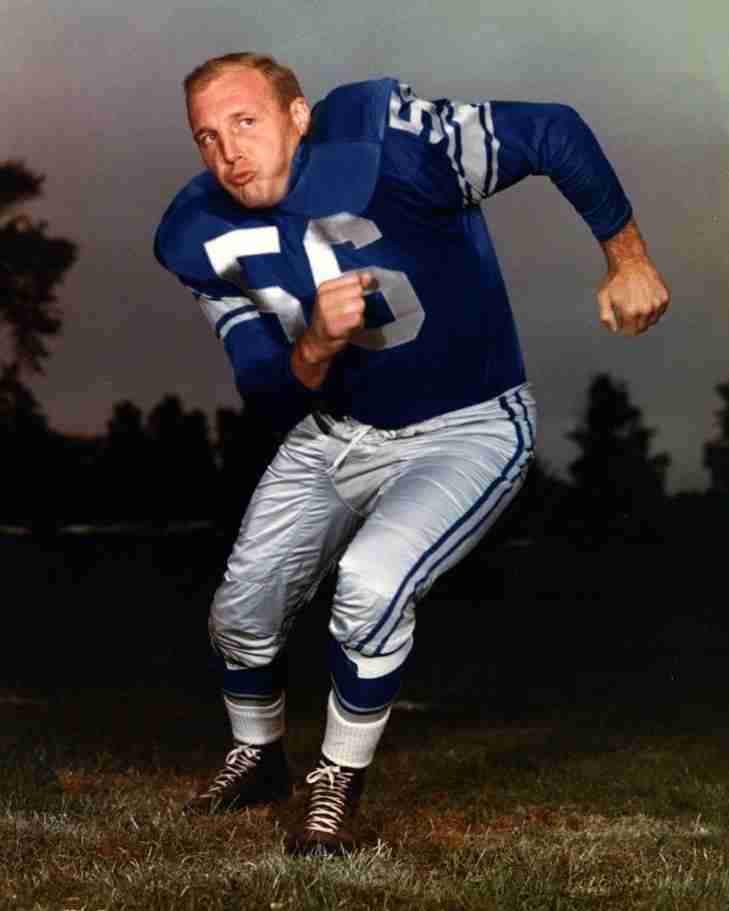
Selected in the seventh round of the 1953 NFL Draft out of Pittsburgh, Joe Schmidt came to the Motor City as an unheralded rookie with an incredible nose for the football. He quickly carved out a starting spot on a defense loaded with future Hall of Famers, making an immediate impact during Detroit's drive to the 1953 NFL Championship. By his second season, Schmidt had established himself as the absolute anchor of the Lions' defense, earning the first of ten consecutive Pro Bowl selections in 1954.
As head coach Buddy Parker installed the newly evolving 4-3 defense, Schmidt revolutionized the middle linebacker position. He brought unprecedented tactical instincts to the middle of the field, dropping seamlessly into pass coverage to blank opposing tight ends while maintaining the speed and instincts to fill run lanes from sideline to sideline. Named defensive captain in 1956—a leadership role he held for nine seasons—he essentially operated as an extension of the coaching staff, calling all defensive audibles at the line of scrimmage with uncanny accuracy.
Physically, Schmidt possessed a rare combination of brute strength and lateral range that set a brand-new prototype for the middle linebacker position. Listed at 6-foot-1 and 220 pounds, he was built like a granite slab, yet he maneuvered through traffic with the footwork of a safety. Rather than absorbing blocks from 250-pound guards, he used his fast hands and quick reads to slip underneath interior linemen, blowing up plays in the backfield before they could even materialize. His signature tackling form was devastating—a chest-to-chest blow that stopped ballcarriers in their tracks—and his sheer physical presence dictated how offenses approached the center of the field.
Schmidt reached the peak of his career in 1957, shining brightly as the defensive leader. He delivered an unforgettable season, with an impressive 157 tackles (80 solo) over 12 games, showcasing his talent and dedication. The United Press honored him with the NFL MVP award—an exceptional achievement for a defensive player—and he was also named to the First-Team All-Pro for the fourth year in a row. His remarkable season culminated in a spectacular performance during the 1957 NFL Championship Game, where he effectively contained rookie Jim Brown and the Cleveland Browns, helping Detroit secure a commanding 59–14 victory.
Opposing offenses really struggled to find an opening against him during his peak. When teams tried to throw over the middle, Schmidt would drop back into zone coverage with ease, grabbing 24 interceptions over his career. If they tried to run around the edges, his relentless energy and quick pursuit along the sidelines often forced runs out of bounds for only short gains. His knack for reading snap counts and spotting play-action fakes gave the Lions a clear strategic edge every time they took the field.
During his prime, Schmidt established one of the most impressive stretches by any NFL defender, earning eight First-Team All-Pro honors over nine seasons (1954–1957, 1958–1962). His strong leadership on defense made him a natural fit for coaching after retiring following the 1965 season. Schmidt joined the Lions' coaching staff as linebackers coach in 1966 and became head coach from 1967 to 1972, leading Detroit to four winning seasons and reaching the 1970 playoffs.
Schmidt played 13 seasons in Detroit (1953–1965), with 155 games, 24 interceptions, and 17 fumble recoveries as a top middle linebacker. He was named to the NFL 1950s All-Decade Team, had his No. 56 jersey retired by the Lions, and joined the Pride of the Lions in 2009. Inducted into the Pro Football Hall of Fame in 1973, he was also selected for the NFL 100th Anniversary All-Time Team.
