

5. Cy Young
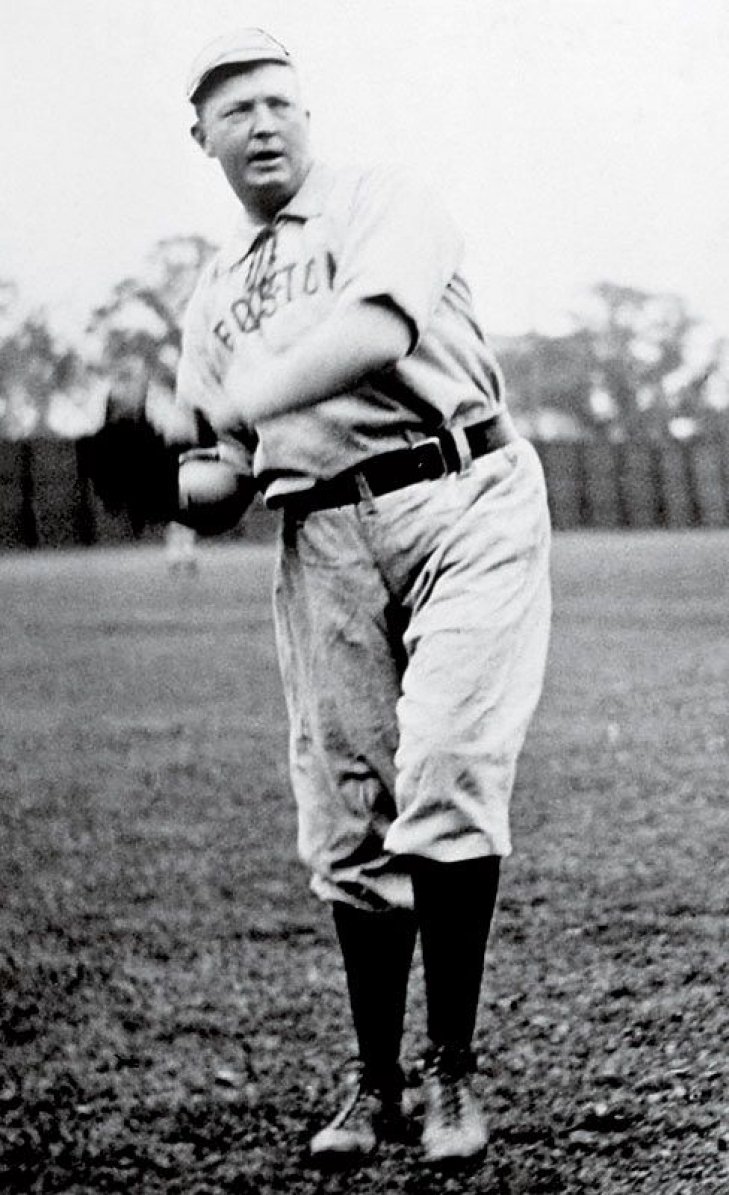
By the time Denton True "Cy" Young joined the upstart Boston Americans for their inaugural 1901 season, he was already a legend with 267 wins to his name. Many expected the 34-year-old to be in the twilight of his career, but "The Cyclone" instead authored a second act that defined the birth of modern baseball. In his first year in Boston, he secured the American League’s first Pitching Triple Crown, leading the league in Wins (33), ERA (1.62), and Strikeouts (158).
Young’s dominance in the early 1900s was a clinic in efficiency. He followed his Triple Crown with back-to-back seasons leading the AL in Wins (32 in 1902 and 28 in 1903). His 1903 campaign was a masterpiece, as he famously threw the first pitch in modern World Series history and earned two wins to lead Boston to the inaugural championship. His control was so precise that he led the AL in WHIP and Strikeout-to-Walk ratio nearly every year, proving that velocity was nothing without his signature "cyclone" precision.
On May 5, 1904, Young achieved a feat of such advanced quality that remains one of the greatest single-game performances in history: the first perfect game in American League history. Out-dueling the eccentric Rube Waddell, Young retired all 27 Philadelphia Athletics in just 83 minutes. This was part of a staggering stretch where he didn't allow a hit for 24 consecutive innings, a record that stood as a testament to his untouchable command during the Deadball Era.
Young remained a workhorse for Boston through 1908, remarkably recording three more 20-win seasons as he pushed past the age of 40. Before being traded to Cleveland in 1909, he amassed 192 wins in a Boston uniform—a franchise record he currently shares with Roger Clemens. He finished his Boston tenure with a microscopic 2.00 ERA, 1,341 strikeouts, and a 0.970 WHIP, figures that set an impossible bar for every Red Sox pitcher who followed.
Inducted into the Baseball Hall of Fame in 1937 as part of its second class, Young was later honored as a charter member of the Boston Red Sox Hall of Fame. As for this high rank, it is a testament to how good he was, even though eight of his legendary 22 seasons were in Boston.
2. Carl Yastrzemski
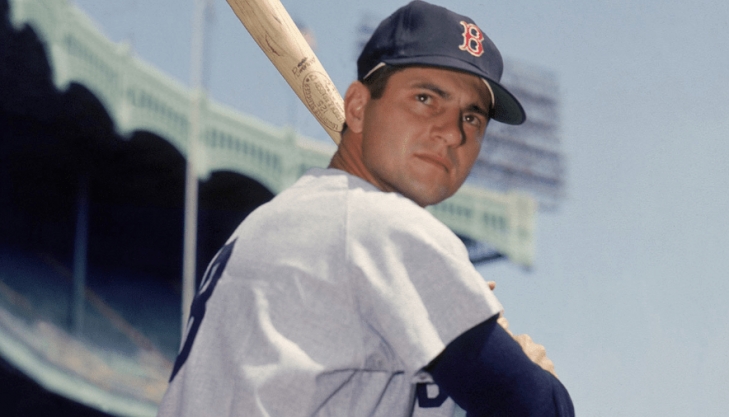
Carl Yastrzemski famously stepped into the vacuum left by Ted Williams in 1961, taking over left field and the mantle of the franchise’s premier hitter. Like his predecessor, Yaz was a "Lifer" who spent his entire 23-season career (1961–1983) with the Red Sox. While he too was unable to secure a World Series ring, his career was a testament to elite consistency and high-stakes production, leading Boston through two of its most iconic "Impossible Dream" eras.
The pinnacle of Yastrzemski’s career arrived in 1967, in an era where pitchers ruled the mound, Yaz authored a Triple Crown masterpiece, leading the American League in Batting Average (.326), Home Runs (44), and RBIs (121). He swept the leaderboards, also topping the AL in Runs Scored, Hits, OBP, and Slugging to easily secure the MVP. It was a season of singular brilliance that single-handedly willed the Red Sox to the 1967 Pennant.
Beyond the power of '67, Yaz was a versatile offensive force, securing Batting Titles in 1963 and 1968 and leading the league in On-Base Percentage five times. While he may not have matched Williams’ pure hitting metrics, he far surpassed him with the leather. An 18-time All-Star, Yaz was a defensive technician, winning 7 Gold Gloves and leading the league in assists 8 times. His five seasons leading AL Left Fielders in Total Zone Runs identify him as a premier two-way outlier.
Yaz's postseason resume proves he was a big-game performer. In 17 high-pressure October games across 1967 and 1975, he posted a staggering .369/.447/.600 slash line with four home runs and 11 RBIs. Though the supporting cast often fell just short of the ultimate prize, Yastrzemski’s personal performance in the clutch was beyond reproach. He was the heartbeat of the '67 "Impossible Dream" and the 1975 squad that participated in arguably the greatest World Series ever played.
By the time he retired after the 1983 season, Yastrzemski had rewritten the Red Sox record books through sheer longevity and talent. He remains the all-time franchise leader in Runs Scored (1,816), Hits (3,419), Doubles (646), and Runs Batted In (1,844). These volume-dense totals make him the absolute anchor for Category 1 in our framework, representing a level of career accumulation that few in the sport's history can rival.
Yastrzemski was a first-ballot Hall of Fame inductee in 1989, the same year the Red Sox retired his legendary Number 8. He was also a foundational member of the inaugural Red Sox Hall of Fame class in 1994. In Fenway, Yaz represents the transition from the individual brilliance of the Williams era to the gritty, all-around excellence that defined the Red Sox for the next quarter-century.
1. Ted Williams
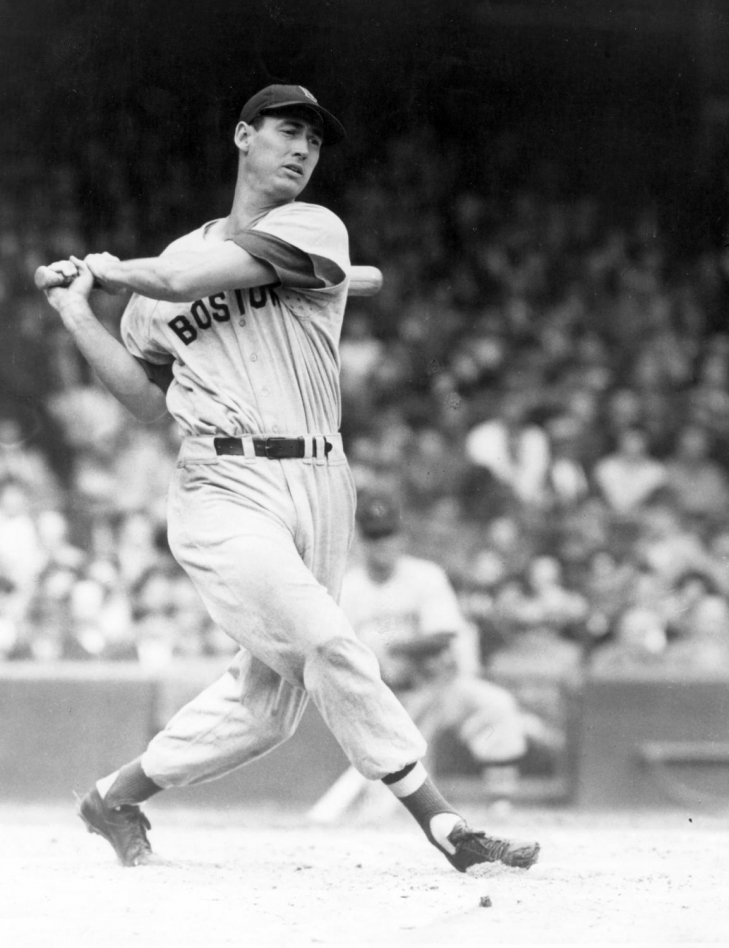
Were you expecting someone else?
As incredible as Ted Williams was, it is a bit lost just how good he was. Part of this is because so much time has passed; part because his Red Sox only won one American League Pennant.
Williams remains the gold standard for hitting, even if the passage of time and the Red Sox's lack of postseason hardware during his era sometimes obscure his true brilliance. Spending his entire 19-season career in Boston (1939–1960), Williams’ tenure was only interrupted by three years of military service during World War II. His rookie season in 1939, where he batted .327 with 31 home runs and a league-leading 145 RBIs, was a perfect showcase of the offensive juggernaut he would become for the next two decades.
Before the war, Williams embarked on a legendary tear, securing three Runs Scored titles, two Batting titles, and leading the league in OBP and Home Runs multiple times. Most notably, his 1941 campaign saw him finish with a .406 average—the last time any player has reached that magical mark. Despite winning the Triple Crown and leading the AL in bWAR in both 1941 and 1942, he was remarkably overlooked for the MVP award both times, finishing as the runner-up to Joe DiMaggio and Joe Gordon as the Yankees claimed the Pennant.
Upon his return in 1946, Williams immediately reclaimed his throne as the game's premier hitter. Between 1946 and 1950, he added two more Batting titles and consistently led the American League in On-Base Percentage and Slugging. It was during this prolific stretch that he earned his two MVP awards (1946 and 1949), and even in the years he didn't win, he was a fixture in the top three of the voting. He continued to be a statistical outlier, securing his final Home Run and RBI titles during this period.
While injuries began to take a toll as he entered his 30s, Williams remained remarkably productive whenever he was in the lineup. He continued to dominate the leaderboards well into the 1950s, winning two more Batting titles in 1957 and 1958 and leading the league in OBP five more times between 1951 and 1958. With the exception of a single down year in 1959, he maintained a batting average over .300 throughout his entire career, proving that his technical mastery of the strike zone was immune to the traditional aging curve.
It is often noted that Williams only led the Red Sox to a single American League Pennant; this is viewed through the lens of his competition. He spent his career battling a Yankee dynasty that featured legends like DiMaggio, Mantle, and Berra. Furthermore, while Williams was never known for his speed or defensive prowess, his offensive contributions were so overwhelming that those shortcomings were largely rendered irrelevant. He concluded his career in 1960 in spectacular fashion, still hitting .316 with 29 home runs in his final season.
Ted Williams retired as the all-time franchise leader in Batting Average, OBP, Slugging, and Home Runs—records that still stand today. His career slash line of .344/.482/.634 is headlined by his .482 On-Base Percentage, which remains the highest in the history of Major League Baseball. Inducted into the Hall of Fame in 1966 on his first ballot, "The Splendid Splinter" remains the benchmark against which all other hitters are measured, a "Lifer" who carried the identity of the Red Sox through two decades of excellence.
How can that ever change?
11. Dustin Pedroia
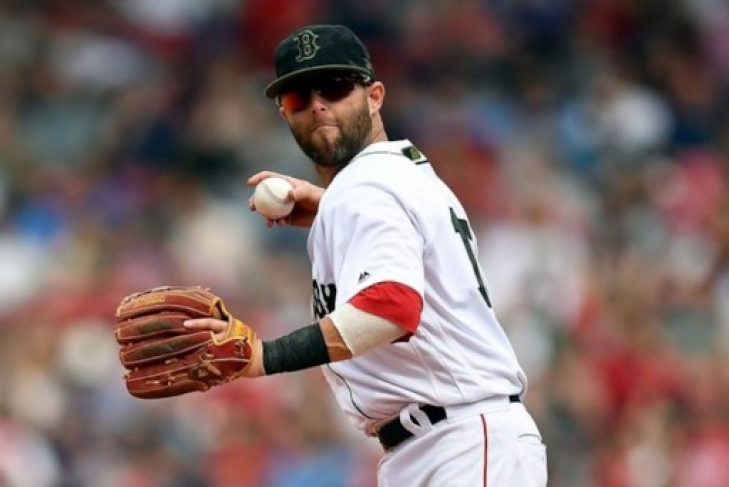
Dustin Pedroia arrived in Boston in 2006 and immediately shattered every expectation regarding his size. By 2007, the "Laser Show" was in full effect as he secured the American League Rookie of the Year award with a .317 average and 165 hits. He punctuated his rookie campaign in legendary fashion, becoming the first rookie in MLB history to lead off a World Series with a home run (Game 1, 2007), setting the tone for the first of his three World Series rings in a Red Sox uniform.
If 2007 was the introduction, 2008 was the takeover. In one of the most decorated single seasons for a second baseman, Pedroia won the AL MVP, led the league in Runs Scored (118), Hits (213), and Doubles (54), and swept the Gold Glove and Silver Slugger awards. He became only the third player in history to win ROY and MVP in consecutive seasons, proving that his high-intensity approach was a sustainable, elite-level weapon.
Pedroia’s impact extended far beyond the box score. A four-time Gold Glove winner and four-time All-Star, he was the defensive and emotional anchor of the infield for over a decade. He combined surprising power—recording five seasons of 15+ home runs—with elite baserunning, stealing 20 bases on four different occasions. He was also defined by his leadership during the "Boston Strong" 2013 championship run, where he played 160 games and served as the dugout's unwavering heartbeat.
Tragically, a severe knee injury in 2017 effectively cut his career short in its prime. Despite his relentless efforts to return, he was limited to just nine games across the 2018 and 2019 seasons. He officially retired after the 2020 season, finishing with 1,805 hits and a career .299 batting average—falling just a fraction short of the .300 mark due to his final injury-plagued at-bats. He remains a "Lifer" in every sense of the word, having spent all 14 seasons of his career in the Red Sox organization.
Inducted into the Red Sox Hall of Fame in 2024, Pedroia’s legacy as the quintessential "Grinder" is set in stone.
6. David Ortiz
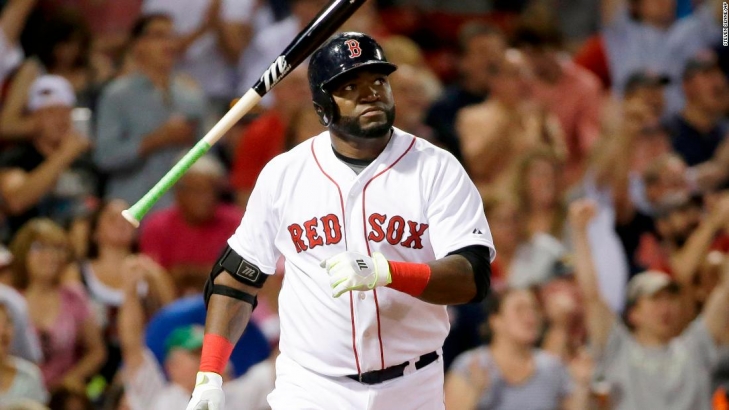
David Ortiz arrived in Boston in 2003 as a Minnesota castoff and left fourteen years later as a New England immortal. The legend of "Big Papi" began almost immediately; in his debut season, he powered 31 home runs and drove in 101, but it was the following year that he became the face of a revolution. As the anchor of the 2004 squad, Ortiz’s walk-off heroics in the ALCS earned him the ALCS MVP and paved the way for the Red Sox to finally "Reverse the Curse" and secure their first World Series title in 86 years.
For the next decade, Ortiz was the most feared power threat in the American League. He produced eight more seasons with 30+ home runs, including a massive 2006 campaign in which he set a franchise record with 54 home runs while leading the league in RBIs (137) and Walks (119). Despite the "DH penalty" often applied by voters, Ortiz’s offensive efficiency was so undeniable that he finished in the top five of the MVP voting for five consecutive seasons (2003–2007), proving he was more than just a slugger; he was an elite efficiency engine.
Ortiz’s ability to hit for average and maintain a disciplined eye was a hallmark of his game. A ten-time All-Star, he batted over .300 seven times in a Boston uniform and secured the AL On-Base Percentage title in 2007. His postseason resume, however, is what truly separates him from the pack. A vital part of three World Series titles (2004, 2007, 2013), Ortiz’s performance in the 2013 Fall Classic was otherworldly, earning him World Series MVP honors after batting a staggering .688 during the series.
Even in his final act, Ortiz refused to slow down, authoring what is widely considered the greatest "swansong" in baseball history. At age 40, he led the American League in Doubles (48), RBIs (127), Slugging (.620), and OPS (1.021). He retired at the absolute peak of his powers, leaving the game not because he had to, but because he had nothing left to prove. He finished his Red Sox career with 483 home runs and 1,530 RBIs, cementing his status as a "Lifer" in spirit, if not by technicality.
Inducted into the Baseball Hall of Fame in 2022 on his first attempt, Ortiz saw his Number 34 retired at Fenway Park just three years later. He remains the all-time postseason benchmark for the franchise, holding 17 home runs and a legendary reputation for high-leverage dominance. In the Fenway Lab, Ortiz isn't just a designated hitter; he is the singular force who turned the Red Sox into the most successful franchise of the 21st century.
7. Pedro Martinez
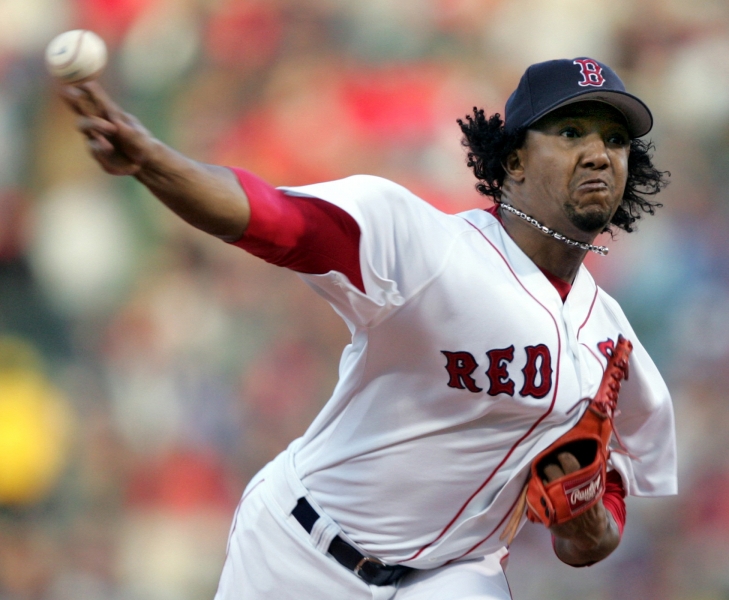
The Montreal Expos’ loss was the Boston Red Sox's eternal gain. Arriving via trade in 1998, Pedro Martinez didn’t just join the Boston rotation; he revolutionized it. After a stellar debut season where he finished second in Cy Young voting, Martinez embarked on a two-year stretch that defied the laws of physics. In 1999, he secured the Pitching Triple Crown, leading the American League in Wins (23), ERA (2.07), and Strikeouts (313). His 1.39 FIP that year remains a beacon of dominance, signaling a pitcher who was entirely independent of his defense.
If 1999 was a masterpiece, 2000 was a miracle. Martinez authored a 1.74 ERA in an era where the league average was nearly three runs higher. He set an MLB record at the time with a 0.737 WHIP, essentially rendering the opposition's bats obsolete. While he finished fifth in MVP voting that year, his second consecutive Cy Young confirmed what the Lab already knew: Pedro was the most dominant force on the planet. His postseason contributions during this peak were equally legendary, particularly his six hitless relief innings against Cleveland in the 1999 ALDS—a definitive highwater mark.
Despite a shoulder injury in 2001, Pedro remained untouchable upon his return. In 2002, he went 20–4, leading the league in ERA (2.26), Strikeouts (239), and WHIP (0.923). Though he was controversially denied a third straight Cy Young in favor of Barry Zito, the metrics proved Pedro was the superior outlier. He followed this with another ERA title in 2003 (2.22), continuing to suppress runs at a rate that seemed impossible given the offensive explosion occurring across the rest of the league.
The final chapter of his Boston story was the most emotional. While 2004 was statistically his "weakest" regular season, it served as his crowning achievement. Pedro was the emotional and competitive heart of the team that broke the 86-year curse. His performance in the 2004 World Series—seven shutout innings to earn a win in Game 3, was the perfect exclamation point on his Fenway tenure, ensuring that he left Boston not just as a statistical titan, but as a champion.
Pedro left Boston for the Mets in 2005, carrying with him a spectacular record of 117–37, a 2.52 ERA, and 1,683 strikeouts. His winning percentage in a Red Sox uniform is a staggering testament to his efficiency. Inducted into the Baseball Hall of Fame in 2015, the Red Sox wasted no time retiring his Number 45 that same year. Pedro represents the pinnacle of peak value, a player who proved that in the right hands, a baseball could be a weapon of pure mathematical dominance.
3. Roger Clemens
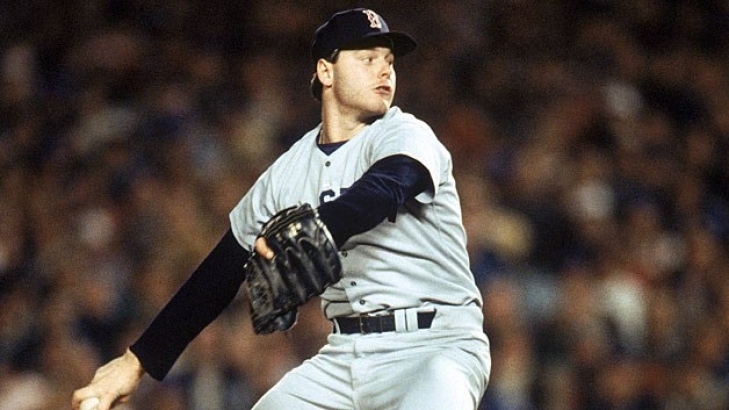
Roger Clemens arrived in Boston in 1984 as a power-pitching revelation, a Texas-sized arm that would redefine the "Rocket" nickname at Fenway Park. While his first two seasons showed glimpses of brilliance, his 1986 campaign was a historic explosion that remains the gold standard for Red Sox pitching. That year, Clemens became the rare pitcher to sweep the AL MVP and Cy Young awards, leading the league in Wins (24), ERA (2.48), and WHIP (0.969) while carrying Boston to the brink of a World Series title.
The “Rockets’" dominance was a nightly attraction. From 1986 to 1992, he was arguably the premier hurler in the game, securing two more Cy Young Awards (1987 & 1991) and authoring a monumental 20-strikeout game that stands as one of the most dominant single-game performances in baseball history. During this stretch, he was an efficiency machine, winning three more ERA titles and two Strikeout crowns, proving that his high-velocity "fuel" was inexhaustible.
Even as injuries slowed his pace in the early 90s, his metrics remained elite. Despite a losing record in 1995, Clemens showcased his enduring power by securing his third Strikeout Title with 257 punchouts. While the Red Sox front office infamously believed his peak was behind him when he departed for Toronto in 1997, his 13 seasons in Boston had already built a resume that remains unmatched in the franchise's modern era.
Clemens left Boston with a staggering record of 192–111, a 3.06 ERA, and 2,590 strikeouts. Though his career remains shadowed by PED suspicions that have barred him from Cooperstown, his place in Boston history was formalized with his induction into the Red Sox Hall of Fame in 2014. He remains the statistical ceiling for Boston pitchers, an anchor who proved that for over a decade, the road to the AL East title went directly through the Rocket's right arm.
While later chapters of his career would bring World Series rings and more hardware in other uniforms, his foundational years at Fenway defined an era of Boston baseball.
14. Manny Ramirez
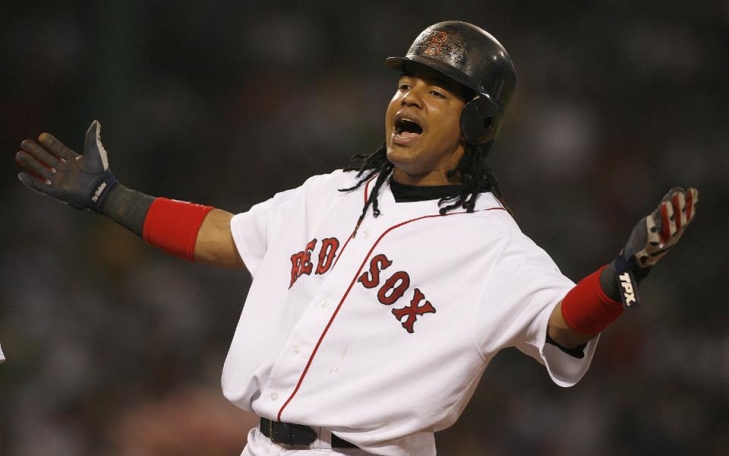
"Manny being Manny" was a phrase that captured the enigmatic, often brilliant, and occasionally baffling nature of Manny Ramirez. While he arrived in Boston in 2001 as an established star from Cleveland, it was at Fenway Park where he became a global icon. Ramirez was a Red Sox All-Star in every one of his eight seasons, serving as the surgical right-handed counterpart to David Ortiz’s left-handed power. Together, they formed a middle-of-the-order tandem that redefined the power game for the BoSox.
Ramirez’s statistical consistency in Boston was staggering. In each of his seven full seasons with the Red Sox, he launched at least 33 home runs, peaking with an American League Home Run Title (43) in 2004. He won the AL Batting Title in 2002 (.349) and securing three OBP titles. His ability to control the strike zone was elite; he never finished a season in Boston with an On-Base Percentage lower than .388. This sustained excellence made him a fixture in the MVP conversation, finishing in the top ten in five consecutive seasons (2001–2005).
While his regular-season numbers were Hall of Fame-caliber, his postseason impact cemented his legend. Ramirez was the engine of the 2004 and 2007 World Series championships, notably earning 2004 World Series MVP honors after batting .412 in the sweep of St. Louis. He retired from the Red Sox with 11 postseason home runs and 38 RBIs, numbers that highlight his status as one of the greatest high-leverage hitters to ever wear the uniform.
However, the "Manny being Manny" era ended in a storm of controversy. By 2008, his behavior began to overshadow his production. A dugout brawl with teammate Kevin Youkilis and a physical altercation with 64-year-old traveling secretary Jack McCormick over complimentary tickets created an untenable environment. When he began to "dog it" on the field, the front office made the difficult decision to trade him to Los Angeles. His legacy was further complicated by two subsequent PED suspensions, which effectively ended his chances at a first-ballot Cooperstown induction.
Ramirez finished his Boston career with 1,232 hits, 274 home runs, and a massive .312/.411/.588 slash line. Despite the turbulent exit, his on-field contribution was undeniable; without him, the "Curse of the Bambino" might still be intact. Recognizing this impact, the Red Sox inducted Ramirez into the Red Sox Hall of Fame in 2020.
10. Bobby Doerr
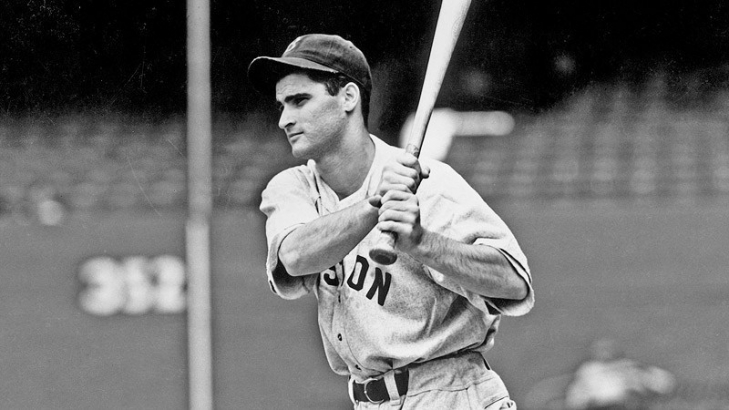
Bobby Doerr was the steady engine of the Red Sox for the entirety of his 14-year Major League career (1937–1951). Arriving as a teenager, he became a permanent fixture at second base by 1938 and quickly earned a reputation as one of the most reliable defensive infielders in the game. A nine-time All-Star, Doerr was the "Silent Captain" of the legendary Teammates era, providing a consistent glove and a surprisingly potent bat that made him a premier offensive threat at his position.
Doerr’s offensive peak showcased a rare combination of average and power for a middle infielder. He batted over .290 six times and was a consistent run producer, recording six seasons with over 100 RBIs. His 1944 campaign stands out as a masterpiece of efficiency; despite the war-depleted rosters, Doerr led the American League with a .528 Slugging Percentage and finished a close second in the batting race at .325. This elite production earned him significant MVP attention throughout the decade, including a career-best third-place finish in 1946.
Defensively, Doerr was the gold standard of his era. He led AL second basemen in double plays five times and fielding percentage four times, once handling 414 consecutive chances without an error— a staggering record at the time. Whether it was his range or his reliable hands, his defensive metrics as a high-floor anchor for Boston squads/ Even when his career was cut short at age 33 due to spinal issues, he had already amassed 2,042 hits and 223 home runs, totals that ranked him among the greatest offensive second basemen in history at the time of his retirement.
Like many of his peers, Doerr’s career included a sacrifice for his country, as he missed the 1945 season to serve in the U.S. Army. He returned in 1946 without missing a beat, driving in 116 runs and leading the Red Sox to the World Series, where he batted a brilliant .409 in the seven-game set.
In 1986, the Veterans Committee officially recognized Doerr's greatness with an induction into the Baseball Hall of Fame. That same year, the Red Sox honored him by retiring his Number 1, and he was fittingly included in the inaugural class of the Red Sox Hall of Fame in 1995.
13. Lefty Grove
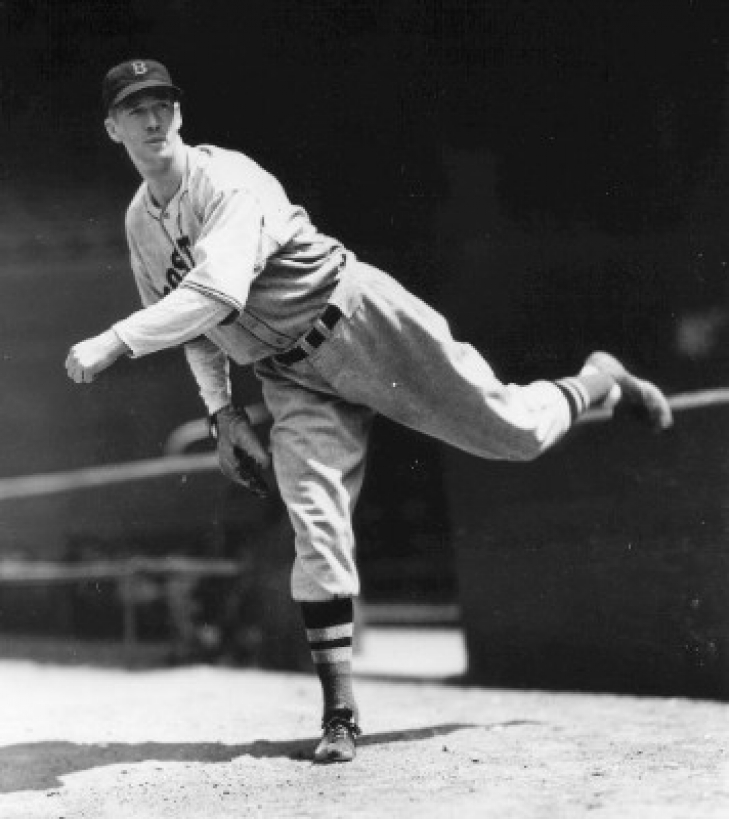
Lefty Grove arrived in Boston in 1934 under the shadow of a "fire sale" in Philadelphia and a disastrous first year at Fenway. Initially, it appeared the legendary southpaw was finished; plagued by arm trouble, he struggled to an 8–8 record and a career-worst 6.50 ERA. However, what followed was one of the most remarkable transformations in pitching history. Grove abandoned the raw power that had defined his youth and reinvented himself as the craftiest pitcher in the American League.
From 1935 to 1939, Grove became a statistical anomaly. Despite being in his mid-to-late 30s, he secured four ERA titles for the Red Sox (1935, 1936, 1938, and 1939). Even more impressive in advanced metrics, Grove led all AL pitchers in bWAR for three consecutive seasons (1935–1937), proving he was the most valuable arm in the league long after his supposed expiration date.
Though his strikeout totals dipped, Grove’s efficiency skyrocketed. He remained the staff ace for a Red Sox team on the rise, providing a veteran anchor for a clubhouse that would soon include icons like Ted Williams and Bobby Doerr. On July 25, 1941, at the age of 41, Grove achieved one final milestone in a Boston uniform: his 300th career victory, a 10–6 complete-game win over the Cleveland Indians at Fenway Park. It would be the final win of his career, a moment of legacy that cemented his status as a titan of the sport.
Grove retired after the 1941 season with a Boston record of 105–62, a winning percentage (.629) that showcased his ability to win even when he wasn't at his physical peak. Inducted into the Baseball Hall of Fame in 1947, he was later named a charter member of the Boston Red Sox Hall of Fame.
12. Tris Speaker
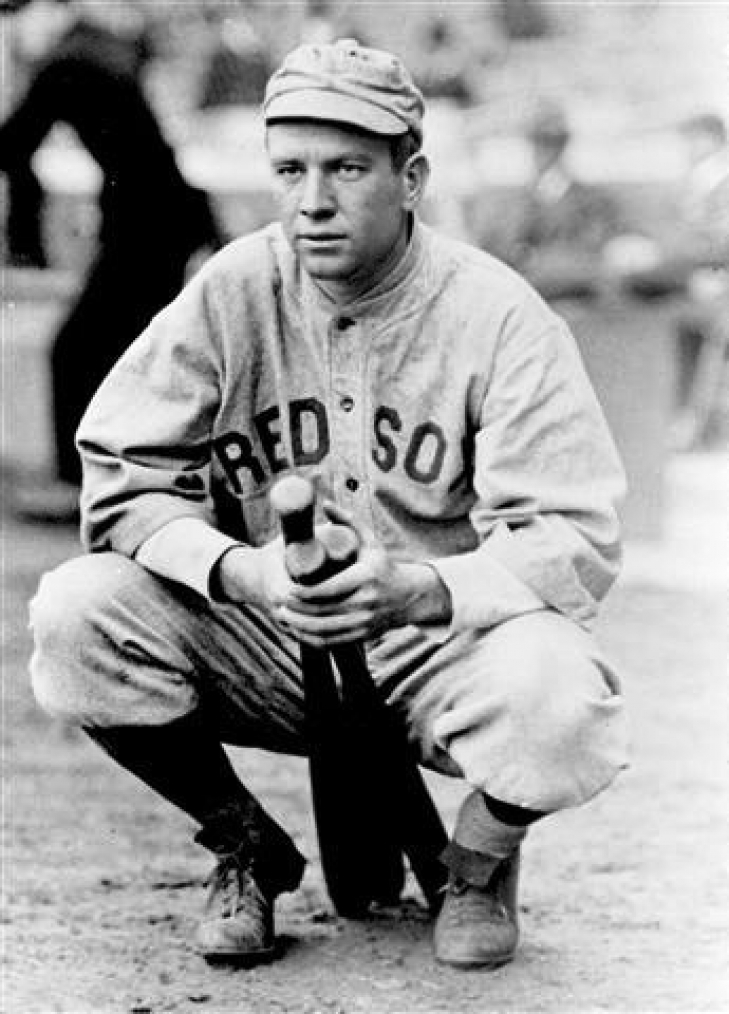
The Hall of Fame career of Tris Speaker began in Boston, where he debuted in 1907 and quickly entrenched himself as the starting center fielder by 1909. Known as the "Grey Eagle," Speaker revolutionized the position by playing an exceptionally shallow center field, a defensive innovation that allowed him to turn triples into outs and lead the league in outfield assists. Offensively, he was just as dominant, batting .309 in his first full season and embarking on a decade-long stretch where he became a fixture at the top of the American League leaderboards.
Speaker’s 1912 campaign stands as one of the greatest individual seasons in Red Sox history. That year, he batted a staggering .383 and led the American League in Doubles (53), Home Runs (10), and On-Base Percentage (.464). This rare power-and-patience profile earned him the AL MVP (Chalmers Award) and propelled Boston to a World Series Championship. His discipline was legendary; after 1910, Speaker never produced an OBP under .400 during his tenure in Boston.
Speaker was the engine behind two World Series titles in Boston (1912 and 1915), providing the clutch hitting and leadership that defined the franchise's early golden age. However, a contract dispute before the 1916 season led to a blockbuster trade to the Cleveland Indians, a transaction that Boston fans and historians would regret for generations. Despite the change of scenery, Speaker's impact on the Red Sox record books remained, leaving the city with 1,327 hits and an elite slash line of .337/.414/.482.
Speaker continued his assault on the record books in Cleveland, amassing another 1,965 hits and retiring as the all-time MLB leader in Doubles with 792, a record that still stands today. His defensive metrics were equally historic, as he remains the all-time leader in assists and double plays among center fielders.
Inducted into the Baseball Hall of Fame in 1937 (with the formal ceremony in 1939), Speaker was also honored as a charter member of the Boston Red Sox Hall of Fame.
The Boston Red Sox announce their 2018 HOF Class
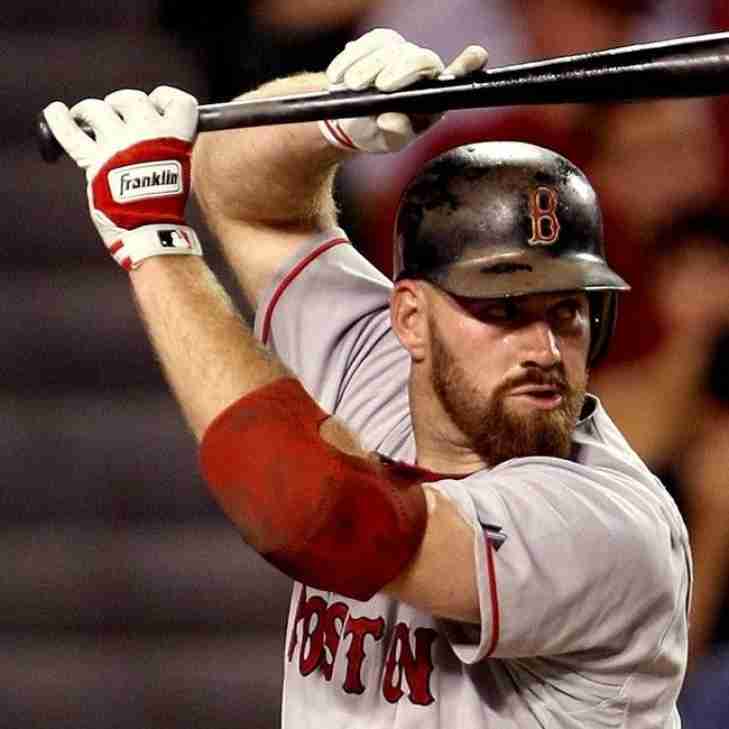
The Red Sox have announced that Derek Lowe, Kevin Youkilis and Mike Lowell will be the newest members, all of which were members of recent World Series wins for the Sox. John “Buck” Freeman and Alphonso Green were also chosen.
A member of the Red Sox from 1997 to 2004, Derek Lowe would split time between the starting role and the bullpen for his first two years before securing the closing role in 2000. It was an All Star season for Lowe, as he would lead the American League in Games Finished and Saves. 2001 was not as kind as he lost the closer’s role and was relegated to set-up and middle relief roles but a return to the starting rotation in 2002 would produce the best regular season of Derek Lowe’s career. The sinkerball specialist went 21 and 8 with a 0.974 WHIP and notably pitched a no-hitter at Fenway. Lowe made a second All Star Team and finished third in Cy Young voting.
Lowe followed up with solid campaigns in both 2003 and 2004 and was a large contributor in the 2004 World Series Championship as he went 3 and 0 in that post season. Lowe is 70 and 55 with a 19.8 bWAR as a member of the Boston Red Sox.
Kevin Youkilis was also a member of the 2004 World Series team, though it was in his first year and he was not a major contributor for that team. Youkilis would become the Red Sox’ starting First Basemen in 2006 and would go to three All Star Games and earn a Gold Glove and was vital in the 2007 World Series win. Youkilis would have a Slash Line of .287/.388/,487 with 133 Home Runs and a bWAR of 31.4 with Boston.
Youkilis was originally a Third Basemen, but he was moved to First, due to the arrival of the third Hall of Famer, Mike Lowell. Arriving as a Free Agent from The Florida Marlins, Lowell took over at the “Hot Corner” and brought a balanced attach of offense and defensive skill. Lowell was with Boston for five seasons (2006-11) and by far his 2007 campaign was his greatest ever.
No only was Mike Lowell named to the American League All Star Team, he would also finish 5th in MVP voting. Lowell’s regular season production accelerated in the post season where he batted .333 in both the ALDS and ALCS and was named the 2007 World Series MVP with a .400/.500/.800 Slash Line.
John “Buck” Freeman played for the then named Boston Americans from 1901 to 1907. He helped Boston win the World Series in 1903 and he was a two time RBI leader. He had 879 Hits with Boston in his career.
Alphonso “Al” Green has spent the last 44 years with the team working in the Fan’s Services Department for most of it. He is 90 years old.
The newest members of the Hall will be honored at a gala on May 24, 2018.
We here at Notinhalloffame.com would like to congratulate the latest members of the Boston Red Sox Hall of Fame.
The Boston Red Sox Announce their next HOF Class
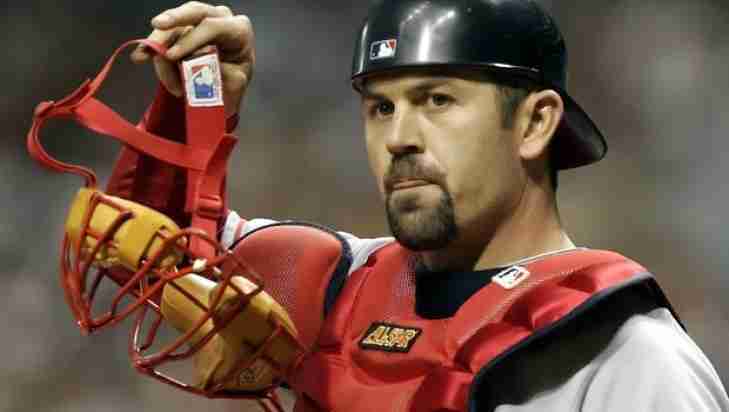
Former Catcher, Jason Varitek headlines the group. Spending fifteen seasons with Boston (1997 to 2011), Varitek would win two World Series rings, and would make three All Star Games. The popular player was also a one time Gold Glove and Silver Slugger recipient and was the captain of the team for seven seasons.
Famed knuckleballer, Tim Wakefield also joins the Red Sox Hall. Like Varitek, Wakefield was a two time World Series Champion. He would play for Boston for seventeen seasons, and holds the record for the most starts in franchise history (430) and Innings Pitched (3,006). He also had 2,046 Strikeouts and 186 Wins in a Red Sox uniform.
The third inductee will be Ira Flagstead, who played seven seasons with Boston in the 1920’s. The Outfielder would finish his run in Boston with 867 Hits and a Slash Line of .295/.374/.411.
The final inductee is Larry Lucchino, who was the President/CEO for fourteen seasons overseeing Boston’s three World Series Titles.
This group will be officially inducted into the Boston Red Sox Hall of Fame during a gala on May 19th and will be honored the following day with a ceremony prior to the game before the Cleveland Indians.
We here at Notinhalloffame.com would like to congratulate the newest Boston Red Sox Hall of Fame class.
15. Wes Ferrell
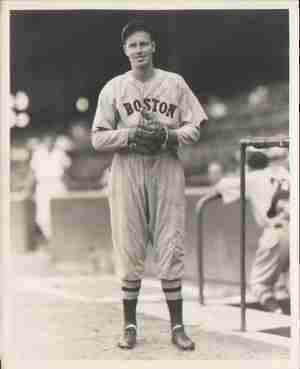
Athletes are competitive by nature, but 99.9 percent of them paled to the competitive juices of Wes Ferrell. He was known to get violent whenever he lost and take it out on himself and inanimate objects. He may have been animated himself at times, but his teammates have always said they wanted him on their side.
Wes Ferrell’s first four years as a regular in the Indians’ rotation saw him win twenty games. He would do so again on two more occasions, utilizing a brilliant fastball and an assortment of pitches. He was one of the only pitchers to retire with a winning percentage over .600, and he did so as an innings-eating starter. Ferrell also may be one of the game’s greatest hitting pitchers as he has decent power numbers and a lifetime .280 average.
His numbers began to decline sharply as his arm gave out, and he was not able to make the career numbers that would have ensured him a Cooperstown plaque. If he had similar metrics in the last thirty years, he would likely not have to fight for that spot in Cooperstown
Should Wes Ferrell be in the Hall of Fame?
61. Carl Mays
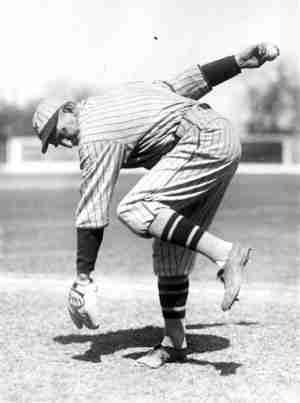
It is often the case for various Halls of Fame to discriminate based on the likeability of the candidate. Carl Mays was not necessarily the most liked player in his day, and his brushes with controversy probably pushed Mays on the opposite side of the bubble.
Sadly, Carl Mays is not best remembered for his four World Series rings or his 208 career wins. He is best known for a beanball he pitched that killed the Cleveland Indians’ Ray Chapman. Mays was also not the most liked player and was a spitball pitcher (legal at the time) which has not necessarily shone him in the brightest of lights. He was a very adept submarine style pitcher and though he won his share of games he could never shake the cloud of Ray Chapman.
Mays may eventually be considered, as the sting of his accident may have washed away. What doesn’t is that he was a purveyor of the spitball, and that in itself could be enough to keep him out.
Should Carl Mays be in the Hall of Fame?
9. Dwight Evans
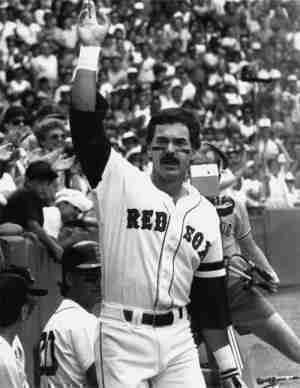
Outside of Boston, it may be forgotten how good Dwight Evans was. It could be because he played on teams with the more popular players, but Evans was a huge component in both the 1975 and 1986 World Series runs.
Starting off in an outfield with Fred Lynn and Jim Rice, Evans was essentially the number three man in the outfield, but became a huge contributor with his defensive play in the field. Year by year, his offensive numbers slowly began to improve, and by the 1980s, Evans was contributing with power and a huge amount of walks, leading to very high On-base percentages. That patience at the plate may have cost him sexy Batting Average numbers, but he showed such a complete mastery of the game that this should not be overlooked.
Evans was a very good player and posted excellent career numbers, but like so many on this list, he is the victim of being in the shadows of others and not having a monster year. Evans quietly left the ballot in 1999, and despite high Sabremetric numbers, there seems to be little reason to think Evans will be strongly considered by the Veterans Committee. This is too bad, as he at least deserves more than just a glance.
Should Dwight Evans be in the Hall of Fame?
50. Reggie Smith
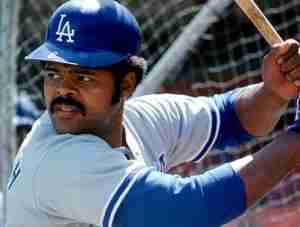
In the late 70’s, Hall of Fame pitcher Don Sutton famously noted that Steve Garvey was not the best player on the Dodgers; it was Reggie Smith. Garvey may have been the most popular, but Sutton was not alone in his assessment of Reggie Smith.
In his prime, Reggie Smith was a legitimate five-tool player. He had decent power, decent speed, and was a smart player who always knew how to get on base. In retrospect, it is hard to find a real criticism of his game, as he was above average in every aspect of his baseball acumen. In fact, should we ever look to do the most underrated players in baseball history, Reggie Smith might very well make the top (or at least top ten) of our list.
Reggie Smith failed to gain the attention of fans and writers alike, as good as he was at different baseball skills, he was not the best at any of them. He could hit homers, but many hit more. He could steal, but many swiped more. He could field, but many were better. Reggie did everything so well, but without one “great” on the baseball report card, he failed to achieve the fame he should have despite playing for high-profile squads.
Should Reggie Smith be in the Hall of Fame?
19. Luis Tiant
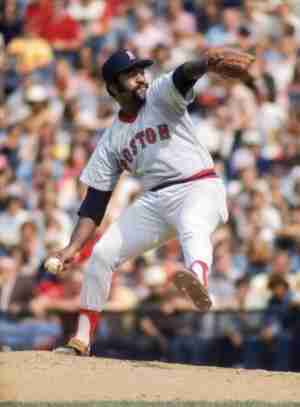
In the long and illustrious (often tortured) history of the Boston Red Sox, a case can be made that of all the men who graced Fenway’s mound Luis Tiant was the most popular of them all. Considering the number of great athletes who have donned the Red Sox uniform, this is an impressive accolade indeed.
Tiant wasn’t just popular because of his friendly demeanor, inviting accent, and the fact that he didn’t look like an athlete; Tiant was also popular because he was damn good. In his career, the Cuban won 20 games four times with his unorthodox delivery. When he was on, he had excellent control and could get batters out with finesse or power.
Midway through his career, Taint missed many games due to shoulder injuries. After a few very subpar campaigns, he resurrected his career with Boston, but not before losing out on seasons that would have easily padded his stats to make him more palatable to Cooperstown. Tiant also gave up a lot of home runs, which hampered him at every juncture of his career. If those bad seasons were just below average, Tiant very well could have had a place in the Hall.
Should Luis Tiant be in the Hall of Fame?
Wade Boggs to finally have his number retired in Boston
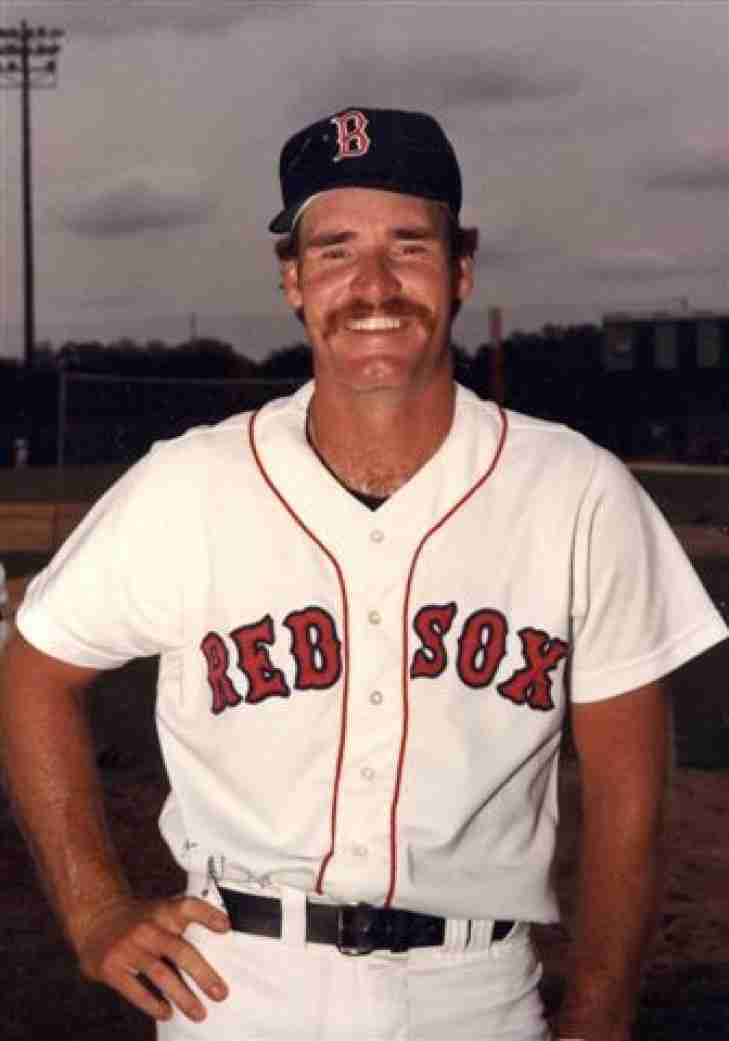
In the 80’s, Boggs was regarded as one of the best contact hitters in baseball, his only rival being Tony Gwynn of the San Diego Padres. Boggs would go on a tear, winning the Batting Title five times, the On Base Percentage Title six times and would have seven consecutive seasons collecting over 200 Hits. The popular third baseman would be an All Star in Boston eight times.
Wade Boggs overall numbers as a member of the Red Sox is astounding. He would have 2,098 of his 3,010 Hits in Boston. He would smack 422 Doubles, with 85 Home Runs, have a Slash Line of .338/.428/.462 with a bWAR of 71.6.
Boggs has not played in Boston since 1992 and has hid share of controversy, which has likely delayed this accolade. There was the longtime affair with Margo Adams, which ended as acrimonious as possible. The fact that he would later player for Boston’s bitter rivals, the New York Yankees and would later (allegedly) broker a deal where by he would go into the Hall of Fame wearing a Tampa Bay Devil Rays hat did not do him any favors.
Boggs would however go into Cooperstown wearing the Red Sox cap, as the Baseball Hall stepped in and took the decisions away from the player to prevent something like that occurring.
None of this matters anymore as Fenway is retiring a number that more than holds it own.
The event will take place on May 26.
We here at Notinhalloffame.com would like to congratulate Wade Boggs and the many fans of the Boston Red Sox who will be on hand to celebrate that day.
We wish we could be there too!
Roger Clemens talks about the HOF
Let’s do it again!
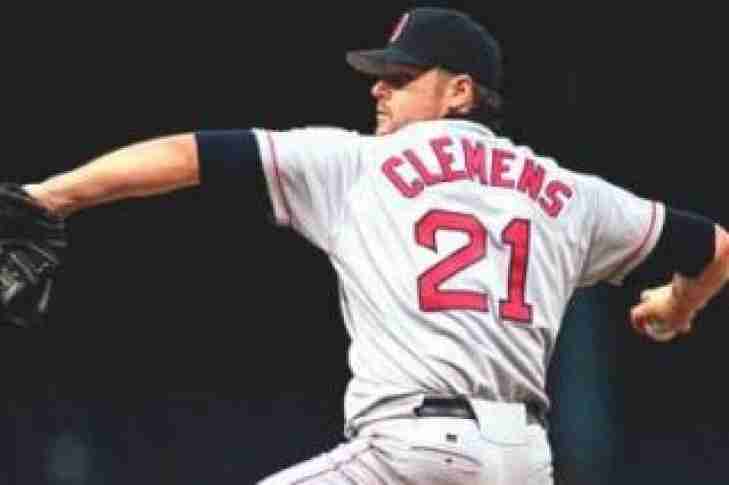
Recently, we discussed Clemens and the Baseball Hall of Fame and in a recent interview with 98.5, the Sports Hub in Boston had this to say:
