


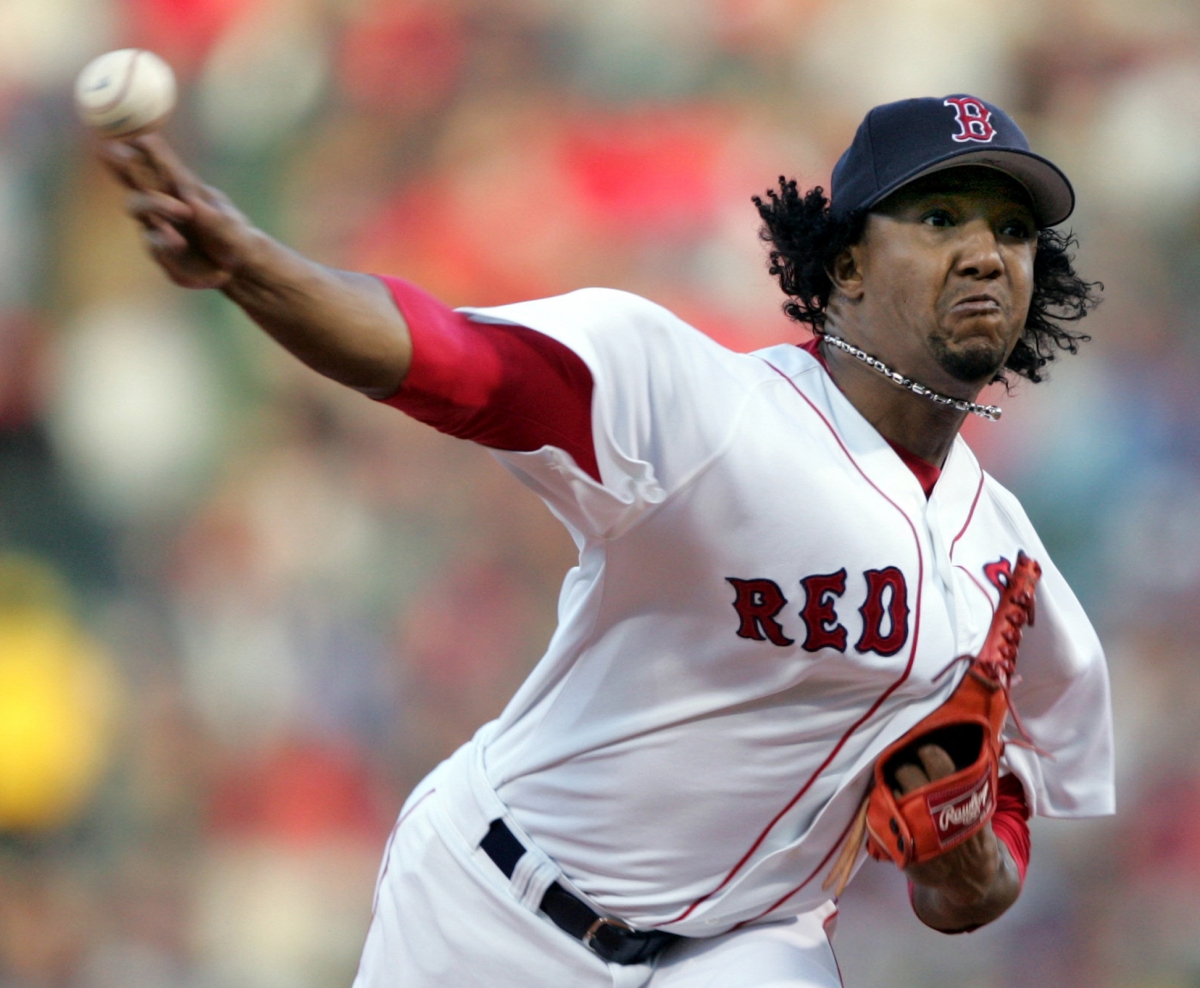
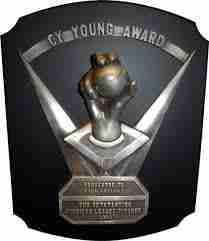




The Montreal Expos’ loss was the Boston Red Sox's eternal gain. Arriving via trade in 1998, Pedro Martinez didn’t just join the Boston rotation; he revolutionized it. After a stellar debut season where he finished second in Cy Young voting, Martinez embarked on a two-year stretch that defied the laws of physics. In 1999, he secured the Pitching Triple Crown, leading the American League in Wins (23), ERA (2.07), and Strikeouts (313). His 1.39 FIP that year remains a beacon of dominance, signaling a pitcher who was entirely independent of his defense.
If 1999 was a masterpiece, 2000 was a miracle. Martinez authored a 1.74 ERA in an era where the league average was nearly three runs higher. He set an MLB record at the time with a 0.737 WHIP, essentially rendering the opposition's bats obsolete. While he finished fifth in MVP voting that year, his second consecutive Cy Young confirmed what the Lab already knew: Pedro was the most dominant force on the planet. His postseason contributions during this peak were equally legendary, particularly his six hitless relief innings against Cleveland in the 1999 ALDS—a definitive highwater mark.
Despite a shoulder injury in 2001, Pedro remained untouchable upon his return. In 2002, he went 20–4, leading the league in ERA (2.26), Strikeouts (239), and WHIP (0.923). Though he was controversially denied a third straight Cy Young in favor of Barry Zito, the metrics proved Pedro was the superior outlier. He followed this with another ERA title in 2003 (2.22), continuing to suppress runs at a rate that seemed impossible given the offensive explosion occurring across the rest of the league.
The final chapter of his Boston story was the most emotional. While 2004 was statistically his "weakest" regular season, it served as his crowning achievement. Pedro was the emotional and competitive heart of the team that broke the 86-year curse. His performance in the 2004 World Series—seven shutout innings to earn a win in Game 3, was the perfect exclamation point on his Fenway tenure, ensuring that he left Boston not just as a statistical titan, but as a champion.
Pedro left Boston for the Mets in 2005, carrying with him a spectacular record of 117–37, a 2.52 ERA, and 1,683 strikeouts. His winning percentage in a Red Sox uniform is a staggering testament to his efficiency. Inducted into the Baseball Hall of Fame in 2015, the Red Sox wasted no time retiring his Number 45 that same year. Pedro represents the pinnacle of peak value, a player who proved that in the right hands, a baseball could be a weapon of pure mathematical dominance.

Comments powered by CComment