

Committee Chairman
30. Rodney Harrison
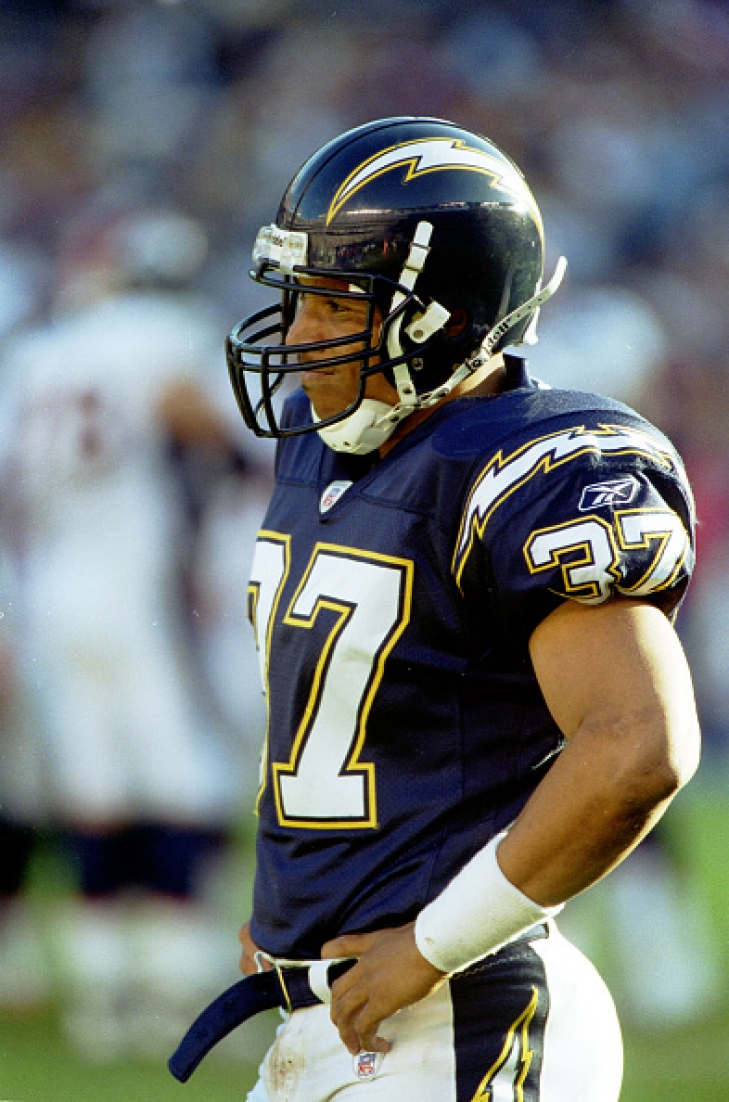
Rodney Harrison came out of Western Illinois as a fifth-round pick in 1994 and spent his rookie year mostly on special teams while the Chargers made their Super Bowl run. By his third season, he had locked down the starting strong-safety job, and from there the hits started landing with a little more force than the rulebook preferred. At 6-foot-1 and around 220 pounds, he played the position like a linebacker who had wandered into the secondary—blitzing, filling alleys, and finishing tackles in a way that made receivers think twice about cutting across the middle. He picked up the nickname “The Hitman,” and while he would later insist he was just a passionate, old-school player, the fines and the “dirtiest player” votes that followed suggested opponents saw it a bit differently.
Once he was a full-time starter, the production came in bunches. From 1996 through 1998, he piled up well over 100 tackles a season, and in 1998 he earned First-Team All-Pro and Pro Bowl honors with 114 tackles, three interceptions, and four sacks. After missing most of 1999 with an injury, he bounced back with more 100-plus tackle seasons, including a career-high 127 tackles and six interceptions in 2000, then made the Pro Bowl again in 2001. Teammates voted him the Chargers’ Defensive Player of the Year four times during his run in San Diego. He was the rare safety who could cover deep, come downhill and stuff the run, and still generate pressure when the defense dialed up a blitz—21.5 of his career sacks came while he wore the lightning bolt.
The Chargers released him after the 2002 season. In nine years with the franchise, he finished with 26 interceptions, 21.5 sacks, and 760 combined tackles, numbers that still rank among the best for a safety in team history.
He later found a home in New England, added a couple of Super Bowl rings, and in 2025 the Chargers inducted him into their Hall of Fame, finally giving the hard-hitting safety the franchise recognition that matched the reputation he built during those nine seasons in San Diego.
29. Louie Kelcher
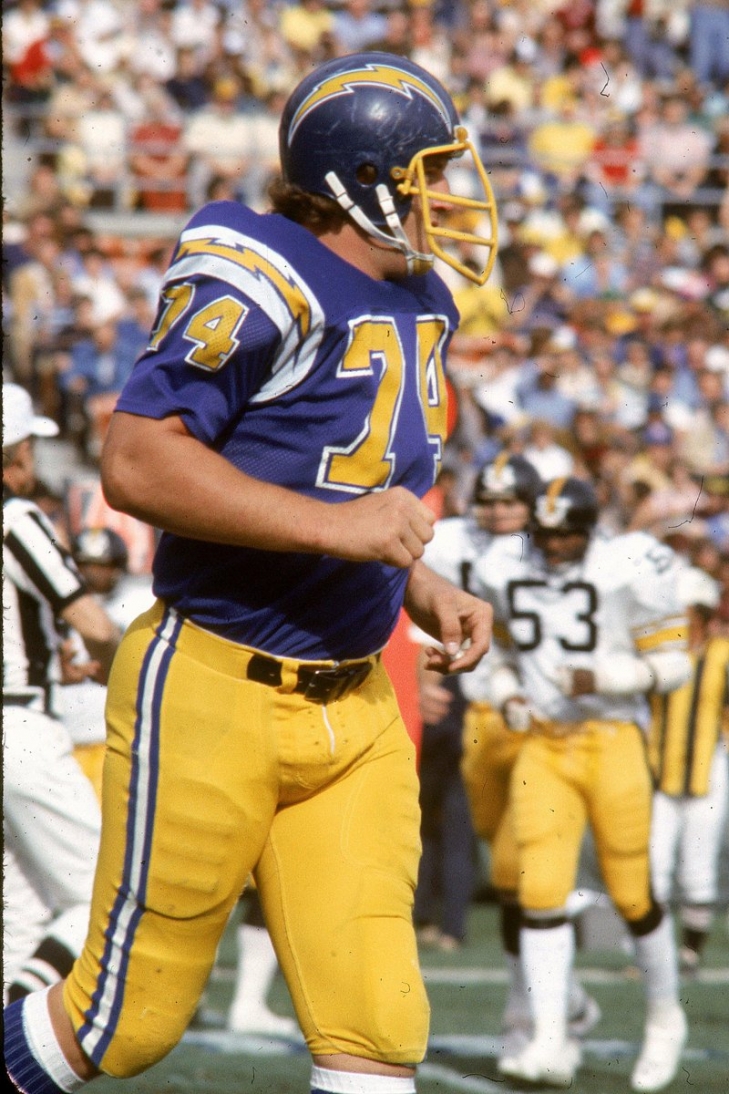
Louie Kelcher joined the Chargers as a second-round pick out of SMU in 1975 and immediately became a massive presence in the middle of the defensive line. At 6-foot-5 and often listed at 280–300 pounds, he was one of the biggest interior linemen of his era, using that bulk to clog running lanes and push the pocket. As a rookie, he earned All-Rookie honors, then settled into a long run as a starter. In 1977, he was voted the team’s Most Valuable Player after helping the defense record 44 sacks, and the next year he earned First-Team All-Pro honors and his second Pro Bowl nod.
The best stretch came in the late 1970s and early 1980s alongside Fred Dean, Gary “Big Hands” Johnson, and Leroy Jones—the group that became known as the Bruise Brothers. Kelcher made three Pro Bowls (1977, 1978, and 1980) and earned Second-Team All-Pro honors in 1977, 1980, and 1981. In 1980, even after missing most of the previous season with a knee injury, he returned and helped the defense lead the NFL with 60 sacks. He was the kind of space-eating tackle who could occupy multiple blockers, disrupt the run, and still generate pressure up the middle when the play called for it. In the 1980 AFC Championship Game, he finished with 20 tackles, and in the famous “Epic in Miami” playoff the following year, he forced a fumble that helped keep the Chargers alive.
After the 1983 season, the Chargers traded him to the San Francisco 49ers, where he played one final year and won a Super Bowl. Across his nine seasons in San Diego, he had piled up roughly 40 unofficial sacks along with two interceptions and eight fumble recoveries.
The franchise later inducted him into its Hall of Fame in 2003, recognizing the big, physical defensive tackle who had been a cornerstone of the Chargers’ front during the late Air Coryell era.
28. Don Macek
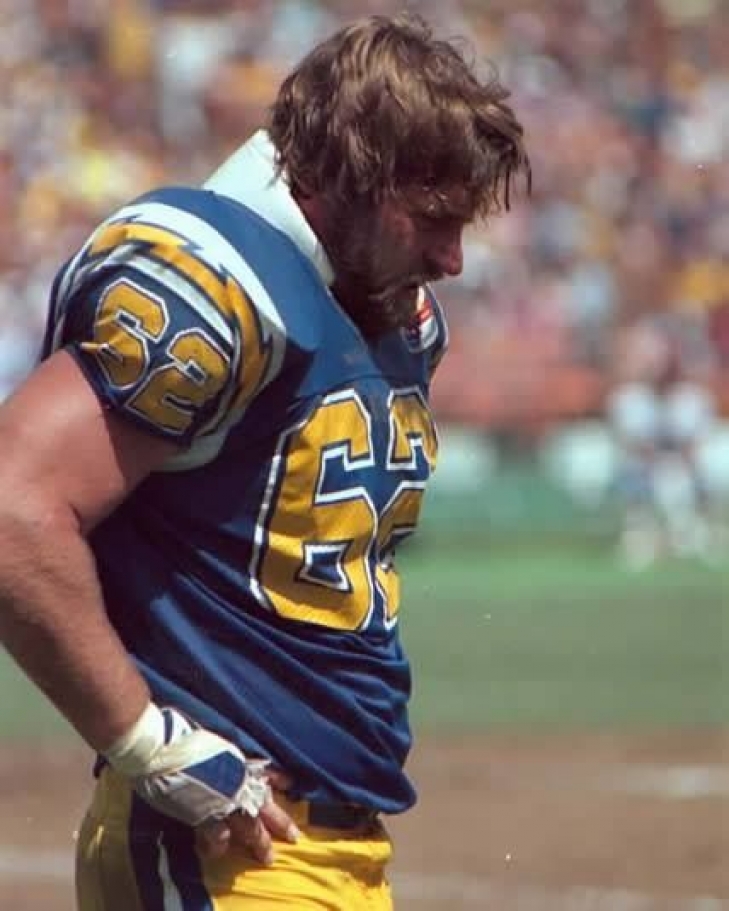
The Chargers selected Don Macek out of Boston College in the second round of the 1976 draft, and the guard-turned-center became one of the franchise's most quietly valuable picks. As a rookie, he earned All-Rookie honors while starting at right guard, then shifted to center in 1979 and stayed there for the rest of his career. At 6-foot-3 and about 260 pounds, he was a durable, technically sound blocker who could handle the constant collisions in the middle of the line and still get out to the second level when the play called for it. He started 150 of his 162 games in San Diego, missing only a handful of starts across 14 seasons.
Most of those years lined up with Dan Fouts and the Air Coryell offense. Macek snapped the ball and helped anchor a line that allowed the fewest sacks per pass attempt in the NFL from 1981 to 1983, giving Fouts the time to lead the league in passing yards for four straight seasons. The Chargers won three consecutive AFC West titles from 1979 to 1981 and reached the AFC Championship Game twice during that stretch. Teammates such as Ed White lined up next to him for years, and the unit’s ability to keep the pocket clean helped the offense stretch the field the way it did. Macek never made a Pro Bowl, but he was the steady, understated presence who started nearly every snap for more than a decade.
He retired after the 1989 season. Throughout his career with the Chargers, he was the long-term center who helped protect one of the most prolific passing attacks the franchise has ever had.
The team later inducted him into its Hall of Fame in 2004 alongside Ed White, recognizing the durable center who spent 14 years at center during the Air Coryell era.
27. Ed White
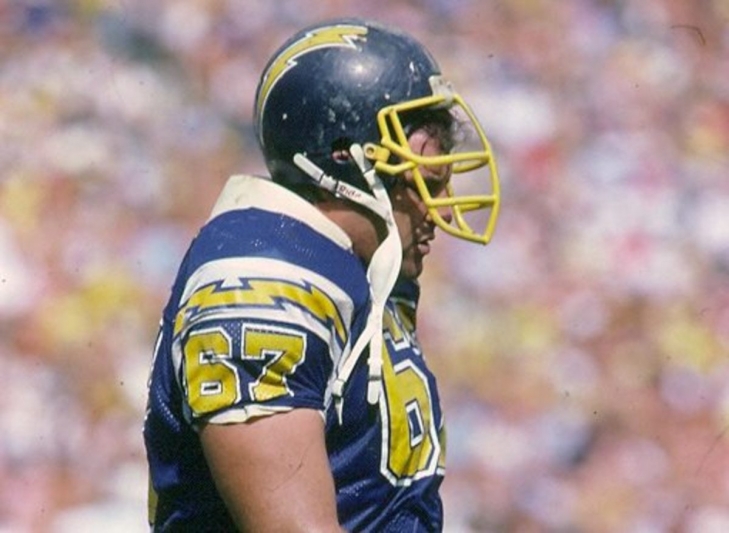
Ed White came to the Chargers before the 1978 season in a trade that sent running back Rickey Young to the Minnesota Vikings. After nine years in Minnesota—where he had already made three Pro Bowls—the veteran guard stepped into the starting right-guard spot in San Diego and stayed there. At a thick 6-foot-1 and around 270 pounds, he was a powerful, physical blocker who could drive defenders off the ball in the run game and hold his ground in pass protection. He started 117 of his 119 games with the Chargers, missing only two contests over eight seasons, and earned his fourth career Pro Bowl nod in 1979 as the team began a stretch of four straight playoff appearances under Don Coryell.
Those years lined up with the peak of the Air Coryell offense. With White anchoring the right side next to center Don Macek, the line helped Dan Fouts lead the NFL in passing yards four straight seasons and kept the sack rate low enough that the unit ranked among the league’s best in protection from 1981 to 1983. The Chargers won three consecutive AFC West titles from 1979 to 1981 and reached the AFC Championship Game twice. White was named the team’s Lineman of the Year three straight times from 1983 to 1985, even as the overall results cooled, and teammates and opponents alike noted how tough he was to move. Fouts has repeatedly said White was one of the most feared linemen he ever played with, the kind of guard who made life miserable for the defensive tackles across from him.
White retired after the 1985 season. Over his eight years in San Diego, he was one of the most durable and consistent pieces of the offensive line during the franchise’s most prolific passing era.
The Chargers later inducted him into their Hall of Fame in 2004, recognizing the veteran guard who had helped keep Dan Fouts upright and the Air Coryell attack rolling for nearly a decade.
