


Site Admin
35. George Andrie
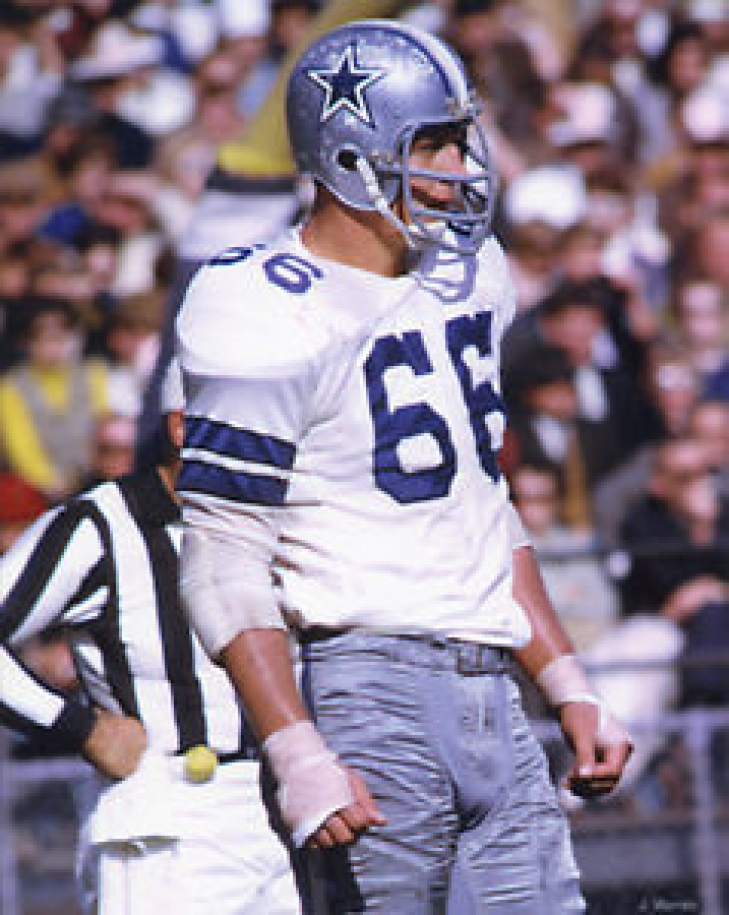
When you think of Marquette, you don’t come up with visions of football. Perhaps that is because the program shut down in 1960, the year George Andrie was a junior. This meant that during his senior year, he wasn’t playing football, and as such, slipped under the radar of many teams, but the Dallas Cowboys and especially, legendary Gil Brandt were not among them. He was chosen by Dallas in the 6th Round in 1962, and he was set to begin his pro career.
Andrie made a strong debut as a rookie, securing the right defensive end position and partnering with Bob Lilly on Tom Landry's front line. This pair quickly became a key part of the original "Doomsday Defense." With quick lateral moves and long reach, Andrie disrupted passing lanes and played at a high level from 1965 to 1969, earning five straight Pro Bowl selections and a First-Team All-Pro honor in 1969. In his peak 1966 season, he caused significant problems for opposing backfields, recording 18.5 sacks in 14 games and intercepting a 6-yard touchdown return.
Beyond his skill in pass rushing, Andrie was also known for performing under pressure in crucial games. He made a key play in the historic 1967 "Ice Bowl" by recovering a fumble from Bart Starr in the end zone for a touchdown. Four years later, he played a vital role on the defense in Super Bowl VI, recording a sack and putting pressure on Miami’s Bob Griese, as Dallas limited the Dolphins to only three points and secured their first Lombardi Trophy.
An ironman for over a decade, Andrie made 112 consecutive regular-season starts, missing only two games in his career. He retired after the 1972 season as a lifelong Cowboy, leaving a legacy of defensive dominance that set the standard for generations of Dallas edge rushers.
Andrie played in 141 regular-season games with 136 starts. He had 98.5 career sacks (unofficial) with 13 fumble recoveries and two defensive touchdowns.
34. Danny White
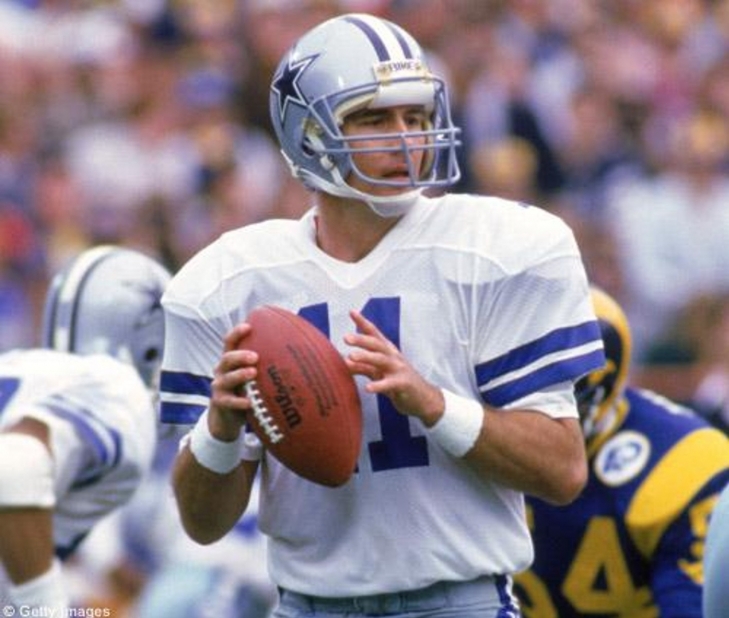
Drafted in the third round of the 1974 NFL Draft out of Arizona State, Danny White found himself in a unique logjam. With Roger Staubach firmly entrenched under center in Dallas, White chose to start his professional career in the upstart World Football League, taking snaps for the Memphis Southmen to gain valuable quarterback reps. Following the WFL's collapse, White signed with the Cowboys in 1976. For four years, he embraced a grueling dual role: serving as Tom Landry's trusted holding specialist and primary punter while operating as Staubach's designated heir apparent.
When Staubach hung up his cleats after the 1979 season, White stepped out of the shadow of a franchise icon and immediately validated Landry's trust. Taking over under center in 1980, White delivered a sterling debut campaign, throwing for 3,287 yards and 28 touchdowns to lead Dallas to a 12–4 record. What followed was one of the most remarkable individual runs in modern NFL history: White continued to pull double duty as both starting quarterback and starting punter through the 1984 season, famously becoming the only player in league history to pass for over 3,000 yards and punt for over 3,000 yards in the same season (1981).
White's tenure as a QB1 was characterized by notable statistical efficiency and an unwavering record of victories. He led the Dallas Cowboys to three consecutive NFC Championship Games from 1980 to 1982, securing his sole career Pro Bowl selection during the strike-shortened 1982 season when he led the NFC with 16 touchdown passes. Equipped with a rapid release and precision in long throws, White consistently ranked among the league leaders in passer rating and yards per attempt, demonstrating his arm talent to compete effectively with any quarterback in the conference.
Despite holding a commanding 62–30 regular-season record as a starting quarterback, White faced brutal scrutiny from a fanbase spoiled by Staubach's Super Bowl rings. That pressure peaked in 1984 when Landry briefly benched him in favor of Gary Hogeboom. White quietly reclaimed the starting job through superior preparation, bouncing back in 1985 to lead Dallas to another division title. Injuries—most notably a broken wrist suffered in 1986—eventually slowed his career before his retirement following the 1988 season.
In his thirteen seasons, White amassed 21,959 passing yards, 155 touchdown passes, and 132 interceptions alongside a 62–30 record as a starter. As a punter, he added 610 career punts for 24,509 yards (40.2 average).
32. John Niland
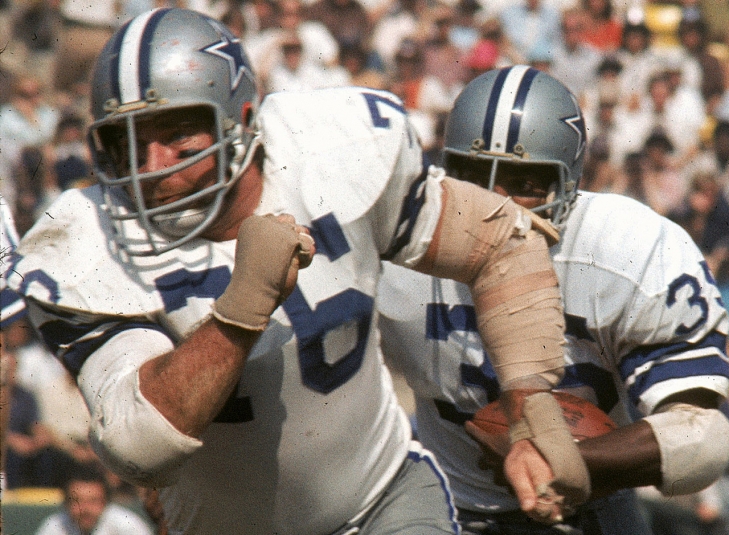
When the Dallas Cowboys selected University of Iowa consensus All-American John Niland fifth overall in the 1966 NFL Draft, they made franchise history before he ever put on a helmet. Niland became the first offensive lineman Dallas selected in the first round, establishing a blueprint for heavy-investment blocking units that would define the organization across multiple generations.
Niland spent his rookie year being baptized in fire, starting four games and squaring off daily in practice against legendary defensive tackle Bob Lilly. Iron sharpened iron; refining his technique against Lilly transformed Niland into a dominant interior force. By 1967, he had taken full ownership of the starting left guard spot, using his low-pad balance and athletic, pulling-guard agility to spearhead Tom Landry's "Multiple Offense."
Between 1968 and 1973, Niland put together a stretch of interior line play matched by few guards of his era. He earned six consecutive Pro Bowl nods and three First-Team All-Pro honors (1969, 1971, and 1972). Niland was the relentless motor on an offensive line that annually led the league in total offense and rushing yards, paving lanes for Duane Thomas, Walt Garrison, and Calvin Hill.
His finest hour arrived during the 1971 postseason, culminating in Super Bowl VI. Niland and the Dallas front wall completely neutralized the Miami Dolphins' front seven, paving the way for a then-record 252 rushing yards in a 24–3 victory that delivered the franchise's first Lombardi Trophy.
Niland's nine-year tenure in Dallas was marked by remarkable durability, missing just two games across 124 regular-season contests. After a final full season in Big D in 1974, he was traded to the division-rival Philadelphia Eagles, playing one final season before retiring after the 1975 campaign.
With Dallas, Niland played 124 regular-season games (111 starts), 15 postseason contests, and two Super Bowls. A six-time Pro Bowler, three-time First-Team All-Pro, Super Bowl VI champion, and Cowboys' All-Time Team member, he is one of six offensive linemen in franchise history with at least six Pro Bowls.
31. Don Meredith
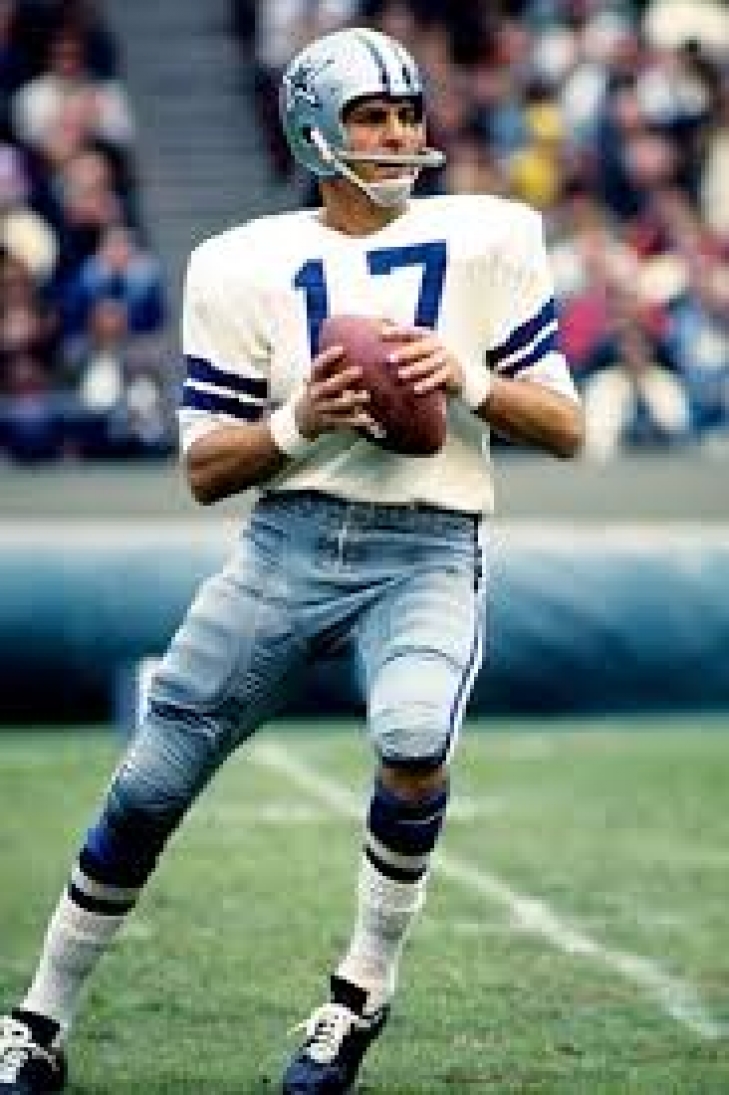
Long before America’s Team was a global marketing titan, it was a fledgling expansion franchise in desperate need of an identity. Enter Joseph Donald "Dandy Don" Meredith. A star at Southern Methodist University who was born and raised in Mount Vernon, Texas, Meredith was signed to a personal-services contract before the Cowboys even officially existed. When Dallas took the field for its inaugural 1960 season, the charismatic local hero instantly became the franchise’s first true face.
After splitting time early in his career, Meredith took full command of Tom Landry’s complex offense as the undisputed starter in 1963. He brought a loose, swaggering charm to the huddle that perfectly complemented Landry’s rigid, methodical demeanor. Armed with a deep-ball touch and extraordinary toughness—regularly dusting himself off after taking brutal hits behind a young offensive line—Meredith transformed Dallas from a league laughingstock into a championship contender.
His finest individual play arrived during a three-year Pro Bowl run from 1966 through 1968. In 1966, Meredith earned the Bert Bell Award as the NFL’s Most Valuable Player after throwing for a career-high 2,805 yards and 24 touchdowns. Paced by his 15.8 yards per completion—which led the entire NFL for a second consecutive year—he guided Dallas to its first-ever winning record (9–3–1) and a spot in the NFL Championship Game. Though heartbreaks against Vince Lombardi’s Green Bay Packers in the 1966 title game and the legendary 1967 "Ice Bowl" weighed heavily on him, Meredith was the engine that turned Dallas into a perennial powerhouse.
Weary of the physical toll and intense media pressure, Meredith shocked the football world by retiring after the 1968 season at just 31 years old. His magnetic personality made him a natural fit for television, where he joined Howard Cosell and Frank Gifford in 1970 as an original color commentator for Monday Night Football. His folksy wit, quick humor, and signature singing of "Turn Out the Lights, the Party's Over" whenever a game was out of reach revolutionized sports broadcasting.
Across nine active seasons spent exclusively with the Dallas Cowboys (1960–1968), Meredith played in 104 regular-season games, compiling 17,199 passing yards, 135 touchdown passes, and 1,216 rushing yards with 15 ground touchdowns. A three-time Pro Bowl selection, All-Pro, and 1966 Bert Bell Award winner, "Dandy Don" was inducted into the Dallas Cowboys Ring of Honor in 1976 alongside teammate Don Perkins, forever remembered as the Texas folk hero who put the franchise on the map.
