


Site Admin
50. Dez Bryant
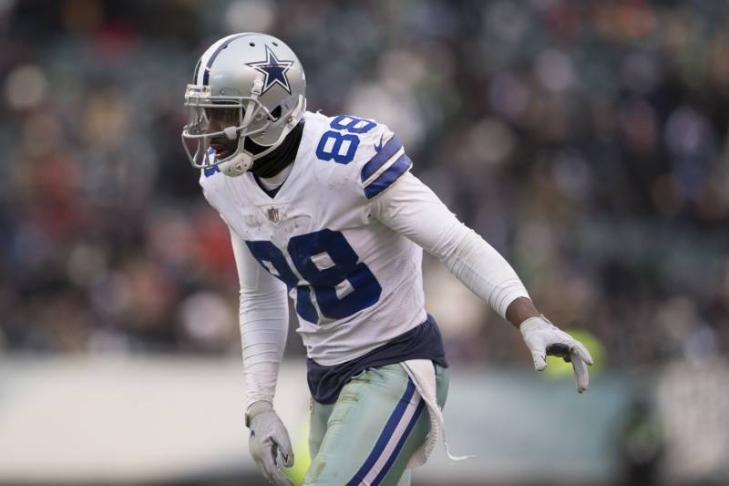
Drafted 24th overall out of Oklahoma State in 2010, Dez Bryant stepped into Big D carrying the legendary mantle of jersey No. 88. The All-American wideout announced his presence immediately, earning All-Rookie honors after compiling 561 receiving yards and six touchdowns on offense while generating another 508 yards and two scores on punt returns. Recognizing his singular aerial talent, the Cowboys quickly shifted his full focus to wide receiver—a move that unleashed one of the most physically dominant perimeter pass-catchers of his generation.
From 2012 through 2014, Bryant embarked on an absolute reign of terror against opposing secondaries, stringing together three consecutive seasons with at least 1,200 receiving yards and 12 touchdowns. Highlighting his game was a fierce, high-pointing ability that made him virtually unstoppable in tight coverage, culminating in a signature "Throw Up the X" touchdown celebration that swept through Cowboys Nation.
2014 was his best season, when he caught 88 passes for 1,320 yards and led the NFL with a franchise-record 16 touchdown receptions. That dominant run earned him First-Team All-Pro honors, his second of three Pro Bowl selections (2013, 2014, 2016), and anchored a division-winning Dallas offense.
Injuries slowed his production, and in April 2018, the Cowboys released Bryant after eight seasons. He signed with the Saints mid-2018 but tore his Achilles in his first practice, ending his year. After recovery, Bryant returned to the NFL with the Ravens in 2020, catching two touchdowns. With Dallas, he amassed 7,459 receiving yards and 73 receiving touchdowns.
49. Charles Haley
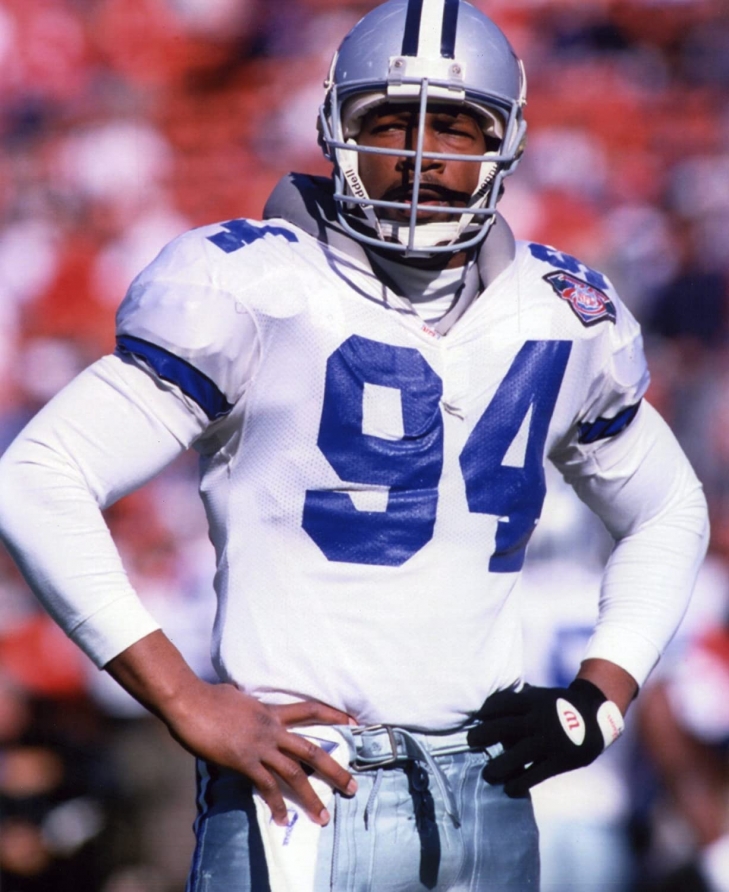
When the Dallas Cowboys acquired Charles Haley in August 1992, they were getting a proven champion still in his physical prime. Haley had already won two Super Bowls and earned three Pro Bowl nods in San Francisco, but friction with head coach George Seifert made him available via trade. Jimmy Johnson seized the opportunity, bringing in the explosive edge defender to serve as the missing, mean-spirited catalyst for a rising contender.
Haley converted seamlessly into the defensive end spot in Dallas's 4-3 scheme. Though his intense, unvarnished personality could cause friction behind closed doors, his on-field impact was immediate and transformative. He injected an unquestioned edge into the defensive front, demanding perfection from teammates and giving the Cowboys the premier pass-rushing threat they needed to get over the playoff hump.
Over his first four seasons in Big D, Haley helped usher in a golden era, capturing three Super Bowl titles (XXVII, XXVIII, XXX) and becoming the first player in NFL history to win five Super Bowl rings. He earned two Pro Bowl selections in silver and navy, pairing them with a First-Team All-Pro nod in 1994. In both of those Pro Bowl campaigns (1994 and 1995), he posted double-digit sack totals, wreaking havoc on opposing protection schemes in big-game moments.
Severe back issues and personal family matters led to brief retirements near the end of his tenure, though he returned to help secure his third ring in Texas before retiring after the 1996 season. He later mounted a brief comeback with the 49ers in 1999, but his legacy as the ultimate championship catalyst was already secure.
Haley had 34.0 sacks, 172 combined tackles, six forced fumbles, and four fumble recoveries with Dallas.
46. Daryl Johnston
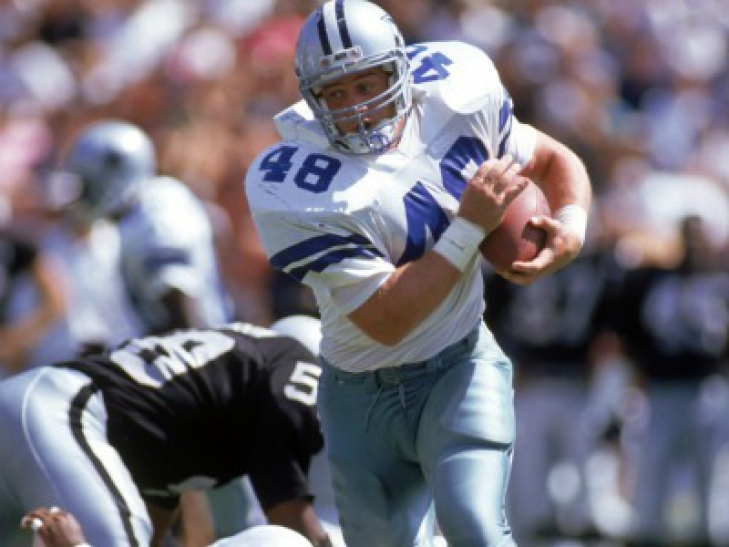
Long before the fullback position was largely erased from modern NFL playbooks, Daryl Johnston turned lead-blocking into an art form. Selected in the second round out of Syracuse in 1989, the 6-foot-2, 240-pound bruiser arrived in Big D just as Jimmy Johnson was laying the groundwork for a dynasty. It didn't take long for Texas Stadium to embrace him, as booming, deep chants of "Mooooose" echoed through the stands every time he leveled an incoming linebacker.
While Johnston was a capable runner and receiver in his own right, his true greatness lay in his selflessness as the lead blocker for Emmitt Smith. Paving highway-wide lanes through stacked defenses, Johnston served as the physical battering ram that allowed Smith to systematically dismantle opponents on his way to becoming the NFL’s all-time rushing leader. Smith frequently singled out Johnston as the unsung key to his record-breaking success, famously requesting that Moose join him on stage during his Hall of Fame induction.
Beyond his devastating lead-blocking duties, Johnston gave Troy Aikman an incredibly reliable third-down option out of the backfield. Equipped with soft hands and a high football IQ, he hauled in 294 career passes, keeping drives alive with clutch short-yardage conversions and outlet receptions under pressure.
Johnston was an indispensable pillar of the Cowboys’ 1990s glory years, capturing three Super Bowl titles (XXVII, XXVIII, XXX) while earning Pro Bowl selections in 1993 and 1994. In fact, his unique dominance at the position forced the NFL to officially create a dedicated fullback slot on the Pro Bowl ballot, ensuring true lead-blockers received proper recognition.
A persistent neck injury sidelined Johnston late in his career, ultimately forcing him to hang up his cleats following the 1999 season. As the NFL increasingly phased out traditional fullbacks in favor of spread formations and single-back sets in the years that followed, Johnston stood as one of the final, magnificent enforcers of a bygone gridiron era.
Johnston accumulated 2,227 receiving yards, 753 rushing yards, and 22 total touchdowns (14 receiving, eight rushing).
45. Travis Frederick
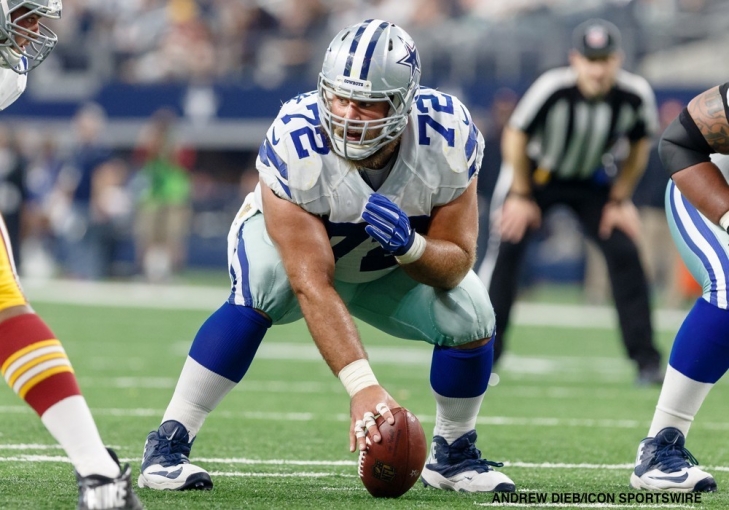
Travis Frederick arrived in Dallas surrounded by unfair skepticism from media pundits who labeled him a reach when the Cowboys took him 31st overall. He silenced those critics almost instantly, stepping onto the field as a Week 1 starter and immediately establishing himself as the intellectual brain and physical anchor of the Dallas offensive line.
Frederick served as the literal center point for what quickly became the premier offensive line in professional football alongside Tyron Smith and Zack Martin. Exceptional at diagnosing blitz packages and calling out front adjustments at the line of scrimmage, he paved highway-wide lanes for DeMarco Murray’s 2014 rushing title and Ezekiel Elliott’s dominant 2016 rookie campaign. Frederick’s rare combination of anchor strength, elite leverage, and football IQ earned him five Pro Bowl selections in his six active seasons, culminating in First-Team All-Pro honors in 2016.
Tragedy struck before the 2018 season when Frederick was diagnosed with Guillain-Barré syndrome, an autoimmune disease that forced him to miss the entire campaign. Showing incredible resilience and determination, he fought his way back to the gridiron in 2019, starting all 16 games and earning his fifth Pro Bowl selection in a triumphant comeback story.
Listening to his body, Frederick made the difficult decision to retire abruptly in March 2020 at just 29, choosing his long-term health over continued gridiron accolades. Though his career was shorter than expected, his peak performance at center remains one of the most dominant stretches at the position in modern NFL history.
Frederick started all 96 regular-season games he played in (plus three postseason starts).
