


Site Admin
29. Ray Donaldson
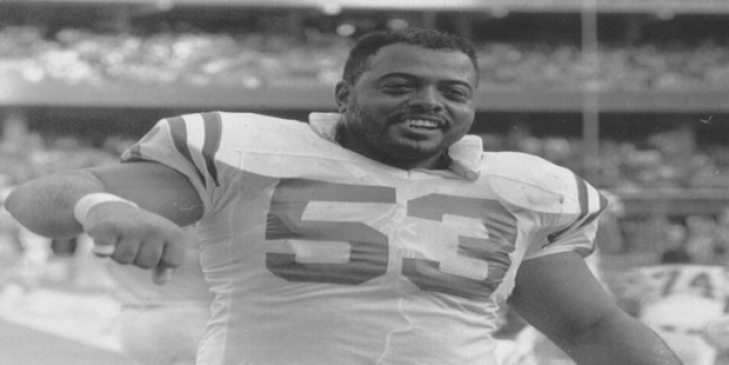
Drafted in the second round (32nd overall) of the 1980 NFL Draft out of the University of Georgia, Ray Donaldson arrived in Baltimore initially ticketed for interior depth. But by his second season in 1981, "Bulldog" earned the starting nod at center, breaking historical ground as the first African-American starting center in NFL history. That barrier-breaking moment launched a stellar, decade-plus run as the unyielding anchor of the Colts' offensive line.
Donaldson was the ultimate model of durability and quiet leadership through a turbulent chapter in franchise history. He served as the primary pivot man during the team's overnight relocation from Baltimore to Indianapolis in 1984, becoming the undisputed engine of the offense. Combining dense functional strength with elite footwork, he carved out gaping lanes for dynamic backfield talents—most notably clearing the way for Eric Dickerson’s league-leading 1,659 rushing yards during the 1988 season.
Donaldson’s peak national recognition in horseshoe blue came in the late 1980s. Between 1986 and 1989, he was selected to four consecutive Pro Bowls, earned Second-Team AP All-Pro honors in 1987, and helped lead Indy to an AFC East division crown and a playoff berth. His streak of 152 consecutive starts over a 10-year span highlighted a relentless work ethic that earned universal reverence from teammates and defensive linemen across the NFL.
He went on to spend two productive years anchoring the line for the Seattle Seahawks before experiencing a career renaissance with the Dallas Cowboys.
19. Lydell Mitchell
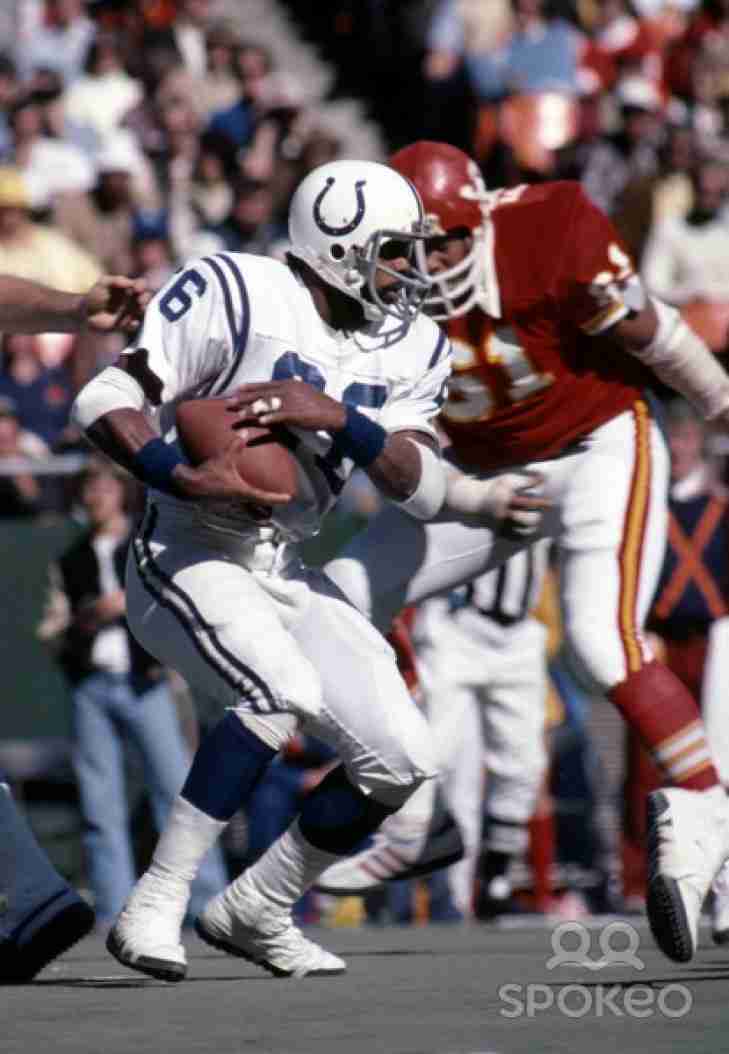
Drafted in the second round of the 1972 NFL Draft out of Penn State, Lydell Mitchell arrived in Maryland as an elite, multi-dimensional weapon ready to transform Baltimore's backfield. After a couple of seasons settling into the professional ranks, Mitchell exploded into full stardom alongside quarterback Bert Jones, serving as the offensive engine for a juggernaut squad that captured three consecutive AFC East division titles from 1975 to 1977.
Mitchell’s prime in blue and white was characterized by constant dual-threat versatility. He became the franchise’s first to achieve three straight 1,000-yard rushing seasons, surpassing 1,193 yards in 1975, 1,200 in 1976, and 1,159 in 1977. His most groundbreaking achievements, however, came through the air: Mitchell led the NFL in receptions twice—72 catches in 1974 and 71 in 1977—a rare feat for a running back at that time. In his outstanding 1976 season, he recorded an NFL-high 23 Approximate Value (AV), 1,755 scrimmage yards, and eight touchdowns, earning Second-Team AP All-Pro honors.
During his peak stretch, Mitchell was a three-time Pro Bowl selection (1975, 1976, 1977) and a two-time Second-Team AP All-Pro choice. Whether grinding out tough yards between the tackles or lining up as Jones' primary safety valve out of the backfield, he regularly generated high-volume output, racking up over 1,700 yards from scrimmage in three straight campaigns. After a contract dispute, Mitchell spent his final three NFL seasons with San Diego and the Los Angeles Rams, but he reached his highest level in Baltimore.
With the Colts, Mitchell had a total of 8,010 yards from scrimmage and 41 total touchdowns.
To know Him Is To Love Him
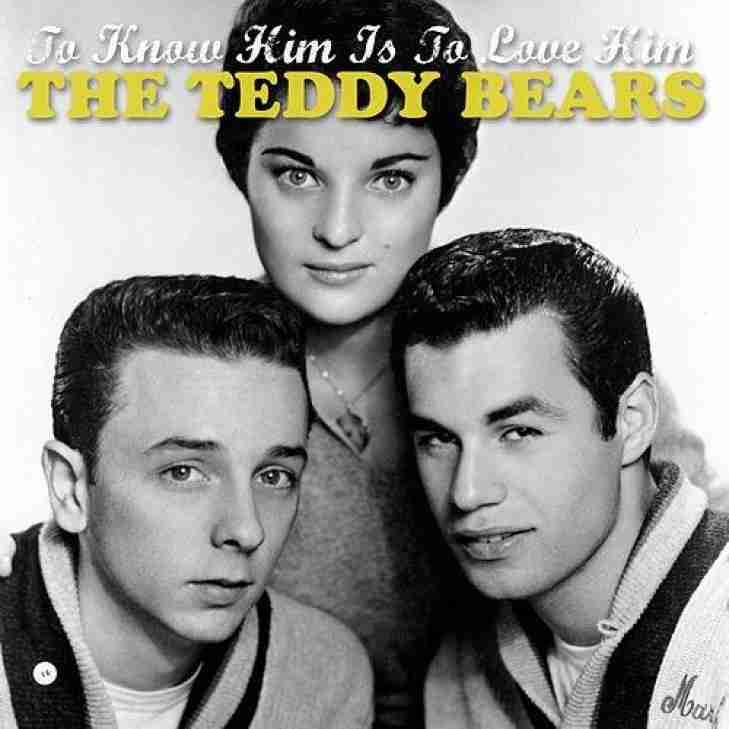
The Teddy Bears
To Know Him Is to Love Him
17. Alan Ameche
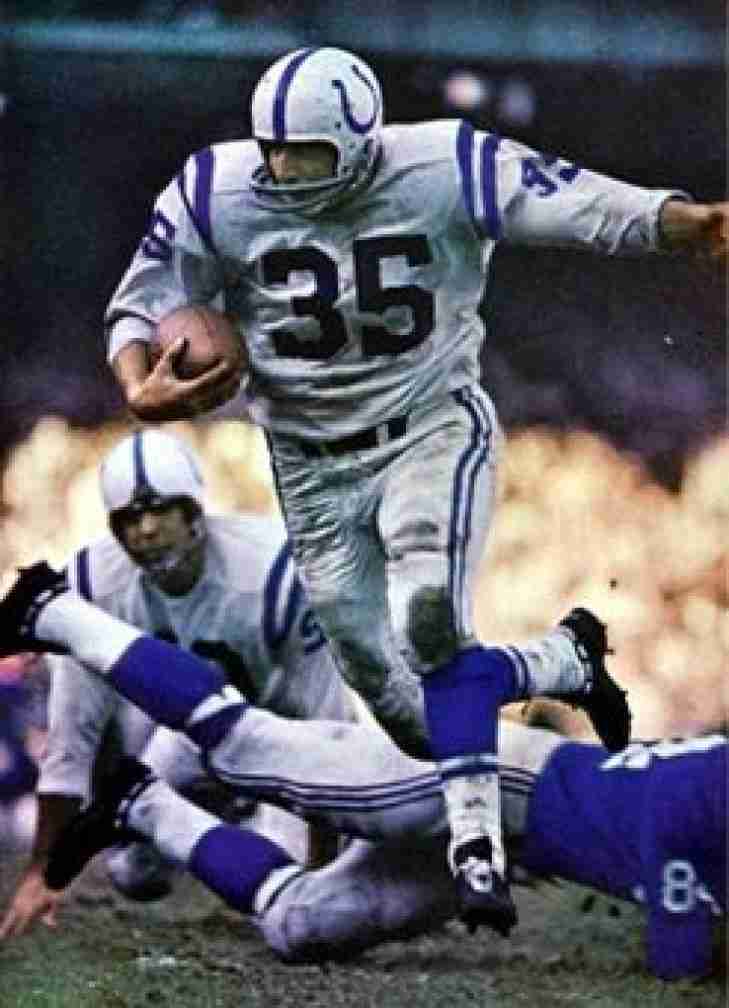
Fresh off winning the 1954 Heisman Trophy at Wisconsin, Alan "The Horse" Ameche arrived in Baltimore as the third overall pick in the 1955 NFL Draft and immediately established himself as a dominant focal point for the Colts. Combining a power-packed 218-pound frame with elite speed, he burst onto the professional scene by rushing for 194 yards in his very first career game against the Chicago Bears, featuring a staggering 79-yard touchdown run. Ameche capped his stellar debut campaign by winning the NFL rushing crown with 961 yards and a league-leading nine rushing touchdowns, sweeping Rookie of the Year honors and earning a First-Team AP All-Pro selection.
Ameche served as the ideal backfield anchor for head coach Weeb Ewbank and quarterback Johnny Unitas, delivering punishing runs between the tackles while absorbing heavy workloads. He earned Pro Bowl selections in each of his first four seasons (1955–1958) and added three Second-Team AP All-Pro selections (1956, 1958, 1959). His peak seasons provided the physical backbone for Baltimore's offensive explosion: in 1956, he eclipsed 1,000 yards from scrimmage and racked up nine touchdowns, following that up in 1958 with a dominant 791-yard, eight-touchdown effort on the ground. His career became forever etched in gridiron lore during the 1958 NFL Championship Game against the New York Giants—widely remembered as "The Greatest Game Ever Played". In sudden-death overtime, Ameche capped a grueling drive with a legendary one-yard touchdown dive into the end zone, securing Baltimore's first world championship.
He remained a vital weapon the following season as the Colts captured back-to-back titles in 1959, powering through defenses for 679 rushing yards and five scores while opening up passing lanes for Unitas and Raymond Berry. Tragically, Ameche’s stellar trajectory was cut short during his sixth season in 1960 when he suffered a severe Achilles tendon injury that forced him to retire at just 27 years old. Despite his brief career, his impact across the decade earned him a selection to the NFL 1950s All-Decade Team.
Overall, Ameche amassed 4,045 rushing yards, 40 rushing touchdowns, 101 receptions, 733 receiving yards, and four receiving touchdowns.
