


Site Admin
33. Jimmy Orr
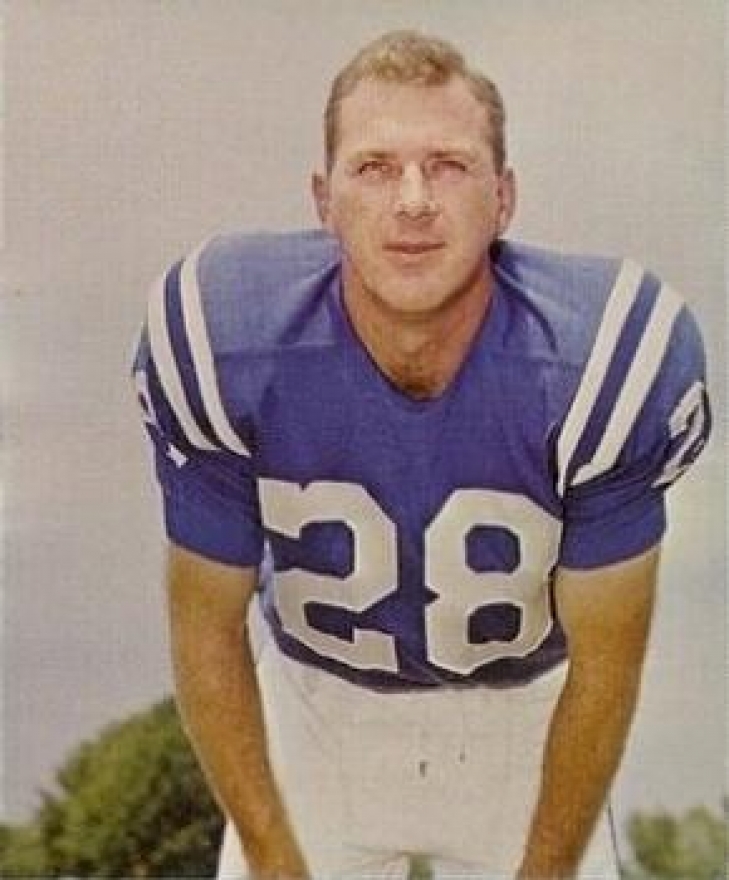
Long before he became Johnny Unitas' favorite downfield target in Charm City, Jimmy Orr proved his big-play pedigree in Pittsburgh. Drafted in 1958 out of Georgia, Orr captured AP NFL Rookie of the Year honors and earned a Pro Bowl bid with the Steelers before a blockbuster multi-player trade brought him to Baltimore in 1961. Lined up opposite Raymond Berry, Orr brought explosive field-stretching vertical speed that gave the Colts' offense an entirely new dimension.
Orr’s signature trait was his staggering big-play efficiency. Possessing exceptional boundary tracking and deep-ball acceleration, he led the entire National Football League in yards per reception twice during his ten seasons in Baltimore—averaging a ridiculous 21.7 yards per catch in 1964 and an incredible 25.6 yards per catch in 1968. Across his ten campaigns in horseshoe blue, Orr averaged 22.9 yards per catch, a mark that stands as one of the most explosive multi-year runs in pro football history.
His individual peak arrived in 1965, when he put together a dominant First-Team AP All-Pro season. With 45 receptions for 847 yards and 11 touchdown catches, Orr earned his second career Pro Bowl selection and established himself as one of the game’s premier flankers. He finished in the NFL's top ten in receiving yards three times during his Colts tenure (1962, 1964, and 1965).
Despite being famously missed by Earl Morrall on the infamous "flea-flicker" play in Super Bowl III while standing wide open in the end zone, Orr found ultimate narrative redemption two years later. In Super Bowl V against the Dallas Cowboys, Orr helped Baltimore secure a dramatic 16–13 victory, walking off the field for the last time as a Super Bowl champion.
With the Colts, Orr caught 256 passes for 5,859 yards and 50 touchdowns, averaging a stunning 22.9 yards per reception.
37. Don Shinnick
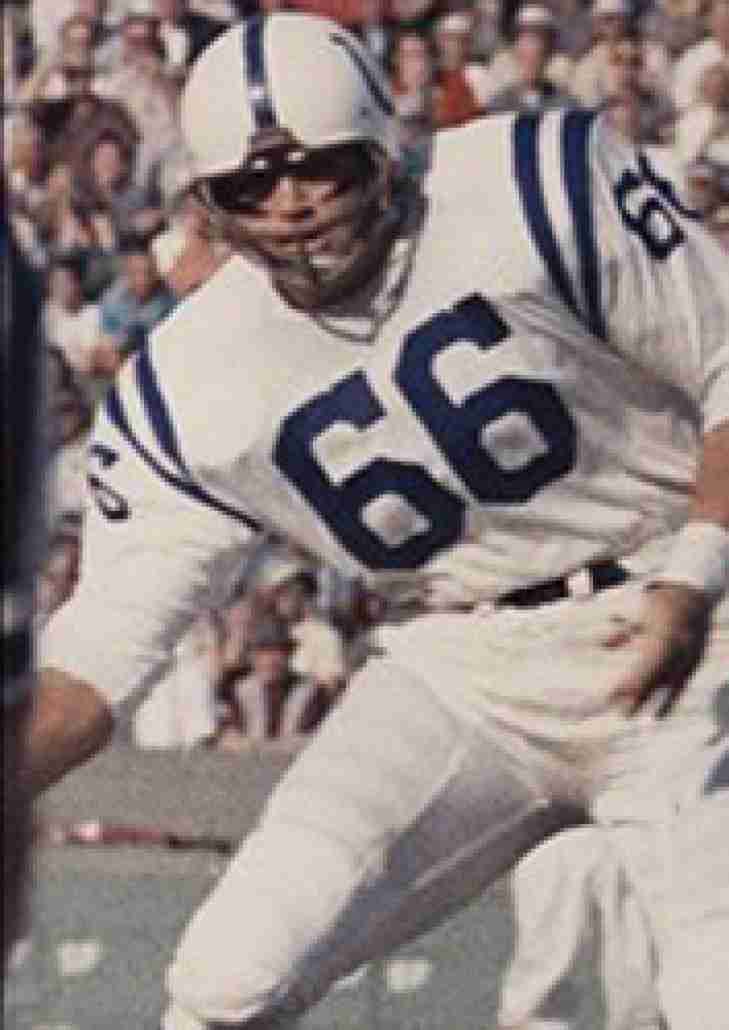
Selected in the second round (20th overall) of the 1957 NFL Draft out of UCLA—where he starred as a two-way fullback and linebacker—Don Shinnick stepped into Baltimore's linebacking corps with an extraordinary nose for the football. Joining Weeb Ewbank's defense alongside Bill Pellington and Gino Marchetti, Shinnick immediately solidified the interior, displaying rare spatial awareness and zone-coverage instincts.
Shinnick’s defining superpower was his unprecedented ability to drop into coverage and snatch opposition passes out of the air. While middle linebackers of the late 1950s were expected primarily to stuff the run, Shinnick revolutionized second-level pass defense. His career apex came in 1959, when he tied for the NFL lead with seven interceptions, earning Second-Team AP All-Pro honors while anchoring Baltimore's defense during their second consecutive NFL Championship run.
Beyond his coverage prowess, Shinnick stood as a relentless, bone-jarring tackler who consistently diagnosed plays before they unfolded. His diagnosing ability enabled Baltimore to capture back-to-back world titles in 1958 and 1959, culminating in his starting role on the 1968 NFL Championship team that reached Super Bowl III.
Loyal and durable across 13 active seasons spent exclusively in Baltimore, Shinnick played in 166 regular-season games for the franchise, picking off at least one pass in 12 of his 13 NFL campaigns. He finished with 37 interceptions for 255 return yards and nine fumble recoveries.
20. Marshall Faulk
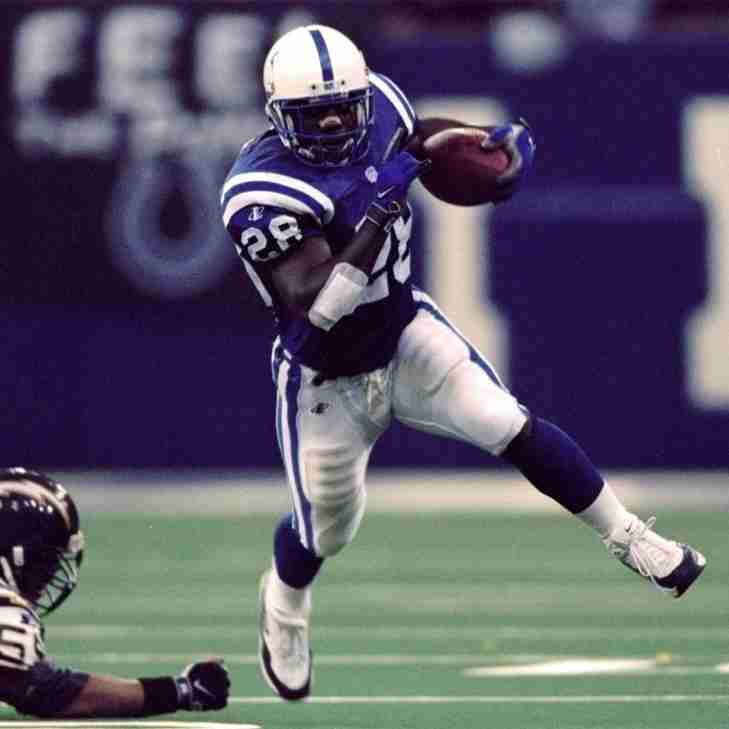
Before he became the dynamic catalyst for "The Greatest Show on Turf" in St. Louis, Marshall Faulk spent his formative years in Indianapolis completely rewiring what NFL teams expected from a modern, dual-threat running back. Selected second overall out of San Diego State in the 1994 NFL Draft, Faulk took the league by storm as a rookie, compiling 1,282 rushing yards, 52 receptions, and 12 total touchdowns to earn AP Offensive Rookie of the Year honors and an immediate Pro Bowl nod.
Despite navigating nagging injuries during his five-year run in blue and white, Faulk's brilliant multidimensional play became the backbone of the offense. Possessing elite field vision and uncanny route-running ability out of the backfield, he routinely erased linebackers in space, producing four seasons with over 1,000 rushing yards and catching at least 44 passes in all five of his campaigns in Indianapolis. His peak Colts season came in 1998, when he set a franchise record with 2,227 yards from scrimmage (1,319 rushing, 908 receiving) and earned First-Team AP All-Pro honors while serving as a crucial safety valve for rookie quarterback Peyton Manning.
Following that career year, a bitter contract stalemate prompted the Colts to make one of the most debated trades in franchise history, sending Faulk to the St. Louis Rams in the spring of 1999 for second- and fifth-round draft picks. While the Colts repurposed that draft capital to select Edgerrin James, watching Faulk win three consecutive NFL Offensive Player of the Year awards, an MVP title, and a Super Bowl ring with St. Louis left Circle City fans pondering what might have been had he remained Manning's backfield partner for the long haul.
Time eventually softened those wounds as both parties recognized the historic weight of his early brilliance. Faulk was elected to the Pro Football Hall of Fame in 2011, and the organization officially embraced his legacy two years later when he was inducted into the Colts Ring of Honor in 2013.
He compiled 1,389 rushing attempts, 5,120 rushing yards, 42 rushing touchdowns, 297 receptions, 2,894 receiving yards, and 11 receiving touchdowns for a total of 8,014 yards from scrimmage and 53 total touchdowns for the Colts.
39. Eugene Daniel
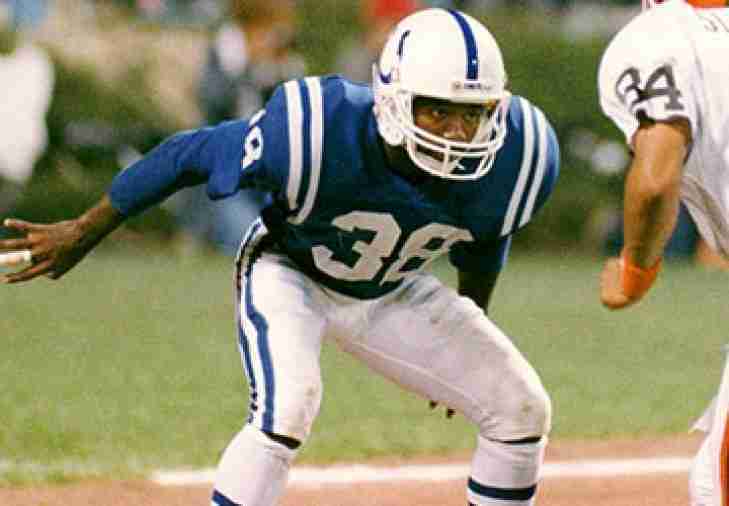
When the Colts packed up and moved to Indiana in 1984, few imagined that an eighth-round longshot out of LSU would end up defining perimeter defense in the Hoosier State for the next thirteen years. Eugene Daniel didn't just earn a roster spot as a rookie flyer—he seized the starting cornerback role with a fierce, physical edge that made him an immediate fan favorite and an immovable anchor in the Indianapolis secondary.
Daniel’s breakout sophomore campaign in 1985 cemented his status as one of the game's most underrated ball hawks. Picking off eight passes to finish tied for second in the National Football League, he authored his signature moment in March of that season against the New York Jets: stepping in front of a pass in his own end zone and racing 97 yards for a touchdown—a franchise record for the longest interception return for a touchdown in Colts history that still stands.
Despite playing through multiple coaching transitions and defensive schemes, Daniel served as a locker room general whose physicality set the tone for Indianapolis. He anchored the secondary during the 1987 AFC East title run and remained a key veteran corner during the team's dramatic run to the 1995 AFC Championship Game, consistently matching up against the opposition's top wideout.
Durable and loyal across 13 active seasons in Indianapolis (1984–1996), Daniel played in 185 regular-season games for Indianapolis—ranking among the highest game totals in franchise history—before concluding his 14-year career with a final season with the Baltimore Ravens in 1997. With the Colts, Daniel compiled 35 interceptions.
