

Site Admin
45. Bubba Smith
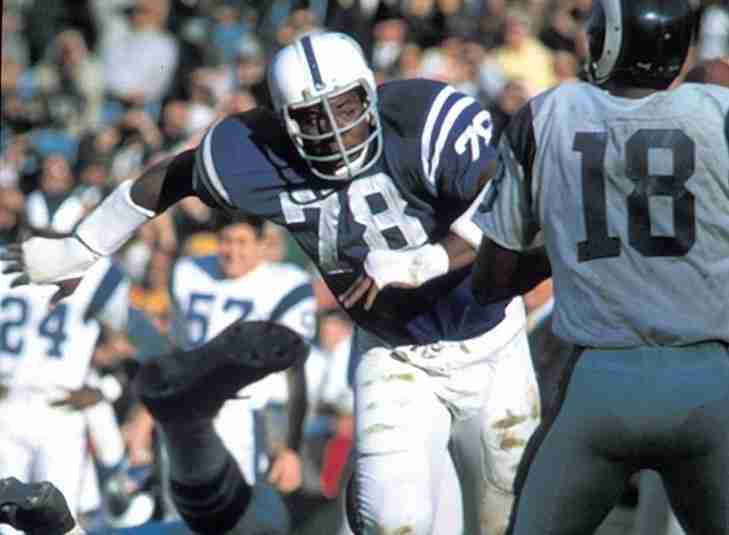
Long before pop culture knew him as the towering Moses Hightower in the Police Academy film franchise, Charles "Bubba" Smith struck genuine fear into opposing backfields as an imposing gridiron force. Selected first overall in the 1967 NFL Draft out of Michigan State, the 6-foot-7, 265-pound defensive end possessed a rare blend of length, explosive speed, and brute power that instantly transformed Don Shula’s defensive front in Baltimore.
Operating on the left side of Baltimore’s defensive trench, Smith became one of the premier pass rushers and edge setters in the National Football League. He earned Second-Team All-Pro recognition in 1968, helping anchor a defense that surrendered just 144 points all season en route to the 1968 NFL Championship. His individual production climbed even higher in 1970 and 1971, earning back-to-back Pro Bowl honors and culminating in a First-Team AP All-Pro campaign in 1971.
Smith’s defensive presence reached its apex during Baltimore’s march to glory in Super Bowl V. Teaming up with Billy Ray Smith Sr. and Fred Miller, his disruptive penetration harassed Dallas quarterbacks throughout the contest, holding the Cowboys' offense in check during a dramatic 16–13 victory to bring the Lombardi Trophy to Baltimore.
Though a tragic knee injury sustained during the 1972 preseason—after colliding with a steel yard-marker post on the sideline—forced him to miss the entire year and ultimately altered his athletic trajectory, his five-season playing run in Baltimore remains legendary.
He was traded to the Oakland Raiders in 1973 before finishing his career with the Houston Oilers. With the Colts, Smith accumulated 43 sacks in 69 games.
49. Gene Lipscomb
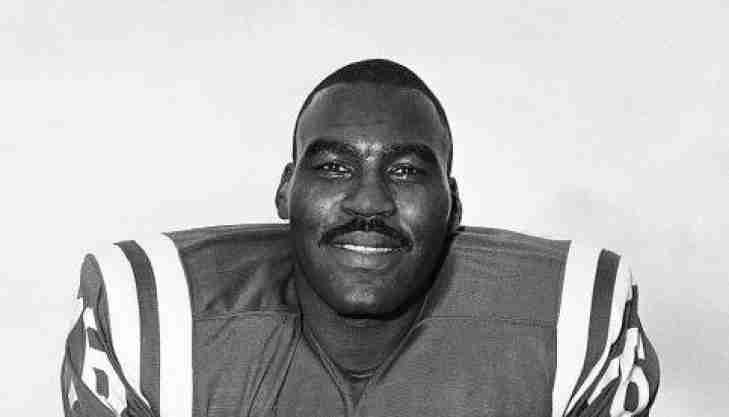
Standing 6-foot-6 and weighing a massive 288 pounds, Gene "Big Daddy" Lipscomb took one of the most improbable paths to professional football stardom in NFL history. Never attending college, Lipscomb honed his physical craft while serving in the United States Marine Corps before breaking into the league with the Los Angeles Rams as an undrafted free agent in 1953. After three seasons in Southern California where his immense potential was overshadowed by off-field friction, the Rams placed him on waivers in 1956—allowing Weeb Ewbank's Baltimore Colts to scoop up the towering defensive tackle for a mere $100 claim fee.
In Charm City, Lipscomb found structure, brotherhood, and immediate stardom. Lining up alongside Hall of Famers Gino Marchetti and Art Donovan, "Big Daddy" utilized a terrifying combination of lateral quickness and physical strength to obliterate opposing offensive lines. His signature move—a stinging slap to the earhole of holding blockers—and his unmatched range allowed him to pursue halfbacks from sideline to sideline. He led Baltimore in tackles during his second season and anchored a dominant interior front that powered the Colts to back-to-back NFL Championships in 1958 and 1959.
During those dual championship runs, Lipscomb operated as arguably the most dominant interior defender in pro football. He earned consecutive First-Team AP All-Pro selections and Pro Bowl nods in 1958 and 1959, then added Second-Team All-Pro honors in 1960. His ability to swallow up double-teams inside gave Baltimore’s linebackers complete freedom to flow to the ball, cementing his reputation as a defensive engine.
Traded to the Pittsburgh Steelers in 1961, Lipscomb played two final All-Pro-caliber seasons before his life was tragically cut short in 1963 at age 31.
38. Billy Ray Smith
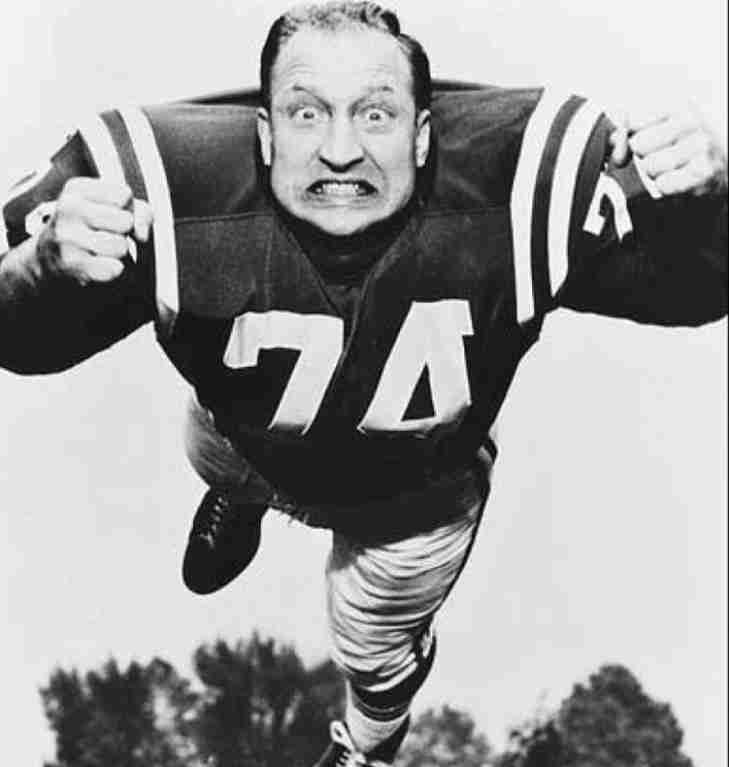
Long before he put the final exclamation point on his 13-year career in orange-squeezed Super Bowl V glory, Billy Ray Smith Sr. arrived in Charm City as a seasoned, battle-tested interior force. Drafted out of Arkansas in 1957, the Augusta native spent his early seasons with the Rams and Steelers before joining the Baltimore Colts in 1961. Smith instantly plugged into the defensive line rotation, bringing relentless leverage, technique, and an unrelenting work ethic that earned him the fond nickname "Rabbit"—a nod to his surprising quickness off the snap for a 250-pound defensive tackle.
Smith’s greatest asset was his rock-solid adherence to defensive fundamentals and unshakeable locker room presence. As a multi-year defensive captain under head coaches Don Shula and Don McCafferty, he anchored the interior alongside Bubba Smith and Fred Miller, establishing a stout front that neutralized opposing ground attacks. His individual peak arrived during the historic 1968 campaign, where he earned Second-Team AP All-Pro honors while helping power Baltimore's dominant defense to the 1968 NFL Championship title.
His career reached a storybook conclusion in 1970. Operating as the heart and soul of the defense at age 35, Smith helped guide the Colts through a gritty playoff run that culminated in Super Bowl V against the Dallas Cowboys. In a hard-hitting 16–13 victory, Smith’s interior wall held firm, securing the franchise's first Super Bowl ring and providing the veteran captain with a perfect fairy-tale exit from professional football.
Durable and steady across a decade for the Shoe, Smith appeared in 133 regular-season games for Baltimore, serving as a trusted leader through one of the most successful eras in team history. Retiring immediately after that Super Bowl V victory, Smith left the game as a two-time champion who set the benchmark for professionalism and defensive line play in Baltimore. He recorded 69.5 sacks in Baltimore.
35. Dick Syzmanski
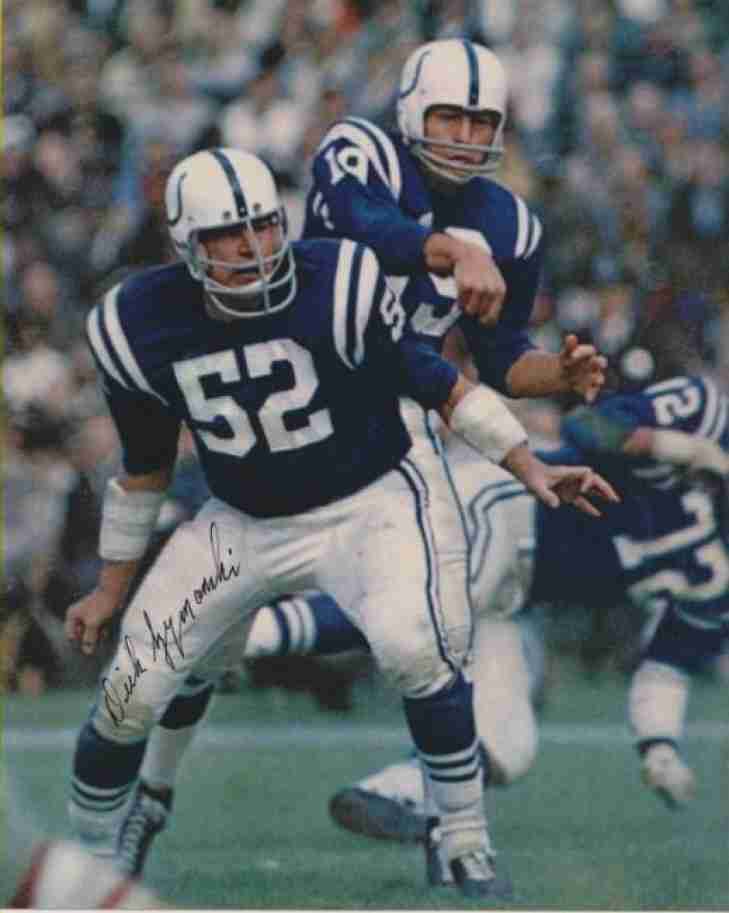
Few players in professional football history have personified two-way versatility like Dick "Sizzy" Szymanski, an iron-jawed pivot who could snap to Johnny Unitas on one drive and drop back to wallop opposing halfbacks on the next. Emerging from Notre Dame in 1955, Szymanski hit Baltimore like a physical revelation, jumping straight into the starting center spot as a rookie to earn Pro Bowl honors before putting his gridiron career on hold to serve his country in the U.S. Army.
After missing the entire 1956 season due to military service, Szymanski returned to a roster that needed his grit on the other side of the ball. Head coach Weeb Ewbank shifted him to middle linebacker for the 1959 and 1960 campaigns, where Szymanski flanked Don Shinnick and Bill Pellington to form one of the league's most punishing linebacking trios. His instinctive play inside proved vital during Baltimore's run to their second consecutive title in 1959, including a 31–16 victory over the New York Giants in the NFL Championship Game.
Returning to his primary center position in 1961, Szymanski re-established himself as one of the game's premier offensive line generals. Serving as the pre-snap caller and protector for Johnny Unitas, he played in 80 consecutive regular-season games from 1959 through 1964, earning two additional Pro Bowl invitations in 1962 and 1964 while anchoring a front line that powered Baltimore back to the top of the league.
Durable, tough, and fiercely loyal across 13 active seasons spent exclusively in horseshoe blue and white, Szymanski appeared in 155 regular-season games, winning three NFL Championship rings (1958, 1959, 1968) before transitioning directly into a multi-decade front office career with the franchise as a scout, personnel director, and general manager.
Syzmanski left the gridiron with 129 starts, 6 interceptions, and one of the most solid reputations in franchise history.
