

Site Admin
32. Tom Matte
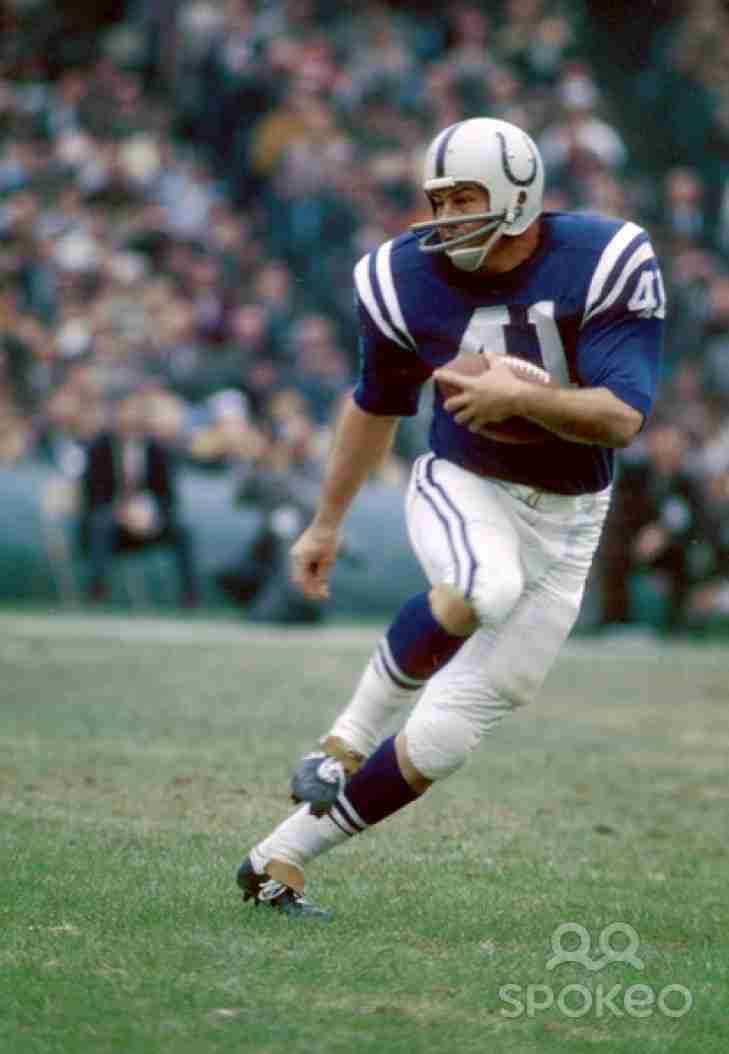
Before he ever topped the NFL in all-purpose yardage or hoisted a Super Bowl trophy, Tom Matte etched his name into pro football folklore as the ultimate utility man who stepped up when disaster struck. Arriving in Baltimore as a first-round pick out of Ohio State in 1961, Matte immediately made his mark with power running and soft hands, but it was his willingness to adapt—and famously wear a play-sheet taped to his wrist as an emergency quarterback—that proved he was the heartbeat of Don Shula’s backfield.
Matte earned legendary gridiron status during the 1965 season through one of the most famous emergency performances in pro football history. When injuries knocked out starting quarterbacks Johnny Unitas and Gary Cuozzo, Shula tapped Matte to start at quarterback for the regular-season finale and the Western Conference playoff game against Green Bay. Wearing a now-famous wristband with handwritten plays taped to his forearm—a strategic innovation that reshaped modern football communication—Matte managed the offense with courage and poise, leading Baltimore to a 20–0 victory over Los Angeles and pushing the Packers to overtime.
Returning to his primary halfback role, Matte produced his individual statistical masterpiece during the late 1960s. He earned back-to-back Pro Bowl selections in 1968 and 1969, serving as the offensive focal point alongside Earl Morrall and Unitas. In 1968, he rushed for 662 yards and ten touchdowns to power Baltimore to the 1968 NFL Championship. He followed up in 1969 with a First-Team AP All-Pro campaign, pacing the entire National Football League with 1,420 all-purpose yards and 11 total touchdowns while averaging 5.0 yards per carry.
Matte's dual-threat versatility proved essential during Baltimore's championship run in Super Bowl V. Contributing as both a runner and receiving outlet, he helped the Colts secure a 16–13 victory over the Dallas Cowboys to bring the Vince Lombardi Trophy to Baltimore.
Retiring after the 1972 season, Matte had 4,646 rushing yards, 45 rushing touchdowns, 249 receptions for 2,869 yards and 12 touchdown catches, and 8,882 total all-purpose yards.
28. Rick Volk
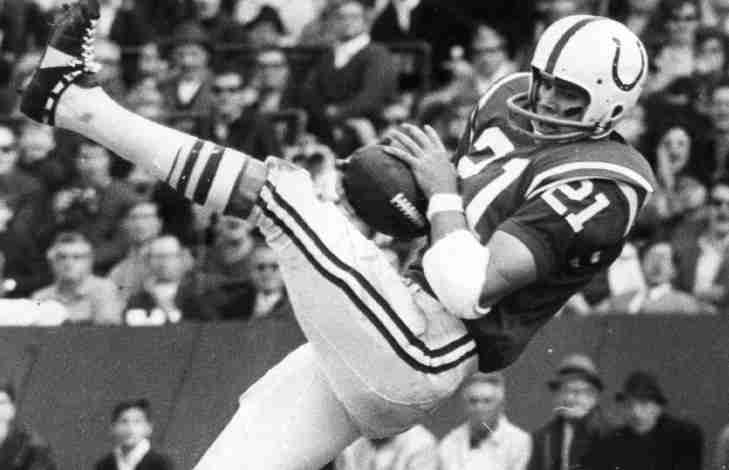
Selected in the second round (45th overall) of the 1967 NFL Draft out of Michigan, Rick Volk completed a rare football progression by transitioning straight from a Rose Bowl appearance with the Wolverines to starting in the NFL as a rookie. Arriving in Baltimore, the tough, cerebral safety immediately won the starting free safety job, bringing instincts, sharp tackling, and ball-hawking range to the back end of the Baltimore secondary.
Volk's impact was immediate, helping propel Baltimore to a 11–1–2 record as a rookie in 1967 while earning his first career Pro Bowl selection and First-Team AP All-Pro honors. The following season, he helped lead the Colts to the NFL Championship and an appearance in Super Bowl III. However, that championship clash turned tragic for Volk when he suffered a severe concussion in a collision in the second half, forcing him to be hospitalized while Baltimore suffered a shocking upset loss to the New York Jets.
Redemption arrived two years later in Super Bowl V against the Dallas Cowboys. Playing with a shoulder harness and relentless determination, Volk made one of the game's defining plays in the fourth quarter. Snagging a critical interception off Cowboys quarterback Craig Morton, he returned it 30 yards to the Dallas 2-yard line, setting up Tom Nowatzke’s game-tying touchdown run and paving the way for Baltimore's 16–13 victory to claim the Lombardi Trophy.
By the time his tenure with the franchise concluded after the 1975 season, Volk had intercepted 31 passes in a Colts uniform—ranking among the top marks in franchise history. He closed out his career with brief stints in New York (Giants) and Miami, but his legacy was permanently established in Baltimore as a big-game playmaker.
27. Fred Miller
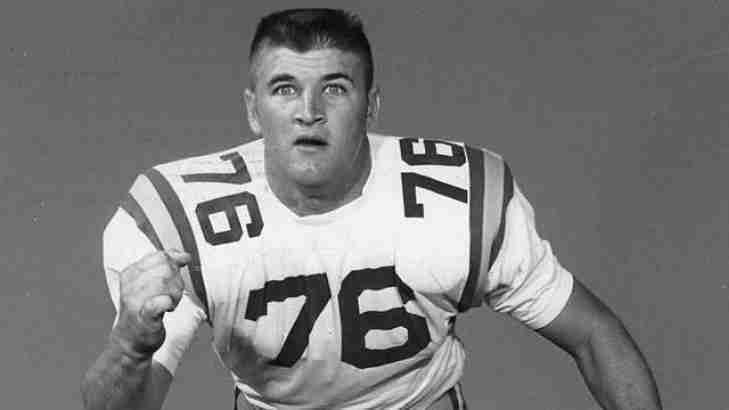
Selected in the seventh round (93rd overall) of the 1962 NFL Draft out of LSU, Fred Miller arrived in Charm City as a raw, physical prospect along the interior defensive line. Settling into the Baltimore Colts' starting lineup by 1964, the 6-foot-3, 250-pound defensive tackle quickly transformed into an unyielding anchor, anchoring one of the most formidable defensive fronts in professional football alongside Bubba Smith and Billy Ray Smith.
Operating as a relentless run-stuffer with exceptional lateral mobility, Miller made a career out of blowing up interior running plays before they could develop. His ability to collapse the pocket from the inside allowed Baltimore's pass rushers to wreak havoc off the edge. During his prime from 1967 to 1969, Miller earned three consecutive Pro Bowl selections, solidifying his reputation as one of the league’s premier defensive tackles.
Miller’s tenure in Baltimore was defined by relentless championship contention, as he suited up in three separate title games for the franchise. He anchored the defense during the historic 1968 campaign, helping propel the Colts to an NFL Championship victory over Cleveland before falling in Super Bowl III. Two years later, Miller got his redemption on the game's biggest stage, starting at left defensive tackle in Super Bowl V as Baltimore defeated the Dallas Cowboys 16–13 to claim the Lombardi Trophy.
Beyond his big-game pedigree, Miller’s hallmark was durability. Over his decade-long career spent entirely in Baltimore, he played in 133 regular-season games, missing only five games total throughout his ten years with the team. His quiet leadership and iron-man reliability along the front four steadied the Colts through two coaching changes and the transition into the post-merger NFL era.
Retiring following the 1972 season, Miller walked away with a championship ring and a permanent spot in Baltimore football lore. He compiled 52 unofficial sacks with 125 starts in 133 games.
26. Chris Hinton
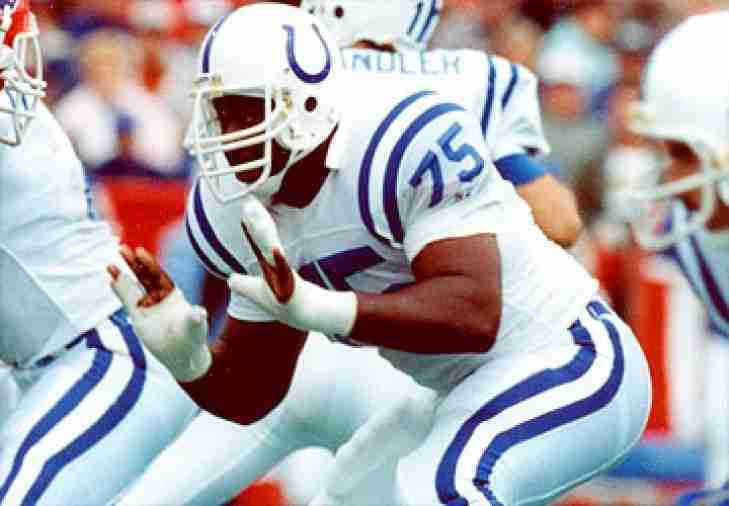
Drafted fourth overall in the 1983 NFL Draft by the Denver Broncos, offensive tackle Chris Hinton was immediately thrust into the spotlight when he was traded to the Baltimore Colts as the centerpiece of the historic deal for John Elway. While Elway's refusal to play for Baltimore reshaped the franchise's trajectory, Hinton quickly proved to be an elite, perennial All-Pro caliber anchor in his own right, famously joking years later that if Elway had stayed in Baltimore, Hinton wouldn't have been there to block for him anyway.
Plugging in immediately at guard as a rookie before switching to left tackle, Hinton weathered the franchise's turbulent relocation to Indianapolis in 1984 while serving as the focal point of the offensive line. Possessing rare technical precision and explosive functional power, he handled the league's premier pass rushers week after week. Across his seven seasons with the Colts, Hinton earned six Pro Bowl selections (1983, 1985–1989), two First-Team AP All-Pro selections (1987, 1989), and three Second-Team AP All-Pro honors (1985, 1986, 1988), spearheading a unit that paved the way for Eric Dickerson's dominant rushing campaigns in the late 1980s.
Hinton spent the final six years of his 13-season NFL career with Atlanta and Minnesota, earning a seventh Pro Bowl nod with the Falcons in 1993. His sustained excellence across the decade was permanently recognized when he was named to the NFL 1980s All-Decade Team. The Colts formally honored his enduring impact by inducting him into the Indianapolis Colts Ring of Honor in 2001.
