

Site Admin
33. Fred Dryer
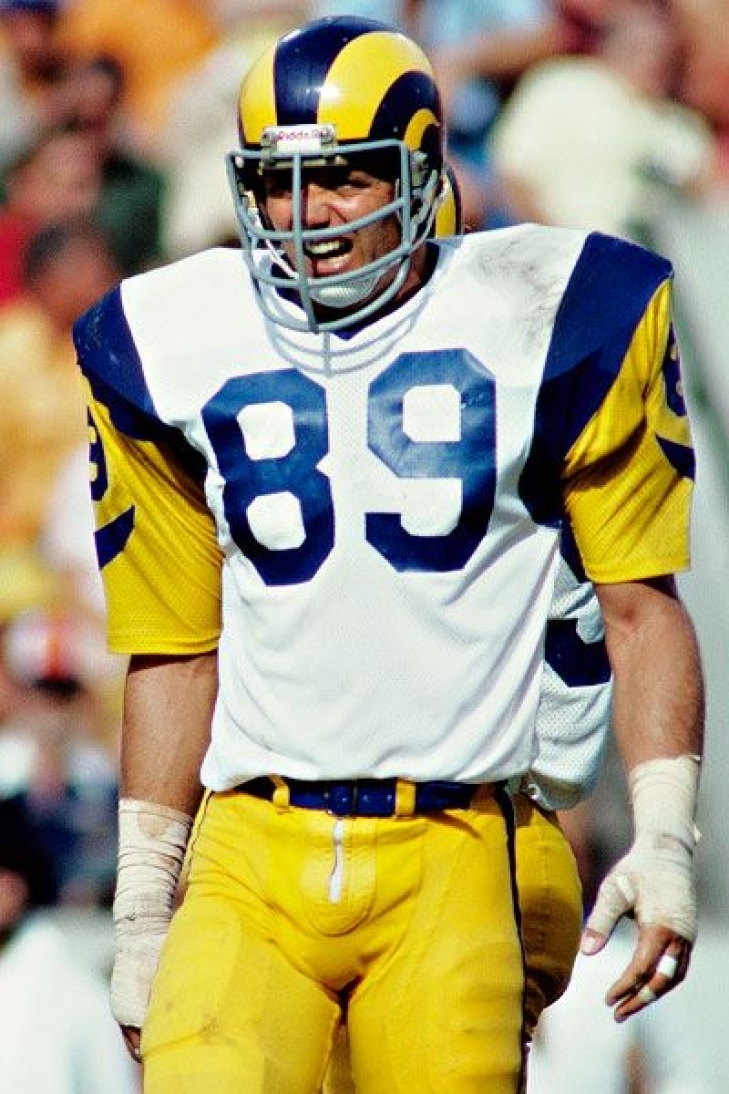
Fred Dryer took a long and messy path to Los Angeles. A first-round pick of the New York Giants in 1969 out of San Diego State, he played well enough in New York but grew unhappy, and the feeling was mutual. The Giants traded him to New England. Dryer refused to play for the Patriots without a new contract, so they moved him along to the Rams. The deal finally put him back in Southern California, exactly where he wanted to be.
Once he settled in as a defensive end, the production followed. In 1973, he did something no one else has ever done: he recorded two safeties in the same game against Green Bay, both in the fourth quarter of a 24-7 win. The next year he tied Jack Youngblood for the unofficial league lead with 15 sacks and earned First-Team All-Pro honors. He followed that with a Pro Bowl selection in 1975. Dryer was a long, athletic pass rusher who could close on quarterbacks quickly, and for a few seasons he was one of the league’s better ends.
The Rams kept contending, and Dryer stayed a regular part of the defensive line. He helped them reach Super Bowl XIV after the 1979 season. By then the individual awards had dried up, but he was still productive enough to start and contribute. The sack totals were no longer league-leading, yet he remained a reliable presence opposite Youngblood on teams that won the NFC West repeatedly.
Dryer played through the 1981 season before retiring. With the Rams, he was a one-time Pro Bowler and All-Pro who set a still-standing record with those two safeties and helped the franchise reach the Super Bowl. The peak years were strong. The later ones were more ordinary, the kind of solid but unspectacular work that keeps a defense together without drawing headlines.
After football, he built a second career as an actor. He starred as the title character in the long-running NBC series Hunter, a move that made him better known to many people than anything he did on the field. The defensive end who once chased down two quarterbacks in the same quarter for safeties ended up chasing criminals on television, which felt like a fitting second act for a player who always seemed to have a flair for the dramatic.
28. Lawrence McCutcheon

Lawrence McCutcheon was the Rams’ top rusher for much of the 1970s after they selected him in the third round out of Colorado State in 1972. He saw almost no action as a rookie, then took over as the starting running back in 1973 under new coach Chuck Knox. That year he rushed for 1,097 yards and earned the first of five consecutive Pro Bowl selections. McCutcheon was a durable back who thrived in Knox’s run-heavy scheme, carrying the ball between the tackles and also contributing as a receiver.
From 1973 to 1977, he led the Rams in rushing every season and finished among the league’s top five in rushing yards four times. He topped 1,000 rushing yards in four of those years and posted more than 1,500 yards from scrimmage in both 1974 and 1976. In 1974, he earned Second-Team All-Pro honors while finishing high in yards from scrimmage and all-purpose yards. McCutcheon also had a standout playoff performance in 1975, rushing for 202 yards in a win over the St. Louis Cardinals. Those seasons established him as one of the league’s more consistent backs, even if he rarely got the same attention as some of the era’s bigger names.
Injuries limited him in 1978, and by 1979 he was sharing carries with younger backs. He still contributed in the postseason as the Rams reached Super Bowl XIV. In that game, McCutcheon threw a 24-yard touchdown pass on a halfback option that briefly gave Los Angeles the lead before Pittsburgh pulled away. The Rams made the playoffs in each of his final seven seasons, and he remained a reliable piece of the offense throughout that stretch.McCutcheon left the Rams after the 1979 season and finished his career with brief stops in Denver, Seattle, and Buffalo. With Los Angeles, he rushed for 6,186 yards and 23 touchdowns while adding 1,683 receiving yards and 12 more scores. Those totals made him the franchise’s all-time leading rusher when he departed.
His five straight Pro Bowl selections and the four 1,000-yard seasons capture the heart of his career with the Rams. McCutcheon was sometimes overlooked compared with other runners of the decade, but his production and durability made him one of the steadiest contributors on those Los Angeles teams.
30. Rich Saul

Rich Saul arrived in Los Angeles as an eighth-round pick from Michigan State in 1970 and spent his first several seasons on the bench. He played special teams and backed up at multiple spots on the offensive line before winning the starting center job in 1975. Once he took over the position, he became a steady presence in the middle of the line. Saul was a smart, physical blocker who made the line calls and helped the Rams stay among the better rushing teams in the league.
Beginning in 1976, he earned a Pro Bowl selection every year through 1981, a six-year run that covered the peak of his career. Those teams won the NFC West repeatedly and reached Super Bowl XIV after the 1979 season. Saul started at center in that game against Pittsburgh and played on an offensive line that included other longtime Rams such as Tom Mack, Dennis Harrah, and Jackie Slater. In 1980, he earned Second-Team All-Pro honors while the Rams continued to contend. He was known for his quickness off the ball and his ability to execute cut blocks in the run game.
Saul remained the starter through the 1981 season even as the Rams began to slip from their earlier form. He played in every game that year and closed out his career after a 6-10 finish. In his 12 NFL campaigns, he appeared in 176 games and started 106, a stretch of durability that included consecutive regular-season appearances for most of his time in Los Angeles.
He retired after 1981. With the Rams, he finished as a six-time Pro Bowl center who helped the franchise reach the Super Bowl and remain competitive throughout the late 1970s and early 1980s. His consistency at the position and the recognition he earned over those six seasons marked him as one of the more reliable interior linemen of his era.
Saul later remained connected to the game in the Los Angeles area. He is remembered as the center who anchored the Rams’ line during one of the more successful stretches in franchise history.
29. Dennis Harrah

Dennis Harrah spent his entire 13-year career with the Los Angeles Rams after they selected him 11th overall out of Miami in the 1975 Draft. He came off the bench as a rookie, playing special teams while backing up at guard. The next year he won the starting right guard job and held that spot for the rest of his time in Los Angeles. Harrah was a large, athletic lineman who could pull in the run game and hold up in pass protection, and he quickly became a regular on an offensive line that helped the Rams win the NFC West six times.
He earned the first of his six Pro Bowl selections in 1978 and followed it with two more consecutive nods in 1979 and 1980. Those years came during a stretch when the Rams reached the playoffs repeatedly and advanced to Super Bowl XIV after the 1979 season. Harrah was part of a strong front that included other longtime starters, and the unit helped open holes for the running game while protecting the quarterbacks. He missed time with injuries in some seasons but remained the primary right guard whenever he was healthy.
After a quieter stretch in the early 1980s, Harrah returned to the Pro Bowl for three straight years from 1985 to 1987. In 1986, he earned First-Team All-Pro honors, his highest individual recognition. That second peak came as the Rams again contended in the NFC West, and Harrah still started and played at a high level into his mid-30s. He was also a team captain for six seasons, reflecting the respect he earned from teammates and coaches.
Harrah played his final season in 1987 and retired afterward. As a Ram, he appeared in 168 games and started 144. Those totals, along with the six Pro Bowl selections and the All-Pro nod, marked a long and productive career at a demanding position.
He later made the Rams’ 40th Anniversary Team. Harrah gave Los Angeles a durable and consistent right guard who helped the offense stay competitive through multiple coaching changes and roster turns over more than a decade.
