

Site Admin
37. Jack Snow

Jack Snow was taken eighth overall in the 1965 draft, but he never played a snap for the team that picked him. The rights quickly moved to the Los Angeles Rams, where he spent his entire 11-year career. A Notre Dame product with good size and soft hands, he stepped into the starting lineup as a rookie and stayed there for most of the next decade. Snow was not the flashiest receiver of his era, yet he had a knack for the deep ball and the toughness to work across the middle. Roman Gabriel trusted him on those routes, and Snow rarely dropped the ones he got his hands on.
The clear peak arrived in 1967. He caught only 28 passes, but they went for 735 yards and eight touchdowns, a 26.3-yard average that led the NFL. That production earned him a Pro Bowl selection. In one game against Baltimore, he scored on 53- and 80-yard catches. He was the kind of receiver who could take a short throw and turn it into a long gain, or stretch the field when Gabriel looked his way. The numbers weren’t huge by modern standards, but in a run-heavy offense, they stood out.
He kept producing after that. In 1970 he finished fifth in the league in receptions and ninth in receiving yards with 51 catches for 859 yards and seven touchdowns. He remained a starter through 1974 and helped the Rams reach the playoffs several times. The later seasons brought fewer targets and fewer big plays. By 1975, he was mostly a reserve, and the production dropped sharply. The deep threat was still there on occasion, but the volume was gone.
Snow retired after the 1975 season with 340 catches for 6,012 yards and 45 touchdowns, all of them with the Rams. The 1967 season was the one that earned him a Pro Bowl selection. The years around it were solid and steady, not spectacular. He was a reliable target for Gabriel on teams that mixed a strong running game with enough passing to keep defenses honest. The early career was promising, the middle stretch brought the best numbers, and the end was quieter.
After football, he stayed connected to the game as a Rams broadcaster. The receiver, who once led the league in yards per catch, finished his career with the same team that acquired him before he ever played a down. The totals were respectable for the era, and the Pro Bowl year remains the clearest highlight.
36. Joe Scibelli
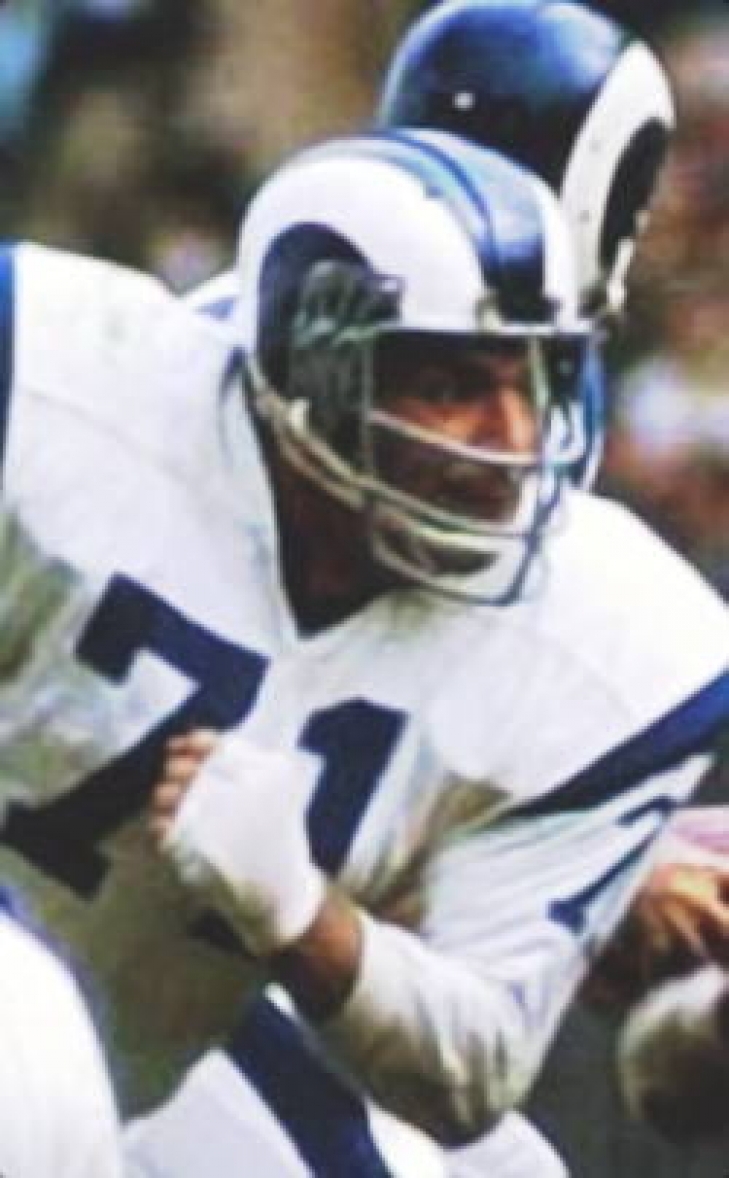
Joe Scibelli showed up as a 10th-round pick in 1961 out of American International and Notre Dame, a late-round guard who looked nothing like a prototype NFL lineman. He stood about 6-1 and carried a top-heavy build that made him easy to overlook. The Rams still gave him the right guard job early, and he held it for most of the next 15 years. Scibelli wasn’t the strongest or most athletic blocker, but he was smart, consistent, and willing to work. He became known for chewing raw garlic before games and breathing on defensive linemen at the snap, a small psychological edge he never stopped using.
His peak came in 1968, when he made the Pro Bowl. That was the only time he earned the honor, yet he remained a starter for years after. In 1973, he received First-Team All-Pro recognition from the Newspaper Enterprise Association while the Rams led the league in scoring and total yards. He played alongside Charlie Cowan for the entire stretch and later next to Tom Mack, forming one of the era’s more durable interior lines. The Rams won division titles in 1967, 1969, and from 1973 through 1975, and Scibelli was a constant on those teams. He served as a team captain for a long stretch and was named the Rams’ most valuable offensive lineman five times by the alumni association.
He played every season from 1961 through 1975 and finished with 202 games, one of only five players in franchise history to reach 200. The early years were quiet. The middle stretch brought the Pro Bowl, the All-Pro nod, and the division titles. The later years were the work of a veteran who simply kept showing up and getting the job done on teams that were still competitive. He retired after the 1975 season.
Scibelli left behind a reputation for durability and reliability more than highlight-reel plays. He was the right guard who stayed in the lineup for a decade and a half, helped the offense score, and occasionally made opponents wrinkle their noses before the snap. The one Pro Bowl was the clear peak. The rest was the steady, unglamorous work that keeps an offensive line together. He died of cancer in 1991 at 52, but the longevity record and the garlic stories remained.
35. Jack Reynolds
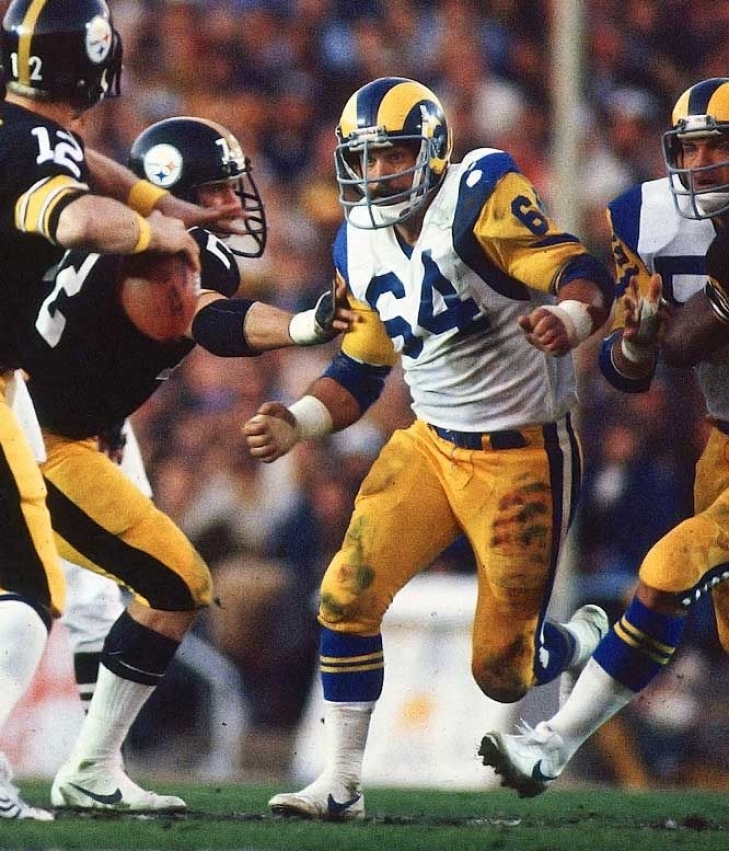
Jack Reynolds earned the nickname “Hacksaw” the hard way. After a tough loss at Tennessee, he took a hacksaw to an old car and cut it in half to burn off his frustration. The Rams liked the intensity enough to take him 22nd overall in 1970. He spent his first few seasons coming off the bench on a veteran defense before winning the starting middle linebacker job in 1973. Once he got there, he stayed there. Reynolds was a tough, instinctive player who diagnosed runs quickly and filled gaps with force. He wasn’t the biggest or fastest linebacker, but he rarely missed assignments and played with a constant edge.
The Rams of the mid-to-late 1970s were regular contenders, and Reynolds was a steady presence in the middle of the defense. He earned Pro Bowl selections in 1975 and 1980. In between those honors, he helped the team win the NFC West multiple times and reach the playoffs almost every year. He played in Super Bowl XIV after the 1979 season. Individual awards were limited, yet teammates and coaches trusted him in the biggest games. He finished with 145 games for Los Angeles and started the large majority of them once he took over the job.
The Rams released him after the 1980 season. He signed with San Francisco and won two Super Bowls there, but that chapter came after he left Los Angeles. As a Ram, he was a two-time Pro Bowler who had started for most of a decade and helped the franchise stay competitive through the 1970s. The early years were quiet. The middle stretch brought the Pro Bowls and the playoff runs. The end was abrupt.
Reynolds left behind a reputation for toughness and reliability. He was the middle linebacker who showed up every week, made the calls, and hit people. The Super Bowls came later with another team, but the bulk of his career and the nickname that stuck were built in Los Angeles.
34. Tom Newberry
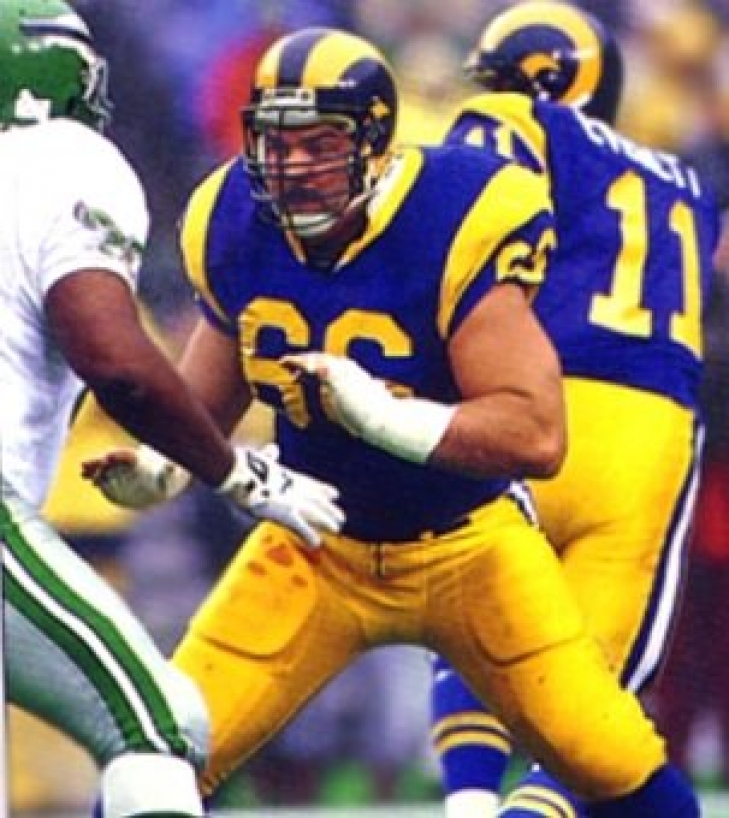
Tom Newberry was a second-round pick out of Wisconsin-La Crosse in 1986, a small-school prospect who didn’t exactly look the part of an NFL left guard. He stood about 6-2 and started his career a little light for the position, yet he won the starting job as a rookie and made the All-Rookie team. The Rams had bet on his quick feet and aggressive style, and he repaid them by anchoring the left side almost immediately. He was the kind of guard who preferred to fire out and create holes in the run game rather than sit back and pass-block, and it showed early.
The peak came fast. In 1987, he earned Second-Team All-Pro honors. The next two seasons he was First-Team All-Pro and a Pro Bowl selection both years. Those 1988 and 1989 campaigns marked him as one of the league’s better interior linemen. He helped the Rams reach the playoffs in both of those seasons and again in 1986, and he was a key piece of the line that protected Jim Everett and opened lanes for the run game. The individual awards dried up after that, but the production did not. Newberry kept starting and kept playing at a high level even as the Rams slipped from contention.
He stayed with Los Angeles through the 1994 season. Over those nine years, he played in 131 games and started 128, a stretch of durability that made him a constant on the offensive line. The early years brought the accolades and the playoff runs. The later ones were quieter, the work of a reliable veteran on teams that were no longer among the NFC’s best. He still did the job, even if the spotlight had moved on.
Newberry left after 1994 and spent one final season with the Pittsburgh Steelers, starting at center in their Super Bowl XXX appearance. With the Rams, he finished as a two-time First-Team All-Pro and Pro Bowl guard who had made the All-Rookie team and started nearly every game he played. The peak was short but clear. The rest of the tenure was the steady, unglamorous work that keeps an offense functioning. It was a solid career built on quickness and toughness from a player most teams had overlooked.
