

Committee Chairman
1. Joe Greene
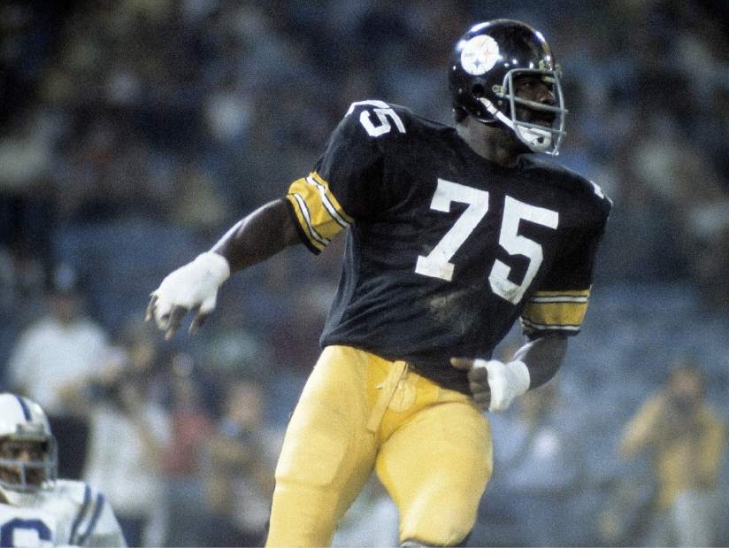
When many publications or blogs come up with "Mean" Joe Greene as the greatest Pittsburgh Steeler of all-time, they seem to make the selection seem so any. We came up with Greene as our top player in franchise history, but it was a struggle with many legends who could have easily been placed at number one. One thing above all else, though, is when you think of what embodies a Steeler, it is hard to come up with a better man than Greene.
50. Rufus Mayes
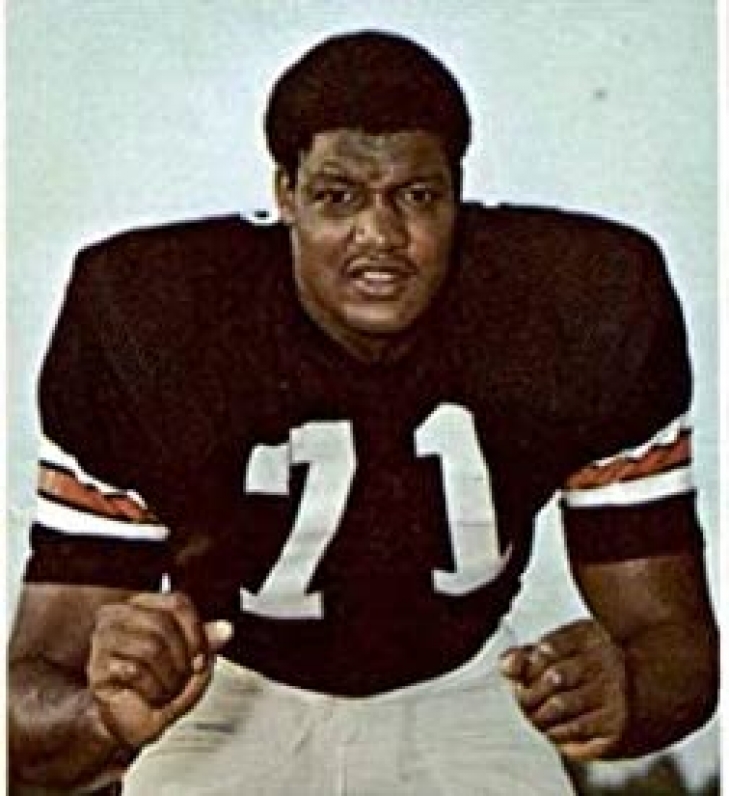
Acquired via trade following his 1969 rookie season, Ohio State standout Rufus Mayes arrived in Cincinnati after being taken 14th overall by the Chicago Bears in the first round. The Bengals sent defensive linemen Bill Staley and Harry Gunner to Chicago in exchange for Mayes—a swap that tilted heavily in Cincinnati's favor as Mayes went on to spend nearly a decade protecting the perimeter in Queen City.
At 6 feet 5 inches and 250 pounds, Mayes possessed excellent quickness and technique, stepping straight into the starting left tackle spot. He served as the primary anchor for Paul Brown's offensive front, protecting the blind side for quarterbacks Virgil Carter and Ken Anderson while opening holes for power backs like Essex Johnson and Pete Johnson.
Mayes reached the peak of his career during a stellar three-year stretch from 1974 through 1976. During those campaigns, he consistently posted double-digit Approximate Value ratings and anchored an offensive line that helped power Cincinnati to an 11-3 record and a playoff berth in 1975. Though voters routinely overlooked him for Pro Bowl honors, his high-level pass protection and stability on the edge placed him among the most effective left tackles in the AFC during the mid-1970s.
He remained a trusted starter through 1978 before finishing his professional journey with a brief final season in Philadelphia in 1979. Mayes started 98 of his 110 games in Cincinnati.
Awards = HOF?: Part Fifty-Eight: Mariano Rivera/Trevor Hoffman Award
We here at Notinhalloffame.com thought it would be fun to take a look at the major awards in North American team sports and see how it translates into Hall of Fame potential.
Needless to say, different awards in different sports yield hall of fame potential. In basketball, the team sport with the least number of players on a roster, the dividend for greatness much higher. In baseball, it is not as much as a great individual season does not have the same impact.
Last time, we looked at the now defunct Delivery Man of the Year, a trophy that only existed from 2005 to 2013. We also looked at recently the Rolaids Reliever of the Year, which was mathematically calculated to honor the best closer. In 2014, a new award, which will likely be the gold standard for closers arrived, the Mariano Rivera AL Reliever of the Year and Trevor Hoffman NL Reliever of the Year.
These awards honor the best modern closers after being named after two Hall of Famers.
Yes, we know that this is embryonic, but that will only be temporary, so we know that this won’t yield anyone…for now.
So how many Mariano Rivera AL Reliever of the Year and Trevor Hoffman NL Reliever of the Year winners have made the Baseball Hall of Fame?
Let’s find out!
The following are the past players who have won either the Mariano Rivera AL Reliever of the Year and Trevor Hoffman NL Reliever of the Year who are eligible for the Baseball Hall of Fame and have been enshrined.
None
The following are the players who have won the Mariano Rivera AL Reliever of the Year and Trevor Hoffman NL Reliever of the Year who are eligible for the Baseball Hall of Fame and have not been selected:
None.
Let’s update our tally, shall we?
|
Award in Question |
Percentage of recipients who have entered the HOF |
Percentage of recipients by year who have entered the HOF. |
|
NBA MVP |
100% |
100% |
|
NHL Art Ross |
100% |
100% |
|
NHL Hart Trophy |
93.6% |
96.3% |
|
NBA Finals MVP |
91.3% |
94.9% |
|
NHL Norris |
90.5% |
96.4% |
|
NHL Ted Lindsay Award |
90.0% |
|
|
NBA All-Star Game MVP |
89.5% |
91.7% |
|
NHL Conn Smythe |
74.2% |
85.4% |
|
NFL Bert Bell Award |
73.7% |
71.4% |
|
NFL AP Offensive Player of the Year |
73.1% |
79.4% |
|
NFL AP MVP |
68.3% |
74.0% |
|
NFL Walter Payton Man of the Year |
66.7% |
66.7% |
|
NHL Lady Byng |
63.8% |
76.0% |
|
NFL Defensive Player of the Year |
60.8% |
71.1% |
|
NFL Super Bowl MVP |
60.6% |
64.9% |
|
NHL Mark Messier Leadership Award |
60.0% |
60.0% |
|
NBA Defensive Player of the Year |
58.3% |
56.5% |
|
NHL Vezina |
57.1% |
66.3% |
|
NBA Rookie of the Year |
56.5% |
56.5% |
|
MLB MVP |
55.0% |
60.2% |
|
NFL Pro Bowl MVP |
52.3% |
54.8% |
|
MLB Lou Gehrig Award |
51.9% |
51.9% |
|
MLB Roberto Clemente Award |
47.4% |
47.4% |
|
NHL Calder Trophy |
46.5% |
46.5% |
|
NBA J. Walter Kennedy Citizenship Award |
46.0% |
46.0% |
|
MLB/NL/AL Cy Young Award |
44.4% |
55.4% |
|
MLB Babe Ruth Award |
37.0% |
39.3% |
|
NHL King Clancy Award |
36.8% |
36.8% |
|
NHL Frank J. Selke Trophy |
33.3% |
36.7% |
|
MLB World Series MVP |
33.3% |
36.8% |
|
MLB Hutch Award |
33.1% |
33.1% |
|
NFL Offensive Rookie of the Year |
28.6% |
28.6% |
|
NHL Bill Masterton Memorial Trophy |
27.9% |
27.9% |
|
MLB Edgar Martinez Award |
26.7% |
17.2% |
|
MLB Delivery Man of the Year |
25.0% |
50.0% |
|
MLB (NL/AL) Silver Slugger (Designated Hitter) |
25.0% |
30.8% |
|
MLB Comeback Player of the Year |
25.0% |
25.0% |
|
MLB (NL/AL) Silver Slugger (Shortstop) |
23.5% |
52.6% |
|
MLB (NL/AL) Gold Glove |
21.7% |
36.8% |
|
NHL William M. Jennings Trophy |
20.7% |
40.4% |
|
NFL Defensive Rookie of the Year |
20.6% |
20.6% |
|
MLB (NL/AL) Silver Slugger (Catcher) |
20.0% |
22.5% |
|
MLB (NL/AL) Gold Glove (Second Base) |
18.8% |
39.8% |
|
MLB Rolaids Reliever of the Year |
18.6% |
33.3% |
|
MLB (NL/AL) Gold Glove (Shortstop) |
18.2% |
35.1% |
|
MLB (NL/AL) Silver Slugger (Pitcher) |
18.2% |
20.1% |
|
MLB (NL/AL) Silver Slugger (Second Base) |
16.7% |
32.7% |
|
MLB (NL/AL) Gold Glove (Outfield) |
16.7% |
30.1% |
|
MLB (NL/AL) Silver Slugger (Outfield) |
15.7% |
25.2% |
|
MLB (NL/AL) Gold Glove (Third Base) |
14.3% |
14.3% |
|
MLB (NL/AL) Silver Slugger (Third Base) |
13.6% |
14.3% |
|
MLB (NL/AL) Silver Slugger (First Base) |
13.6% |
13.3% |
|
MLB (NL/AL) Rookie of the Year |
13.3% |
13.3% |
|
MLB (NL/AL) Gold Glove (Catcher) |
10.3% |
15.2% |
|
NBA Most Improved Player of the Year |
5.3% |
3.2% |
|
MLB (NL/AL) Gold Glove (First Base) |
3.8% |
3.2% |
|
NFL AP Comeback Player of the Year |
0.0% |
0.0% |
So, who is up next?
The following are the players who have won the Mariano Rivera AL Reliever of the Year and Trevor Hoffman NL Reliever of the Year in MLB who have retired but have not met the mandatory years out of the game to qualify for the Baseball Hall of Fame:
None.
The following are the players who have won the Mariano Rivera AL Reliever of the Year and Trevor Hoffman NL Reliever of the Year in MLB who are still active.
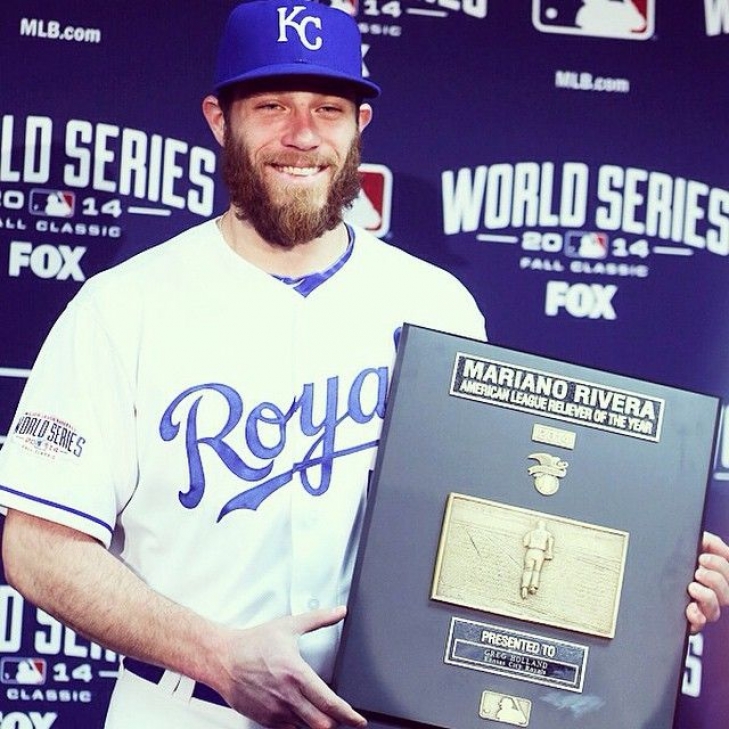
Greg Holland, Kansas City Royals: 1-3, 46 Saves, 1.44 ERA, 90 SO, 2014, AL
Greg Holland was in his fifth year in the Majors, all of which were in Kansas City. An All-Star in 2013, Holland was so again in 2014, and posted a 1.44 ERA with a 0.914 WHIP. Holland was ninth in Cy Young voting this year, and he helped the Royals win the American League Pennant. The Royals won the World Series in 2015, but Holland had to leave late in the season for Tommy John Surgery. He came back in 2016, but with St. Louis. Holland came back in 2020 to the Royals.
35 Years Old, Playing for the Kansas City Royals.
Craig Kimbrel, Atlanta Braves: 0-3, 47 Saves, 1.61 ERA, 95 SO, 2014, NL
By this point, Craig Kimbrel already won the Rookie of the Year, and was the final NL Rolaids Reliever of the Year and Delivery Man of the Year. Kimbrel fittingly became the first Trevor Hoffman National League Reliever of the Year, and this was his fourth consecutive season leading the NL in Saves. He notably was named the TSN Pitcher of the Year, the second straight time that Kimbrel won that award. Kimbrel was ninth in Cy Young voting.
33 Years Old, Playing for the Chicago Cubs.
Andrew Miller, New York Yankees: 3-2, 36 Saves, 2.04 ERA, 100 SO, 2015, AL
It didn’t take long for a Yankee to win an award named after a Yankee, but it did take Miller long to win an award of any kind as a Major League Pitcher. Miller debuted in 2006 for Detroit, and he would later play for Florida, Boston and Baltimore, joining the Yankees in 2015. This was his only year as a closer, and only full year with the Yankees, as he was traded to Cleveland during the 2016 Season. Miller finished ninth in Cy Young voting this year and had a 0.859 WHIP.
36 Years Old, Playing for the St. Louis Cardinals.
Mark Melancon, Pittsburgh Pirates: 3-2, 51 Saves, 2.23 ERA, 62 SO, 2015, NL
Mark Melancon began his career with the New York Yankees, and he would later throw for Houston and Boston before becoming a Pittsburgh Pirate in 2013. An All-Star in 2013, Melancon was so again in 2015, where he led the National League in Saves (51) where he was eighth in Cy Young voting. He led the NL in Games Finished (67) the following year, though he split the season with the Pirates and Washington.
36 Years Old, Playing for the Atlanta Braves.
Zack Britton, Baltimore Orioles: 2-1, 47 Saves, 0.54 ERA, 74 SO, 2016, AL
Zack Britton began his career with the Baltimore Orioles in 2011, and he would be promoted to the team’s closer in 2014. Britton was an All-Star in 2015, leasing the American League in Games Finished (58), with 46 Saves and a 1.92 ERA, but he took that good number and sliced by nearly two-thirds with a 0.54 ERA. Britton led the AL in Games Finished that year (63) and Saves (47) and was an All-Star for the second time as well as the fourth-place finisher for the Cy Young.
33 Years Old, Playing for the New York Yankees.
Kenley Jansen, Los Angeles Dodgers: 3-2, 47 Saves, 1.83 ERA, 104 SO, 2016, NL
Kenley Jansen debuted in the Majors for the Dodgers in 2010 where the native of Curacao has spent his entire career in the bullpen. Jansen became the closer in 2012, and in 2016, he was an All-Star for the first time on the strength of his 47 Saves, 1.83 ERA and 0.670 WHIP. His 13.6 SO/9 was also among the best in Baseball.
33 Years Old, Playing for the Los Angeles Dodgers.
Craig Kimbrel, Boston Red Sox: 5-0, 35 Saves, 1.43 ERA, 126 SO, 2017, AL (2)
Kinbrel joined the Boston Red Sox in 2016, going to his fifth All-Star Game. This was best year in Boston, as he was an All-Star again where he again won the TSN Pitcher of the Year, and was sixth in Cy Young voting. Kimbrel became the first player to win the Hoffman and Rivera Award. He won a World Series Ring the following year, and he would leave Boston for the Cubs, going three-for-three in All-Star Games.
33 Years Old, Playing for the Chicago Cubs.
Kenley Jansen, Los Angeles Dodgers: 5-0, 41 Saves, 1.32 ERA, 109 SO, 2017, NL (2)
Jansen followed up his 2016 Hoffman winning year with another one, and did so at an even higher level. Jansen dropped his ERA to 1.32, had a WHIP of 0.746 and posted a blistering of SO/BB of 15.57. Jansen was fifth in Cy Young voting that year.
33 Years Old, Playing for the Los Angeles Dodgers.
Edwin Diaz, Seattle Mariners: 0-4, 57 Saves, 1.96 ERA, 124 SO, 2018, AL
Edwin Diaz may not have won a game this year, but who cares? He led the AL in Saves (57), and Games Finished (65) and he matched his sub-2 ERA with an even more impressive WHIP of 0.791. Diaz, who went to the All-Star Game this year, was eighth in Cy Young voting.
26 Years Old, Playing for the New York Mets.
Josh Hader, Milwaukee Brewers: 6-1, 12 Saves, 2.43 ERA, 143 SO, 2018, NL
From the 12 Saves, you could see that Hader was not the primary closer, but as relief pitching changes, so do stats for an award such as this. Hader fanned 143 batters, a filthy amount considering he only threw 81.1 Innings. His 15.8 SO/9 and 0.811 WHIP were incredible, and he was named to the All-Star Game in what was his second year in the Majors. He was also seventh in Cy Young in voting.
27 Years Old, Playing for the Milwaukee Brewers.
Aroldis Chapman, New York Yankees: 6-1, 12 Saves, 2.43 ERA, 143 SO, 2019, AL
A four-time All-Star with the Cincinnati Reds and World Series winner with the Chicago Cubs, Chapman later became a Yankee (twice actually) and in 2018 he was an All-Star for the first time in the American League. 2019 was Chapman’s sixth All-Star year, but first winning any individual award with his 37-Save year.
33 Years Old, Playing for the New York Yankees.
Josh Hader, Milwaukee Brewers: 3-5, 37 Saves, 2.63 ERA, 138 SO, 2019, NL (2)
Hader was a more traditional closer this year, but his Strikeout rate remained astronomical with a 16.4 SO/9. An All-Star for the second straight year, Hader had another great WHIP with a 0.806. He would become the first back-to-back Hoffman Award winner.
27 Years Old, Playing for the Milwaukee Brewers.
Liam Hendriks, Oakland Athletics: 3-1, 14 Saves, 1.78 ERA, 37 SO, 2020, AL
The native of Perth, Australia, Liam Hendriks was in his tenth season, and his second as a closer. In the COVID-19 stricken year, Hendricks also posted a WHIP of 0.671 and was ninth in Cy Young voting.
32 Years Old, Free Agent.
Devin Williams, Milwaukee Brewers: 4-1, 0 Saves, 0.33 ERA, 53 SO, 2020
For the first time in the history of the award, we have a winner who was not a closer, so much so that he had ZERO Saves. Devin Williams was incredible this year, allowing only one Run in his 27 Innings Pitched. He was so good in this season, that he had a SO/9 of 17.7 with a WHIP of 0.630. Amazingly, Williams was a rookie, and also won the Rookie of the Year Award. He also finished seventh in Cy Young Award voting.
26 Years Old, Playing for the Milwaukee Brewers.
We can’t wait to see how this award plays out in the future.
So, what is up next?
We go back to the baseball playoffs, and the ALCS and NLCS MVPs.
As always, we thank you for your support, and look for that soon.
49. T.J. Houshmandzadeh
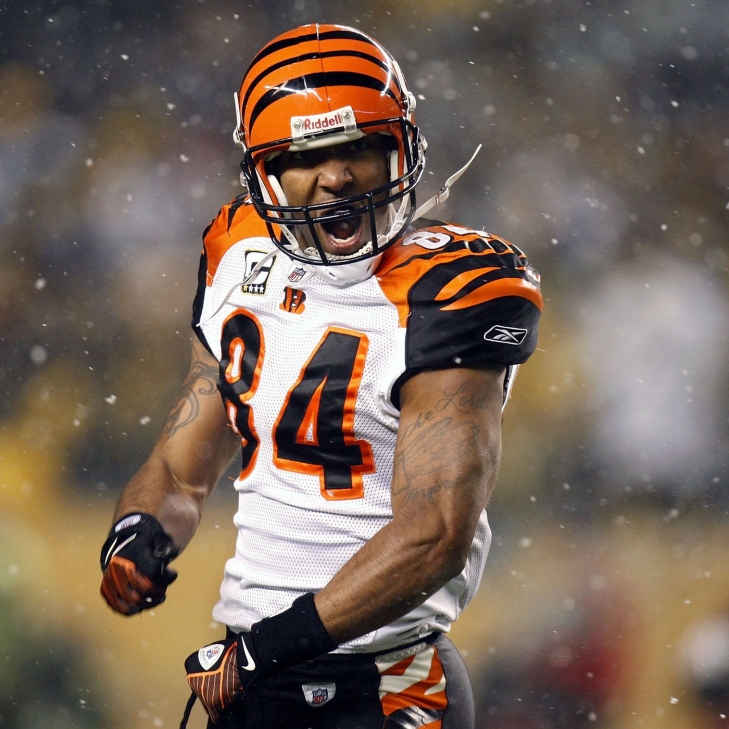
Wasn’t the last name of T.J. Houshmandzadeh a thing of beauty on the back of an NFL jersey?
Drafted in the seventh round (204th overall) of the 2001 NFL Draft out of Oregon State, T.J. Houshmandzadeh was an unheralded longshot whose bold personality was matched only by his elite hands and ferocious work ethic over the middle. Along with the custom spacing required to fit his iconic surname on the back of his jersey, Houshmandzadeh carved out a legacy as one of the most dependable third-down chain-movers in franchise history.
Houshmandzadeh spent his early NFL tenure establishing himself as a role player, working as a reserve receiver and special teams returner. After a hamstring injury sidelined him for almost the entire 2003 season, he fought his way into the starting lineup in 2004 alongside Chad Johnson, forming one of the dynamic receiving duos of the 2000s.
From 2004 to 2008, Houshmandzadeh became Carson Palmer's key safety valve. He accumulated 978 receiving yards in 2004 and 856 yards in 2005, providing the physical, tough-yardage support alongside Johnson's speed downfield during Cincinnati's 2005 division victory. In 2006, he surpassed 1,000 yards with 90 receptions for 1,081 yards and nine touchdowns, paving the way for an outstanding season in 2007. In the historic 2007 season, Houshmandzadeh equally led the NFL with a franchise-record 112 receptions, setting personal bests with 1,143 receiving yards and 12 touchdowns, which earned him his only Pro Bowl selection.
He played one final season with Cincinnati in 2008, catching 92 passes despite missing his starting quarterback for most of the year, before signing with the Seattle Seahawks in free agency in 2009. With the Bengals, he compiled 507 receptions, 5,782 receiving yards, and 37 receiving touchdowns alongside 1,291 total return yards.
