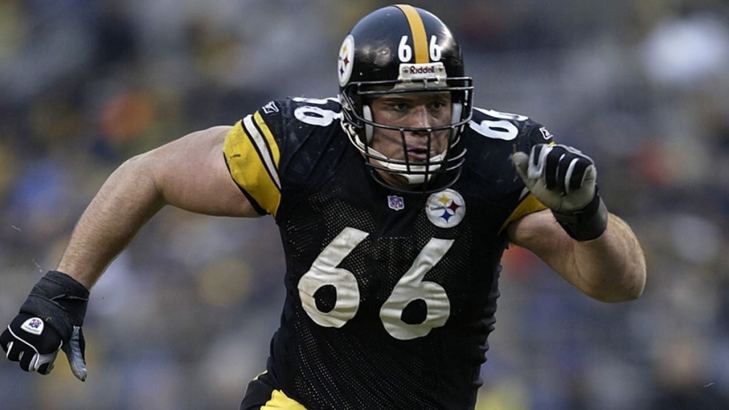
Taken in the ninth round (231st overall) of the 1984 NFL Draft out of Holy Cross, physics major Bruce Kozerski arrived in Cincinnati as a deep-draft longshot. He spent his entire 12-year NFL career with the Bengals (1984–1995), earning the moniker "Mr. Versatile" for his rare ability to start at every position on the offensive line.
Kozerski, standing 6 feet 4 inches and weighing 287 pounds, was known for his exceptional footwork, football IQ, and physical power. Initially serving as a key reserve on the interior line in his first two seasons, he became a full-time starter at guard and center in 1986. His role as a crucial linchpin was marked during Cincinnati's 1988 AFC Championship run, where he started all 16 games at center, snapping to Boomer Esiason and creating openings for Ickey Woods and James Brooks, leading up to Super Bowl XXIII.
Kozerski's legendary status in Queen City stemmed from his exceptional versatility in position flex. Over more than ten years, he regularly stepped into crucial roles at center, left guard, right guard, and right tackle. From 1988 to 1990, he earned Pro Bowl alternate honors three years in a row. Demonstrating his adaptability late in his career, in 1994, he transitioned fully to right tackle, starting all 16 games.
Kozerski remained a steadying veteran presence for the franchise through 1995, finishing his career as one of the longest-tenured interior linemen in franchise history before retiring to enter the teaching and coaching ranks in Greater Cincinnati. Kozerski appeared in 172 regular-season games (137 starts) and five postseason contests.
Playing his college ball at Ohio State, Pete Johnson was a Second Round Pick in 1977 by the Cincinnati Bengals.
Taken in the second round (31st overall) of the 1992 NFL Draft from Tennessee, Carl Pickens joined Cincinnati as a versatile, physical playmaker. With exceptional jumping and catching skills, reliable hands, and a formidable red-zone threat, Pickens swiftly became one of the most potent receiving options of the 1990s.
Pickens started strong as a rookie in 1992, demonstrating his quickness both as a receiver and return specialist. He gained 555 total yards and received AP Offensive Rookie of the Year, quickly becoming a key offensive star for the Bengals.
By 1994, Pickens leveled up into a true primary receiver, cracking the four-figure mark for the first time with 71 receptions for 1,127 yards and 11 touchdowns. That breakout ignited a dominant three-year stretch where he posted at least 1,000 yards and double-digit touchdowns each season. His 1995 campaign stood as his defining opus, as he hauled in 99 passes for 1,234 receiving yards and led the entire NFL with 17 receiving touchdowns, earning First-Team All-Pro honors and his first Pro Bowl selection. He backed that up in 1996 with 100 receptions for 1,180 yards and 12 touchdowns, earning a second straight Pro Bowl nod while becoming the first player in Bengals history to catch 100 passes in a single season.
Following a hamstring injury that restricted him to merely four games in 1997, Pickens rebounded in 1998 with his fourth career 1,000-yard season, obtaining 82 receptions for 1,023 yards and five touchdowns. Nevertheless, disagreements with senior management and public criticism of the team's coaching strategy cast a shadow over his final years in Cincinnati. The team even enacted what became known as the "Carl Pickens Clause"—a contractual provision permitting clubs to recover bonuses if a player publicly disparaged the organization.
After the 1999 season, Pickens parted ways with the Bengals and signed with the Tennessee Titans for the 2000 campaign before wrapping up his career with Dallas in 2001. With Cincinnati, Pickens played in 120 regular-season games (110 starts). He generated 530 receptions, 6,887 receiving yards, and 63 receiving touchdowns, along with two punt return touchdowns.
One of the few place kickers drafted (8th round in 1979 from the University of California), Jim Breech had his early NFL journey altered when the Oakland Raiders released him in favor of Chris Bahr. The Cincinnati Bengals seized the opportunity, claiming Breech off waivers in 1980 and securing a steady, clutch-kicking presence who would anchor their special teams unit for the next 13 seasons.
Breech, known for being compact and ice-cold under pressure, proved to be the ultimate cold-weather specialist at Riverfront Stadium. His quick-strike style and talent for performing in high-pressure moments made him a key figure during the franchise’s most successful period. Breech was one of the few players to contribute significantly to both Bengals Super Bowl teams in 1981 and 1988.
His postseason clutch ability is legendary: Breech was perfect with a 9-for-9 record on field goal attempts over nine playoff games, including making all four attempts in Super Bowl XVI and Super Bowl XXIII. Notably, his 40-yard field goal late in Super Bowl XXIII put Cincinnati ahead 16–13 with just over three minutes left. He also set an NFL record by winning nine overtime games with walk-off field goals, never missing in any extra period.
Breech achieved high-volume efficiency during the 1980s, ranking in the top ten for field goal percentage and total points five times. In 1988, he led the NFL with 53 extra points, contributing to the league's highest-scoring offense and reaching the AFC Championship.
He was Cincinnati’s full-time placekicker until 1992, then retired. Breech played 181 regular-season and nine postseason games, making 225 field goals and 349 extra points for 1,151 points, still a franchise record.