


Committee Chairman
Our All-Time Top 50 Dallas Stars have been revised to reflect the the last three seasons.
Yes, we know that this is taking a while!
As many of you know, we here at Notinhalloffame.com are slowly generating the 50 of each major North American sports team. That being said, we have existing Top 50 lists out and we always consistently look to update them when we can and based on necessity. As such, we are very happy to present our pre-2021-22 revision of our top 50 Dallas Stars.
As for all of our top 50 players in hockey we look at the following:
1. Advanced Statistics.
2. Traditional statistics and how they finished in the NHL.
3. Playoff accomplishments.
4. Their overall impact on the team and other intangibles not reflected in a stat sheet.
Please note, that this is our first revision in in the last three years, and it has resulted in two new entries some significant rises.
As always, we present our top five immediately:
1. Mike Modano
2. Sergei Zubov
3. Jamie Benn
4. Marty Turco
You can find the entire list here.
The top five sees a change with Benn climbing from #5 to #3.
Five-time All-Star and current Stars Center, Tyler Seguin, climbs from #19 to #7.
Defenseman, John Klingberg, makes a huge climb from #48 to #18.
Defenseman, Esa Lindell and Right Wing, Alexander Radulov, enter at #40 and #50 respectively.
We welcome your input and comments and as always, we thank you for your support.
14. Joel Bitonio
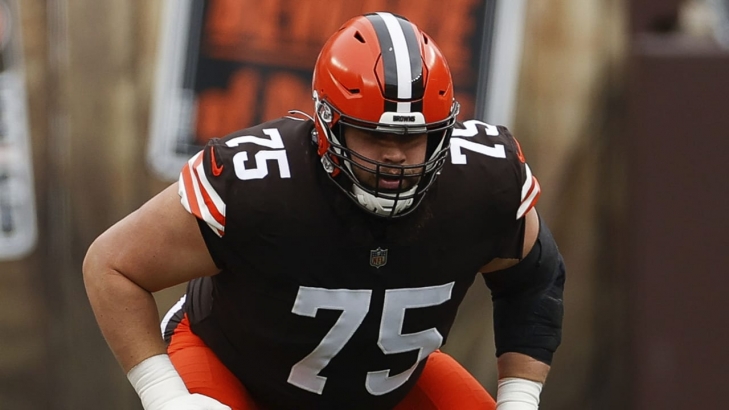
From Nevada, Joel Bitonio was taken in the second round (35th overall) of the 2014 NFL Draft out of Nevada, and immediately established himself as a generational fixture on the offensive line. Over a 12-season career spent entirely in brown and orange, Bitonio anchored the left guard position with iron-clad durability, elite technique, and unwavering loyalty to the franchise.
Bitonio integrated swift lateral agility with exceptional core strength and leverage. Serving as Cleveland's left guard, he demonstrated proficiency in executing reach blocks against edge defenders and pulling into the secondary during perimeter sweeps. In pass protection, his rapid footwork and robust anchoring maintained the integrity of the interior pocket, exemplifying exemplary interior offensive line play over his decade-plus tenure.
Bitonio earned PFWA All-Rookie Team honors in 2014 after starting all 16 games. Early in his career, he battled injury setbacks that limited him in the 2015 and 2016 campaigns. He returned to full health in 2017—launching a staggering 6,481 consecutive snaps streak that spanned nearly six full seasons.
The durability demonstrated by Bitonio marked the beginning of an era characterized by elite individual dominance. He was recognized with seven consecutive Pro Bowl selections from 2018 to 2024. Additionally, he received the Second-Team All-Pro honor for three consecutive years (2018–2020) before attaining the highest accolade with back-to-back First-Team All-Pro recognitions in 2021 and 2022. Whether facilitating Nick Chubb's rushing titles or providing steadfast protection during Cleveland's playoff runs in 2020 and 2023, Bitonio unequivocally served as the driving force behind the Browns' offensive line.
Bitonio proudly wrapped up his 12th and final season in 2025, demonstrating his incredible consistency by starting all 17 games. Throughout his career, he surpassed Hall of Famer Joe Thomas for the most games started (178) by any Cleveland player since the franchise's return in 1999. During his time with the Browns (2014–2025), Bitonio started every single one of his 178 regular-season games, earned 7 Pro Bowl selections, 2 First-Team All-Pro honors, 3 Second-Team All-Pro honors, and set the record for the most games played by any player in the modern Cleveland era.
50. Earnest Byner
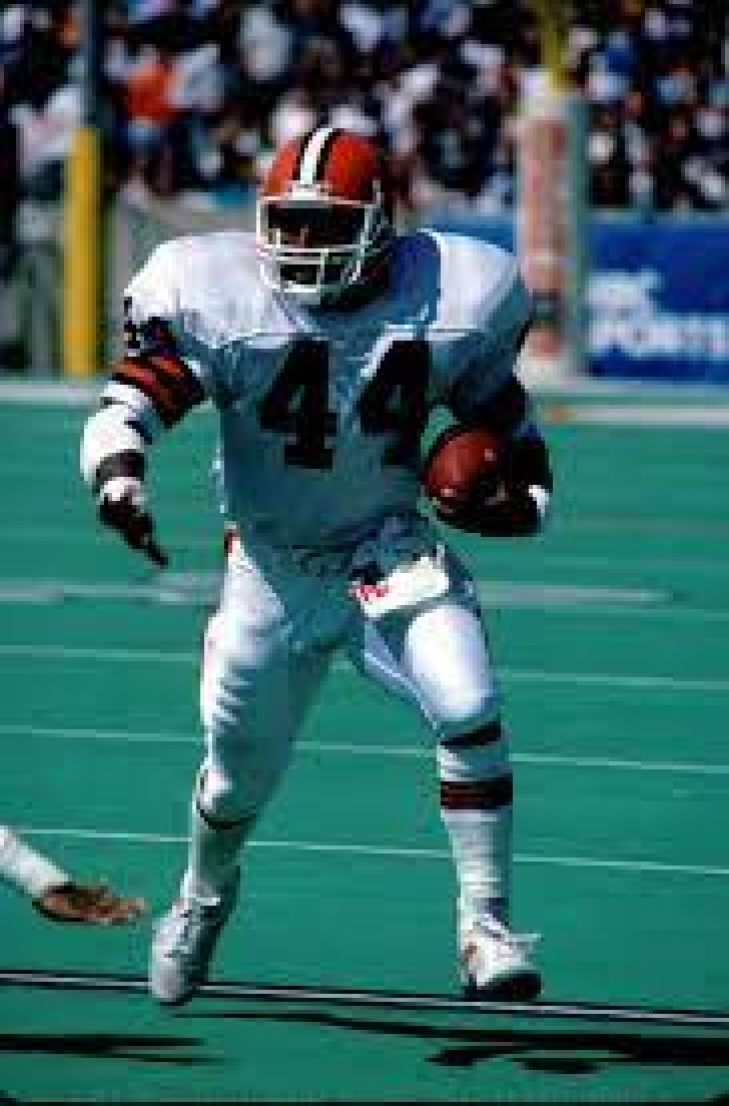
From East Carolina, Earnest Byner was a 1984 tenth-round pick who came to Cleveland as an afterthought, but quickly proved to be one of the best draft bargains in franchise history. Possessing a hard-nosed running style and exceptional hands out of the backfield, Byner worked his way into the rotation as a rookie before bursting onto the scene in his sophomore season.
That 1985 campaign showcased his dynamic versatility. Byner teamed up with Kevin Mack to form a punishing backfield tandem, and both backs eclipsed 1,000 yards in the same season—with Byner rushing for 1,002 yards and catching 460. Beyond his raw production as a runner and receiver, his selfless pass protection and perimeter blocking made him an indispensable part of Marty Schottenheimer's offense.
Byner was instrumental in leading the Browns to the 1987 AFC Championship Game in Denver, delivering a heroic postseason with 187 yards from scrimmage and two touchdowns. Sadly, the game ended in heartbreak. Cleveland trailed by seven and was driving to tie the game late in the fourth quarter when Byner was stripped of the ball at the Denver two-yard line. Known as "The Fumble," this moment became a lasting, painful chapter in franchise history, but it never lessened Byner's heart or the fans' admiration for his relentless effort.
After completing another season in Cleveland, Byner was traded to the Washington Redskins in 1989, earning two Pro Bowl selections and a Super Bowl ring. He returned to Northeast Ohio in 1994 for a second tenure with the Browns, where he served as a reliable veteran and offered leadership during the franchise's difficult move to Baltimore after the 1995 season.
Across seven total seasons in a Cleveland uniform (1984–1988, 1994–1995), Byner appeared in 105 games, compiling 3,364 rushing yards, 2,630 receiving yards, and 37 total touchdowns. As a testament to his enduring popularity, Byner was chosen as a Cleveland Browns Legend in 2006.
49. Dub Jones
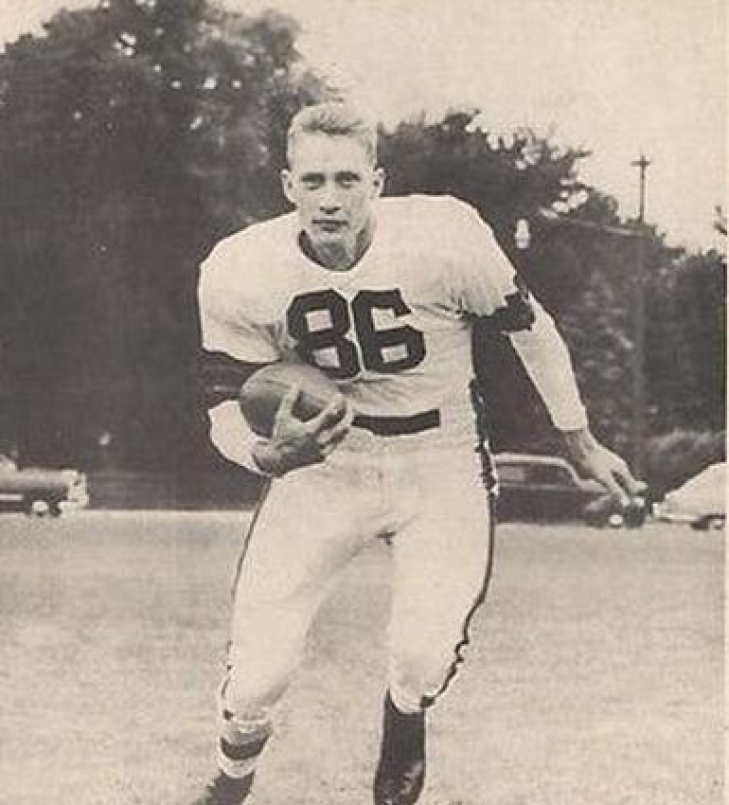
Landing in Cleveland following a circuitous route through the early days of professional football, William "Dub" Jones became one of Paul Brown's most lethal offensive weapons. Originally selected second overall by the Chicago Cardinals in 1946 out of Tulane, Jones opted for the AAFC instead, spending time with Miami and Brooklyn before Brown recognized his unique skill set and acquired him in 1948.
Upon arriving in Northeast Ohio, Jones added a versatile, big-play dimension to a backfield that was already dominating the AAFC. He contributed to undefeated and championship-winning seasons in 1948 and 1949, but his production expanded dramatically when the Browns jumped to the NFL in 1950. Operating as a hybrid halfback and flanker, Jones' rare combination of track speed and soft hands made him an ideal target for Otto Graham in Brown's innovative passing schemes.
His career peaked in the early 1950s, headlined by a legendary individual performance against the Chicago Bears on November 25, 1951. Jones tied an NFL single-game record by scoring six touchdowns in a 42–21 victory, a historic mark that still stands today. He earned consecutive Pro Bowl honors in 1951 and 1952, topping 1,000 yards from scrimmage in 1952 while finishing among the league leaders in both rushing and receiving efficiency.
Jones remained a vital contributor through the mid-1950s, helping power Cleveland to additional NFL Championship titles in 1954 and 1955 before hanging up his cleats.
In his eight seasons with Cleveland, Jones accumulated 4,784 yards from scrimmage and 40 total touchdowns, and the organization recognized him by naming him a Cleveland Browns Legend in 2004.
