

Committee Chairman
12. Bob Friend
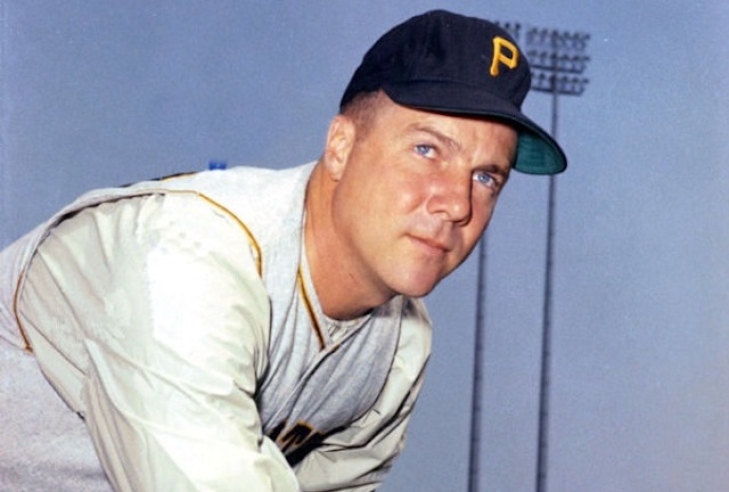
Assessing a pitcher's legacy solely based on win-loss records can sometimes misrepresent their actual performance. When a pitcher spends a decade working in a challenging, low-scoring environment for a struggling team, their overall stats will inevitably reflect those conditions. Bob Friend exemplifies this. During his long, high-appearance career with the Pirates, the resilient right-hander was recognized as one of the top National League starters of his time. However, many fans misinterpret his career numbers because they ignore the context of the teams he carried.
Arriving in Pittsburgh as a young 20-year-old rookie in 1951, Friend was immediately immersed in a challenging period of Pirates baseball under GM Branch Rickey. During his first four summers, he endured significant adversity while playing as both a starter and a high-leverage reliever, on teams that regularly lost more than 90 games annually.
His major breakthrough came in the 1955 regular season when his efficiency filters reached a historic peak across the league. Despite the Pirates finishing at the bottom of the standings, Friend demonstrated exceptional run prevention, leading the National League with a 2.83 ERA and achieving an impressive 6.0 bWAR. He became the first pitcher in major league history to win an ERA title while playing for a last-place team.
What followed was an impressive demonstration of iron-man durability, marking the franchise's gradual move towards relevance. Friend became a regular part of the lineup, consistently taking the ball during the season. He led the National League in games started for three straight summers from 1956 to 1958 and topped the league in challenging workloads by surpassing 270 innings in back-to-back years.
His standout performance came during a remarkable 1958 season, when he matched legendary lefty Warren Spahn for the major league lead with a career-high 22 wins. This contributed to a strong second-place finish for the Bucs and earned him third in the National League Cy Young voting.
Two summers later, that intense workload paid off with the ultimate corporate achievement. As a key frontline player alongside Vern Law during the historic 1960 pennant race, Friend finished with an 18-12 record and a flawless 3.00 ERA. Although his appearances in the subsequent high-stakes World Series against the powerful New York Yankees were challenging and low-variance, his heavy lifting during the regular season was a crucial factor that paved the way for Bill Mazeroski's legendary walk-off home run.
Friend remained a pillar of the organization's rotation all the way through the 1965 schedule, closing out his lengthy 15-year stay in Pittsburgh with a pair of brief twilight stops with both New York franchises before walking away after 1966. Because he spent so many summers throwing for sub-.500 clubs, he retired with a highly unique 197–230 record; with a 191-218 record in Pittsburgh with 1,682 strikeouts.
Despite his accomplishments, Friend was left off the Baseball Hall of Fame ballot when he was first eligible in 1972.
6 Benefits of Live Streaming Sports That You Aren’t Aware

Watching any sports event live is one of the most exhilarating experiences for sports lovers. It can bring about the excitement that a match recording can never do justice to.
However, for several reasons, many viewers may not be able to watch matches or other sports-related activities live. In such scenarios, live streaming sports is the best option. You can provide the audience with a live experience at their convenience and cost.
Let’s look at a few more benefits of live streaming sports.
1. Audience Engagement
Live streaming sports can improve audience engagement. Although the audience may not be present physically at the sports venue, they can still get a good view of the stadium.
For instance, you can provide a 360-degree view to the audience or offer a multiple-angle view. Thus, covering the sports event from every corner of the stadium.
Apart from multiple angles, you can also improve audience engagement by other means. For example, live streaming allows you to stream other things, such as player interviews, training practices, and many more.
Hence, live streaming any sports event allows you to increase audience engagement.
2. Brand Promotion
Brand promotion is crucial for sports organizations if they wish to stay in the public eye and keep the players relevant.
You can market it on social media when you decide to live stream any sports event. This social media promotion provides visibility and exposure to sports organizations, as several sport enthusiasts would talk about the event on social media platforms.
However, the sports event you’re live streaming must be available quickly to the viewers. There are specific free streaming sites like these sites, where viewers can watch sports live without much interruption or disturbance.
3. Expand Your Audience
Did you know that more than 150 million peopole in the US watch live sports events at least once a month in 2019? This statistic proves that you can expand your audience base significantly by live streaming sports.
Live streaming sports provides the utmost comfort and convenience to the viewers. With the help of free sport streaming sites, viewers don’t need to pay anything to watch any sports event. All they need is an electronic device to stream the event.
It’s also convenient for sports organizers, as they need not worry about the venue capacity. They can promote the event properly and expand the audience base by offering the option of live streaming.
4. Better Audience Experience
No sports lover appreciates spoilers. Now, the best part of live streaming sports is that viewers can enjoy the matches at the same time as they’re going on.
Viewers don’t need to wait for hours to watch the event on a sports channel. This way, they can avoid running into any match-related spoilers. Thus, keeping their excitement and adrenaline rush intact provides a better audience experience.
5. Revenue Generation
Live streaming sports may seem like a massive blow to revenue generation. After all, it’s free for the most part. However, there are ways to generate revenue by live streaming sports, such as:
- Asking viewers to buy a subscription to your chosen live streaming platform
- Advertisements
- Pay-per-view option
- Including donation options on the live streaming page
Hence, if you want to generate revenue by live streaming sports, it is possible too.
6. Cost-Effective Option
The best part about live streaming sports events is that you can get all of the benefits mentioned above at a minimal cost.
Apart from technical equipment, like a professional camera, you don’t require a lot to stream live sports events online.
There are also various platforms today where you can live stream sports events. For instance, if you don’t want to live stream at a more significant level, you can always opt for social media sites, like Facebook.
Apart from you, live streaming sports events are also affordable for most viewers. They can stream it on any device, such as a TV, phone, or tablet as long as they have a stable connection. Although, if you decide to live stream the event on a streaming service, they may have to pay the charges accordingly.
Endnote
With the advancement of technology, it has become extremely easy to live stream sports. However, keeping its ease aside, live streaming sports events provides several other benefits to you and your viewers too.
You can market or promote the sports event by live streaming it, and even generate revenue out of it. On the other hand, live streaming sports provide your audience with convenience, comfort, and affordability. Thus, you can easily extend your audience base.
10. Barry Bonds
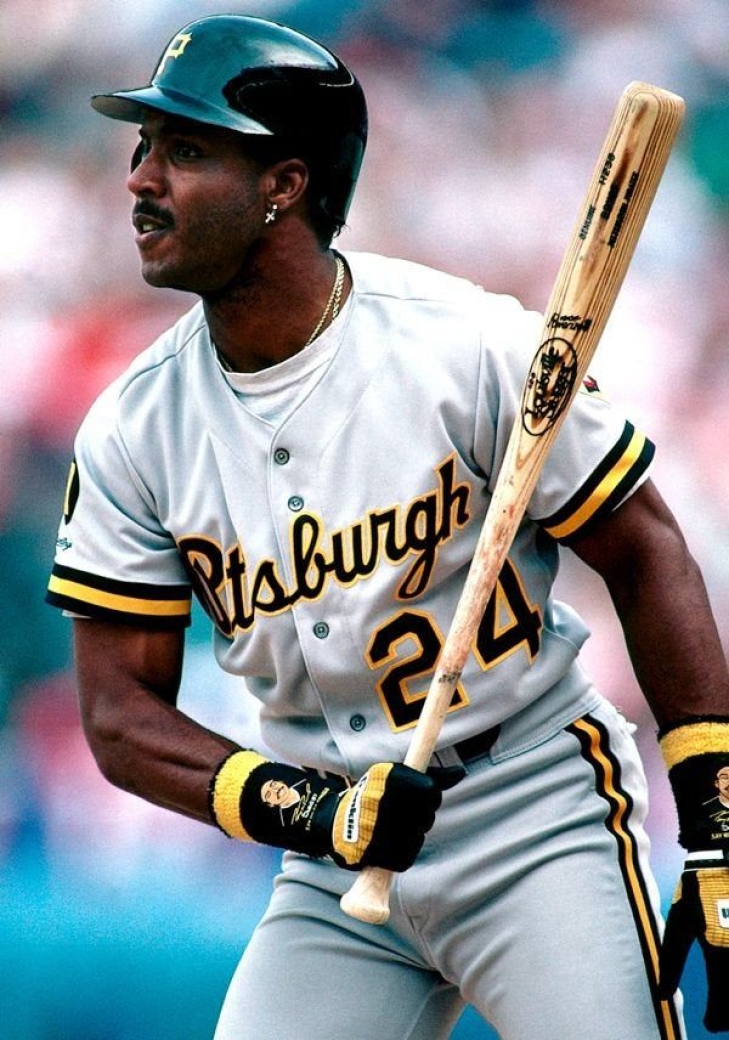
Many in the baseball community often see Barry Bonds as a figure surrounded by heated debates, mainly focusing on his transformation during his late years in San Francisco. But before he became one of the most controversial and dynamic players of the modern game, he spent seven summers in western Pennsylvania building a very different kind of legacy. In Pittsburgh, Bonds wasn't just a towering slugger; he was a slim, incredibly fast, five-tool talent who blended amazing athletic skill with a sharp, instinctive eye. His efforts helped lift a struggling small-market team from the bottom of the National League standings into a long, exciting period of championship chase.
Drafted sixth overall in 1985, Bonds inherited incredible talent from his father, Bobby Bonds, and his legendary godfather, Willie Mays. He quickly advanced through the minor leagues and made his major league debut the next summer. By the start of the 1987 season, he had earned the regular spot in left field, ready to shine.
Although his initial campaigns from 1987 to 1989 were undoubtedly effective, they occasionally failed to meet the expectations of a local fan base and media that anticipated immediate, generational excellence. Additionally, his confrontational and highly defensive interactions with journalists and management swiftly created an impression that he was exceedingly difficult to handle behind the scenes.
His career's key turning point occurred during a historic 1990 breakout season, when his raw talent finally transformed into remarkable efficiency. Bonds delivered an outstanding multi-faceted performance that earned him his first National League MVP Award. He hit .301, led the league in slugging percentage (.565), and had an OPS of .970. He also hit 33 home runs, drove in 114 RBIs, stole 52 bases, and played Gold Glove defense, helping the Pirates win their first National League East division title in over ten years.
Far from being just a one-summer anomaly, Bonds spent the following two years dominating National League pitching staffs. He narrowly missed the MVP award in 1991, finishing as the runner-up after leading the league with a .410 on-base percentage, and then delivered an exceptional performance in the 1993 season.
In the impressive 1992 regular season, Bonds earned his second MVP award by hitting 34 home runs, driving in 103 runs, and drawing a league-high 127 walks. He dominated advanced analytics by leading all of baseball in on-base percentage (.456), slugging (.624), and OPS (1.080), while also earning his third straight Gold Glove and Silver Slugger awards.
Despite leading the team to three straight National League Championship Series, underlying tensions persisted. The fans, often alienated by his distant attitude and disappointed by his postseason struggles, never truly warmed up to him. Given the harsh financial constraints of small-market baseball, everyone in Pittsburgh knew the front office could never offer him the lucrative contract available in free agency.
Bonds signed with San Francisco in 1993, and he became the most feared offensive player, perhaps ever. Over his tenure in Pittsburgh, Bonds smacked 176 Home Runs, 556 RBI, with a sick Slash Line of .275/.380/.503. As of this writing, Bonds is the only two-time MVP in franchise history.
9. Max Carey
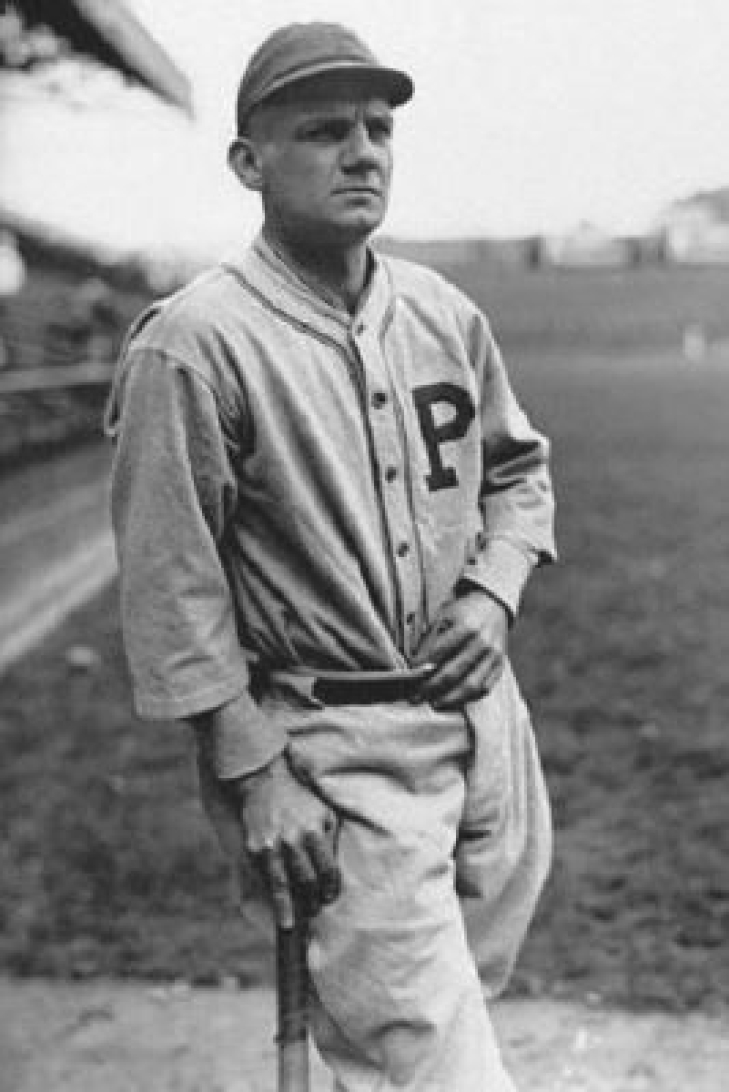
The modern idea of an elite leadoff hitter often evokes images of quick speedsters, but Max Carey combined agility with keen, strategic thinking. Originally on track to become a Lutheran minister, the Indiana-born player unexpectedly shifted to baseball, applying a deliberate, tactical approach to base running that changed the run game. His modest debut over two games for the Pittsburgh Pirates late in 1910 showed the team they had found their fastest player, a base stealer who would spend fifteen years making the bases his domain.
Carey made table-setting a staple of his regular-season routine, expertly navigating the Deadball Era with a pristine left-handed bat and sharp eye. While he lacked power for the middle of the lineup, he was a highly effective contact hitter who surpassed the .300 batting average six times during his tenure in Western Pennsylvania. He consistently overwhelmed opposing pitchers with his patient approach, leading the National League in walks twice and frequently maintaining on-base percentages that kept the infield in a constant state of high alert.
Once Carey produced a free pass or a single, the true operational magic started. He didn't sprint blindly; instead, he analyzed pitchers' movements with precise detail, leading the way in timing jumps over simply depending on quick footwork. His breakout on the leaderboard came in 1913, when he captured his first National League stolen base crown with 61 swipes.
Carey delivered an exceptional display of stolen-base prowess, unmatched in National League history. Over his career, he led the league in stolen bases ten times. His peak came in 1922 when he stole 51 bases in 53 attempts, achieving a remarkable 96.2% success rate despite the era's defensive technologies and pitch-out strategies designed to contain him. He ended his career with 688 stolen bases in the Steel City, a record that still stands as the all-time high in Pirates history.
Nevertheless, evaluating his historical impact solely through his legs underestimates his overall defensive contribution on the field. As a roaming center fielder endowed with exceptional instinctual reads and spatial agility, Carey revolutionized the outfield, rendering it virtually impenetrable for opposing line drives. He consistently led the league in putouts and assists, building a defensive record that would have easily earned him multiple Gold Gloves if such awards had been available in his time.
The peak of his team's achievement came during the historic 1925 regular season, where his veteran leadership led the Bucs to a National League pennant. In the seven-game World Series against the Washington Senators, Carey delivered an outstanding performance, hitting an impressive .345 and helping Pittsburgh win the world championship.
Tragically, his long tenure with the club ended suddenly and without ceremony in the middle of 1926. Amidst a fierce and widely publicized dispute within the front office, involving player-coach Fred Clarke, often called the "ABC Affair' by historians, the aging captain was quickly placed on waivers and subsequently claimed by the Brooklyn Robins.
He departed the organization with an exceptional localized baseline of 2,425 hits, 1,415 runs scored, and 306 doubles over 2,130 games. Carey was chosen by the Veterans Committee in 1961 for the Baseball Hall of Fame.
