

Committee Chairman
Our All-Time Top 50 Miami Marlins are up
Yes, we know that this is taking a while!
As many of you know, we here at Notinhalloffame.com are slowly generating the 50 of each major North American sports team. We have a new one to unveil today, that of the Miami Marlins.
Along with the Colorado Rockies, the Florida Marlins came into existence in 1993, although they have been far more successful than their expansion counterparts.
The Marlins won the Pennant in only their fourth year of existence, but surely, they could not beat the New York Yankees for the World Series! Florida did precisely that, shocking the world, and then they surprised everyone by conducting a fire sale, dismantling the team, and starting from scratch.
Florida again built a good team in 2003 and once again befuddled the baseball world by winning their second World Series. True to form, they repeated what they did after 1997 by cost-cutting and getting rid of the parts that won it for them.
Since that time, the Marlins changed their team name to the Miami Marlins but have remained to operate as a small market team.
Our Top 50 lists in Baseball look at the following:
1. Advanced Statistics.
2. Traditional statistics and how they finished in the National League.
3. Playoff accomplishments.
4. Their overall impact on the team and other intangibles not reflected in a stat sheet.
Remember, this is ONLY based on what a player does on that particular team and not what he accomplished elsewhere and also note that we have placed an increased importance on the first two categories.
This list is updated up until the end of the 2021 Season.
The complete list can be found here, but as always, we announce our top five in this article. They are:
3. Josh Johnson
We will continue our adjustments on our existing lists and will continue developing our new lists.
Look for our more material coming soon!
As always, we thank you for your support.
Three new members to the Minnesota Twins Hall of Fame
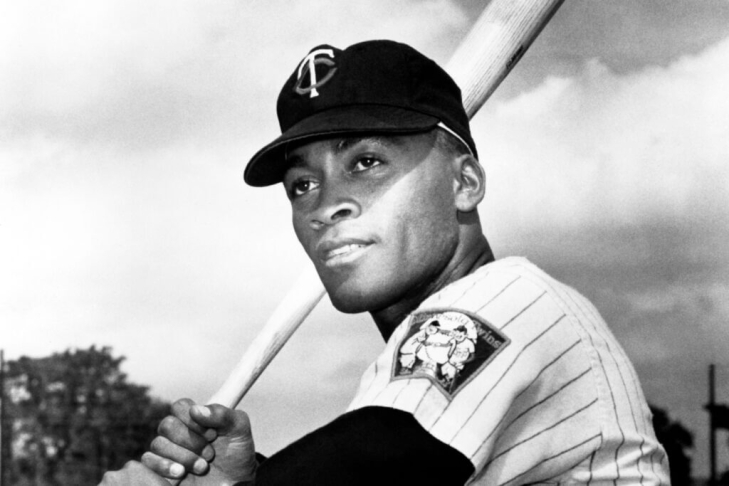
Regular visitors of Notinhalloffame.com know that we are slowly working on the top 50 of every major team in the NHL, NBA, NFL and MLB. Once that is done, we intend to look at how each team honor their past players, coaches and executives. As such, it is news to us that the Minnesota Twins have announced that three new men, Dan Gladden, Cesar Tovar and Ron Gardenhire have been inducted into their franchise Hall of Fame.
Gladden played for Minnesota from 1987 to 1991, where the Outfielder accumulated 661 Hits with 116 Stolen Bases and a .268 Batting Average. A member of both the 1987 and 1991 World Series winning team, Gladden is one of seven former players who were on both championship squads, and he notably scored the series-winning run in the ’91 Fall Classic. Gladden enters not only as a player, but as a broadcaster, having been the color man for the Twins radio broadcasts since 2000.
From Venezuela, Tovar played for Minnesota from 1965 to 1972 where the versatile player logged significant times at Second Base, Third Base, Shortstop and all three Outfield positions. Tovar batted over .300 twice for Minnesota, and in 1970, he led the NL in Doubles (36) and Triples (13), and was the league leader in Hits (204) in 1971. Receiving MVP votes in five straight years (1967-71), Tovar amassed 1,164 Hits, 186 Stolen Bases and batted .281 for the Twins.
Gardenhire was Minnesota’s longtime Manager from 2002 to 2014, and had a record of 1,068 and 1,039 for the team.
We here at Notinhalloffame.com would like to congratulate all three for this impending honor.
The Women's Basketball Hall of Fame announces their 2022 Finalists
The Women’s Basketball Hall of Fame announced the Finalists for the Class of 2012, which consists of 12 candidates.
The inductees will be announced on February 14 on ESPN2 during the Maryland vs Iowa game. Those inducted will be enshrined on June 11.
The Finalists are:
Debbie Antonelli (Broadcaster). Antonelli has been a broadcaster for 34 years and has worked for ESPN, CNS, FOX, Westwood One and the Big Ten Network.
Alice “Cookie” Barron (Player). Barron played for the Waylon Baptist Flying Queens and helped them win three National Championships. She also helped take the United States to Gold in the 1957 FIBA World Championship.
Evelyn Blalock (Coach). Blalock took Kilgore College to theww Junior College National Championships.
Cathy Boswell (Player). Boswell was a two-time All-American at Illinois State and an Olympic Gold Medalist for the U.S. in 1984.
Doug Bruno (Coach). Bruno has been the Head Coach at DePaul since 1986, and as of this writing has a record of 731-357 and has won five Big East Tournaments. He also won two Olympic Gold Medals for the United States as an Assistant Coach for the United States (2012 & 2016).
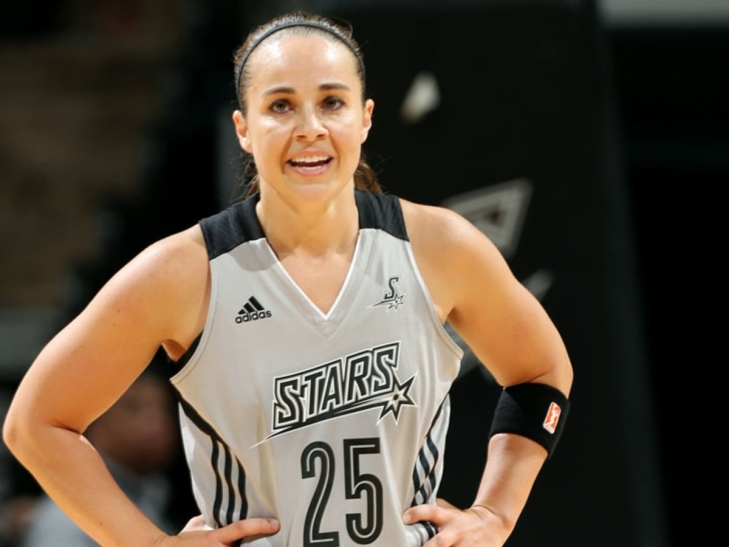
Becky Hammon (Player). Hammon is easily the biggest name on this list, and six-time WNBA All-Star and two-time First Team All-WNBA Selection. Hammon played pro for the New York Liberty and San Antonio Stars, and would later become an Assistant Coach for the San Antonio Spurs of the NBA. Currently the Head Coach of the Las Vegas Aces, Hammon was named to the WNBA 15th, 20th and 25th Anniversary Team, and Internationally won an Olympic Bronze Medal for Russia in 2008.
Donna Lopiano (Administrator). Lopiano was the Women’s Athletic Director at Texas from 1975 to 1992 and the CEO of the Women’s Sports Foundation from 1992 to 2007.
Lisa Mattingly (Referee). Mattingly has officiated in both the WNBA and College, and has refereed in 17 Final Fours.
DeLisha Milton-Jones (Player). Milton-Jones was the 1997 SEC Player of the Year, and the Florida Gator would later be drafted fourth overall by the Los Angeles Sparks in 1999, and helped them win two Titles (2001 & 2002). She also played for the Washington Mystics, New York, and Atlanta Dream and was a three-time WNBA All-Star. Milton is currently the Head Coach at Old Dominion.
Paul Sanderford (Coach). Sanderford took Western Kentucky to three Final Fours.
Bob Schneider (Coach). Schneider won five State (Texas) High School Titles and 634 Wins in Division II.
Penny Taylor (Player). From Australia, Taylor played nineteen professionally years, most notably for the Phoenix Mercury where she won three WNBA Championships. A three-time WNBA All-Star and one-time First Team WNBA Selection, Taylor won two Silver Medals and a FIBA World Championship for the Aussies.
We here at Notinhalloffame.com would like to congratulate the 12 Finalists for making it this far.
RIP: Meat Loaf
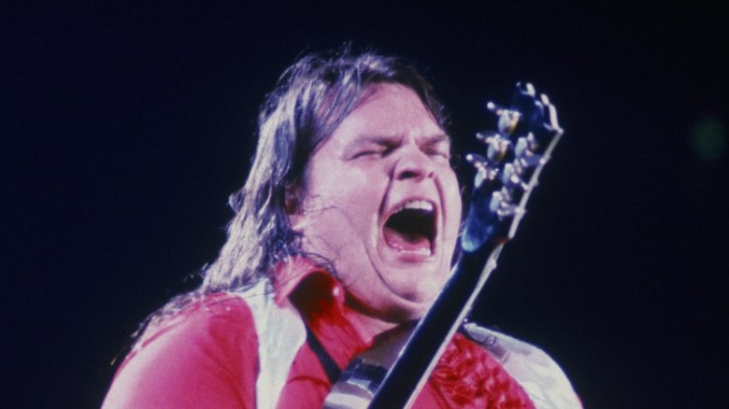
Meat Loaf, the charismatic singer who had one of the biggest albums of all time in “Bat Out of Hell” passed away at the age of 74. No cause of death was given.
Born Marvin Lee Aday, Meat Loaf first became known in 1975 from his appearance in the iconic cult film, The Rocky Horror Picture Show.
Two years later, Meat Loaf collaborated with Jim Steinman, to create the theatrical and powerful, “Bat Out of Hell”, which remains one of the most sold albums ever. Few people who worked on the album, with the exception of Meat Loaf and Steinman understood what they were creating, but the Wagnerian effort resulted in cross-popularity, and Meat Loaf was everywhere in the late 70s.
The 80s were not successful for Meat Loaf, who for years fought for royalties from his smash effort, and even had to declare bankruptcy. Creatively, his efforts in that decade floundered, yielding little sales, no hits and negative reviews. His career rebounded in 1993, with “Bat Out of Hell II”, a back-to-basics effort and reteaming with Steinman. It gave him his first and only #1, “I’d Do Anything for Love (But I Won’t Do That).
In addition to Rocky Horror, he also appeared in 1999’s Fight Club.
We here at Notinhalloffame.com would like to extend our condolences of to the fans, family and friends of Meat Loaf.
