


Site Admin
Teen Angel
Mark Dinning
Teen Angel
43. Matt Belisle
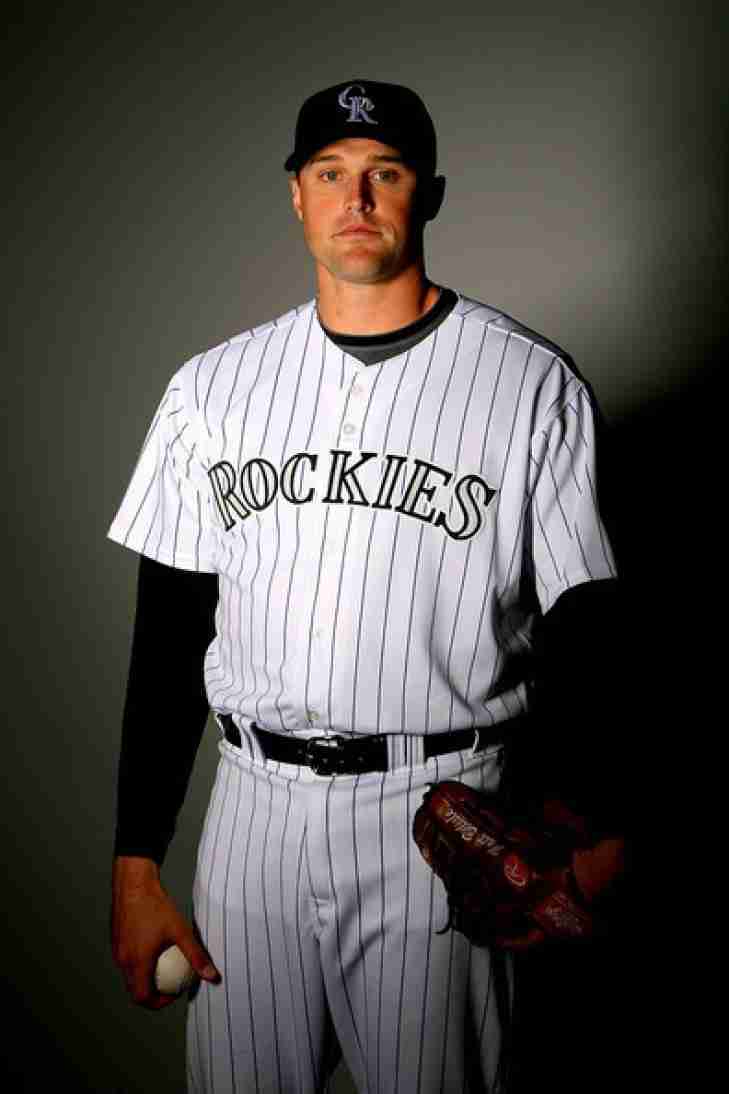
Matt Belisle didn't arrive in Denver as a high-priced savior; instead, he was a former starter from Cincinnati who reinvented himself as a high-frequency weapon out of the bullpen, and for six seasons, he was the rubber-armed heart of the Colorado relief corps.
He reached a definitive level of efficiency in 2010, posting a career-best 2.93 ERA and a 1.087 WHIP over 92 innings, and the year after, he had an atypical 10-4 record for a middle reliever.
In 2012, Belisle led the National League by appearing in 80 games, a grueling workload that would have broken most arms at altitude. He functioned as the ultimate bridge to the ninth inning, utilizing a sharp slider and a heavy sinker to navigate the most dangerous hitters in the division. He finished his run in Colorado with 392 appearances, a total that places him among the most tenured pitchers in the team's history. His career 3.97 strikeout-to-walk ratio with the club remains a benchmark for relievers trying to survive the thin air without giving up walks.
He stayed with the organization through 2014, eventually returning for a brief second stint in 2018 to provide veteran leadership to a young, postseason-bound squad.
27. Adam Ottavino
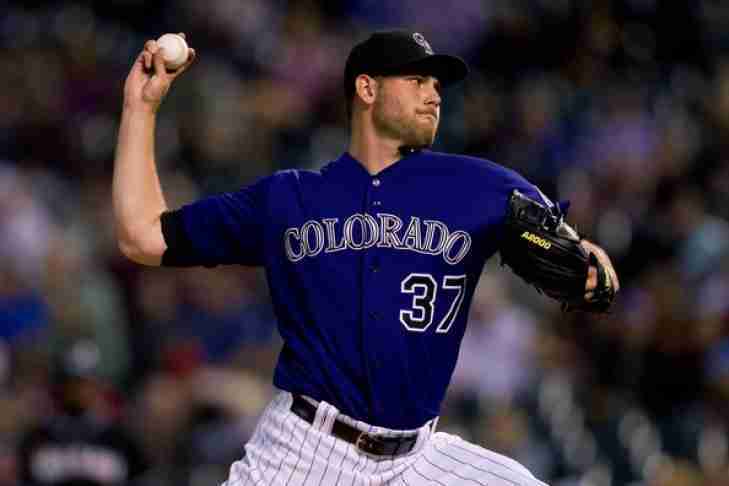
The arrival of Adam Ottavino in Colorado in 2012 was a quiet transaction that eventually reshaped the backend of the Rockies' bullpen for the better part of a decade. Claimed off waivers from St. Louis, the right-hander brought a lanky frame and a sweeping slider that seemed specifically designed to frustrate hitters in the thin mountain air. While he began his professional journey as a starter, the move to the high country saw him fully embrace a relief role,
He established himself as a model of durability over his first three years, appearing in 75 games in 2014 alone and maintaining a professional poise that put him in the conversation for the closer’s role. However, his story took a difficult turn in early 2015; just as he was poised to take over the ninth inning, a significant elbow injury required Tommy John surgery, forcing him to miss the remainder of that season and a large portion of 2016.
Ottavino didn't just come back; he authored a franchise-record 37 consecutive scoreless appearances spanning the end of 2014 and his return in 2016. His performance reached an elite level of efficiency during the 2018 campaign, a summer where he served as the primary set-up man for a playoff-bound squad. That year, he posted a 2.43 ERA and struck out a staggering 112 batters in just 77.2 innings, setting a then-Rockies record for strikeouts by a reliever.
The story in Colorado concluded following the 2018 season when he signed with the New York Yankees as a free agent. He departed as one of the most statistically significant relievers to ever wear the purple pinstripes, leaving behind 17 saves and nearly 500 strikeouts as a Rockie.
41. Bruce Ruffin
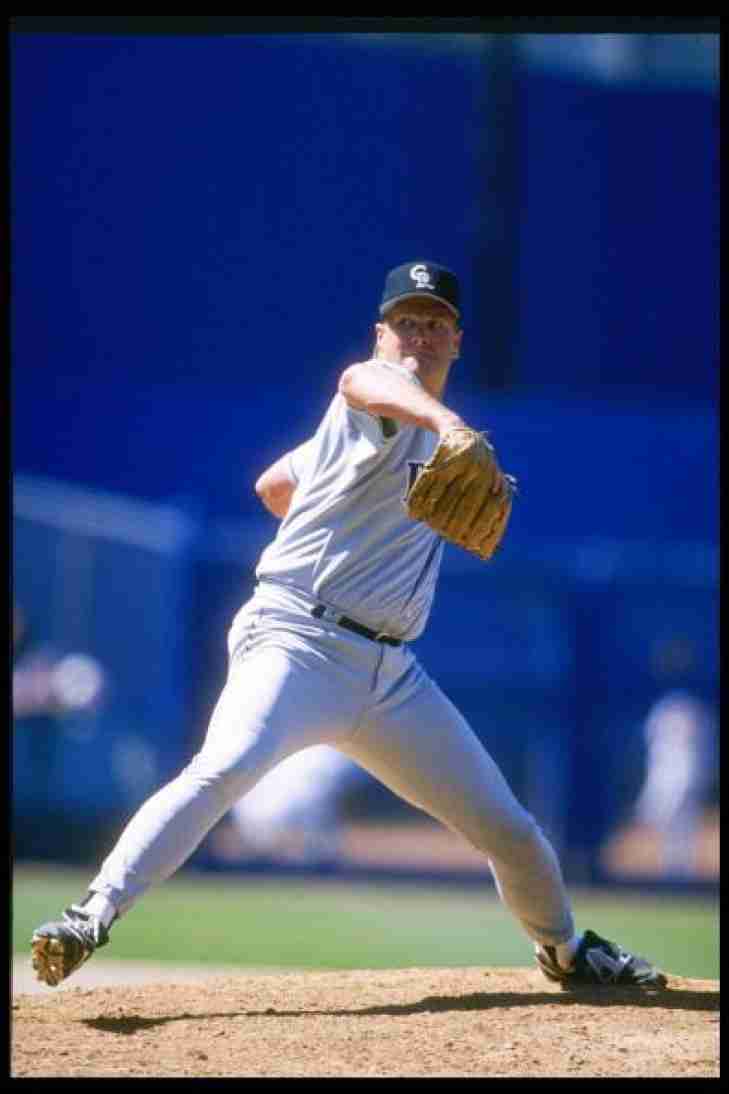
After spending six seasons as a starter for the Phillies, Bruce Ruffin arrived in Denver as an original member of the 1993 inaugural staff. While he began his tenure in the rotation, he eventually found his true calling as a versatile relief specialist, becoming one of the most dependable late-inning arms in the franchise’s early history.
Making 12 starts in his first year in Colorado, the organization quickly realized his value was maximized in shorter, high-frequency bursts. By the 1994 season, he had fully transitioned into a high-leverage relief role, securing 16 saves and proving he could maintain his composure in the hitters' paradise of the Mile High City. He possessed a specialized, heavy slider that allowed him to neutralize left-handed hitters and stabilize a young bullpen that was still finding its identity.
His 1996 campaign stands as his professional high-water mark. That summer, Ruffin appeared in a career-high 71 games and recorded 24 saves. He finished the season with a 4.00 ERA and a career-best 1.21 WHIP, a remarkable feat given the offensive explosion occurring in Colorado during the mid-90s.
The physical toll of 12 major league seasons finally led to Ruffin’s retirement after the 1997 season. As a Rockie, Ruffin compiled 246 appearances and 60 saves while serving as a key member of the 1995 Wild Card team.
