


Site Admin
45. Michael Cuddyer
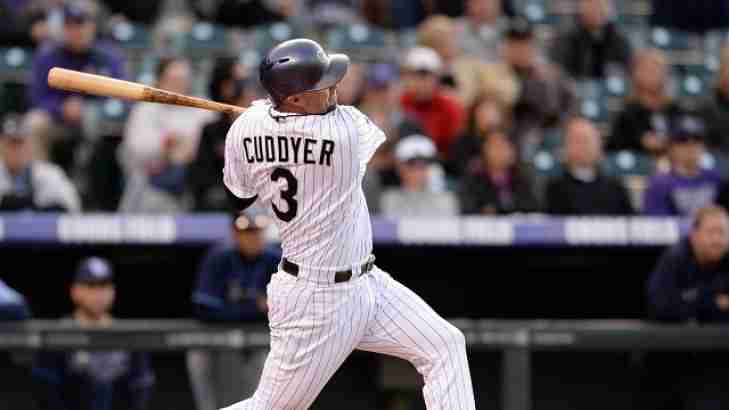
In the timeline of Colorado baseball, Michael Cuddyer’s tenure was more of a high-yield guest appearance than a franchise-defining era. His arrival in Denver in December 2011 was a rare moment of aggressive free-agent spending for the Rockies, who lured the veteran away from Minnesota with a three-year, $31.5 million deal. While the move was partly a culture play—Rockies star Troy Tulowitzki reportedly lobbied heavily to get the respected veteran into the clubhouse, it was also a gamble on a 32-year-old outfielder whose best days were theoretically behind him.
Cuddyer’s time in Denver is essentially defined by a 2013 campaign that stands as the statistical outlier of his career. That year, he produced a run of efficiency that defied his age, capturing the National League batting title with a career-high .331 average. It was a summer where everything seemed to find a gap; he authored a franchise-record 27-game hitting streak and earned both an All-Star selection and a Silver Slugger. He served as the veteran-like heartbeat of a lineup that relied on his ability to drive the ball to all fields, finishing the year with 20 home runs and 84 RBIs.
However, the reality of his Rockies run was heavily impacted by the physical toll of a long career. His 2014 season was a fragmented collection of highlights interrupted by three separate trips to the disabled list, including a fractured shoulder, which limited him to just 49 games. Even in that limited action, he showed flashes of his professional poise, hitting for the cycle against the Reds in August. This made him just the third player in MLB history to achieve the feat in both leagues, but it couldn't mask the fact that his body was beginning to fail him. While his .307 career average in Colorado is statistically impressive, it came in a relatively small sample size of just 318 hits.
His tenure with the organization ended following the 2014 season, when he signed with the New York Mets.
40. John Thomson
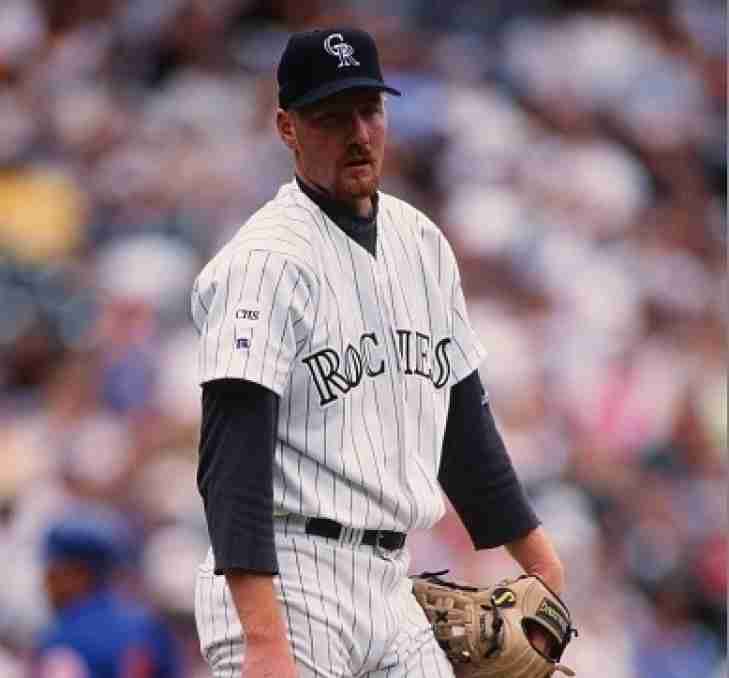
A seventh-round draft pick with a lean frame and a relentless sinking fastball, John Thomson didn't rely on the high-velocity fireworks that often resulted in "taters" in Denver. Instead, he leaned on a focused intensity and a specialized ability to induce contact,
He arrived as a young arm in 1997 and immediately became a workhorse, throwing 166.1 innings in his first full season. While he never reached a dominant statistical summit, he provided the organization with something arguably more valuable in the late '90s: a pitcher who didn't beat himself. He currently sits near the top of the Rockies' all-time leaders for fewest walks allowed per nine innings, a level of control that was essential for survival in a high-scoring environment.
He amassed 27 wins and nearly 400 strikeouts in purple and black before being traded to the Mets in 2002.
38. Chris Iannetta

While the Colorado Rockies are often defined by the high-altitude power of their "Blake Street Bombers," Chris Iannetta brought a different, more patient brand of value to the catcher's spot. A fourth-round pick from North Carolina State, Iannetta didn't just occupy the space behind the plate; he became a vital, if occasionally underrated, asset for a franchise seeking stability in its battery. His career in Denver was marked by two distinct chapters, one as a young, power-hitting starter and another as a respected veteran, proving that a catcher’s worth is often measured by the trust of his pitchers as much as his own stat line.
Iannetta’s first run in Colorado was defined by a rare combination of power and plate discipline for the position. His best offensive year was 2008, when he emerged as a primary offensive threat by blasting 18 home runs and driving in 65. During the Rockies' historic 2007 "Rocktober" surge, Iannetta provided the steady-state reliability needed to navigate a grueling postseason, helping lead the club to its only World Series appearance. He possessed a specialized ability to handle a staff in the league's most difficult environment, eventually recording a 2.5 defensive bWAR with the Rockies.
Ianetta was traded to the Angels after the 2011 season, but returned seven years later in a veteran capacity. He retired two years later, having compiled 435 hits and 80 home runs with Colorado.
44. Garrett Atkins
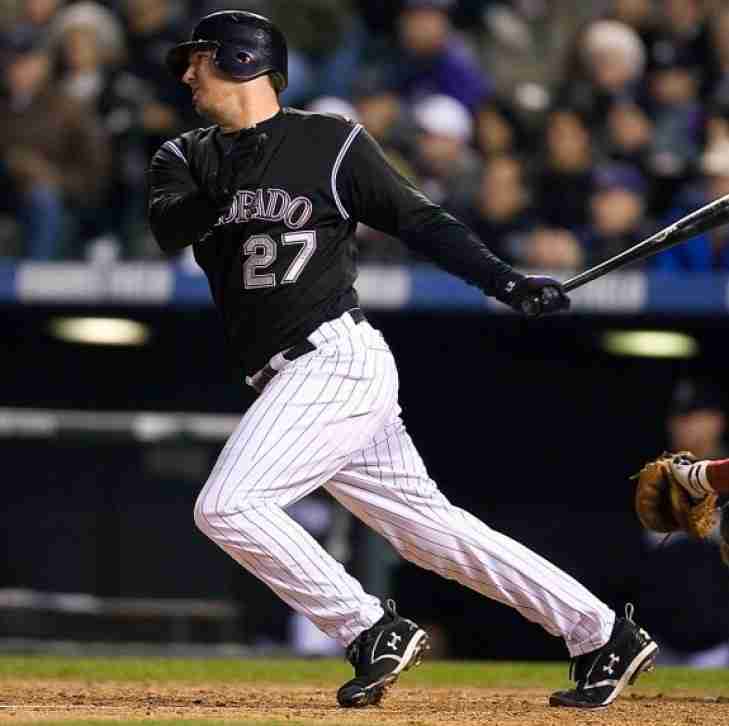
Arriving in 2003, Garret Atkins eventually claimed the third base job and became a central figure in the Rockies' most successful era. While he offered the kind of high-volume production that looks great on a 1990s baseball card, he was also a defensive liability whose overall value was often diluted by the very environment that padded his offensive totals.
Atkins reached his professional high-water mark during a 2006 campaign that, on the surface, looked like the birth of a superstar. He finished 15th in the NL MVP voting after hitting a blistering .329 with 29 home runs and 120 RBIs, numbers that placed him in a specialized group with the likes of Albert Pujols and Miguel Cabrera that year. This wasn't an isolated burst; he backed it up with a 25-homer, 111-RBI performance in 2007, serving as a vital run-producer for the "Rocktober" squad that reached the World Series. He twice batted over .300 and amassed three consecutive seasons with 20 or more home runs.
However, the focused intensity of his offensive production was almost entirely offset by his struggles in the field. Atkins was essentially a natural first baseman playing third out of necessity, and the metrics reflected that discomfort. He compiled a career -4.9 dWAR with the Rockies, often struggling with range and lateral quickness at the "hot corner." This defensive anchor, combined with a significant drop in production away from Denver, meant that despite his 100-RBI seasons, he never achieved the elite sabermetric status of his teammates. He plateaued early, and as his hitting began to decline in 2009, his lack of defensive versatility made him a difficult fit for the roster’s long-term plans.
His tenure with the organization ended following the 2009 season, after seven of his eight major league years in a Rockies uniform. Atkins compiled 805 hits and 98 home runs while finishing fourth in the 2005 NL Rookie of the Year race.
