


Site Admin
44. Garrett Atkins
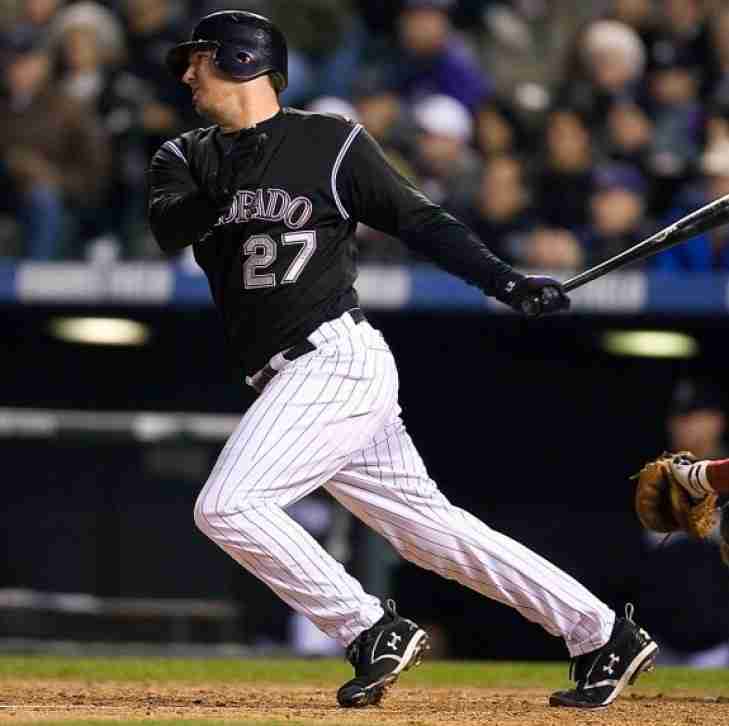
Arriving in 2003, Garret Atkins eventually claimed the third base job and became a central figure in the Rockies' most successful era. While he offered the kind of high-volume production that looks great on a 1990s baseball card, he was also a defensive liability whose overall value was often diluted by the very environment that padded his offensive totals.
Atkins reached his professional high-water mark during a 2006 campaign that, on the surface, looked like the birth of a superstar. He finished 15th in the NL MVP voting after hitting a blistering .329 with 29 home runs and 120 RBIs, numbers that placed him in a specialized group with the likes of Albert Pujols and Miguel Cabrera that year. This wasn't an isolated burst; he backed it up with a 25-homer, 111-RBI performance in 2007, serving as a vital run-producer for the "Rocktober" squad that reached the World Series. He twice batted over .300 and amassed three consecutive seasons with 20 or more home runs.
However, the focused intensity of his offensive production was almost entirely offset by his struggles in the field. Atkins was essentially a natural first baseman playing third out of necessity, and the metrics reflected that discomfort. He compiled a career -4.9 dWAR with the Rockies, often struggling with range and lateral quickness at the "hot corner." This defensive anchor, combined with a significant drop in production away from Denver, meant that despite his 100-RBI seasons, he never achieved the elite sabermetric status of his teammates. He plateaued early, and as his hitting began to decline in 2009, his lack of defensive versatility made him a difficult fit for the roster’s long-term plans.
His tenure with the organization ended following the 2009 season, after seven of his eight major league years in a Rockies uniform. Atkins compiled 805 hits and 98 home runs while finishing fourth in the 2005 NL Rookie of the Year race.
36. Kevin Ritz
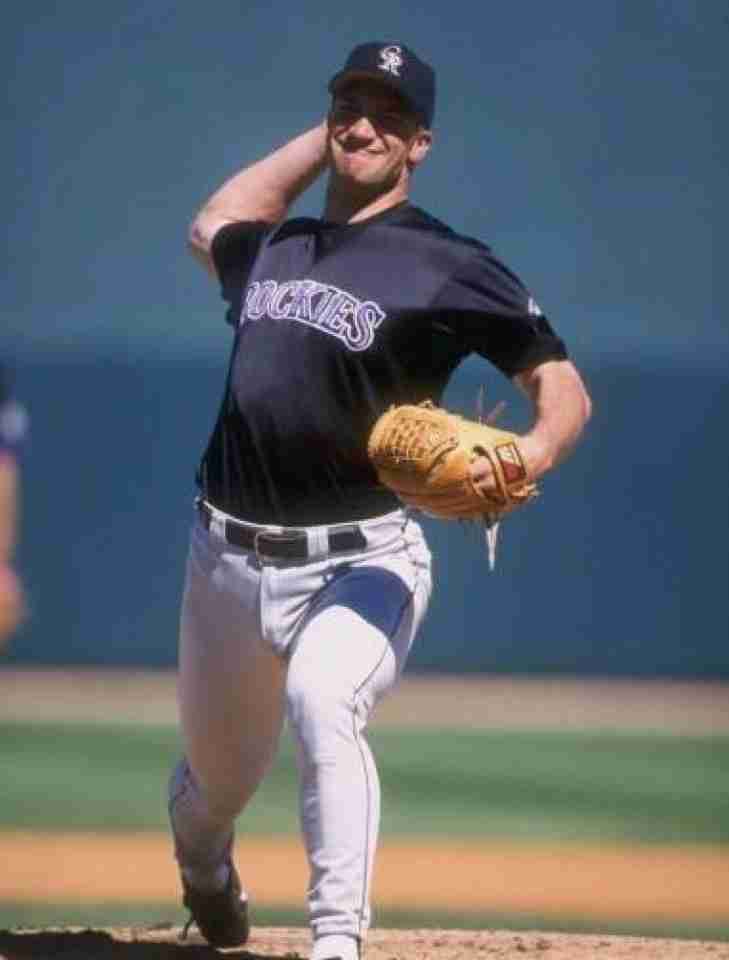
For a brief but electric window in the mid-1990s, Kevin Ritz was the definition of "Coors Field Proof." Arriving as an expansion draft selection from Detroit, Ritz didn't just survive the thin air of Denver; he thrived in it, providing the Colorado Rockies with the first legitimate ace in franchise history.
During the 1995 campaign, Ritz emerged as the backbone of the "Blake Street Bombers" era, leading the club to its first-ever postseason appearance. He authored a season of such profound efficiency that he finished 8th in the National League in bWAR for pitchers (4.5). The year after he won 17 games, a club record that stood for fourteen years. It was a season of pure survival and grit; while he led the National League in earned runs allowed (125), he also led his team in innings pitched (213) and games started (35).
Ritz struggled afterward, as in 1997 and 1998, as shoulder injuries began to take their toll. After undergoing major surgery, he attempted a professional comeback but was eventually forced into retirement. With the Rockies, Ritz compiled 39 wins and 337 strikeouts, setting a then-franchise record with 17 victories in 1996.
46. Marvin Freeman
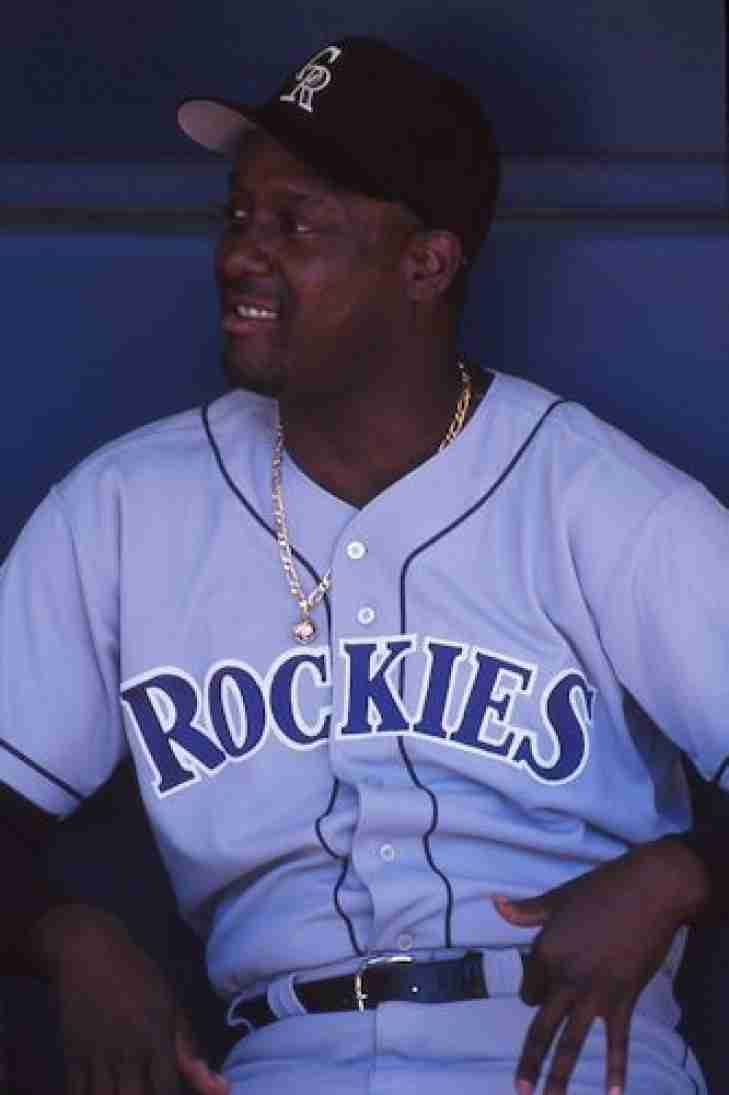
In the early years of the Colorado Rockies, Marvin Freeman was the definition of a one-hit wonder. Nicknamed "Starvin’ Marvin" for his tall, 6'7" frame, he spent most of his decade-long career as a middle-of-the-road swingman for the Phillies and Braves. However, for a few months in 1994, he managed to do something almost no other pitcher in baseball history had: he dominated while pitching at Mile High Stadium.
Freeman’s tenure in Denver is defined entirely by the strike-shortened 1994 season, a run that looks like a complete statistical fluke when compared to the rest of his career. Before arriving in Colorado, he hadn't been a regular starter in years, but a spring injury to a teammate thrust him into the rotation. He responded by going 10-2 with a 2.80 ERA, a figure that would have been second in the league only to Greg Maddux had the season not been cut short. He managed a 4.5 bWAR in just 19 games, a level of efficiency that earned him a fourth-place finish in the NL Cy Young voting.
Once the 1995 season began, the league seemed to catch up. His ERA ballooned to 5.89, and he struggled with elbow soreness that eventually required surgery, forcing him to miss the franchise's first-ever postseason run. By 1996, his performance had regressed even further, and he was eventually released by the team mid-season after a difficult stretch that included a reported on-field incident with a media personality.
Freeman compiled a 20-18 record with 200 strikeouts with Colorado.
37. Armando Reynoso
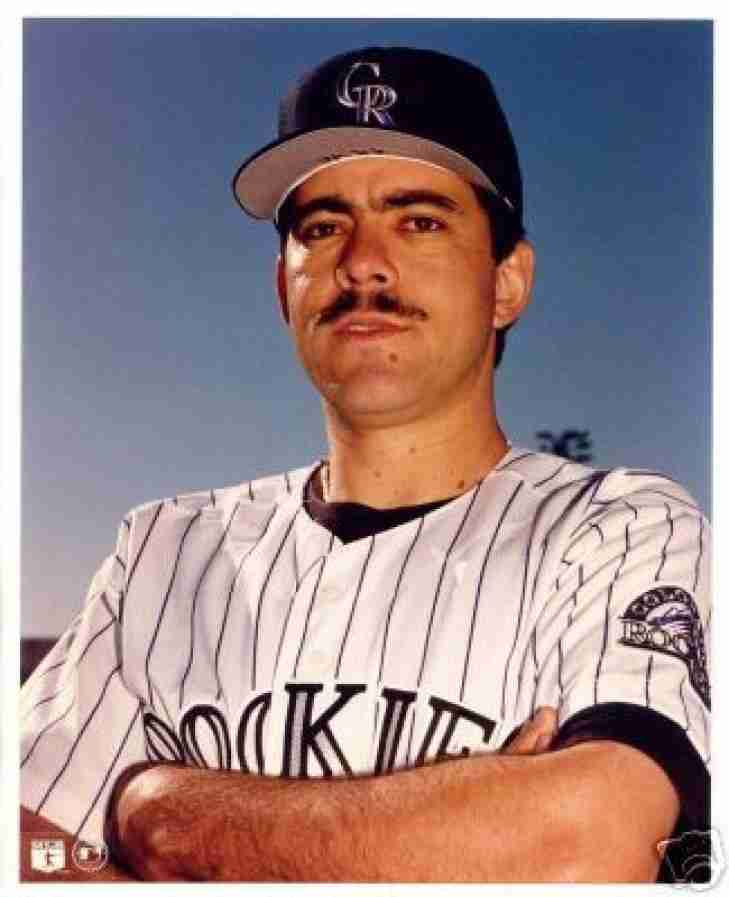
A right-hander from Mexico who had previously struggled to find a permanent home in Atlanta, Reynoso became an original member of the 1993 inaugural rotation.
Reynoso’s time in Denver began with a 1993 season that remains one of the best for a starter in the team's early history. He led the inaugural staff with 12 wins and 189 innings pitched. In an era where a 5.00 ERA was often considered a success at altitude, Reynoso produced a sharp 4.00 mark and struck out 117 batters.
The calling card of his time in purple and black was a professional resilience that allowed him to bounce back from injuries that hampered his 1994 and 1995 campaigns. Despite being limited to just 29 appearances across those two seasons, he remained a high-leverage asset whenever he took the mound, contributing to the club's historic first playoff run in 1995.
Reynoso had a much better 1996, throwing 168.2 innings with an 8-9 record and a 4.96 ERA, but he would be traded to the New York Mets that December. As a member of the Rockies, Reynoso had a 30-31 record with a 4.65 ERA.
