


Site Admin
14. John Mayberry
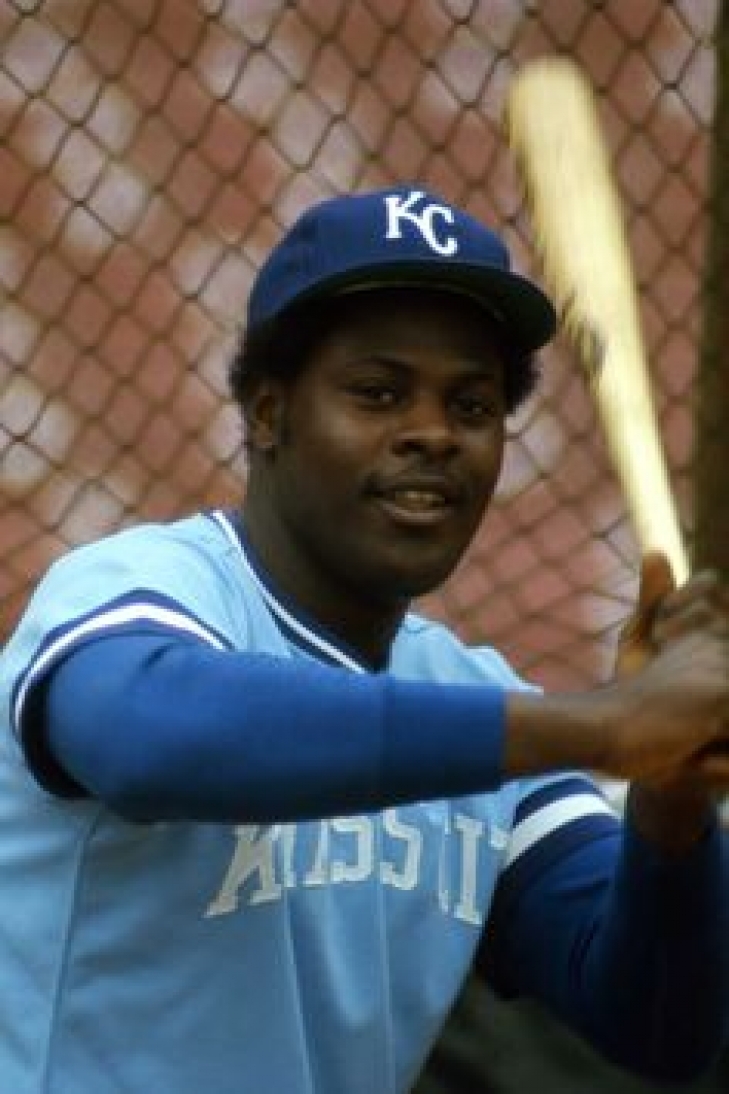
John Mayberry arrived in Kansas City as the first true home run threat for a young franchise, a massive left-handed presence who provided the lineup with an immediate injection of power. For six seasons, he was the primary engine of the Royals' offense, a player whose ability to drive the ball over the fence was matched only by a specialized eye for the strike zone that kept him among the league leaders in on-base percentage.
Mayberry had an immediate impact in 1972 after a lopsided trade with Houston. He reached a career-defining breakout in his debut season with the club, winning the Royals Player of the Year honors and signaling a transition from a young prospect to a premier American League slugger. He possessed a focused intensity at the plate, pairing his strength with a disciplined approach that saw him lead the league with a .417 on-base percentage in 1973. He showed the organization that a first baseman could be both a high-frequency home run threat and a master of the walk, setting a franchise record with 122 free passes that still stands today.
The best season in Kansas City came during the 1975 campaign. That summer, Mayberry became the first player in franchise history to cross the 30-homer threshold, finishing with 34 home runs and 106 RBIs. His performance earned him a runner-up finish for the American League MVP, as he led the league in walks for a second time while recording a career-high 38 doubles. He provided the dependable, day-to-day production that transformed the Royals into a perennial contender, eventually recording three seasons with at least 100 RBIs. Despite his offensive efficiency, his defensive range at first base remained a difficult hurdle that often limited his overall statistical value.
The story in Kansas City took a sudden and turbulent turn during the 1977 postseason. Following a regular season where he hit 23 home runs and hit for the cycle, Mayberry fell out of favor with manager Whitey Herzog. A late arrival before Game 4 of the ALCS against the Yankees led to a benching that effectively signaled the end of his tenure. He was subsequently sold to the Toronto Blue Jays before the 1978 season, leaving the Royals with 143 home runs and 552 RBIs.
In 1996, the Royals inducted him into their Hall of Fame.
15. Mike Sweeney
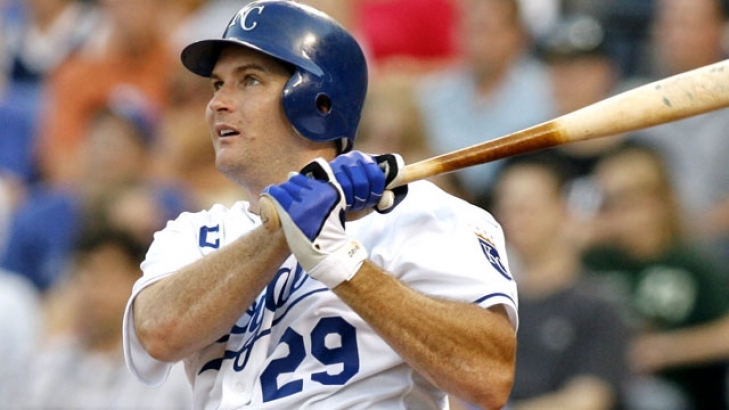
Mike Sweeney arrived in Kansas City as a 10th-round pick with a catcher's mitt and a bat that would eventually make him the heart and soul of the franchise. While he began his journey behind the plate, his path to becoming a Royals legend was paved by a transition to first base and designated hitter, where his offensive production could carry a team through a difficult era. For thirteen seasons in a Royals uniform, he was a beacon of character and consistency, a player who famously wore the captain's "C" on his jersey and served as the bridge between the glory years of the eighties and the resurgence of the 2010s.
Sweeney’s emergence in Kansas City reached a definitive breakout in 1999. After several seasons of splitting time and battling for a permanent spot, he secured the starting job and responded with a .322 batting average and 22 home runs. This performance signaled a transition from a defensive liability at catcher to one of the premier offensive threats in the American League. In 2000. That year, Sweeney set a franchise record with 144 RBIs, a mark of high-frequency production that earned him his first of four consecutive All-Star selections and solidified his status as the most dangerous bat in the lineup.
In 2002, he reached a career peak for average, batting .340, the second-highest single-season mark in Royals history, and finished second in the American League batting race. He showed the organization that he was a foundational piece of the franchise, recording five seasons with a batting average of .300 or better and six seasons with at least 20 home runs. However, his overall value declined due to defensive struggles and a series of back and knee injuries that increasingly limited him to the designated hitter role. Despite these physical hurdles, he remained a model of resilience, providing the dependable leadership the team’s first official captain was required to provide.
Everything culminated in a career that saw him rank near the top of almost every major offensive category in Royals history. He finished his tenure in Kansas City with 1,398 hits, 197 home runs, and a .299 batting average, a statistical footprint that trails only George Brett in the conversation of the team's greatest hitters. However, the toll of chronic injuries eventually led to a departure following the 2007 season. He spent his final professional years as a veteran presence in Oakland, Seattle, and Philadelphia, but he chose to retire as a Royal, signing a one-day contract in 2011 to ensure his journey ended where it began.
The story in Kansas City reached a natural conclusion in 2015 when he was inducted into the Royals Hall of Fame.
12. Zack Greinke
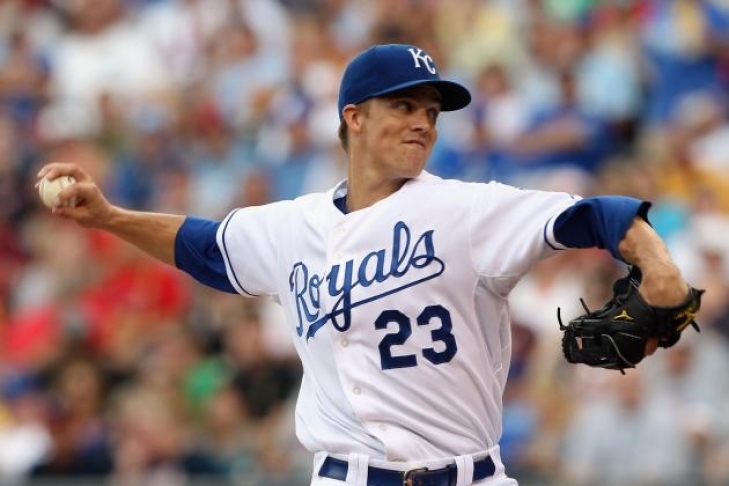
Zack Greinke’s path in Kansas City was a study in profound professional resilience. Arriving as a highly touted first-round pick in 2002, he quickly found that the weight of expectation, combined with personal battles with social anxiety and depression, nearly derailed his career before it truly began. After stepping away from the game entirely in 2006 to reset his mental health, Greinke returned with a recalibrated mindset and a tactical approach that transformed him from a struggling prospect into the most dominant arm in the American League.
Greinke’s climb back to the mound reached a major turning point in 2008. That season, he provided the Royals with a model of durability, winning 13 games and posting a 3.47 ERA, signaling his transition from a question mark to a front-line starter. He possessed a focused intensity and a diverse repertoire that allowed him to outthink hitters, culminating in a historic 2009 campaign. That summer, he reached a career peak, leading the league in ERA (2.16), WHIP (1.07), and FIP (2.33). He captured the American League Cy Young Award, a season in which he also led all pitchers in bWAR, proving he was the premier craftsman of his era.
The middle of his tenure reached a complicated plateau in 2010. While he remained a high-frequency strikeout threat, the lack of run support in Kansas City led to a frustrating win-loss record. Seeking a chance to compete for a championship, Greinke requested a trade and was dealt to Milwaukee following the season. He left behind 931 strikeouts and a Cy Young trophy, embarking on a decade-long odyssey that saw him earn elite honors across both leagues. He showed the organization that while his talent was immense, his path was uniquely his own, leaving a legacy of brilliance that many fans thought had reached its final chapter in a Royals uniform.
The story in Kansas City took a surprising turn in 2022. In a move that mirrored a veteran-like homecoming, Greinke returned to the Royals as a free agent, reclaiming his spot in the rotation to mentor a new generation of arms. While he no longer possessed the triple-digit heater of his youth, his ability to navigate lineups remained elite as he relied on guile and movement. He provided the club with two final seasons of steady-state presence, including a 2022 campaign where he posted a respectable 3.68 ERA. However, the 2023 season proved to be a difficult closing punctuation, as he struggled to a 2-15 record with an ERA over five, eventually entering free agency as one of the most respected figures in the game’s history.
He left the Royals with 66 wins and 1,101 strikeouts, having spent nearly half of his storied career in the blue and white.
13. Dennis Leonard
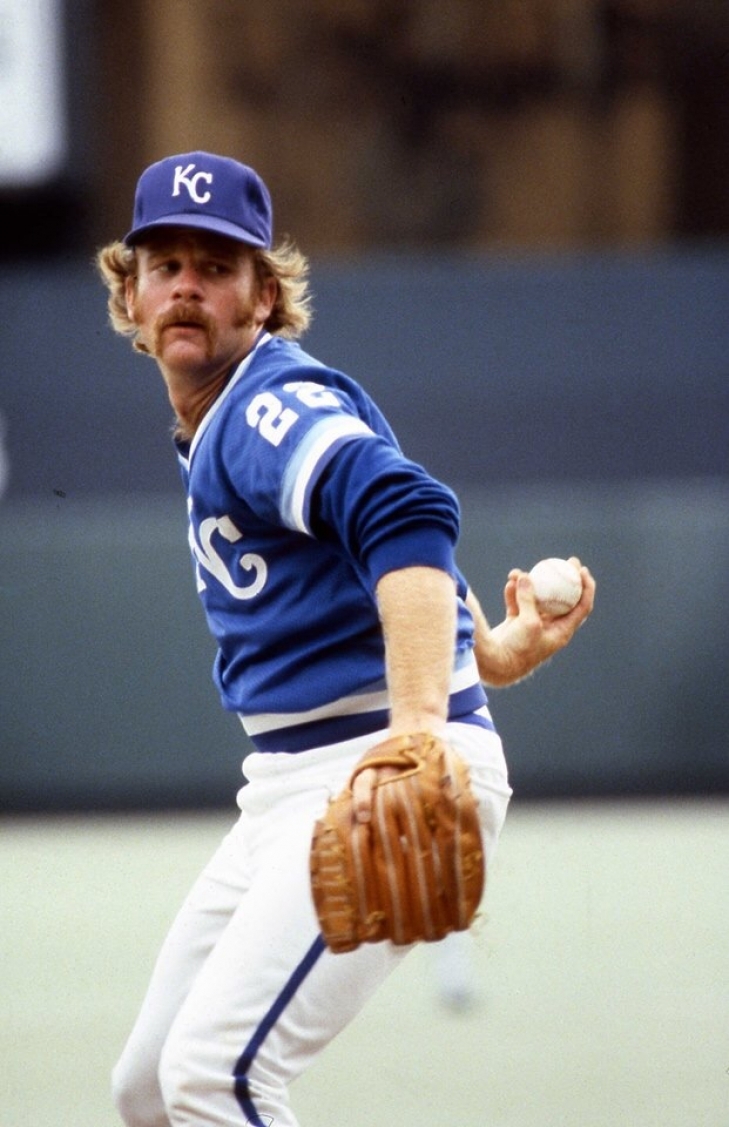
Dennis Leonard was the relentless engine of the Kansas City rotation during their first golden era, a right-hander whose durability was as steady as the mustache he famously wore. In an age where the Royals were constantly battling for American League supremacy, Leonard provided a high-frequency workload that turned him into the winningest right-hander in the sport over a seven-year stretch.
Leonard’s ascent in Kansas City began in 1974, but he reached a major turning point in 1975 when he secured 15 wins and proved he could handle the demands of a full season. He possessed a focused intensity that allowed him to move past his prospect years and become a franchise pillar almost overnight. By 1977, he reached a career peak for volume, winning 20 games for the first time and finishing fourth in the Cy Young voting.
Leonard became the only pitcher in Royals history to record three separate 20-win seasons, reaching that mark again in 1978 and 1980. During the 1980 campaign, he was the primary outlier in the rotation that led Kansas City to its first-ever World Series appearance. He showed the organization that a pitcher could become a legend by simply refusing to yield the mound, eventually amassing more wins than any other right-handed starter in the American League between 1975 and 1981.
Everything seemed to be building toward a historic total until the 1982 season, when the heavy workload of his peak years led to a series of devastating knee injuries. Leonard spent the next few seasons navigating a difficult, injury-plagued plateau, undergoing multiple surgeries that kept him off the diamond for nearly three full years. He showed a remarkable professional resilience by returning to the mound in 1986, winning eight games in a veteran-like comeback that served as an inspiration to the clubhouse. He eventually retired with 144 wins and 1,323 strikeouts, having spent his entire twelve-year professional life in a Royals uniform.
In 1989, the Royals inducted him into their Hall of Fame.
