


Site Admin
34. David DeJesus
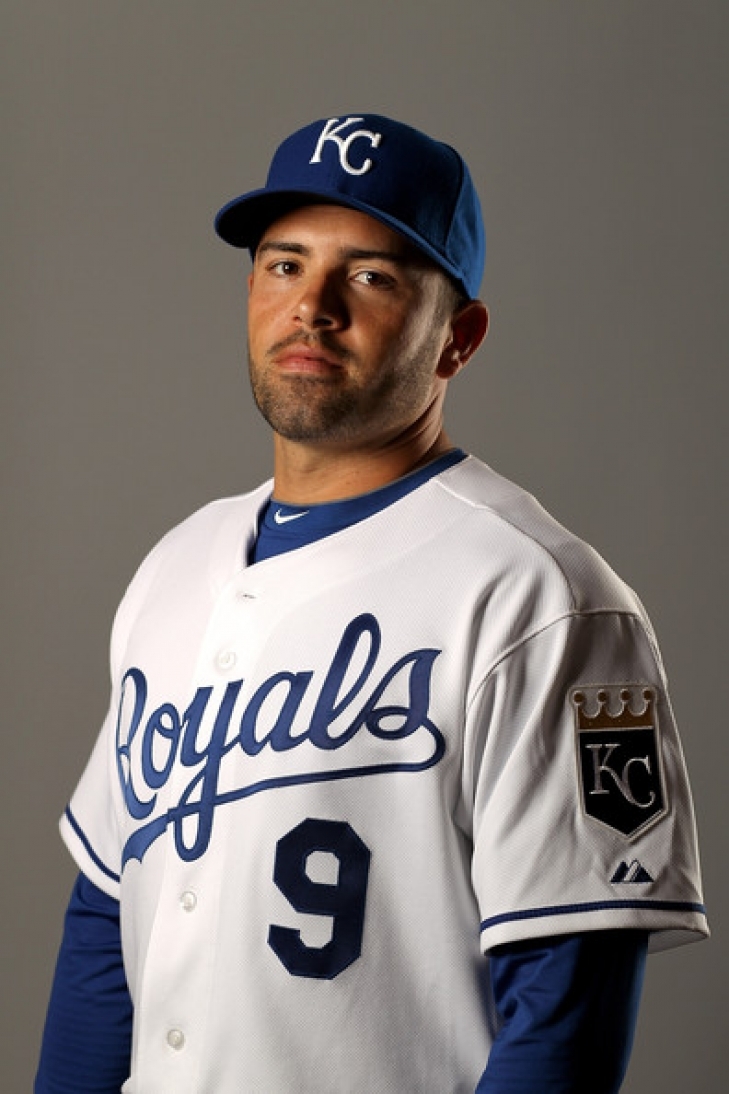
A fourth-round pick from Rutgers in 2000, David DeJesus made it to the bigs in 2003, took over center field in 2004, and immediately finished sixth in the American League Rookie of the Year voting.
During the 2008 campaign, he recorded a career-high .307 batting average with 12 home runs and 73 RBIs while providing steady-state production at the top of the order. He demonstrated a specialized ability to manufacture runs in a cavernous home ballpark, recording 159 hits and a .366 on-base percentage, and from 2007 to 2009 had at least 155 hits per season.
In 2006, he demonstrated a rare, vulnerable quality by leading the American League in hit-by-pitches, a testament to his specialized ability to crowd the plate and reach base by any means necessary. While he never duplicated the hardware potential of his rookie season, he remained a model of offensive consistency, maintaining a .289 career average during his stay in Kansas City.
DeJesus was traded to Oakland in 2010 and, as a Royal, compiled 971 hits, with a .289 average.
33. David Cone
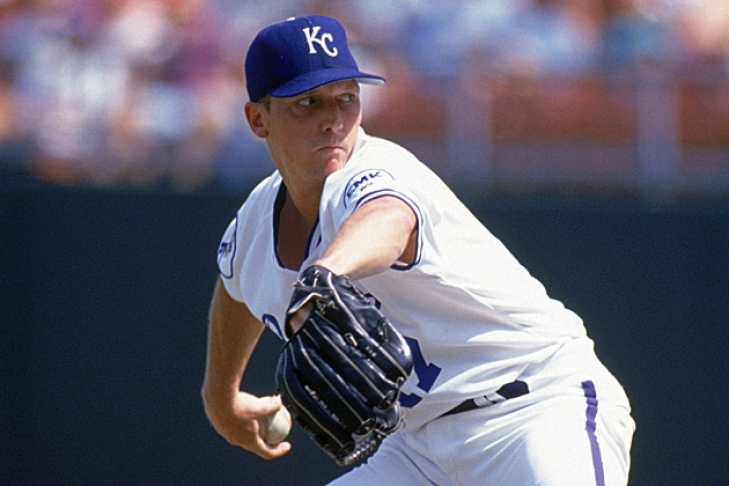
David Cone was the "hometown boy" who became one of the most surgical arms in baseball history. A Kansas City native, he was drafted by the Royals in 1981 and debuted as a reliever in 1986 before the organization made a historic tactical error by trading him to the Mets for catcher Ed Hearn. While his "gun for hire" reputation was forged in New York and Toronto, he returned to the Royals in 1993 to deliver the most efficient individual pitching stretch in franchise history, proving that he was much more than a postseason specialist.
Upon returning as a high-profile free agent, he demonstrated a specialized ability to dominate the American League despite a deceptive 11-14 record in his first year back. He led the league in innings pitched (254.0) and finished third in the AL in bWAR (6.7), showing the organization that he was a foundational ace who simply lacked run support.
The season after was a bittersweet one for Cone, and for MLB in general, as the players’ strike ended the season in August. That summer, Cone demonstrated a focused intensity, posting a 16-5 record with a 2.94 ERA and a league-leading 7.1 bWAR for pitchers. He showed the organization he was a foundational superstar by securing the 1994 AL Cy Young Award and finishing ninth in the MVP voting, marking the first and only time a Royal had won the award since Bret Saberhagen.
In a cost-cutting move, Kansas City traded Cone to the Blue Jays before the 1995 Season. Cone compiled 27 wins, 355 strikeouts, and the 1994 AL Cy Young Award as a Royal.
28. Joakim Soria
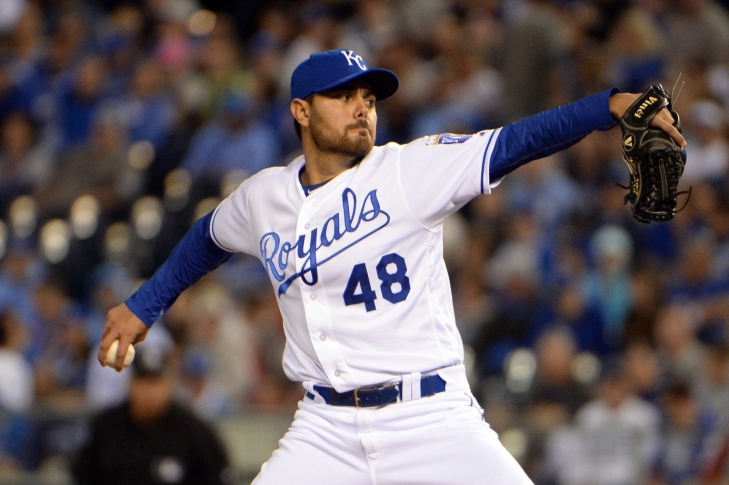
Joakim Soria joined the Kansas City organization as a Rule 5 selection from the San Diego Padres in late 2006, a diamond-in-the-rough find who would immediately transform into one of the most dominant closers in the game. Making his debut in 2007, the right-hander from Monclova quickly earned the nickname "The Mexicutioner" for his cold-blooded efficiency in the ninth inning.
After saving 17 games as a rookie, he evolved into an elite force between 2008 and 2010. During this stretch, he demonstrated a specialized ability to lock down games with a microscopic 1.84 ERA and a 1.005 WHIP. He showed the organization he was a foundational star by earning two All-Star selections and delivering a historic 2010 campaign. That summer, he recorded a career-high 43 saves, finished second in the league in Win Probability Added (WPA), and placed tenth in the AL Cy Young voting, a rare feat for a reliever on a non-contending team.
The heart of his first tenure was defined by elite durability until a torn elbow ligament required Tommy John surgery, which forced him to miss the entire 2012 season. This injury led to a difficult transition; after five dominant years, the Royals chose not to re-sign him, allowing him to test free agency. However, Soria’s story in Kansas City reached a natural second act when he returned to the club in 2016. During this second run, he pivoted into a veteran setup role, providing the steady-state production needed to bridge the gap for a team coming off a World Series title. While his velocity had dipped slightly, his veteran-like poise remained a tactical asset for the bullpen.
Soria was traded to the Chicago White Sox in early 2018 and had 162 saves for Kansas City.
27. Eric Hosmer
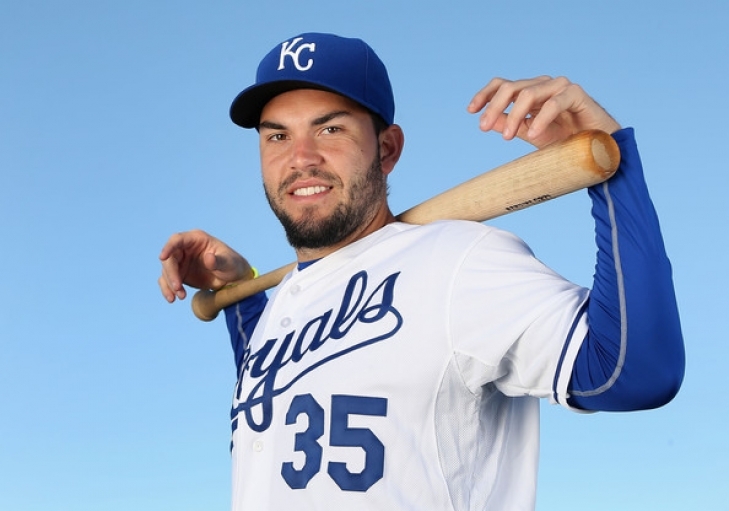
Eric Hosmer joined the Kansas City organization as the third overall selection in the 2008 draft, a high-ceiling prospect from Florida who would become the face of the Royals' resurgence. After a rapid ascent through the minors, he debuted in May 2011 and immediately secured the starting first base job.
In 2011, he demonstrated a specialized ability to handle the bright lights of the American League, batting .293 and finishing third in the Rookie of the Year voting. He showed the organization that he was a foundational winner during the 2014 and 2015 postseason runs, delivering veteran-like poise and a series of signature moments, none more famous than his "mad dash" home to tie Game 5 of the 2015 World Series. This period of rapid growth served as the essential lead-in to his most productive years, proving his worth as a steady-state run driver for a championship-caliber roster.
In 2016, he earned his first All-Star selection and was named the All-Star Game MVP, signaling his arrival as an elite presence in the sport. He followed this with a historic 2017 season, recording a career-high .318 batting average and earning his lone Silver Slugger Award. He showed the organization that he was a foundational star by belting 25 home runs and driving in 94 runs, providing the offensive muscle for a team in transition. While he secured four Gold Glove Awards (2013–2015, 2017) through a reputation for picking low throws and elite scooping, advanced metrics like defensive bWAR and Total Zone Runs remained consistently critical of his overall range and positioning.
Following the 2017 season, Hosmer signed an eight-year contract with the San Diego Padres. With Kansas City, he had 1,132 hits, 127 home runs, and the 2015 World Series title.
