


Site Admin
20. Freddie Patek
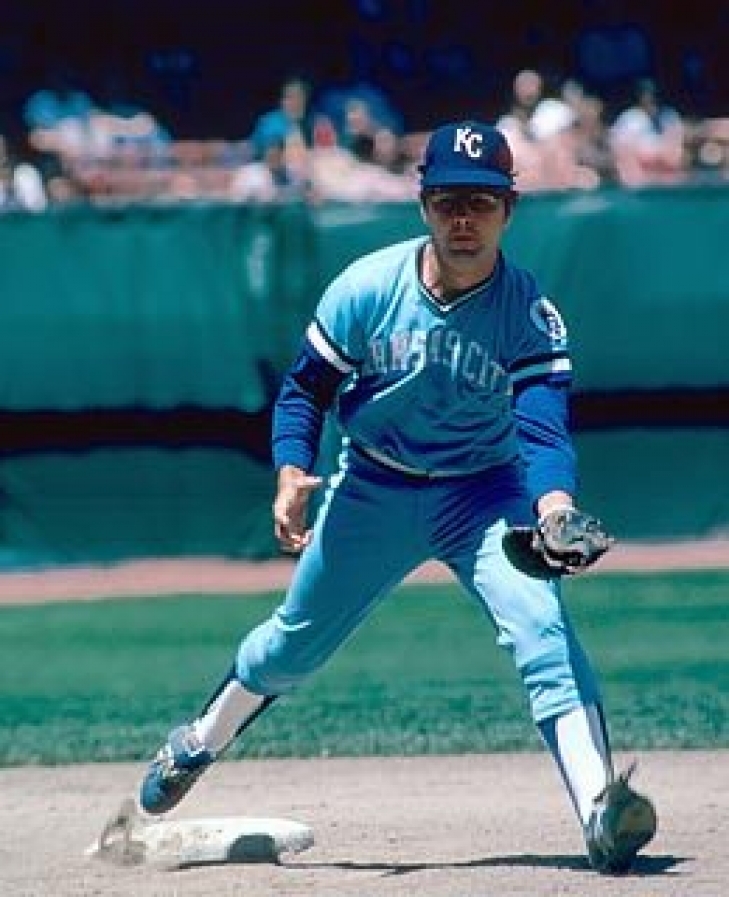
Freddie Patek joined the Kansas City organization in late 1970 via a trade with the Cincinnati Reds, a move that brought the man affectionately known as "The Flea" to Missouri in exchange for Roger Nelson and Richie Scheinblum. At 5-foot-5, he was frequently the smallest player on any field he stepped onto, but he quickly proved that his impact on the game was anything but miniature.
The climb toward Patek’s peak in the mid-1970s was a study in defensive mastery and relentless, high-frequency base-running. After taking over the starting shortstop role, he demonstrated a specialized ability to cover more ground than almost anyone in the American League. In 1972, he reached a peak for defensive efficiency, leading the league in defensive bWAR (3.1) and Total Zone Runs (21), effectively serving as the vacuum of the Kansas City infield. This period of defensive growth served as the essential lead-in to his most productive offensive years, showing that while he might struggle to maintain a high on-base percentage, his presence was a constant tactical headache for opposing pitchers once he reached first.
In the 1977 campaign, he evolved into the premier base-stealer in the American League, recording a league-best 53 swipes and earning his third All-Star selection. He showed the organization that he was a foundational winner by helping lead the Royals to three consecutive AL West titles between 1976 and 1978. He possessed a rare, durable quality that saw him log eight straight seasons with at least 30 stolen bases, providing the steady-state production required to stabilize the top of a lineup that featured icons like George Brett and Amos Otis. Even with a career .309 OBP in Kansas City, he maximized every opportunity, eventually amassing 336 steals, a franchise record at the time of his departure.
Following the 1979 season, Patek signed with the California Angels as a free agent. With Kansas City, he compiled 1,036 hits, 336 stolen bases, and three All-Star selections and was inducted into the Royals Hall of Fame in 1992.
6. Salvador Perez
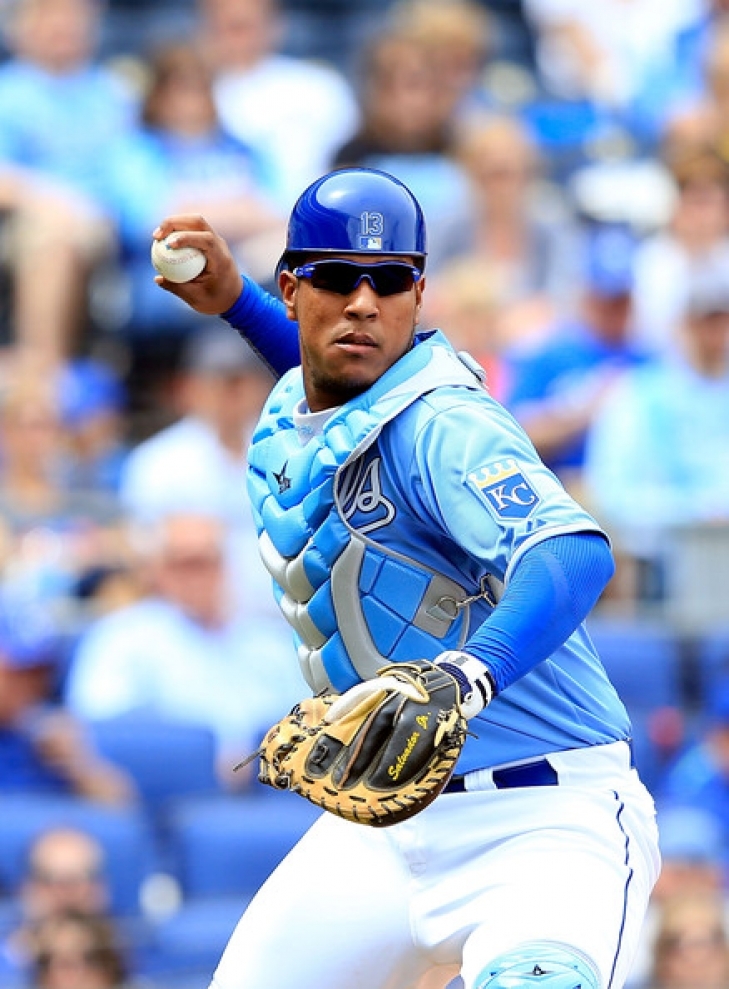
The arrival of Salvador Perez in Kansas City in 2011 didn't just provide the Royals with a catcher; it gave the franchise its emotional compass. A jovial, high-energy presence from Venezuela, "Salvy" quickly transitioned from a defensive specialist into a tactical powerhouse who could break a game open with a single swing.
Perez’s career was defined during the 2015 World Series. That October, he didn't just manage a championship pitching staff; he dictated the tempo of the Fall Classic, batting .364 and earning World Series MVP honors as the Royals secured their first title in thirty years. He was a model of specialized durability, capturing five Gold Gloves and four straight Silver Sluggers during a dominant mid-decade run. While his aggressive approach at the plate often resulted in a lower on-base percentage, his raw power and high-leverage hitting made him the primary offensive engine for a roster that prioritized grit and contact.
Perez’s character was shown following a lost 2019 season due to Tommy John surgery. Many questioned if a veteran catcher could return to peak form, but Perez answered with a statistical outlier stretch that redefined the position’s offensive ceiling. In 2021, he authored a masterpiece of power hitting, leading the major leagues with 48 home runs and 121 RBIs, setting a new single-season record for home runs by a primary catcher. He was a model of professional resilience, capturing three consecutive All-MLB First Team selections between 2020 and 2021, proving that his impact on the diamond was only growing with age.
The story in Kansas City is still being written, but Perez has already secured his place in the pantheon of Heartland legends. Entering the 2026 season with the Royals, Perez has compiled 303 home runs, 1,003 RBIs, and five Gold Gloves.
17. Jeff Montgomery
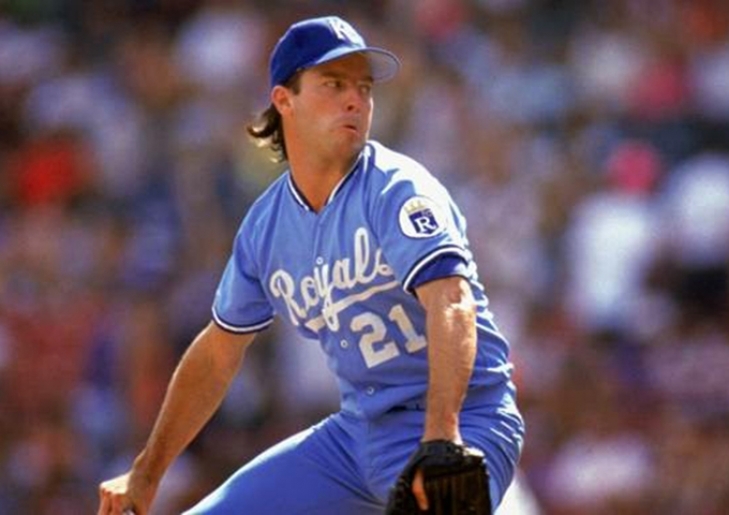
Jeff Montgomery found his professional home in Kansas City after a 1988 trade with the Cincinnati Reds, a move that shifted him from a versatile young arm to a permanent fixture in the bullpen. For twelve seasons, he patrolled the late innings at Kauffman Stadium with a specialized focus on efficiency and a calm, cerebral approach to the closer role.
Montgomery’s journey in a Royals uniform reached a rapid peak shortly after his acquisition. By 1989, he had transitioned into a premier American League reliever, recording 18 saves and a 1.37 ERA. This initial splash signaled a transition from a middle-relief option to a frontline stopper who specialized in generating high-frequency outs in the most leveraged situations. He showed the organization that he was a foundational piece of the pitching staff, earning his first All-Star selection in 1992 and establishing himself as a model of reliability for a club that prioritized late-inning defense.
The core of his time in Missouri was defined by elite, all-around production during the early 1990s. In 1993, Montgomery reached a career peak for individual dominance, leading the American League with 45 saves and capturing the Rolaids Relief Man Award. He possessed a focused intensity that allowed him to thrive under pressure, finishing 13th in the MVP voting and earning his second of three All-Star nods. Despite a lack of overwhelming physical stature, he remained a statistical force, recording five separate seasons with at least 30 saves.
Following the 1999 season, Montgomery chose to retire, and did so with 304 saves in a Kansas City uniform. In 2003, his baseball chapter closed with his induction into the Royals Hall of Fame.
18. Lorenzo Cain
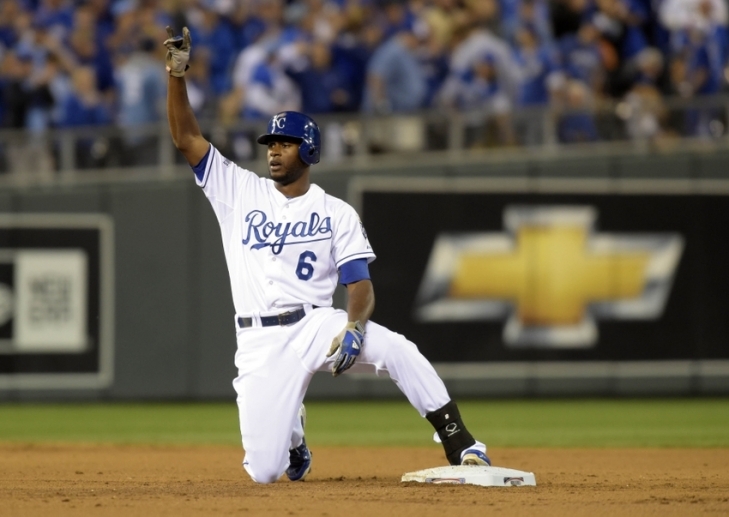
Lorenzo Cain became the defensive heartbeat of a resurgent Kansas City era, arriving via a transformative 2010 trade with the Milwaukee Brewers that completely reimagined the Royals' outfield. For seven seasons, he patrolled center field with a specialized range and a high-velocity style of play that turned potential extra-base hits into routine outs. While he joined a franchise hungry for a return to relevance, Cain provided the spark that ignited a championship window.
Cain’s impact in a Kansas City uniform reached a historic peak during the 2014 and 2015 postseason runs. After securing the starting role in center field, he transitioned into a premier American League force who specialized in taking hits away from the opposition. He showed the organization that he was a foundational piece of a championship puzzle, earning the 2014 ALCS MVP honors for a display of defensive brilliance that left the Baltimore Orioles shell-shocked. He possessed a focused intensity that allowed him to thrive on the biggest stage, anchoring a defense that famously shrank the field for every pitcher on the staff.
The bulk of his Missouri years were characterized by a unique combination of elite glovework and an increasingly dangerous offensive profile. In 2015, Cain reached a career peak for individual dominance, batting .307 with 16 home runs and 28 stolen bases. This performance earned him his first All-Star selection and a third-place finish in the American League MVP voting. He was a statistical force during the 2015 World Series run, providing the high-frequency contact and speed that wore down opposing rotations. Despite a style of play that invited a heavy physical toll, he remained a model of resilience, earning three Wilson Defensive Player of the Year awards and twice surpassing the 150-hit mark.
Following the 2017 season, the veteran outfielder chose to return to Milwaukee via free agency. With the Royals, Cain compiled 751 hits, 120 stolen bases, and the 2015 World Series championship.
