


Site Admin
42. Mike Macfarlane
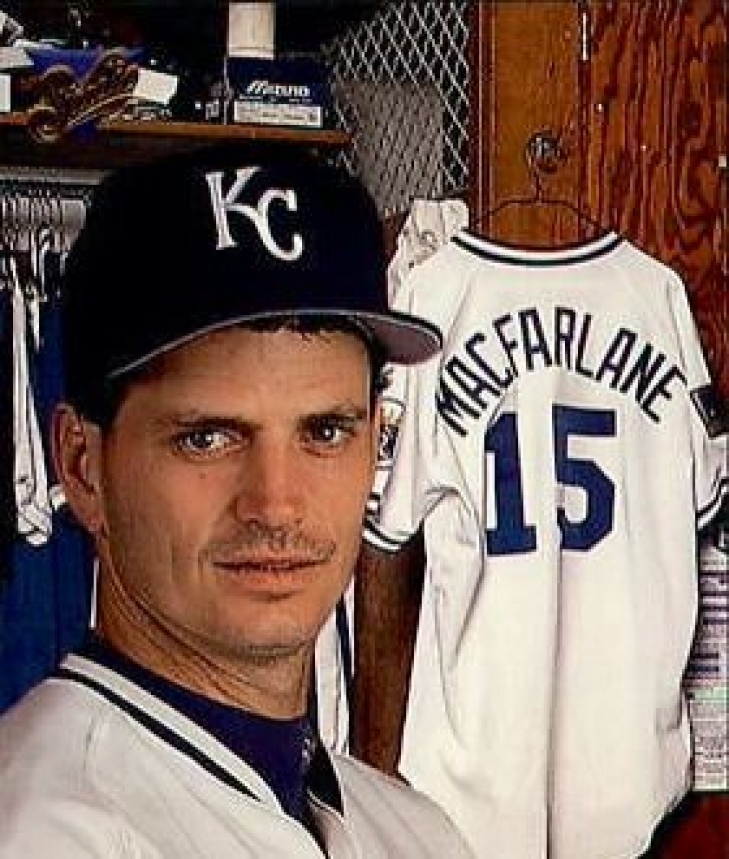
Mike Macfarlane arrived in the Kansas City organization as a fourth-round selection in 1985, a physically sturdy catcher with a reputation for intense preparation and a "blue-collar" approach to the game. He debuted in 1987 and eventually outlasted several high-profile competitors to become the team’s primary signal-caller.
Known mostly for his defensive ability, Macfarlane could occasionally help with his bat. During the 1993 campaign, a season in which he emerged as one of the premier power-hitting catchers in the American League, he belted a career-high 20 home runs and recorded 67 RBIs. He was also willing to sacrifice his body for the team, leading the league in hit-by-pitches in 1992, a category he would again lead in 1994.
Macfarlane was also a favorite of many of the Royals’ staff. He may have been a light hitter, but he had enough power in his bat to gain him at-bats. Macfarlane departed for Boston as a free agent after the 1994 season, but that was short-lived; he returned in ’95 for a second run that lasted until a mid-season 1998 trade to Oakland.
As a Royal, he compiled 717 hits, 103 home runs, and a reputation as a master handler of pitching staffs.
41. Joe Randa
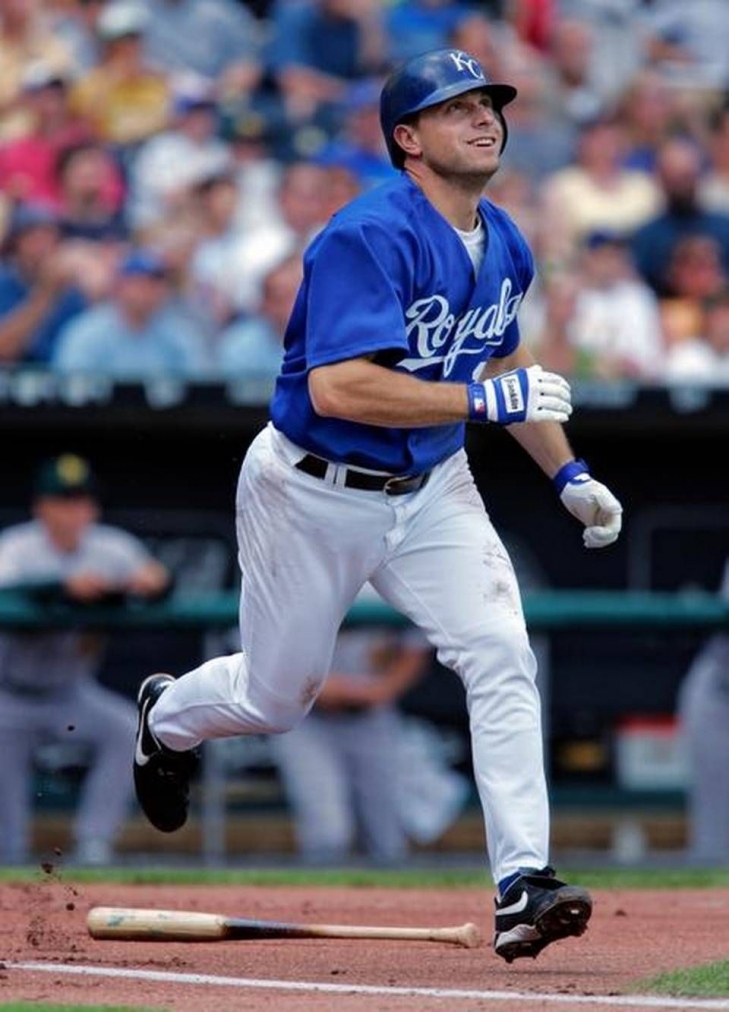
Joe Randa arrived in the Kansas City organization as an 11th-round selection in 1991, but his path to becoming a franchise fixture was anything but linear. After debuting in 1995 and appearing to be a casualty of the team's high-frequency roster turnover, moving through Pittsburgh, Detroit, and the Mets in short order, he returned to the Heartland in 1999.
In his first year back in Kansas City, he demonstrated a specialized ability to spray the ball across the turf at Kauffman Stadium, recording a career-high 197 hits and a .314 batting average, along with 16 home runs and 84 RBIs. This breakout performance served as the lead-in to 2000, where he evolved into a premier run-producer, driving in a career-high 106 runs and maintaining a .304 average.
His tenure was equally defined by his specialized defensive consistency and by a reputation as the emotional heartbeat of the clubhouse. Known as "The Joker" for his ever-present smile, he demonstrated a tactical reliability at third base, setting a franchise record in 2003 by going 75 consecutive games without an error. Even during lean years, he was producing, highlighted by a historic 2004 performance where he became one of only three Royals to collect six hits in a single game.
After the 2024 season, Randa departed for the Cincinnati Reds as a free agent. With Kansas City, he collected 1,084 hits, 563 RBIs, and a .288 batting average.
39. Danny Tartabull
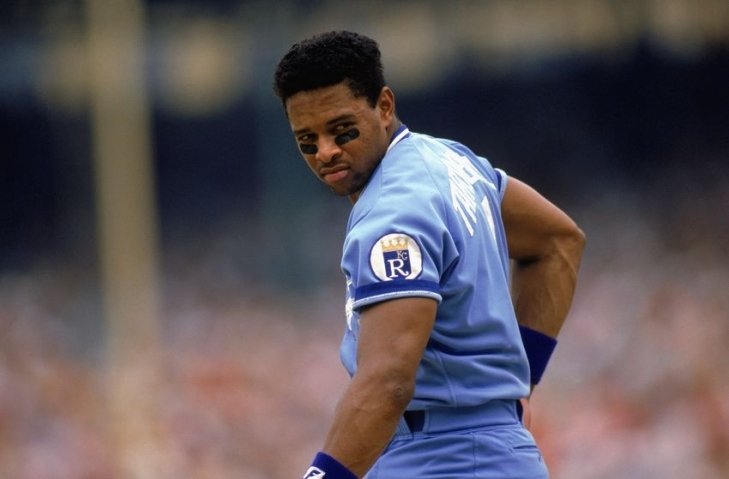
Danny Tartabull arrived in the Kansas City organization via a December 1986 trade with the Seattle Mariners, a deal that sent Scott Bankhead and Mike Kingery to Seattle. A second-generation big leaguer, Tartabull possessed a specialized, violent swing that generated some of the highest exit velocities of the late 1980s.
Tartabull had his best season in 1991; he led the major leagues with a .593 slugging percentage and recorded a career-high 31 home runs. He also had 100 RBIs and a career-best .316 batting average, was 12th in MVP voting, and earned his only All-Star game appearance.
Between 1987 and 1991, Tartabull recorded four seasons with at least 25 home runs and three seasons with over 100 RBIs. He also got on base often, posting a .290 batting average and a .376 on-base percentage for the team.
After his breakout in 1991, Tartabull signed a massive five-year contract with the New York Yankees. Statistically speaking, he was not as good in Yankee pinstripes, but the Seinfeld guest appearance gave him a pop culture moment that he never would have obtained as a Royal.
With Kansas City, Tartabull compiled 674 hits and 124 home runs.
43. Bud Black
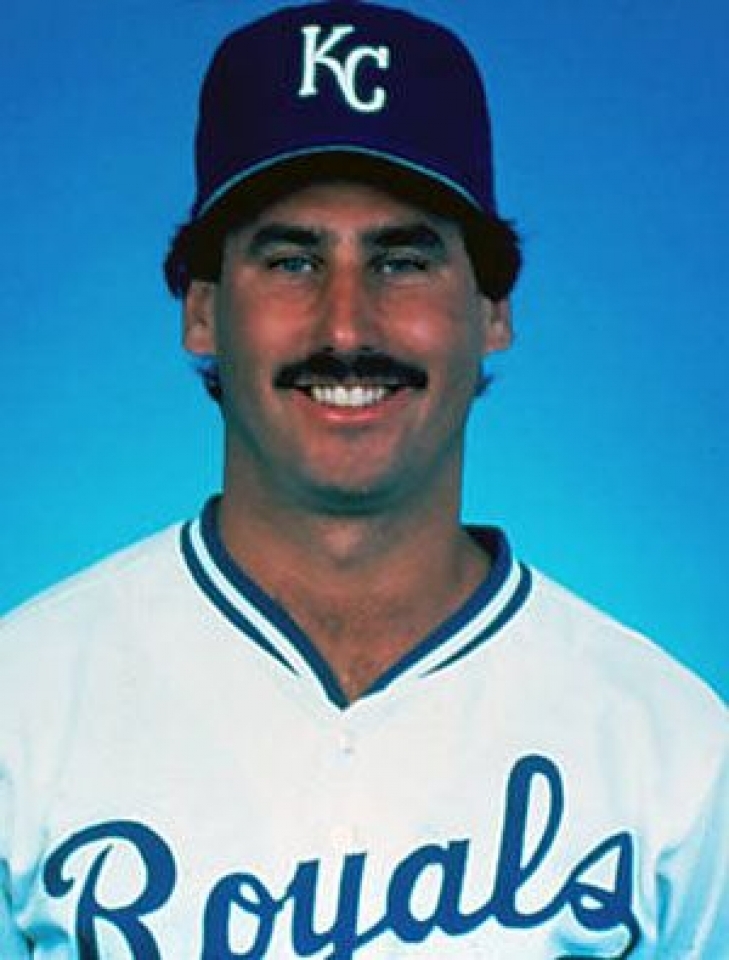
Bud Black arrived in the Kansas City organization in 1982 via a trade with the Seattle Mariners, a move that initially aimed to bolster the bullpen but instead unearthed a dependable left-handed rotation piece. Known for his technical precision and smooth delivery, he became a fixture of the Royals' pitching staff during the most successful era in franchise history.
Black became a full-time starter in 1983, and the season after, he had a coming-of-age campaign. He led the American League with a 1.128 WHIP and recorded a career-high 17 wins. Tossing 257 innings across 35 starts, proving to be the high-volume workhorse the club needed to secure the American League West title. His tactical mastery was evidenced by a 3.12 ERA, the best mark of his career as a full-time starter.
The 1985 championship season saw Black transition into a high-leverage hybrid role when the lights were brightest. While he made 33 starts during the regular season, he demonstrated a specialized ability to adapt in October, serving as both a starter and a high-frequency reliever during the postseason. He showed the organization he was a foundational winner by delivering a scoreless long-relief appearance in Game 6 of the ALCS to keep the Royals' season alive, eventually earning a World Series ring as part of the staff that took down the Cardinals.
With the emergence of young power arms like Danny Jackson and Bret Saberhagen, the Royals found themselves with a surplus of starters but a critical need for a specialized left-handed bridge to the closer, and that is what Black would go towards. He continued in a hybrid role until he was traded to Cleveland during the 1988 season.
Black compiled a 56-57 record, a 3.73 ERA, and a 1985 World Series championship in Kansas City.
