


Site Admin
39. Ed Reulbach
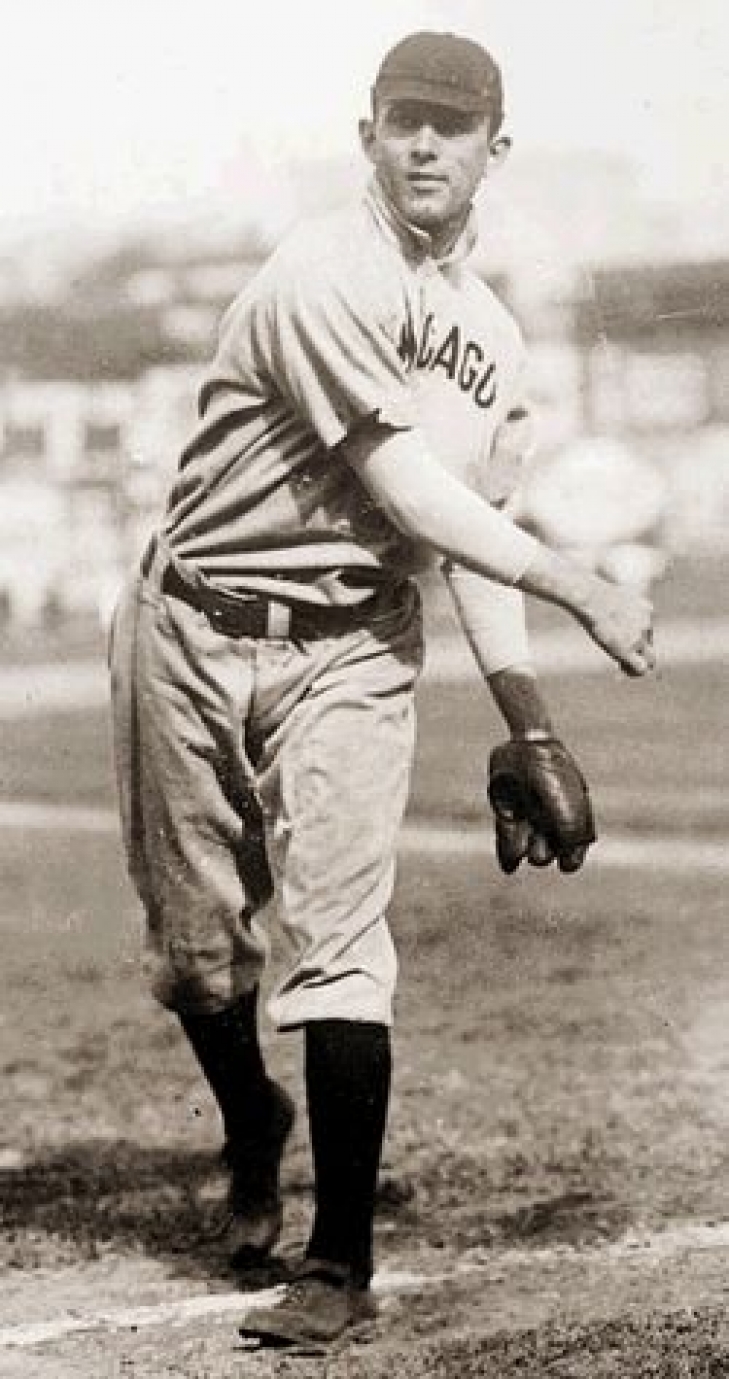
When Ed Reulbach arrived in 1905, he transitioned instantly from a standout college athlete into one of the most difficult pitchers to hit in the National League. He matured into a mainstay of the Cubs’ rotation just as the team began its historic run toward back-to-back championships in 1907 and 1908. His success was staggering; he led the National League in winning percentage for three consecutive years (1906–1908), a feat of consistency matched only by the legendary Lefty Grove. He arrived with a "shadowing" windup that hid the ball from hitters and quickly became a force who could suppress runs as well as any pitcher in the Deadball Era.
The absolute pinnacle of his career arrived during the white-hot pennant race of 1908. On a single afternoon in late September, Reulbach authored a feat that remains the only one of its kind in Major League history: he pitched and won both ends of a doubleheader against the Brooklyn Superbas, throwing two complete-game shutouts in the same day. He was a master of run prevention, finishing with an ERA under 2.00 in four of his first five seasons. This period of dominance saw him surrender fewer than 6 hits per 9 innings in 1906, a ratio of efficiency that would stand as a benchmark for over 60 years.
His identity was synonymous with the Cubs' championship pedigree. A two-time World Series winner, Reulbach was a big-game specialist who famously threw a one-hitter in the 1906 Fall Classic. He was a workhorse who rarely showed signs of fatigue, using his towering 6'1" frame and a high leg kick to overwhelm hitters. He concluded his primary stay in Chicago with 136 wins and a microscopic 2.24 ERA, leaving behind a legacy as one of the most effective and durable arms to ever call the West Side Grounds home.
The chapter eventually closed in 1913, when he moved to Brooklyn, followed by a later star turn in the Federal League. He left the organization as a statistical titan and the last surviving member of the 1907–1908 championship squads. He proved that to rule the mound, you needed more than just a live arm—you needed the intellect to outthink the hitter and the stamina to outlast the sun.
In a long-overdue tribute to his massive impact, the organization named him as an inaugural member of the Chicago Cubs Hall of Fame in 2021.
48. Derrek Lee
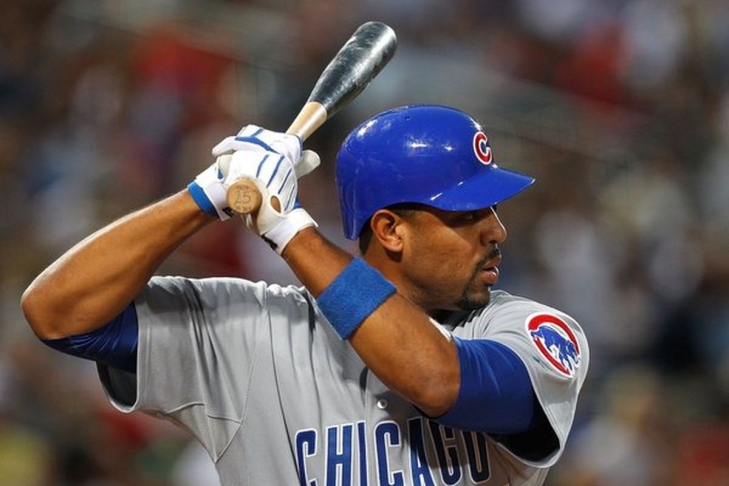
Derrek Lee joined the Cubs in 2004 and bypassed any adjustment period, maturing instantly into a cornerstone of the franchise. He arrived with a World Series ring and a refined approach at the plate, and he wasted no time validating the trade. His tenure was a masterclass in professional consistency, as he maintained a beautiful .298/.378/.524 slash line over his stay. He wasn't just a slugger; he was a sophisticated, high-volume producer who provided the defensive and offensive stability that allowed the organization to capture back-to-back division titles later in the decade.
The absolute pinnacle of his career, and one of the greatest individual offensive seasons in Cubs history, arrived in 2005. That year, Lee was a statistical outlier, capturing the National League Batting Title (.335), Slugging Title (.662), and the OPS Title (1.080). He blasted a career-high 46 home runs, proving that he could provide elite power without sacrificing his technical approach. Despite this historic "triple crown" of efficiency, he famously finished third in a crowded MVP race. a season that remains the gold standard for run production on the North Side in the 21st century.
His identity was synonymous with a quiet, graceful dominance both at the plate and in the field. Lee was an efficiency machine, accumulating 1,046 hits in a Cubs uniform while remaining a perennial threat for both the Silver Slugger and the Gold Glove. He was a master of the high-leverage moment, serving as the tactical anchor of the 2007 and 2008 playoff teams and finishing ninth in the MVP voting during a resurgent 2009 campaign. Whether he was stretching to save an errant throw or lacing a double into the gap to spark a rally, he played with a technical precision that made the game look effortless.
The Cubs chapter eventually came to an end in the summer of 2010, when he was traded to the Atlanta Braves.
49. Jake Arrieta
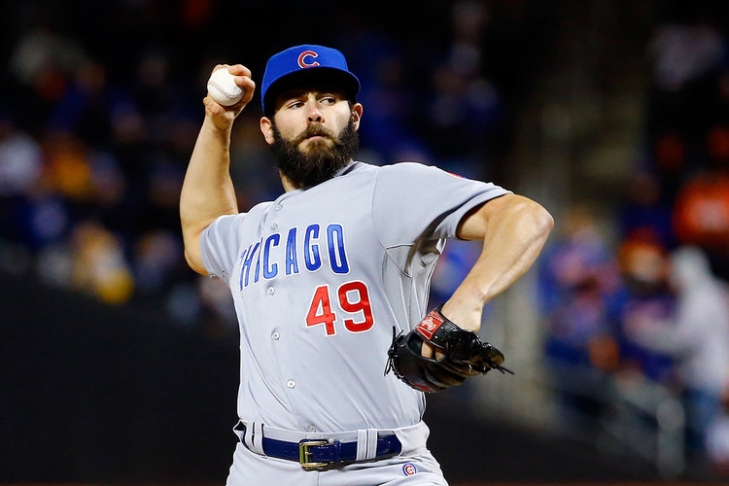
Jake Arrieta’s journey in Chicago began with a 2013 trade with the Baltimore Orioles that would eventually go down as one of the most lopsided heists in franchise history. Sent to the North Side alongside Pedro Strop in exchange for Scott Feldman and Steve Clevenger, Arrieta matured instantly under the tutelage of the Cubs' staff. He shed his inconsistencies and emerged as a statistical titan by 2014, arriving with a "cross-fire" delivery and a heavy sinker that saw him finish fifth in bWAR for pitchers during his first full season in the rotation. It was a warning shot to the rest of the league, signaling that he had unlocked a level of efficiency that few could match.
The absolute pinnacle of his career, and perhaps the most dominant second half in baseball history, arrived in 2015. That year, Arrieta was an efficiency machine, leading the National League with 22 wins while posting a microscopic 1.77 ERA and a 0.865 WHIP. He became the first Cub since Greg Maddux to capture the Cy Young Award, authored by a late-season run where he allowed just four earned runs over his final 12 starts. He followed this masterpiece by serving as the tactical engine of the 2016 championship team, earning an All-Star nod and a Silver Slugger while providing the high-leverage brilliance required to secure the Cubs' first World Series title in 108 years.
His identity was synonymous with a stoic, "workout-warrior" intensity that resonated with the Wrigley Field faithful. Arrieta was a master of the high-stakes moment, accumulating 73 wins and a 3.14 ERA during his primary stay in Chicago. Even as he moved on to Philadelphia in 2018, the connection to the North Side remained unbreakable. While his 2021 return was a difficult final chapter marked by diminishing effectiveness and an eventual release, it could not tarnish the legacy of the man who anchored the rotation during the most important era in the club's modern history.
44. Kiki Cuyler
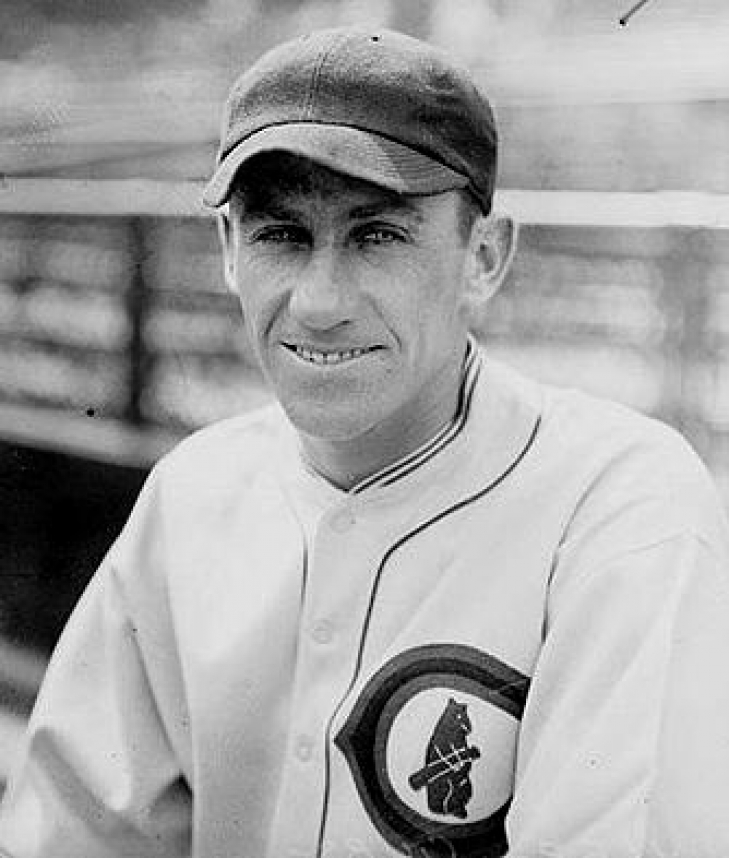
Kiki Cuyler joined the Cubs in 1928 and bypassed any need for an adjustment period, maturing instantly into the premier leadoff threat in the senior circuit. He arrived with a reputation for game-breaking speed and a disciplined eye, and he wasted no time validating the investment. His initial three-year burst in Chicago was a masterclass in aggressive baserunning, as he led the National League in stolen bases for three consecutive seasons (1928–1930). He wasn't just a track star in cleats, though; he was a refined hitter who maintained a staggering .325 career average during his stay, proving that his value was rooted in a sophisticated balance of run production and high-volume theft.
The absolute pinnacle of his efficiency arrived during the 1929 and 1930 campaigns, where he eclipsed the .350 mark in back-to-back years. These weren't just "empty" averages; Cuyler was a high-leverage producer who anchored the lineup for the 1929 National League championship squad and the 1932 pennant winners. Even as he transitioned into the veteran stage of his career, his bat remained a lethal weapon; in 1934, he led the National League in doubles, showing that his extra-base power was a permanent fixture of his game. He finished his Chicago journey with 1,199 hits, serving as a model of consistency during some of the sport’s most prolific offensive years.
The Veterans Committee recognized his historic contribution in 1968 by electing him to the National Baseball Hall of Fame. Locally, the organization ensured his legacy would remain a permanent part of the landscape by naming him to the inaugural class of the Chicago Cubs Hall of Fame in 2021.
