


Site Admin
46. Heinie Zimmerman
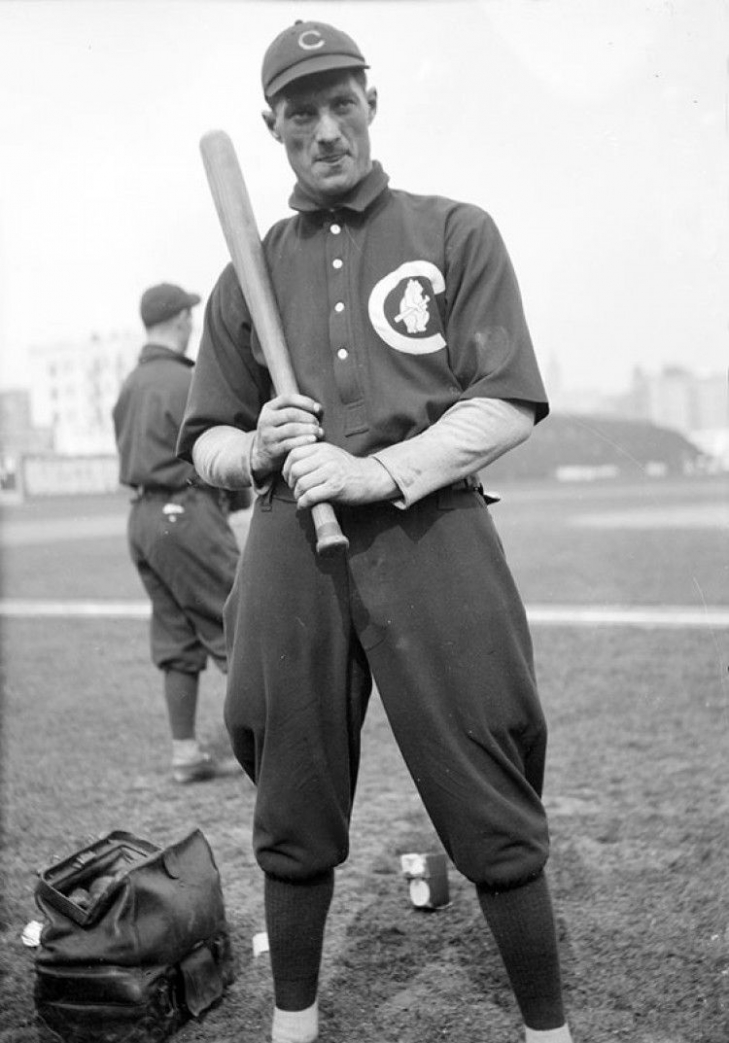
Heinie Zimmerman’s journey began as a young utility man on the legendary 1907 and 1908 World Series championship teams. During those early years, he matured slowly in the shadow of established icons, waiting for the path to clear at third base. He arrived with a raw, aggressive hitting style and eventually evolved into a statistical titan as the new decade dawned. By the early 1910s, he had transformed from a bench option into the primary force of the Cubs' lineup, a high-volume producer who could change the complexion of a game with a single swing.
The absolute pinnacle of his career arrived in 1912, a season of such profound dominance that it remains a benchmark in franchise history. That year, Zimmerman authored a Triple Crown masterpiece, leading the National League in batting average (.372), home runs (14), and RBIs (103). He was an efficiency machine, also leading the league in hits (207), doubles (41), and slugging percentage (.571). Despite this historic run of run production, he famously finished only sixth in the MVP voting—a curious footnote to a season where he was clearly the league's most feared offensive threat.
His identity was synonymous with a high-contact, "swing-at-everything" mentality that made him a fascinating outlier of his era. While he lacked the patient eye of some contemporaries, evidenced by a more modest .343 on-base percentage, he was a master of the "Live-ball" approach before the era even truly began. He rattled off two other .300 seasons during his Chicago stay, accumulating 1,112 hits and maintaining a robust .304 career average with the club. Whether he was vacuuming up grounders at the "hot corner" or lacing a double into the gap, he played with a fiery, high-stakes energy that defined the Cubs' transition into the modern age.
42. Andre Dawson
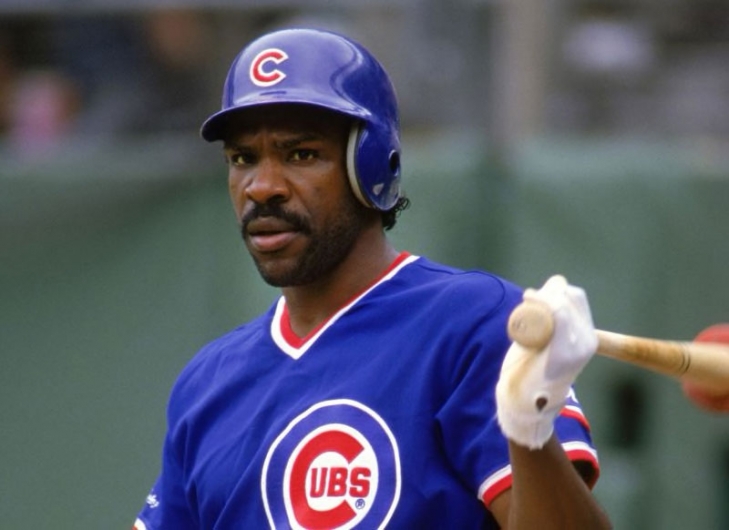
The legend of Dawson’s arrival in 1987 is etched into baseball lore, a victim of "collusion" who famously presented the Cubs management with a signed, blank contract, essentially daring them to name a price for his services. They settled on a half-million dollars, a bargain that matured instantly into a championship-caliber investment. Despite the heavy physical toll of a decade on artificial turf, "The Hawk" thrived on the natural grass of Wrigley Field. He arrived as a man with something to prove and evolved into a statistical titan, authoring a breakout campaign for the ages in his very first summer in Chicago.
The absolute pinnacle of his career arrived that same year. In a feat of pure run-production dominance, Dawson led the National League with 49 home runs and 137 RBIs, a performance so profound that he was named the National League MVP despite playing for a last-place club. He wasn't just a volume-dense slugger; he was a high-leverage force who commanded respect in every at-bat. While he never quite touched those 1987 heights again, his efficiency remained elite; he rattled off five more consecutive seasons with at least 20 "taters," providing a reliable source of thunder in the heart of the Cubs' order.
His identity was synonymous with a quiet, stoic professionalism and a defensive grace that persisted despite his dwindling mobility. During his six-year stay, Dawson powered out 174 home runs and maintained a robust .507 slugging percentage, serving as the primary engine for the 1989 division-winning squad. Whether he was launching a moonshot onto Waveland Avenue or gunning down a runner with his signature arm, he played with a focused intensity that made him a local immortal. He proved that a veteran with a "warrior" mentality could defy the aging process and remain a cornerstone of a major market franchise.
The chapter of his time in Chicago eventually transitioned into a legacy of undisputed greatness. The baseball world officially recognized his impact in 2010 when he was inducted into the National Baseball Hall of Fame in Cooperstown. Locally, the organization ensured his immortality by naming him to the inaugural class of the Chicago Cubs Hall of Fame in 2021.
36. Kris Bryant
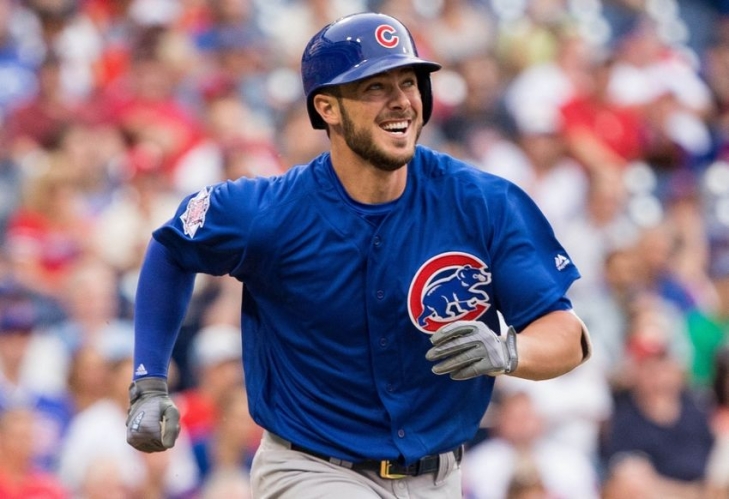
Expectations reached a fever pitch in 2015 when the former Golden Spikes winner made his highly anticipated debut. Bryant bypassed the traditional learning curve, maturing instantly into the National League Rookie of the Year by batting .279 with 26 home runs. He secured an All-Star nod in his very first summer, embodying the figure of a poised, elite talent built for the brightest lights. He wasn't just a prospect; he was the tactical engine that signaled the "Cubs Way" had finally arrived.
The pinnacle of his residency, and arguably the most significant individual season in modern Chicago history, arrived in 2016. Bryant authored a stellar campaign, leading the National League in runs scored (121) and bWAR (7.3) while launching 39 home runs. He became the rare player to follow a Rookie of the Year trophy with an MVP award in successive seasons, a feat that culminated in the historic defensive play to record the final out of the World Series. During this stretch, Bryant was defined by his versatility and high-leverage production, making him the undisputed star of a championship drought-breaking squad.
Consistency remained his hallmark even as the "World Series hangover" affected the rest of the roster. In 2017, he showcased his elite discipline by posting a career-high .409 on-base percentage and finishing seventh in the MVP voting. Even as injuries began to test his durability, he continued to deliver a steady presence at the plate, evidenced by a 31-home run campaign in 2019 and a fourth All-Star selection in 2021. He left the organization with 160 home runs and a reputation as a player who could impact the game with his legs, his glove, and his iconic right-handed stroke.
The conclusion of his Chicago journey came mid-way through the 2021 season, as the organization transitioned into a new era and traded their superstar to the San Francisco Giants. Bryant departed as more than just a statistical titan; he left as a hero who had successfully carried the burden of the "curse" and emerged victorious on the other side.
40. Bill Dahlen
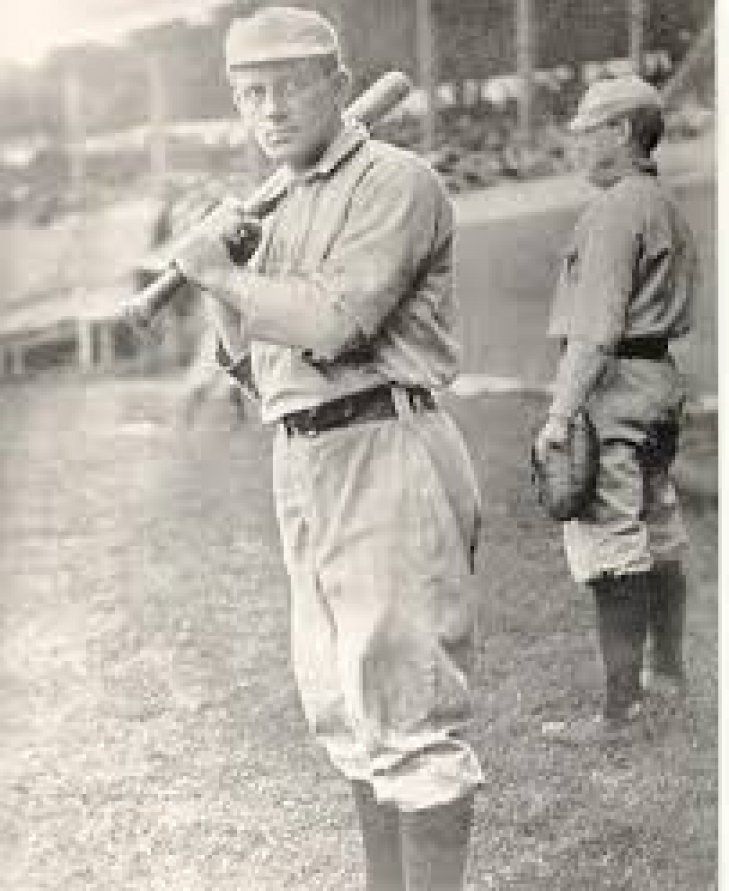
Dahlen arrived in Chicago in 1891 and quickly became a cornerstone of the lineup, offering a level of offensive production that was rare for a shortstop in the pre-modern era. He was a model of consistency at the plate, surpassing the .300 mark in three different seasons and maintaining a remarkable .299 average over his eight-year tenure with the team. His game was built on a rare blend of discipline and extra-base power; he started as a raw talent and rapidly evolved into a strategic threat capable of driving in runs as effectively as manufacturing them with his legs.
The peak of his time in Chicago featured one of the most legendary hitting streaks in baseball history. In 1894, Dahlen recorded a 42-game hitting streak, a feat that stood as the Major League record for years and remains the longest in the franchise's history. This wasn't just a hot streak; it was a sign of his elite efficiency and his ability to perform under the pressure of the era's rough-and-tumble style of play. He was a high-volume producer, tallying 1,170 hits and 561 RBIs, providing the offensive backbone for a team in constant flux.
His identity was defined by his work at shortstop, where he was a defensive standout. Dahlen had an exceptional glove and a strong arm, consistently ranking among the league leaders in putouts and assists. During his time in Chicago, he amassed a total of 34.0 bWAR, a number that emphasized his value as a true two-way star who influenced the outcome of the game on every pitch. Whether he was sparking a rally or preventing a certain base hit in the hole, "Bad Bill" was the heartbeat of the Chicago infield.
Dahlen’s chapter in the Windy City ended after the 1898 season, when he was traded to the Brooklyn Bridegrooms. He left the organization as a statistical titan, having established himself as the greatest shortstop in the early history of the club.
