When the Chicago Cubs traded Dennis Lee Eckersley to the Oakland Athletics in April 1987, it seemed like a clear demotion—a subtle, final opportunity for a declining veteran. "Eck" had been a major league starting pitcher since 1975, earning two All-Star selections, but serious alcoholism was actively endangering both his career and his life.
Upon his arrival, Oakland manager Tony La Russa envisioned the right-hander as a high-leverage setup weapon. Eckersley accepted the role until an injury to incumbent closer Jay Howell necessitated a tactical adjustment. Thrust into the ninth-inning vacancy, he initiated a career transformation that would fundamentally redraft the blueprint for the modern closer and secure his place in Cooperstown.
Who would have thought?
Eckersley established himself as the foremost bullpen force in the game during the 1988 season. Achieving his inaugural of four All-Star selections as an Oakland reliever, he dominated American League hitters by winning the AL saves title with 45 saves, accompanied by an exceptional 0.867 WHIP. His dominant performance contributed significantly to the Athletics securing the junior circuit pennant and earned him a commendable second-place finish in the AL Cy Young Award voting.
The momentum carried directly into 1989, where the Athletics secured the World Series championship. Although his total number of saves decreased slightly to 33, Eckersley was arguably more lethal, confining opposing lineups to a 1.56 ERA and an astonishing 0.607 WHIP. The historic baseline reached an almost comical peak during the 1990 pennant-winning season. Although Oakland ultimately lost to Cincinnati in the Fall Classic, Eckersley demonstrated exceptional effectiveness in the bullpen, achieving a remarkable 0.61 ERA and a corresponding 0.614 WHIP. However, an unexpectedly lower number of saves resulted in a lower placement on the Cy Young Award ballot compared to previous summers.
Following an exceptionally successful campaign in 1991, his career reached its zenith during the 1992 season. Reclaiming the American League saves title with an impressive total of 51 saves, he complemented this achievement with a 1.91 ERA and a 0.913 WHIP. The national baseball community provided the highest recognition of this remarkable outlier performance, overwhelmingly voting Eckersley as both the 1992 AL Cy Young Award recipient and the American League Most Valuable Player.
He provided three more productive seasons in the East Bay before the inevitable toll of age and mileage caught up to his signature, sidearm delivery. Following the 1995 season, he reunited with La Russa by signing with the St. Louis Cardinals, eventually concluding his 24-year major league journey back where it started as a member of the Boston Red Sox.
With the Athletics, Dennis Eckersley had 330 Saves, won 41 Games with a WHIP of 0.953, and was inducted into the Baseball Hall of Fame in 2004. In Oakland, he was inducted into the inaugural franchise Hall of Fame Class in 2018.
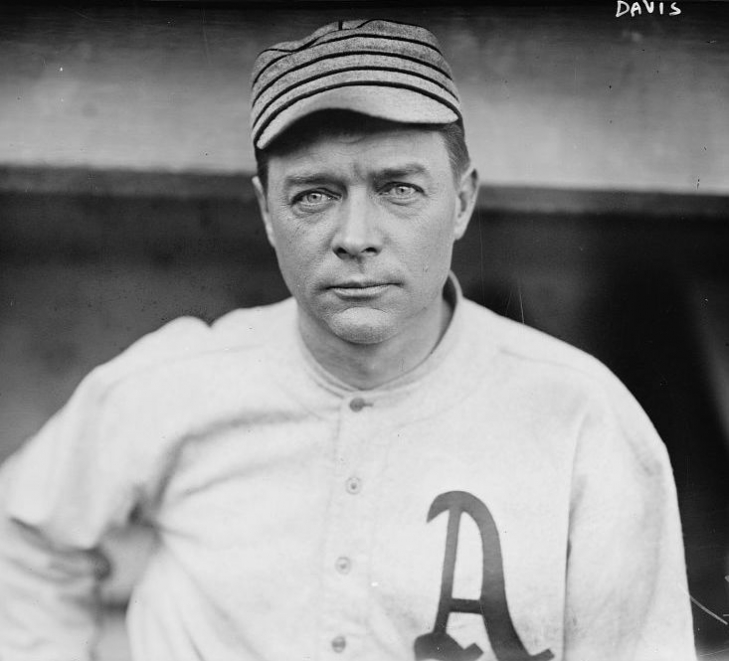
When Connie Mack established his second illustrious Philadelphia Athletics dynasty in the late 1920s, he assembled a roster featuring explosive, free-swinging Hall of Fame-caliber power. Nevertheless, to ensure the effective operation of this formidable lineup, the team required a highly disciplined and intensely focused lead-off batter. This role was fulfilled by Max Frederick Bishop. Renowned for his exceptional and precise strike zone discipline, earning the renowned nickname "Camera Eye”, Bishop’s decade-long service as a ball player who weaponized patience.
In 1924, Bishop secured the permanent starting position at second base, thereby providing Philadelphia with a highly valuable, versatile asset. Had the Rawlings Gold Glove Award been available during the transitional period between the dead-ball and live-ball eras, his collection of awards would have been substantial. He demonstrated an exceptionally flawless defensive technique, integrating superb footwork with an extraordinary sense of timing.
The comprehensive analysis of his defensive worth is substantial: he officially led the entire American League in Defensive bWAR during the 1931 season, ranked within the top ten on six additional occasions, and achieved the highest overall fielding percentage among his positional counterparts on three separate occasions.
Nevertheless, it was his innovative approach at the plate that genuinely perplexed opposing pitching staff. In an era where batters were encouraged to swing aggressively to escape the strike zone, Bishop regarded a base on balls as a home run. Although mainstream publications occasionally mischaracterized him as a light hitter owing to his modest .272 batting average with the Athletics, his capacity to generate offensive opportunities was historically exceptional.
Bishop achieved an impressive .423 on-base percentage over his decade-long tenure in Philadelphia, attaining six top-five positions in the American League OBP rankings. His unwavering patience was exemplified during the 1929 season, when he led the league with 128 walks, consistently creating opportunities for the formidable hitters behind him.
This distinctive blend of a low-variance foundational skill set and a flawless defensive record served as a pivotal catalyst during the franchise's golden era. Bishop provided stability at the top of the lineup, leading the Athletics to securing three consecutive American League pennants from 1929 to 1931, including consecutive World Series championships in 1929 and 1930. He participated in all 18 of those intense Fall Classic contests, executing his defensive responsibilities flawlessly across all 69 chances without a single error, thereby effectively counterbalancing a characteristically modest .182 postseason batting average with a highly profitable .316 on-base percentage.
The profound economic conditions of the Great Depression ultimately resulted in a rapid termination of his tenure in Philadelphia. With the front office urgently seeking liquidity to maintain the franchise's financial stability, Connie Mack arranged a significant roster liquidation after the 1933 season. Bishop was included among distinguished pitchers Lefty Grove and Rube Walberg, and was subsequently traded to the Boston Red Sox in exchange for a substantial cash sum and additional players.
When Barry Zito was called up midway through the 2000 season, he provided the final, mesmerizing piece to a pitching puzzle that would captivate the baseball world. Joining forces with Tim Hudson and Mark Mulder, Zito completed the triumvirate of Oakland’s "Big Three" starting rotation. While his counterpart aces relied on explosive, sinking fastballs to dismantle hitters, Zito operated as a true aesthetic magician on the mound, carving up the junior circuit with a high-arching, 12-to-6 curveball that became the most visually stunning and widely feared weapon of its generation.
His ascent to the highest echelon of major league starting pitchers was remarkably swift. Following an impressive debut period, Zito solidified his status as a top-tier player during the 2001 season, achieving an excellent 17-win record to support the team's wild card pursuit.
The pinnacle of his career was reached during a historic 2002 season. As the leader of the renowned 20-game winning streak that characterized the "Moneyball" era, Zito delivered an exemplary pitching performance. He completely baffled opposing batters, achieving a league-leading 23 victories with only 5 defeats, complemented by 182 strikeouts and an impressive earned run average of 2.75 over 229.1 innings. The national baseball community recognized this outstanding achievement by voting Zito as the 2002 American League Cy Young Award recipient and selecting him for his first of three All-Star Games representing Oakland.
Rather than being a transient highlight, he demonstrated exceptional durability and productivity as the small-market franchise persistently advanced into October contention. Zito accumulated three additional 14-win seasons during his initial seven-year tenure in the East Bay, receiving further All-Star nominations in 2003 and 2006.
Nevertheless, the impending financial considerations of free agency ultimately compelled a geographic relocation across the Bay. After the 2006 season, Zito parted ways with the Athletics to sign a landmark, blockbuster contract with the San Francisco Giants, where he would experience significant postseason successes.
In 2015, following a year of absence from the sport, Zito re-entered professional baseball by signing a minor-league agreement with Oakland. Although he spent most of the summer mentoring prospects in Triple-A, the front office acknowledged his contributions by granting him a September call-up. He participated in only three Major League games during the concluding part of the season, but his final start in the league—a symbolic and emotional contest against his former "Big Three" teammate Tim Hudson provided an ideal, poetic conclusion to his career.
Zito would win 102 Games for Oakland against 63 Losses with 1,098 Strikeouts.
When Tim Hudson emerged in summer 1999, he quickly sparked a new era of baseball in the East Bay. Together with rising stars Barry Zito and Mark Mulder, Hudson led the legendary "Big Three" starting rotation, which would dominate the American League and become the pitching core of the renowned "Moneyball" teams of the early 2000s.
Hudson utilized a dynamic, explosive split-finger fastball and a powerful, biting sinker, establishing himself as a formidable competitor during his six years with Oakland. His skill in consistently producing weak ground balls and navigating high-pressure situations resulted in an impressive 92-39 record and a remarkable .702 winning percentage, making him one of the most efficient pitchers in the sport during that period.
His rapid ascent reached an elite national peak during his sophomore 2000 campaign. Putting on an absolute pitching clinic for the junior circuit, Hudson paced the American League by racking up a magnificent 20 victories against just 6 defeats, carrying a sharp 4.14 ERA over 202.1 intense innings. That dominant display earned him his first career All-Star selection and a brilliant, runner-up finish to Pedro Martinez for the 2000 AL Cy Young Award.
Far from a one-year wonder, he remained remarkably consistent as the franchise's frontline workhorse, anchoring a string of four consecutive postseason appearances for the Athletics from 2000 through 2003. He supplemented his resume with two additional top-six finishes in the Cy Young balloting, placing sixth in 2001 and fourth in 2003, before securing his second All-Star nod in an Oakland uniform during a stellar 2004 season that featured a microscopic 3.32 ERA.
However, as financial constraints in a small market and upcoming free-agent prospects affected the organization, the front office orchestrated a significant transition. In December 2004, Oakland transferred their leading pitcher to the Atlanta Braves as part of a multi-player deal, marking the conclusion of the best chapter in his career.