


Site Admin
11. Sal Bando
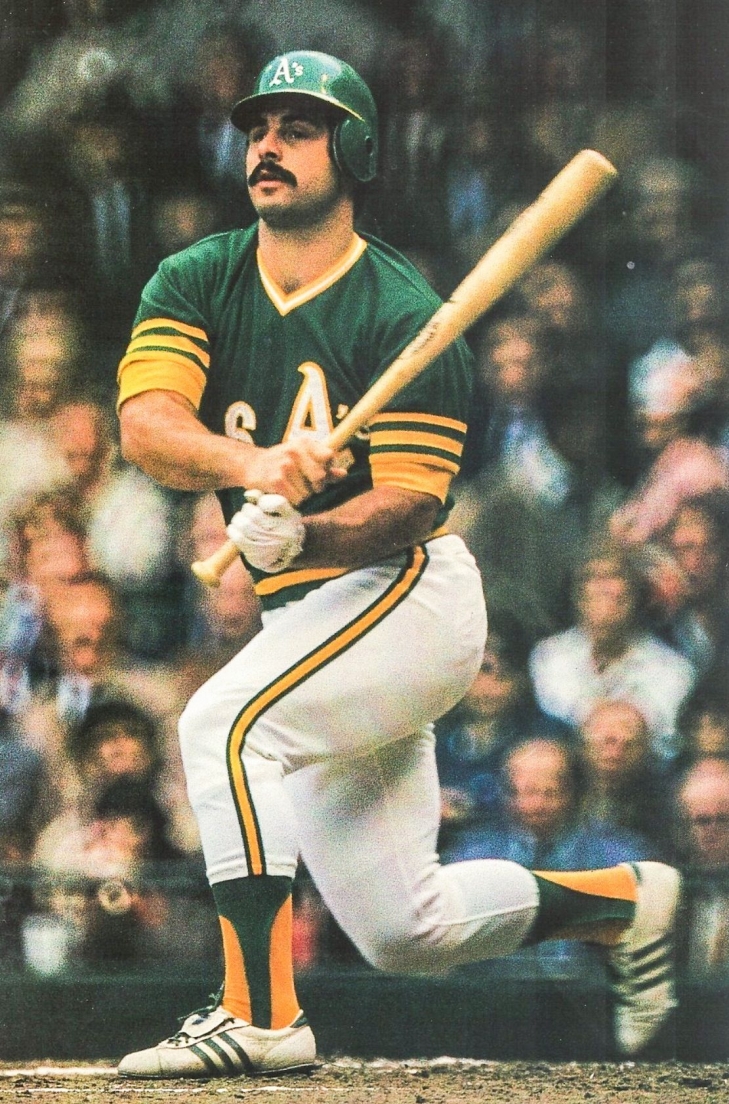
The Athletics’ move from Kansas City to Oakland in 1968 required a steady leadership. Sal Bando, picked in the sixth round of the 1965 draft from Arizona State, became that key figure. He secured the starting third baseman role just as the team settled in California, laying the groundwork for what would grow into one of the most formidable dynasties in modern baseball.
By May 1969, manager Hank Bauer acknowledged Bando's internal leadership, appointing him as team captain. This coincided with his rise to national prominence. That summer, Bando received his first All-Star selection, hitting a career-high 31 home runs and driving in 113 RBIs. He focused on consistent production rather than flashy style, leveraging a disciplined, power-hitter profile. He led by example through quiet leadership while more flamboyant stars made the headlines.
In the early 1970s, Bando was responsible for managing field operations for the renowned "Swingin' A's." Despite the team’s off-field turmoil, marked by roster chaos and public fights, Bando’s role at third base served as a stabilizing influence within the clubhouse. He achieved three straight top-five MVP rankings from 1971 to 1973, including finishing as a runner-up to teammate Vida Blue in 1971. Bando combined a dependable, slick glove with consistent power, surpassing 20 home runs six times during his career, and played a key role in Oakland's historic three-peat as World Series champions from 1972 to 1974.
The heavy workload and the abrasive management style of owner Charlie Finley eventually fractured the core roster. Following the 1976 season, Bando took advantage of the newly minted free-agency system, signing with the Milwaukee Brewers and leaving Northern California with 192 home runs and 1,311 hits in an A's uniform.
Bando was inducted into the Oakland Athletics Hall of Fame in 2022, which occurred just months before he passed away in January 2023.
9. Mark McGwire
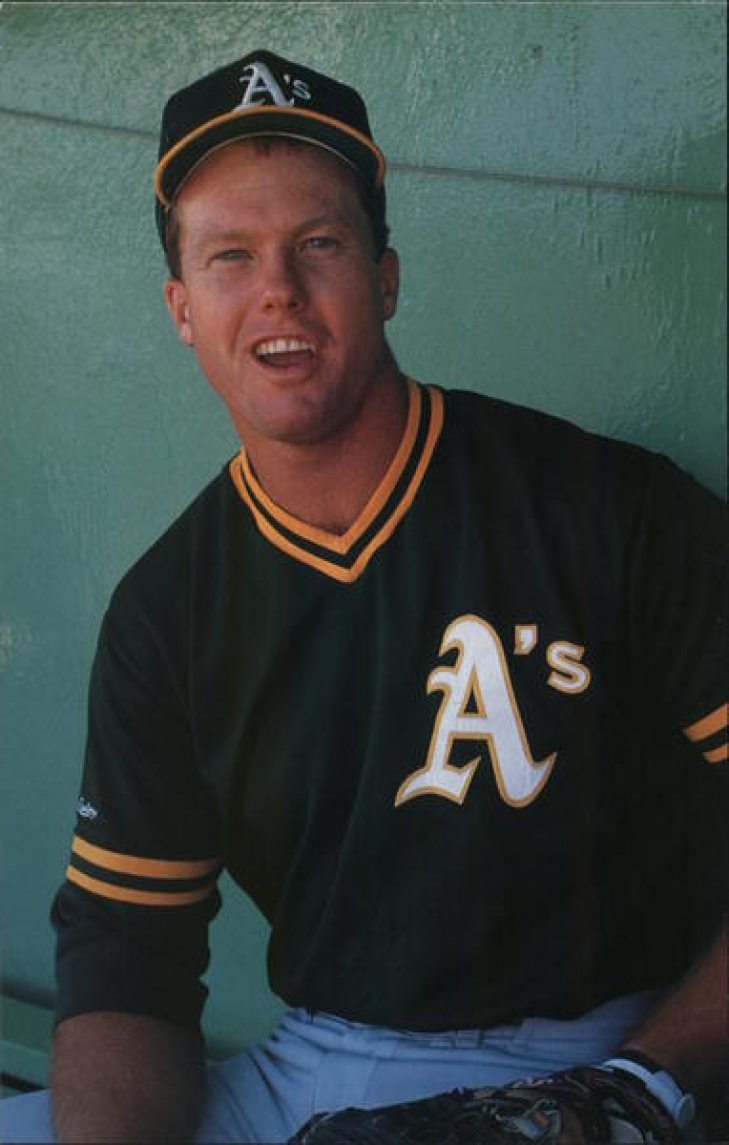
Mark McGwire first entered the Oakland Coliseum clubhouse in August 1986 as a tall, broad-shouldered first baseman, swiftly changing the competitive dynamics of the American League. While his legacy is often linked to his record-breaking single-season home run chase in St. Louis, it was in the East Bay that he truly became a cultural icon. Alongside Jose Canseco, as part of the legendary "Bash Brothers," McGwire was the key offensive force of a team that dominated the late 1980s.
Following an 18-game debut in 1986, McGwire had a groundbreaking breakthrough in the 1987 season, setting a new major league record with 49 home runs, the most in the league. This outstanding achievement earned him the American League Rookie of the Year Award by unanimous vote, establishing the Athletics as a powerful, high-energy force in the lineup. His performance demonstrated that this was not a one-time event, as he followed up with three straight 30-homer seasons, helping Oakland win three consecutive American League pennants and successfully sweeping San Francisco in the 1989 World Series.
Although he received a Gold Glove for his defense in 1990 and hit 42 home runs in 1992, persistent heel and back injuries greatly limited his playing time, causing him to miss most of the 1993 and 1994 seasons. Once he was fully healthy again, his hitting power returned strongly. In 1996, he achieved a career-high by leading Major League Baseball with 52 home runs and posted a league-best .730 slugging percentage, showcasing his powerful hitting when in top form.
As McGwire neared free agency and the Athletics, in the midst of a rebuild, looked to the future, the front office faced a tough choice: trading the franchise legend to the St. Louis Cardinals in late July 1997 for three pitchers. During his time with Oakland, McGwire hit 363 home runs and achieved a .551 slugging percentage. He was also selected as an All-Star nine times while with the team. In 2019, Oakland inducted him into their Hall of Fame.
7. Reggie Jackson
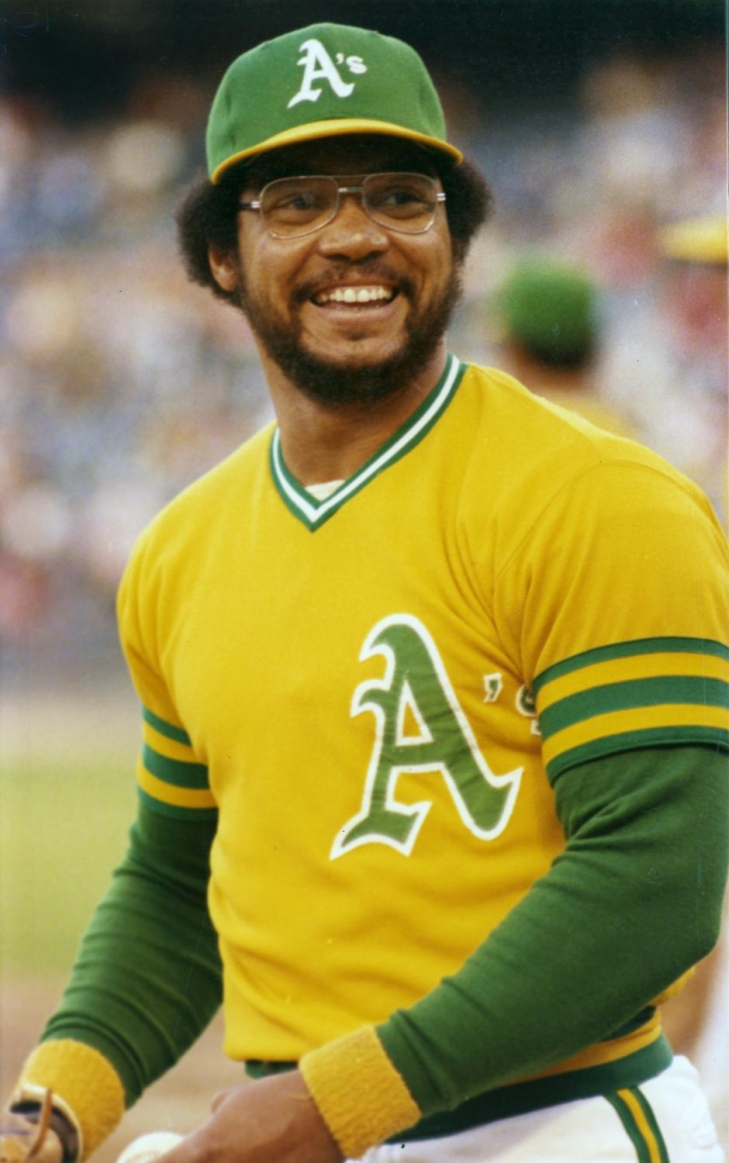
Reggie Jackson joined the organization in 1967, bringing incredible talent right from the start. He made his debut during the team’s last days in Kansas City and quickly became the heart of the lively "Swingin' A's" era in Oakland. Famous for his powerful, corkscrew swing that either sent the ball soaring for a home run or led to a strikeout, Reggie was truly one of the most captivating personalities in baseball.
Reggie Jackson came up with the A’s when they were still in Kansas City (1967), and he would become a starter the following year when the franchise relocated to Oakland. That year would show precisely what everyone should forever expect from Jackson. He went deep 29 times and led the AL in Strikeouts, but he was always a must-watch at bat.
In 1968, during the franchise's first year in Oakland, Jackson achieved a landmark by hitting 29 home runs, marking the arrival of a new kind of superstar who was not only a talented athlete but also a captivating showman. He continued to soar in 1969, delivering an impressive first-half performance that had him on track to challenge the all-time home run record, and he finished the year with 47 home runs and 118 RBIs.
Between 1970 and 1972, Jackson smoothly transitioned from a promising young slugger to a strategic leader guiding a rising powerhouse. Though he missed part of the 1972 postseason due to a high-stakes injury from stealing home in the ALCS, his outstanding regular-season performance, culminating in 25 home runs and 80 RBIs, was the key reason the Athletics made it to the Fall Classic and began their championship journey. By 1973, he had firmly established himself as a top run-producer, blending impressive power with a refined eye for drawing walks, paving the way for his unanimous MVP season.
Jackson achieved his peak in Oakland in 1973, giving us a season that still stands as a proud record for the franchise. He topped the American League in home runs (32), RBIs (117), and slugging percentage (.531), earning him the well-deserved title of American League MVP, chosen unanimously. Following this incredible season, he shone brightly in the playoffs, guiding Oakland to back-to-back championships and earning World Series MVP honors after hitting .310 and smashing a crucial home run in Game 7. He was a key figure in a team that celebrated a historic "three-peat" from 1972 to 1974, showing that his athletic talent was at its best when a championship was at stake.
His tenure in Oakland would end when he was due to become a Free Agent, and the A's Owner, Charlie Finley, arranged a trade to the Baltimore Orioles, believing he could not afford to sign him. Jackson’s overall numbers with the Athletics would see him blast 269 Home Runs with a .496 Slugging Percentage.
Jackson would enter the Baseball Hall of Fame in 1993, and in 2009, his number 9 was retired by the team. When the Athletics created their own Hall of Fame in 2018, he was inducted into the first class.
8. Rube Waddell
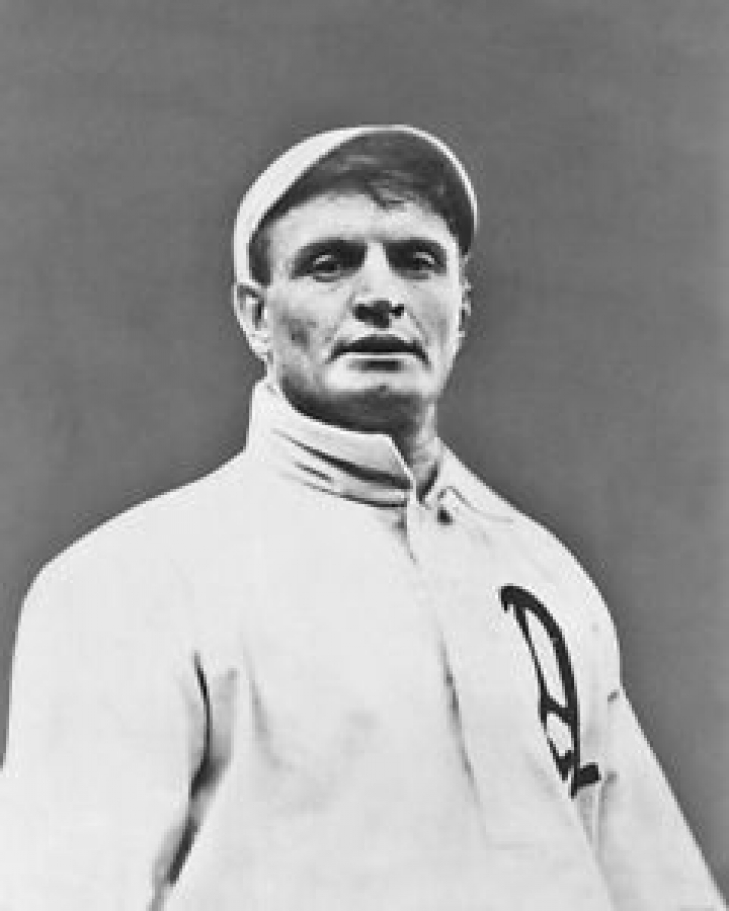
George Edward “Rube” Waddell arrived in Philadelphia in June 1902 under the patient, paternal watch of manager Connie Mack, who had previously managed the brilliant left-hander in the minor leagues. The Athletics were well aware of his reputation as an unpredictable eccentric, but Mack also recognized that beneath the erratic behavior lived a southpaw with unparalleled talent.
His time in Philadelphia was marked by an extraordinary ability to strike out batters, even in an era when contact was prioritized. Waddell set a historic standard by leading the American League in strikeouts during all six of his seasons with the team, including a remarkable 349-strikeout season in 1904 that remained a modern major league record for over sixty years. The 1905 season was his peak, as he achieved the rare AL pitching Triple Crown by leading the league in wins (27), strikeouts (287), and posting a 1.48 ERA. He was a dominant force on the mound, winning at least 20 games in his first four seasons with the team and leading the league in FIP four times.
His extraordinary talent was consistently overshadowed by a chaotic off-field life that often challenged the organization. Waddell's lack of emotional maturity, combined with a serious struggle with alcoholism, frequently distracted from his brilliance; he was known to abandon his team to chase fire engines, play marbles with kids under the stands, or go fishing unexpectedly. The conflict reached a critical point during the 1905 pennant race. After nearly single-handedly leading the Athletics to the World Series, he was sidelined for the entire Fall Classic due to a strange shoulder injury from a locker-room scuffle over a teammate's straw hat, fueling rumors that gamblers had paid him to sit out.
By the end of the 1907 campaign, his high-maintenance lifestyle and deteriorating relationships with his teammates forced Connie Mack’s hand. The Athletics sold the veteran star to the St. Louis Browns before the 1908 season. His personal demons quickly caught up to him, and he was out of the major leagues by 1910. He spent his final years drifting through the minors before his health collapsed, and he tragically passed away at just 37 from complications of tuberculosis and pneumonia.
With the Athletics, Waddell had a 131-82 record, 1,576 strikeouts, and a brilliant 1.97 ERA. Waddell was chosen for the Baseball Hall of Fame in 1946, and forty years later, his name was etched on the Philadelphia Baseball Wall of Fame. The Athletics would also select Waddell for their franchise Hall of Fame in 2021.
