


Site Admin
33. Topsy Hartsel
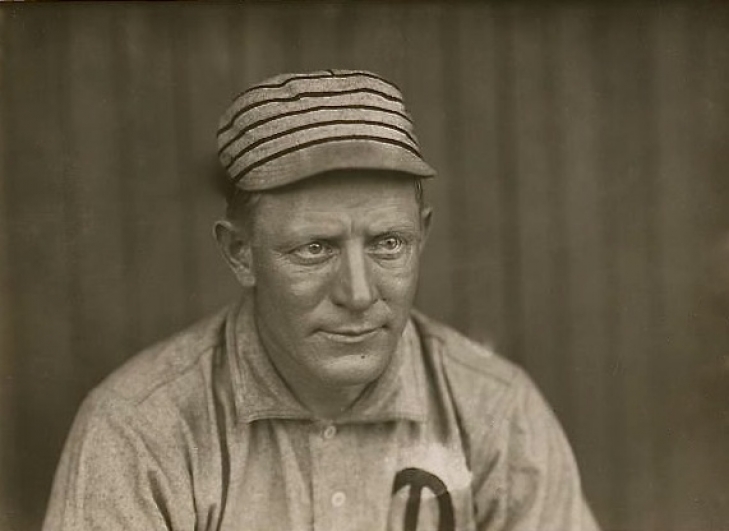
Connie Mack aimed to quickly turn his newly established Philadelphia Athletics into a dominant American League team. He sought a particular kind of player, one who was smart, disciplined, low-maintenance, and unaffected by a deep count. Tully Frederick "Topsy" Hartsel served as the ideal model for this approach.
After an impressive 1901 season with the Chicago Orphans in the National League, where he made 187 hits and maintained a .335 batting average, Hartsel decisively moved to the emerging junior circuit. Mack promptly placed the short, 5-foot-5 outfielder at the top of the batting order, establishing a leadoff strategy that would challenge opposing pitchers for the following decade.
Hartsel demonstrated exceptional proficiency as a leading offensive contributor from the moment he took to the field at Columbia Park. His debut season in 1902 with Philadelphia served as a distinguished example of excellence in the top of the batting order, as he led the American League in runs scored (109), walks (87), and stolen bases (47).
Although a severe hand injury and the inherent friction characteristic of the dead-ball era impeded his ability to attain that astronomical stolen base threshold again, his rapid baserunning continued to be remarkably effective, as he successfully stole double-digit bases in each successive summer through 1908.
Mainstream publications of the era occasionally mischaracterized Hartsel as a light hitter because he crossed the conventional .300 batting average threshold only once while wearing pinstripes, achieving a .309 batting average in 1903. However, evaluating his offensive prowess solely based on hits significantly underestimates his true skill. Possessing an exceptionally disciplined approach within a highly restricted strike zone, an advantage largely facilitated by his modest stature, Hartsel regarded a walk with the same respect as a line drive.
He demonstrated exceptional plate discipline from 1905 to 1908, leading the American League in walks for four consecutive seasons and winning the junior circuit's on-base percentage title twice. His consistent ability to generate traffic resulted in an impressive .402 on-base percentage during this peak period, ensuring that the power hitters batting behind him constantly received intentional bases on balls with runners in scoring position.
While his regular-season volume and sheer patience kept the Athletics in fierce contention throughout the 1900s, his role naturally evolved as Mack’s first great dynasty matured. During the historic 1910 championship run, the veteran outfielder was relegated to a part-time role, appearing in just one Fall Classic game as Philadelphia captured the world title. By the 1911 season, his transition away from the active roster was complete; he spent the summer as a highly respected player-coach under Mack rather than a daily lineup fixture, quietly securing his second World Series ring from the dugout steps before hanging up his cleats.
Hartsel concluded his brilliant ten-year run in Philadelphia with 1,087 hits, 725 walks, and a highly advanced .393 on-base percentage
32. Dwayne Murphy
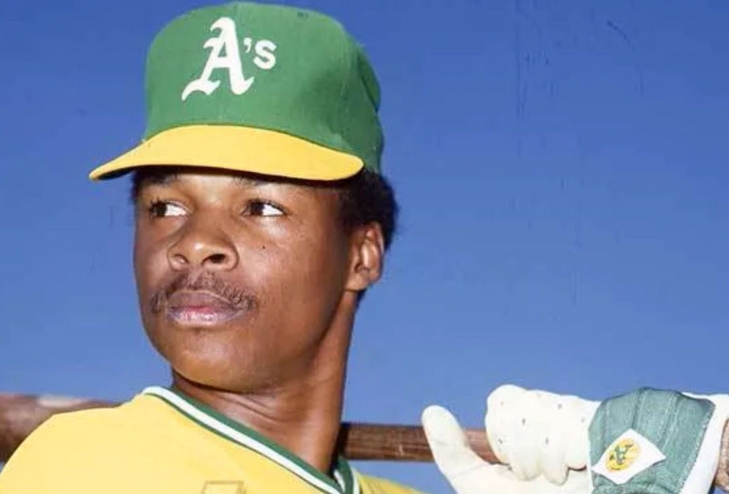
When Dwayne Murphy first appeared for the Oakland Athletics in 1978, his long-term MLB prospects seemed uncertain. Drafted in 1973 as a high school shortstop, he spent five years in the minors sharpening his outfield skills. His initial 60 games in the majors tested his patience, with a sub-.200 batting average that raised doubts about his bat catching up to his speed.
However, the front office persistently believed in his potential. Appointed as the regular starting center fielder in 1979, Murphy quickly developed into one of the most intellectually astute and defensively talented players of his time. His true legacy was built on the field at the Coliseum, where he transformed center field into an almost impenetrable zone for extra-base hits. Murphy exhibited remarkable, fearless athleticism in this position, famously intercepting passes with such speed and intensity that his cap was often blown off during complex plays. His defensive metrics were extraordinary; in 1980, he led all of baseball with an impressive 501 putouts, one of only six seasons in major league history where a center fielder recorded over 500 putouts. This outstanding achievement earned him his first Rawlings Gold Glove Award, beginning a remarkable streak of six consecutive Gold Gloves from 1980 to 1985.
Nonetheless, an exclusive focus on his elite defensive prowess overlooks the distinctly selfless role he fulfilled at the plate. Batsmen who consider only conventional metrics might dismiss his modest .247 career batting average with the Oakland team. However, Murphy demonstrated exceptional mastery of the strike zone, employing superior plate discipline to secure 102 walks in 1980 alone. Playing directly in the second position in the batting order, he functioned as the ultimate strategic protector for his renowned outfield colleague, Rickey Henderson. Murphy engaged in numerous close pitches, deliberately extending counts to afford Henderson the greatest possible space to steal bases and intimidate catchers. Henderson was so deeply appreciative of this strategic sacrifice that, after establishing a new single-season stolen base record with 130 steals in 1982, he publicly remarked that if he could break a base in half, he would give the other half to Dwayne Murphy.
When he was not taking pitches to advance Henderson, Murphy demonstrated an unexpectedly powerful stroke from the left side. He contributed significant middle-of-the-order power to the "BillyBall" era lineups, recording three separate seasons with at least 20 home runs, culminating in a remarkable, career-high 33-homer season during 1984. His tenure in the East Bay concluded quietly following the 1987 season, due to ongoing injuries and roster transitions within the small-market team, which led the front office to grant him free agency. Subsequently, he had brief concluding stints with the Detroit Tigers and Philadelphia Phillies.
He walked away from Oakland having accumulated 999 hits, 153 home runs, and a highly respectable .353 on-base percentage across his decade in the green and gold.
37. Socks Seybold
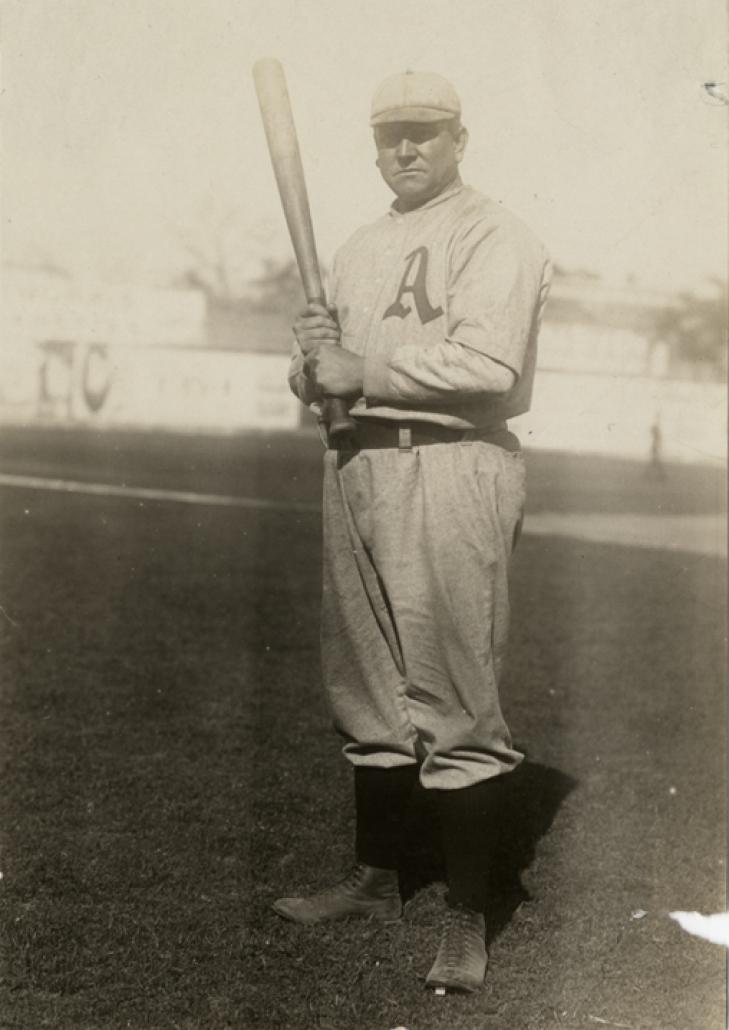
When baseball historians debate the greatest home run champions, Ralph "Socks" Seybold rarely comes up. His career is a collection of historical anomalies.
Seybold was an imposing, burly athlete of the dead-ball era, weighing approximately 200 pounds. Due to his persistent difficulty in maintaining optimal physical condition, he spent nearly his entire twenties performing in minor league teams. Most scouts had entirely dismissed his potential; however, Connie Mack recognized a raw, substantial power that had been overlooked by others. Consequently, he took a chance on the veteran slugger, positioning the 30-year-old "rookie" in left field during the inaugural season of the Philadelphia Athletics in 1901.
Seybold responded to his manager's trust with a stunning offensive breakout. He shut down his critics by posting an impressive .334 batting average, blending his powerful build with a surprisingly smooth swing, quickly earning him hero status among the Shibe Park fans.
The pinnacle of his major league career came in 1902. Seybold excelled in extra-base hits, winning the American League home run title with 16, a record that remained the league's single-season best until Babe Ruth broke it nearly 20 years later. That year, he also achieved a career-high 97 RBIs and maintained an impressive .316 batting average, helping the Athletics secure their first-ever American League pennant.
The natural effects of aging and his ongoing struggle with physical fitness quickly impacted his performance. During the 1908 season, Seybold's abilities declined sharply, and he soon left the major leagues, returning to finish his career in the minors.
He concluded his brilliant, compressed eight-year stay in Philadelphia with 1,066 hits, 51 home runs, and a strong .296 career batting average.
29. Dave Stewart
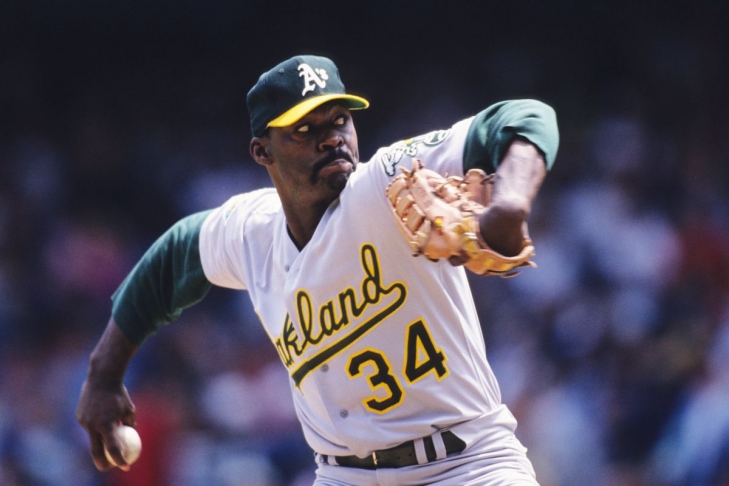
When the front office quietly signed Dave Stewart in May 1986, the transaction did not attract significant notice within the local community. He was regarded as an underperforming journeyman, having been discarded by a struggling Philadelphia Phillies organization that had explicitly released him. Nevertheless, nobody in the East Bay would overlook his potential for long. By reviving a forgotten forkball at the behest of pitching coach Dave Duncan, Stewart achieved an immediate 9-5 record during the latter part of the season, setting the stage for one of the most relentless and industrious periods in modern American League history.
What followed was a relentless four-year period of terror. From 1987 to 1990, Stewart became the team's core, achieving four straight 20-win seasons and leading the league in innings pitched twice. With a fiery fastball and a tumbling forkball, he led the rotation as the team's primary ace, effectively shutting down opposing offenses while Oakland's potent offense provided the support.
His intimidating, hyper-focused "Death Stare" from the rubber became renowned across the nation and contributed significantly to the Athletics securing three consecutive AL pennants. When the regular-season schedule concluded, Stewart elevated his performance to a legendary, high-stakes level. He demonstrated exceptional skill as the definitive clutch performer during the historic 1989 World Series against the San Francisco Giants, dominating the cross-bay rivals to earn the World Series Most Valuable Player (MVP) award and secure the world championship. Throughout that remarkable peak from 1987 to 1990, he consistently received substantial national recognition, achieving four consecutive top-four finishes in the American League Cy Young Award voting.
His iconic Northern California run ended when he signed with the Toronto Blue Jays in 1993, winning a second ALCS MVP and third championship ring, then returned to the East Bay for a final season in 1995 to finish his career.
Assessing Stewart’s position within the franchise history prompts a compelling discussion between conventional standards and contemporary evaluations. For advocates of sabermetrics, his ranking continues to be a matter of debate; advanced statistical models indicate a career-high bWAR finish of only sixth and a single top-ten ranking in seasonal WHIP, excluding him entirely from the top fifty in franchise bWAR. However, using only regular-season spreadsheets doesn't fully capture his true worth. His enormous volume of plays, key victories over top rivals, and unmatched playoff success firmly establish him as one of the franchise's greatest legends.
As an Athletic, Stewart went 119-78 with 1,152 strikeouts and was named to the first class of the Athletics Hall of Fame in 2018. The team would retire his number 34 in 2022.
