


Site Admin
2. Carl Crawford
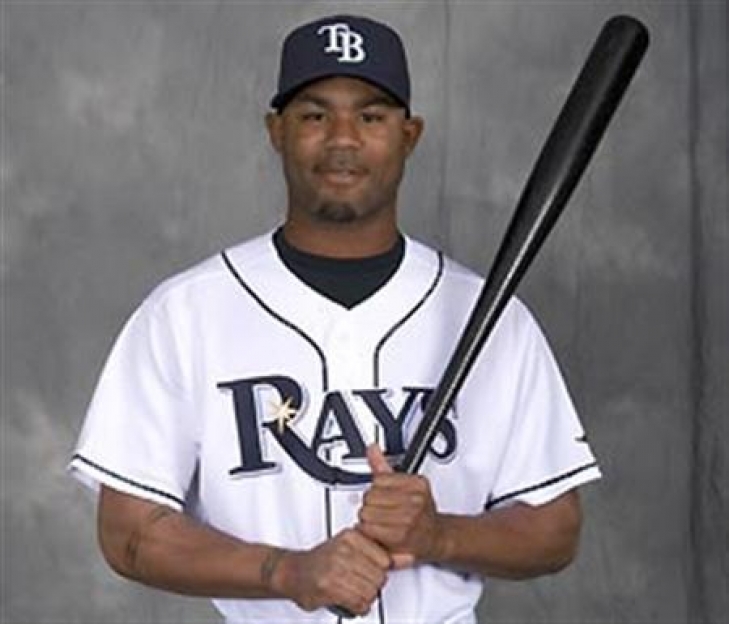
When evaluating the foundational catalyst who first injected pure, electric athleticism into the modern Tampa Bay roster, long before the club became an analytical powerhouse, you have to look directly at the turf-shredding velocity of their premier home-grown speedster. Selected in the second round of the 1999 amateur draft out of high school in Houston, Carl Crawford didn't just climb the minor league ranks; he completely redefined the offensive tempo of the young organization. Making his big-league introduction in the summer of 2002 at just 20 years old, the blazingly fast left fielder embarked on a stellar nine-season residency that fundamentally altered how opponents defended the cavernous outfield grass of St. Petersburg.
His introductory experience in Major League Baseball during 2002 was a brief 63-game period, serving as an initial exposure. However, his subsequent performance in 2003 represented a remarkable and high-velocity breakthrough. Crawford transformed stealing bases and hitting line drives into a disciplined daily routine, recording 177 hits, nine triples, and leading the entire American League with 55 stolen bases. He maintained this vigorous, frontline presence over the following summers, establishing himself as one of the premier high-volume hitters and elite base stealers in all of professional baseball.
From 2004 through 2010, Crawford turned compiling 180-plus hits into an absolute annual certainty, missing the mark only during a frustrating 2008 campaign where an injury restricted him to 109 games. Even in that truncated summer, his high-octane speed remained crucial, helping anchor the outfield during the Rays' improbable, historic run to their first-ever American League pennant and division title.
He was an absolute nightmare for opposing batteries and defensive alignments under the dome, weaponizing his world-class acceleration to lead the American League in triples four separate times (2004, 2005, 2006, and 2010) and topping the junior circuit in stolen bases in three additional campaigns following his rookie breakout.
Crawford’s standout season was in 2010, when he reached career highs with 30 doubles, 13 triples, and 19 home runs. He also drove in 90 runs, scored 110—setting a franchise record—and combined his powerful hitting with excellent defense, earning both an American League Silver Slugger and a Gold Glove. Additionally, he stole 47 bases, helping him secure a seventh-place finish in the league's MVP voting. That rare blend of blistering speed and top-of-the-order hitting earned him massive national reverence, commanding four separate American League All-Star selections—highlighted by an iconic 2009 midsummer showcase where his gravity-defying home run robbery earned him the game's MVP trophy.
This campaign landed him a monumental, $142 million free-agent contract with the Boston Red Sox ahead of the 2011 season.
The transition away from the comfortable marine environment of Florida brought a highly turbulent, painful crossroads; unable to match the skyrocketing performance pressure of New England, severe injuries and debilitating depression took a heavy toll on his mechanics, rendering him a fraction of his former self during subsequent stops in Boston and Los Angeles. While he may never anchor a top historical ranking for the Red Sox or the Dodgers, his monumental legacy with the Rays is completely unassailable. Crawford walked away from St. Petersburg, leaving behind a volume-dense statistical fortress that dominates the organization's archives: a stellar .296 batting average, 765 runs scored, 592 runs batted in, and an incredible 35.6 franchise bWAR, which ranks second behind only Evan Longoria. He remains the all-time, undisputed franchise leader in hits (1,480), triples (105), and stolen bases (409).
1. Evan Longoria
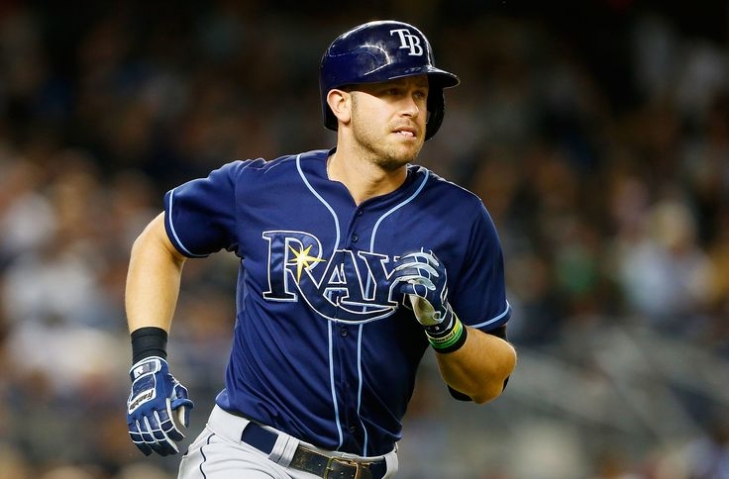
Tracing the complete evolution of the Tampa Bay franchise reveals a pivotal moment when the team shed its "Devil Rays" identity, transforming into a consistent contender. Selected third overall in the 2006 amateur draft from Cal State Long Beach, Evan Longoria took over the starting third base position in St. Petersburg just two summers later. He not only fulfilled expectations but became a star on the big stage, leading an incredible comeback from the worst to the first. During his ten-season tenure at Tropicana Field, the highly skilled third baseman became the franchise's icon, a defensive leader, and the organization’s all-time top run scorer.
His debut in 2008 was truly remarkable, showcasing his immediate impact and strong presence that changed the game for the entire region. Longoria made a habit of producing consistently every day, smashing 31 doubles and 27 home runs, and driving in 85 runs over 122 games. This impressive performance earned him the well-deserved American League Rookie of the Year award and his first All-Star selection. But more than that, his confidence and poise in high-pressure moments helped lift the young team to its first-ever American League pennant and a memorable World Series run against the Philadelphia Phillies.
Longoria established himself firmly among the elite major-league third basemen over the following five years, impressing with his powerful hitting and perfect glove work. He earned back-to-back All-Star selections in 2009 and 2010, using his formidable right-handed swing to win a Silver Slugger Award in 2009 after hitting 33 home runs and amassing a career-high 113 RBIs.
Defensively, he excelled at third-base defense, using quick reflexes and a strong arm to earn consecutive American League Gold Glove Awards. Apart from a limited 74-game season in 2012 due to injury, Longoria consistently hit over 20 home runs each summer, surpassing 30 twice, and finished sixth in AL MVP voting in both 2010 and 2013.
Local fans will forever cherish his iconic moment from the final night of the 2011 regular season—hitting a legendary walk-off home run in the 12th inning against the Yankees, sealing "Game 162" and securing a postseason spot for the Rays. He maintained that prominent presence through the 2017 season, earning his third Gold Glove that summer, before the front office made a decisive move by trading their key player to the San Francisco Giants in December to manage future financial commitments.
Longoria walked away from the Suncoast, leaving behind a monumental statistical fortress that stands as an unassailable foundation of the franchise record books. He remains the all-time, undisputed Rays franchise leader in an astonishing array of categories, including games played (1,435), doubles (338), home runs (261), runs batted in (892), and bases on balls (569).
15. Trea Turner
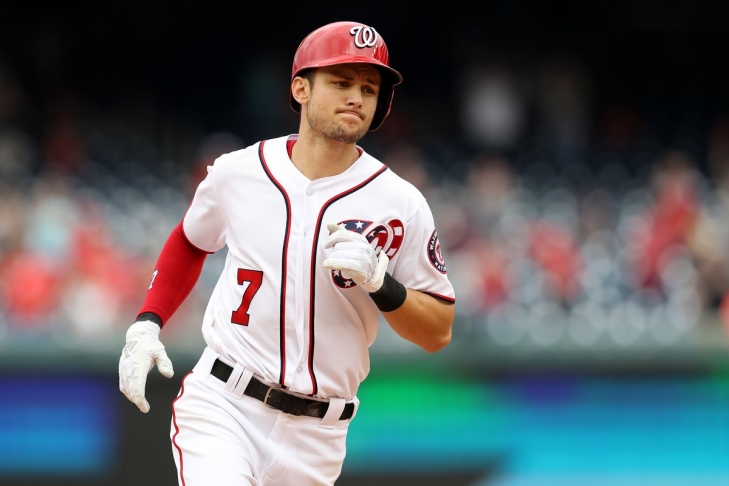
Trea Turner's departure from the Washington Nationals is still a topic that sparks a lot of discussion and change in the team's history. If the team hadn't decided to make big changes at the 2021 trade deadline, he probably would have been a key player for many years. Coming from North Carolina State, Turner was an incredible athlete with lightning-fast speed that kept the opposing team on their toes and made Washington’s batting lineup a real challenge.
His journey to Washington involved an unusual wait. Drafted in the first round of 2014 by San Diego, he was soon traded to the Nationals in a large three-team deal. He had to wait until June 2015 due to a technicality involving a "Player to be Named Later.’ After a brief 40-at-bat introduction in August, Turner delivered a remarkable rookie season in 2016. Ignoring traditional development paths, he hit .342 with 13 homers and 33 stolen bases in just 73 games, playing both second base and center field—finishing as a close runner-up to Corey Seager for NL Rookie of the Year.
Once permanently installed at his natural shortstop position, Turner became the ultimate elite table-setter. He weaponized his elite speed to swipe 46 bases in 2017, then commanded the entire National League in 2018 by leading the league in plate appearances (740), at-bats (664), and stolen bases (43). His relentless baseline chaos became a fundamental gear during the legendary 2019 World Series run; Turner hit a robust .298 and stole 35 bases, providing an indispensable spark at the top of the order that carried the Nationals directly to their historic first-ever World Series banner.
While the strike-shortened 2020 schedule forced a compressed calendar, Turner completely paralyzed Senior Circuit pitching by leading all of baseball with 78 hits, pacing the league with four triples, and finishing an impressive seventh in the NL MVP voting.
In the 2021 season, he reached a historic peak with his offensive performance. Turner compiled an impressive .322 batting average and 21 steals over 96 games, earning his first career All-Star selection after years of waiting. However, with free agency approaching and the team undergoing a full rebuild, the front office traded the star shortstop and ace pitcher Max Scherzer to the Los Angeles Dodgers in a blockbuster deal in July. Turner carried his hot streak to Southern California, securing the 2021 National League batting title with a.328 average and leading the league with 195 hits.
As a National, Turner had 769 hits, 128 doubles, 32 triples, 93 home runs, and 293 RBIs. He posted a .300/.356/486 slash line (121 OPS+) and stole 192 bases.
50. Leon Roberts
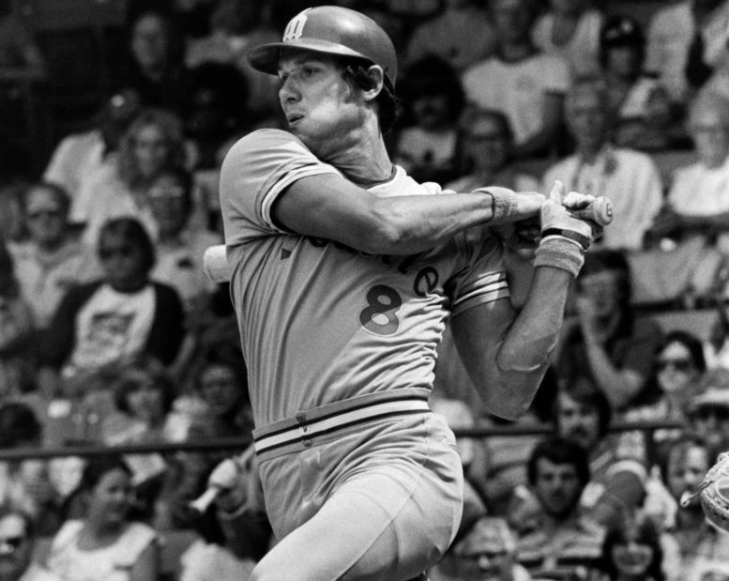
The fact that Leon Roberts managed an 11-year major-league career is a minor medical and athletic miracle. As a child, he accidentally stabbed his right eye with a jackknife, leaving him with a severe focusing impairment in that eye and profoundly broken depth perception in his left. Terrified that a diagnosis would spell the immediate end of his professional aspirations, Roberts hid the injury from every coach, manager, and teammate he ever played with. Yet, despite essentially hitting blind in one eye, the 6'3" corner outfielder found a way to survive at the sport's highest level, engineering his absolute professional peak in the Pacific Northwest.
Acquired from the Houston Astros ahead of the Seattle Mariners' second season in 1978, Roberts walked into the Kingdome and immediately seized the primary everyday role in right field. Hitting inside a cavernous dome where visual tracking was notoriously difficult for fully sighted batters, his level-headed determination turned him into the expansion franchise's premier offensive constant.
Roberts’ introductory 1978 campaign in Seattle was an absolute masterpiece of individual defiance. Slashing a magnificent .301/.364/.515, he thoroughly dominated opposing American League pitching to collect career-high benchmarks with 142 hits, 21 doubles, 7 triples, and 22 home runs. Roberts didn't just accumulate empty volume; he was a highly efficient, high-leverage engine for the young Mariners. Pacing the entire 1978 lineup with a career-high 92 RBIs, his .301 batting average placed him a brilliant sixth overall in the American League batting race.
While the physical toll of grinding through modern schedules and adjusting his mechanics caused his offensive numbers to trend downward over the subsequent two summers, Roberts remained a vital piece of the team's structural depth. He gritted his way through 140 games in 1979, contributing 122 hits and 15 home runs to help support a transitioning lineup. He backed that up by appearing in 119 games during the 1980 campaign, securing 94 hits and reaching double-digit home run territory yet again with 10 long balls. His ability to maintain a regular role despite his sensory hurdles stood as a powerful testament to his fierce competitive character.
Following the 1980 season, the front office made a massive strategic calculation to reshuffle the roster, sending Roberts to the Texas Rangers as part of a monumental, 11-player blockbuster trade package. He would later navigate subsequent major-league chapters with the Blue Jays and Royals before retiring in 1984 to embark on a successful second career as a minor-league manager.
With Seattle, Roberts compiled 358 hits, 63 doubles, 47 home runs, and 179 RBIs across 393 games.
