


Site Admin
44. Tino Martinez
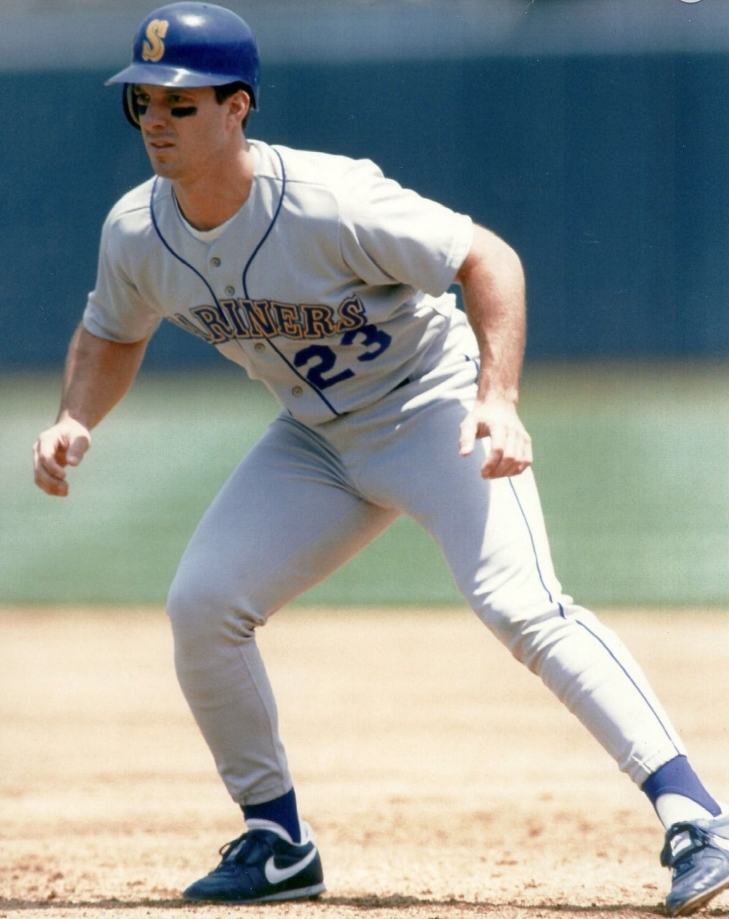
Tino Martinez was an excellent college baseball player at the University of Tampa and a Gold Medalist at the Seoul Olympics. Martinez was a first round pick (14th Overall) in 1988, and he would debut with Seattle in 1990.
48. Ken Phelps
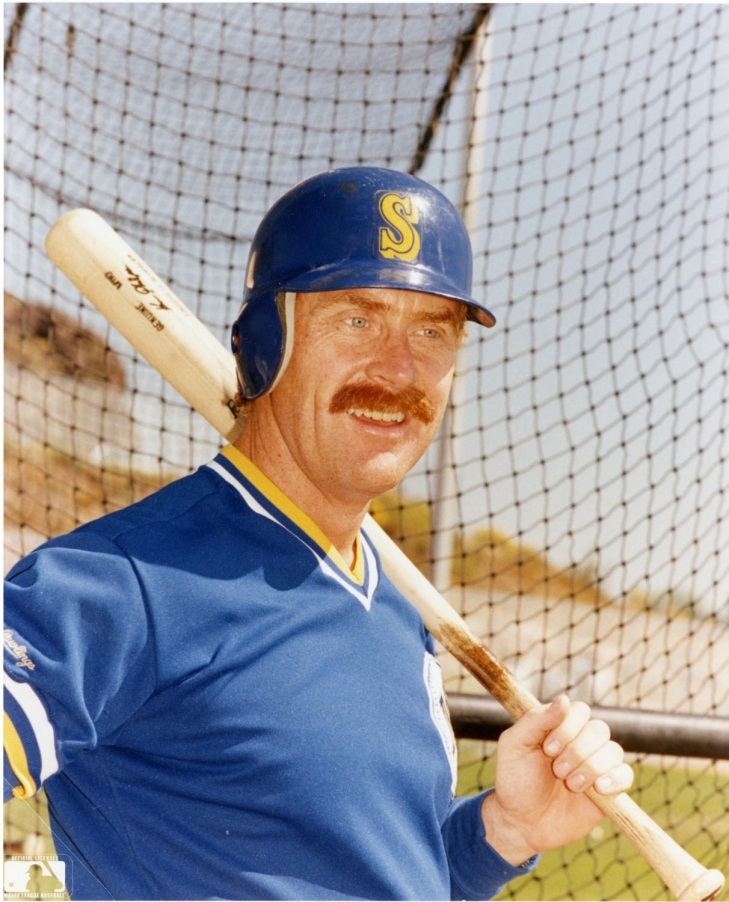
Long before modern analytics transformed front-office decisions, Ken Phelps exemplified what would become known as "Moneyball." During a time when raw batting average and physical build were the main metrics, the mustached, slow-footed slugger was often misunderstood by traditional scouts. They saw a defender who struggled and a player batting around .240 as a platoon candidate. However, those who looked deeper recognized a more dangerous talent: an efficient hitter with an exceptional strike zone sense and a remarkable ability to change the game with one swing.
In March 1983, the Mariners traded for Phelps from the Montreal Expos, giving him a platform to showcase his unique skills. Although he seldom faced left-handed pitchers, he effectively utilized his platoon role against right-handers as a key advantage. While he didn't accumulate many hits, his ability to draw walks was exceptional. Phelps broke the .400 on-base percentage barrier twice during his Seattle tenure, including a remarkable .434 over 72 games in 1988, making him a tough out for pitchers trying to navigate the bottom of the Seattle order.
When he wasn't discarding his bat and heading to first base after a walk, Phelps was busy hitting long shots over the Kingdome walls. He had an impressive three-year run of power from 1984 to 1987. He hit 24 home runs in both 1984 and 1986, with a strong 1985 season where he posted a .521 slugging percentage in limited plate appearances. His best regular season came in 1987, when he hit a career-high 27 home runs, drew 80 walks in just 120 games, and achieved a remarkable .916 OPS.
On July 21, 1988, the Mariners' front office executed a notable mid-season trade, sending 33-year-old Phelps to the New York Yankees in exchange for 23-year-old outfield prospect Jay Buhner. Although Phelps quickly suffered a significant decline after reaching the Bronx, Buhner flourished into a fan-favorite, hitting 40 home runs for Seattle. This trade created a remarkable imbalance, so much so that it was later famously referenced in a memorable episode of Seinfeld.
He finished his six-year Seattle stint with 353 hits, 105 home runs, and 245 RBIs, boasting a .392 on-base percentage and a.507 slugging average over 520 games.
41. Dave Valle
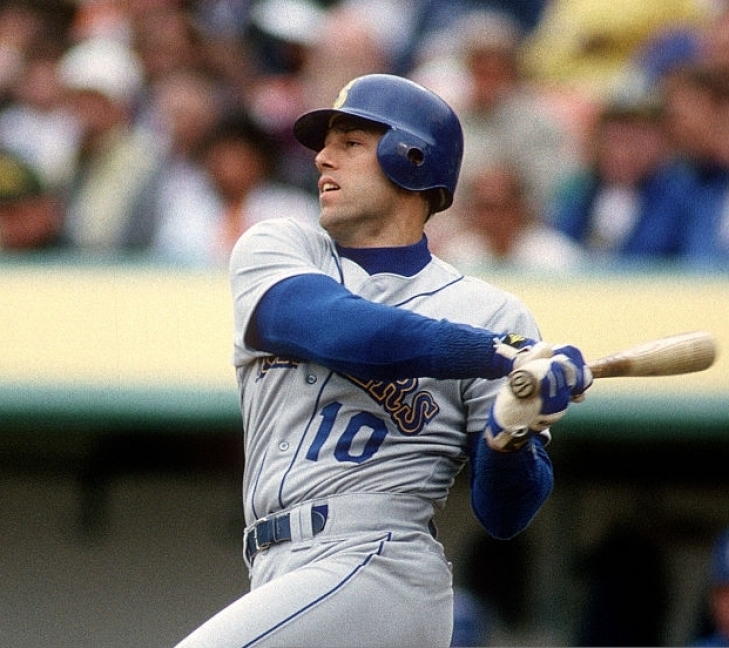
While the late 1980s and early 1990s Seattle Mariners were marked by exciting young talent, having a dependable, hardworking player behind the plate was essential for managing the demanding MLB schedule. For ten years, Dave Valle offered the Pacific Northwest consistent, defense-oriented stability. Drafted in 1978, the New York native spent years working through the minors before debuting in the majors in September 1984. After three seasons sharing catching duties in a competitive rotation, Valle took over as the main catcher in 1987 and maintained that role firmly.
Valle was never expected to be a power hitter for the middle of the lineup. He was mainly valued for his glove rather than his batting. His offensive stats were modest—with a top on-base percentage of .328 in 1990—though he occasionally delivered clutch hits from the bottom of the order. He hit double-digit home runs in both 1987 (12) and 1988 (10), making it harder for pitchers to overlook him. However, the Mariners valued him more for his skill in managing pitchers and suppressing base stealers than for his batting line.
Valle’s last season in Seattle was his finest defensive performance. In 1993, he dominated American League running games, leading all Junior Circuit catchers in caught stealings (57), putouts (881), double plays, and range factor. Highlighting his game-calling skills, he was the catcher guiding Chris Bosio during a historic no-hitter in April that year.
Following his standout 1993 defensive season, Valle became a free agent, signing with the Boston Red Sox and ending his Seattle career. He finished with 558 hits, 61 home runs, and a 6.1 Defensive bWAR over ten years.
46. James Paxton
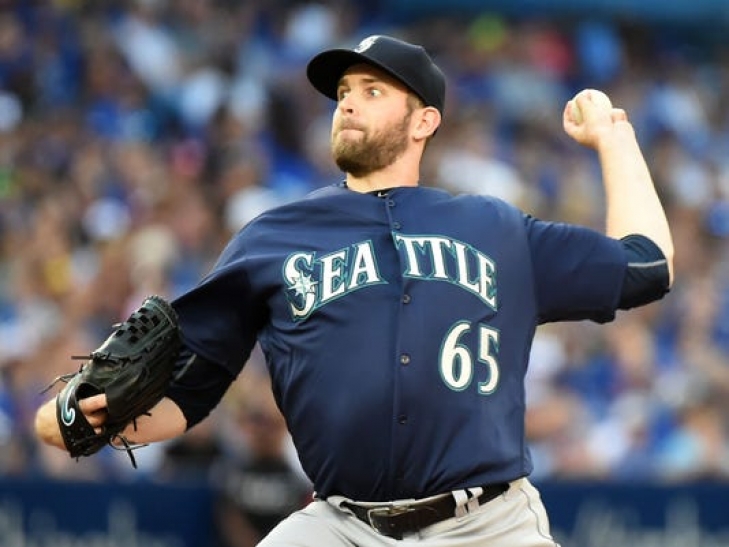
The vast shadow cast by "The Big Maple" continually sparks a blend of awe and ‘what-if' questions for sports fans in the Pacific Northwest. At 6'4" with a powerful left-handed throw, James Paxton had an arsenal of raw talent that, on any night, could break down any Major League Baseball team. Drafted out of the University of Kentucky in the fourth round of 2010, the British Columbia native made his debut in late 2013 with an impressive 3–0 appearance, immediately showing the high-energy potential that set him up as the future of the Mariners' left-handed pitching.
Paxton’s story is closely tied to physical struggles. Between 2014 and 2016, he frequently spent time on the disabled list due to various muscle strains and finger injuries, limiting his playing time and resulting in a modest 15–15 record within the organization. However, in 2017, when his body finally aligned, he delivered an outstanding performance. Over 24 starts, he relied on a powerful high-90s fastball and a sharp cutter to achieve a remarkable 12–5 record, a top-tier ERA of 2.98, and 156 strikeouts.
On May 8, 2018, Paxton made a historic mark in Canadian sports history. Pitching against the Toronto Blue Jays on his home turf, he threw a remarkable 99-pitch no-hitter—becoming the first Canadian-born major leaguer to achieve a no-hit game in Canada. He maintained this exceptional form throughout the 2018 summer, recording a career-high 208 strikeouts over 160.1 innings, and finishing with an 11–6 record. As the front office shifted toward a complete rebuild, GM Jerry Dipoto traded Paxton to the New York Yankees that winter, capitalizing on his peak value in a major blockbuster deal.
Following a 15-win season in the Bronx and injury setbacks, Paxton returned to Seattle on a one-year deal in 2021. Unfortunately, his homecoming was brief; he pitched only 1.1 innings before tearing his ulnar collateral ligament, ending his season and prompting Tommy John surgery. After stints with the Dodgers and Red Sox, Paxton retired from Major League Baseball.
In Seattle, Paxton had a 41–26 record, 3.42 ERA, and 617 strikeouts in 103 starts.
