


Committee Chairman
How to Place Your Bets for the Rugby World Cup 2023
As the new year reeled in, it will be another eventful for rugby aficionados. With the new games for the 2022-2023 season of rugby, fans are now trying to figure out who will be the new winner of the Rugby World Cup 2023. The league teams never fail to showcase new strategies and talents in every game each season, so fans also look forward to how their favorite teams will perform this year.
If you're a bettor and think that this year might be the year your favorite team will mark their name in rugby's history, then you might as well take the chance to participate with them.
To help you get started with sports betting online, here are a few things you must remember.
Find A Good Sportsbook
The pandemic has been a significant reason for the rise of sportsbooks. A sportsbook is similar to a bookmaker who handles your bet onsite, except that it's online. This means you can conveniently place your wagers on the internet without visiting the site location during the Rugby Cup.
Reliable gambling sites such as this website hold a license indicating their legitimacy in accepting and handling bets from their user base. It's important to note that you must look for them when trying to find a good site to bet on. This is because if a sportsbook doesn't hold any licenses, you'll risk being a victim of fraud and losing all your precious money.
You must be attentive to every sportsbook site and carefully search their interface.
Determine What Bets You Can Place
After studying the current favorites for the Rugby World Cup 2023, you should carefully decide what bets you can place. Aside from selecting the right team, you must also carefully choose the bet type you'll be playing since it can also affect the amount of money you can pay out and your winning chances.
To give you an idea of what types of bets you can place, here are the most popular ones commonly offered by most sportsbooks.
- Match Betting. As its name suggests, outright betting is a simple type of Rugby game betting type. This betting option involves choosing the team you think will win the Rugby World Cup.
- Handicap Betting. This is known as the Point Spread wager in other sports. The sportsbook will present a spread that the favorite should cover. Similarly, if you bet on the underdog, they must only lose less than what the sportsbook has presented or straight-up win the game to beat their odds. This wager might sound complicated, but it brings home a relatively good payout and becomes enjoyable over time.
- Over/Under Betting. This type of betting involves the combined final scores of the match. It's about putting stakes on whether the final scores would go beyond what the sportsbook has presented or less than that. You'll then be required to place your wager in 'over' or 'under' bets to seal your bet. However, if the sportsbook's score and the final score end up equal, then the bets will be considered a push.
Deposit to Your Bankroll
Once you're all settled on what bets to place, it's not time for you to deposit on your bankroll. The bankroll would be the money you've prepared solely for betting. In other words, it's the total amount that you're prepared to lose when things go south.
Furthermore, there are various payment channels for a sportsbook. It's best to carefully consider what payment method you'll be using because a good payment channel can serve as an extra layer of security for you.
For instance, before you can deposit to your bankroll using Visa or MasterCard, they will first ask for confirmation from the card user via inputting the OTP or your PIN. If the system deems it unsuccessful, no transaction will be processed, and sometimes they can freeze your account if there are sketchy actions.
On the other hand, if you want to protect your identity, you can consider opening your own e-wallet since many sportsbooks now accept this as their mode of payment. It's a relatively secure payment channel that requires only your name, contact number, and email (optional) upon signing up. If worse comes to worst, hackers won't be able to get important information from you.
Stop Before You Lose Anything
Most importantly, when placing your wagers, you must remember to gamble responsibly. You must not be overwhelmed by a winning streak or getting excited about the huge payout. Keep a grip on yourself and prevent losing control of yourself from betting. It's best to keep track of the wagers you placed and take a step back when you hit your limit.
Also, avoid thinking about "redeeming" yourself if you hit a losing streak and reformulate your strategy by halting your betting activities. You'll never really know when you can get back what you just lost, and playing continuously might end up exhausting your bank. Stick to your budget and stop if you reach your limit, regardless of whether you win or not.
Final Thoughts
Betting in one of the most important rugby tournaments would be a great experience as a fan. If you can participate, take it and prepare everything necessary. Remember that the preparation part is crucial because betting combines luck and skill. Luck alone would decrease your chances of winning. As such, keep tabs on the tips mentioned above to get you started with sports betting online.
Notinhalloffame NBA Cup Standings Update (190)
If you are a regular visitor at Notinhalloffame.com, you know that we created the Notinhalloffame NBA Cup, where in every regular season game, we award points (5-4-3-2-1) to the top five performers. This is the third year that we have done this, and Denver’s Nikola Jokic won the first two.
To keep everyone regularly in the loop this time, we have decided to give regular updates, starting at when the first player cracked 100 Points, and tell all of you the top ten. We will this going forward with every update as the first player breaches the elevated ten-point threshold afterward.
Here is the current top ten, based on the first player to breach 190 Notinhalloffame Cup Points:
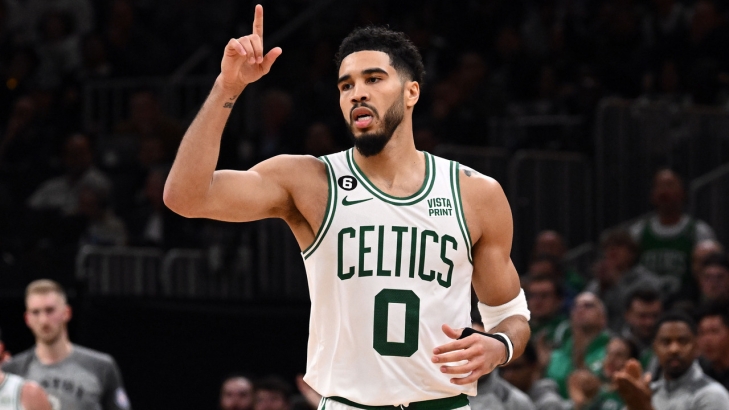
1. Jayson Tatum, Boston Celtics, 190 Points: 49 Games, 31.1 PPG, 8.7 RPG, 4.4 APG, 1.1 SPG, 0.7 BPG, 24.6 PER, 7.3 WS. (#2 on last ranking)
Tatum moved back to the top, and while he is not at the top of any stat line, he is the biggest star on the NBA’s best team. He has never finished with a PPG over 30, but he has that currently (31.1). This could be an MVP season for Tatum.
2. Luka Doncic, Dallas Mavericks, 186 Cup Points: 46 Games, 33.4 PPG, 8.9 RPG, 8.3 APG, 1.5 SPG, 0.5 BPG, 30.3 PER, 8.8 WS. (#1 on last ranking)
Doncic drops to number 2, and we can argue that he is also fallen behind Tatum, the player ahead of him, for MVP consideration. The European superstar is second in PPG (33.4), fourth in APG (8.3) and is second in VORP (5.1) and Win Shares (8.2). His PER of 30.3 also ranks him second. Statistically, he is ahead of Tatum, but that might not matter if Tatum’s Celtics finish that much higher than Doncic’s Mavericks.
3. Shai Gilgeous-Alexander, Oklahoma City Thunder, 175 Cup Points: 47 Games, 30.8 PPG, 4.8 RPG, 5.6 APG, 1.7 SPG, 1.1 BPG, 27.1 PER, 7.8 WS. (#3 on last ranking)
Gilgeous-Alexander is going to be an All-Star this year, and is shattering last year’s averages, which were already good. How great will this Canadian be?
4. Giannis Antetokounmpo, Milwaukee Bucks, 173 Cup Points: 40 Games, 31.8 PPG, 12.2 RPG, 5.3 APG, 0.8 SPG, 0.8 BPG, 27.9 PER, 5.2 WS. (#5 on last ranking)
The two-time MVP is healthy and playing his best basketball of the year. The “Greek Freak” is positioning himself back in the MVP talk and is third in PPG (31.8) and second in RPG (12.2)
5. Ja Morant, Memphis Grizzlies, 170 Cup Points: 43 Games, 27.4 PPG, 5.8 RPG, 8.3 APG, 1.0 SPG, 0.3 BPG, 23.8 PER, 4.8 WS. (#6 on last ranking)
Morant is the face of the Grizzles, and he is posting similar numbers from last year, when he took Memphis to the next level.
6. Nikola Jokic, Denver Nuggets, 169 Cup Points: 44 Games, 25.1 PPG, 11.0 RPG, 10.0 APG, 1.4 SPG, 0.6 BPG, 32.1 PER, 9.9 WS. (#3 on last ranking)
Jokic dropped three spots, though that was more from sitting out a game while others around him on this played in more. The two-time and defending MVP winner (and NIHOF Cup Champion) is leading the league in PER (32.1), Win Shares (9.9), VORP (5.6) and Box Plus/Minus (13.1).
7. Joel Embiid, Philadelphia 76ers, 164 Cup Points: 38 Games, 33.5 PPG, 10.1 RPG, 4.2 APG, 1.1 SPG, 1.7 BPG, 30.7 PER, 6.7 WS. (#9 on last ranking)
Embiid is back from a foot issue, and tearing it up. He took over from Doncic the PPG lead and is second in PER (30.7).
8. Julius Randle, New York Knicks, 156 Cup Points: 52 Games, 24.7 PPG, 10.9 RPG, 4.1 APG, 0.7 SPG, 0.3 BPG, 20.9 PER, 6.0 WS. (#8 on last ranking)
Randle continues to climb the list, and currently has a higher PPG (24.4), as his All-Star year two years ago (24.7).
9. Trae Young, Atlanta Hawks, 154 Cup Points: 46 Games, 27.0 PPG, 2.9 RPG, 9.9 APG, 0.9 SPG, 0.1 BPG, 21.6 PER, 3.6 WS. (#10 on last ranking)
Young moves up one spot, and is the face of an intriguing Hawks squad.
10 (Tie). Kevin Durant, Brooklyn Nets, 153 Cup Points: 39 Games, 29.7 PPG, 6.7 RPG, 5.3 APG, 0.8 SPG, 1.5 BPG, 26.8 PER, 6.4 WS. (#5 on last ranking)
The Nets were on fire, and Durant was posting his best numbers over the past three years. K.D. is now on the injured list with an MCL injury, and will miss a month, that will cost him the MVP and of course, the NIHOF Cup. He dropped three spots from out last update.
10 (Tie). LeBron James, Los Angeles Lakers, 153 Cup Points: 41 Games, 30.2 PPG, 8.5 RPG, 7.1 APG, 0.8 SPG, 1.5 BPG, 25.1 PER, 4.6 WS. (Not on last ranking)
Well look who climbed into the top ten! King James is here, and as always plays his ass off every night. If he stays healthy, he should be able make the top five by season’s end.
Our next update will happen after the first player breaches 200 Cup Points.
History of Poker: From the First Players to the Poker Hall of Fame
Poker is one of the most popular card games in the world, loved by both casual players and passionate gamblers. It's a good bet that you've heard of it, but do you know the history behind this classic card game?
While poker has been most popular among casino attendees, it is also known by card game fans all over the world. It can now even be played at home without physical cards with the help of online casinos, like the one you can access on the Luxury Casino Login page. Read on to learn a short history of the game and some of the most famous names in the field.
Origins and Early History
Poker has been around for centuries and has had a long history in America. It dates back to the 19th century, when it was first played by Native Americans and then later by settlers who traveled westward from Texas and Louisiana into California. However, this version of the game’s origin is not final, with many researchers arguing that it may have Persian or French roots.
The earliest known reference to poker comes from English actor Joseph Cowell’s description from 1829. After that, it was mentioned in the 1837 edition of Foster's Complete Hoyle. In the course of the 19th century, the game spread across the US, gaining more popularity at the beginning of the 20th century.
First Competitions
Professional poker players have been around for just as long, with the first tournaments drawing considerable crowds.
The World Series of Poker (WSOP) began in 1970 as a small satellite tournament at Binion's Horseshoe Casino in Las Vegas. The first incarnation was a small gathering that took place at Binion's Horseshoe Casino in Las Vegas. It was only meant to last one day, but because it was such a success, they decided to make this an annual event.
It wasn't until 1972 that it became an annual event, but by this point, people from all over were competing against one another for thousands of dollars in prize money. Now, it’s one of the largest poker tournaments in history—with more than a million entrants each year.
The formation of the World Series of Poker may have further cemented professional poker players into the public’s consciousness. The WSOP has inspired other notable tournaments that have come after its creation: The European Poker Tour, Asia Championship of Poker, and the Asia Pacific Poker Tour Macau Grand Prix all share some similarities with their predecessor, but also offer unique challenges to those who participate in them.
Poker Hall of Fame
In 1979, Benny Binion, designer of the WSOP, introduced an idea that all serious players could aspire to – induction into the Poker Hall of Fame.
Binion’s idea was to create a place where people could go and see the greats of the game. The thought that there would be an official list of players who had done something great in their careers was foreign and exciting at the time.
A number of professional players have made history by winning multiple WSOP bracelets. Some of the most notable multi-bracelet winners are Doyle Brunson, Johnny Chan, and Phil Ivey; all three have won more than 10 bracelets each.
In addition to these three legends, there are many other players who have been able to win multiple WSOP titles throughout their careers. For example:
- Erik Seidel won nine bracelets between 1992 and 2021;
- Daniel Negreanu won six bracelets between 1998 and 2013;
- Barry Greenstein won three bracelets in 2004-2008.
Conclusion
Poker has a rich history resulting in the Poker Hall of Fame as a way to honor the best and brightest players. There are many great professionals who deserve recognition for their contributions to the game we all love so much. Now that the game is easily accessible to everyone in their homes, whether you want to watch tournaments or play it yourself, you can join the development of its history and follow professionals in their successes.
5 Black Athletes Who Are in Favor of Gays in the Industry
Sexuality and athletics are inextricably linked. Throughout history, many black athletes have come out as gay or shown their support for gays. Their unapologetic commitment, courage, and commitment have made them social icons. They give much-needed visibility and voice to the members of the black gay community. A study by Magrath has shown that many active athletes who identify as gay are shown tremendous support and acceptance by society. Although we only know of a few black gay active athletes, there's a sea change of acceptance for black gays thanks to the increasing number of folks showing gay support in the industry.
1. Wade Davis II
Wade Allan is a writer, speaker, activist, and former football player. Nine years after the end of his career, he came out as gay. Wade shared his fears of being out while still nurturing his football career. He was always cautious with his actions and words, worrying about his teammates ever finding out his orientation.
The perspective on the community changed within the industry since Wade retired from his career. Although acceptance by the community isn't at its peak, Wade is working hard to improve it. Davis believes that everyone is responsible for creating a gender-equal and equitable world. He started working within the NFL to create a safe environment for gay players, served as an LGBTQ surrogate for President Obama, and globally addressed matters surrounding sexual orientation in different capacities. Wade insists that who you date shouldn't matter in sports.
You can clearly see throughout the best black gay dating sites that his impact positively affected the black gay community. So many gays see Wade as a role model and inspirator. Thanks to his proactive stance, thousands of black football stans can now use dating sites and social media to come out as gay and proudly date other guys without fear of being judged.
2. Seimone Augustus
Seimone is a real pioneer in basketball and was destined for greatness as a child. She realized her potential and abilities as a young lady in Minnesota. Before retiring in 2020, she had earned a legacy by winning three gold medals in one of basketball's greatest dynasties. She came out in 2012 and was supported by her family but not her community. That motivated her to become a vocal champion for LGBTQ rights and marriage equality in athletics. She speaks freely of her sexual orientation journey and openly expresses her support for gay stars.
She is a forward thinker and an outspoken and unsung activist in favor of the gay within the athletic industry. Working as an assistant coach in LA Sparks, she aims to create a safe space for LGBTQ players and lead them to find the solace and freedom they need.
3. Jason Collins
Collins is a retired professional basketball player who came out as gay in 2013 while still active in the sport. For the 13 seasons he played in the NFL, he served as a center. The reception of his sexual orientation revelation was primarily positive, making him the face of a long-awaited gay movement in athletics sports.
After retiring, he became a vocal LGBTQ equality advocate. He has inspired young gay players to embrace their sexuality and identity.
4. Fallon Fox
Fox is a retired Martial Artist transgender fighter who knows what the rumors' focus is and what hearsay feels like. Fallon was born male but now lives as female. Although Fox is still transitioning, she is the first MMA fighter to come out as transgender. She was five when she first wore a dress, and it felt right. She tried keeping it a secret for years, but eventually, her truth came out.
The sailing became less smooth with the bad reception by her parents. She has tried fighting her way through transgender rights and as a martial artist. It gave her the confidence to voice her support for gays and to participate in LGBTQ pride walks.
5. John Amaechi
John is a British-American psychologist. He played in the NBA before retiring in 2007. After his retirement, he hit the headlines for coming out as gay. As an organizational psychologist, he inspires transformative change for gay clients. John is also a NY Best-selling author, a sought-after public speaker, an executive coach, and a CEO in favor of gays. He has recently inspired gay Premier League footballers to come out by helping them feel comfortable in who they are.
Conclusion
Sports stars in any field want to be remembered for who they are and what they accomplished, not their sexual orientation. Although many players have chosen to live their truths, it does not make them deviant from any other straight player. In the past, identifying as gay in the sports world would be a huge risk to a career. The scene is slowly changing, with more LGBTQ supporters declaring their stand. We hope that in the future, many more gay athletes will come out publicly, and it will be more of the opening of floodgates compared to the current trickle. In the meantime, we have these inspiring examples that have helped many males to accept themselves, get involved in online dating websites for black singles, and enjoy their lives without looking back.
