


Committee Chairman
Sep 18 Update: Notinhalloffame MLB Cup Standings.
It is with great pleasure that we continue the third annual Notinhalloffame MLB Regular Season Cup, and let us explain how this works:
With every single regular season game, we anointed the best five players in the game with descending points, 5-4-3-2-1.
We knew the following:
- The top players for the MLB NIHOF Cup are not always the best in the league, as injuries keep players out of games, and a premium on staying healthy can help pile up points. It also does not hurt to be a top player on an average or mediocre team, as they can amass Cup points easier that elite players on loaded squads.
- In Baseball, it is more common than in Basketball and Hockey for a player to accrue points with a single Home Run in a game, and overall favors position players. Starting Pitchers have a hard time with approximately 30-35 Starts and throwing less innings than in previous generations. This also is true for closers, which is not made for this process.
- Please remember, that this is NOT necessarily who we think were the best players this year, and does not reflect overall consistency. Treat this the way did, as a fun process and more of a compilation of temporary statistical domination.
At present 1,089 (up from 1,076 last week) players have generated at least one Cup Point.
So, MLB players! Get your agents to work winning this into your contracts!
This is the second-to-last update, with standings as of the afternoon of September 25.
1. Shohei Ohtani: Los Angeles Angels, Designated Hitter & Pitcher: (Ranked #1 Last Week)
202 Cup Points, 135 Games, 1.50 Cup Points per Game, 44 Home Runs, 95 Runs Batted In, 20 SB, .304/.412/.654, 10.1 bWAR & 10-5, 3.14 ERA, 167 SO, 1.061 WHIP.
Oh boy. We have said from the start that this is an award built for Ohtani who can compile points in two different avenues, but September saw hm shut down in both of them. Weeks ago, we thought that he built up enough a gap to gold Acuna and Betts at bay, but that no longer seems to be the case. As of this writing, Ohtani is still the American League leader in bWAR (10.1), Triples (8), Home Runs (44), Walks (91), OBP (.412), OPS (1.066), OPS+ (182) and Total Bases (325). Is this enough with a week left to still win the AL MVP? We think so, but not for the NIHOF Cup where two National League stars are likely to overtake him. Oh, the drama!
2. Ronald Acuna: Atlanta Braves, Outfield: (Ranked #2 Last Week)
200 Cup Points, 153 Games, 1.31 Cup Points per Game, 40 Home Runs, 101 Runs Batted In, 66 SB, .336/.415/.595, 8.0 bWAR.
Acuna leads all National League batters in Stolen Bases (68), Hits (210), Runs Scored (143), OBP (.415), OPS+ (167) and Total Bases (372), and he recently joined the 40-40 Club. He is also second in bWAR (8.0), Batting (.336), and (.595). Acuna is also the runaway leader in Power-Speed # (50.4), and it looks like he will overtake Ohtani for #1 in Cup Points before season’s end
3. Mookie Betts: Los Angeles Dodgers, Outfield: (Ranked #3, Last Week)
192 Cup Points, 146 Games, 1.32 Cup Points per Game, 39 Home Runs, 105 Runs Batted In, 13 SB, .309/.410/.590, 8.1 bWAR.
Betts has been on fire over the last month, propelling himself to second in Cup Standings before relinquishing it back to Acuna. In the National League, he took over the top spot in bWAR (8.1) and is in the top four in Batting, OBP, Slugging, OPS, OPS+, Runs, Doubles, Hits and RBIs. Betts is also fifth in Home Runs (39).
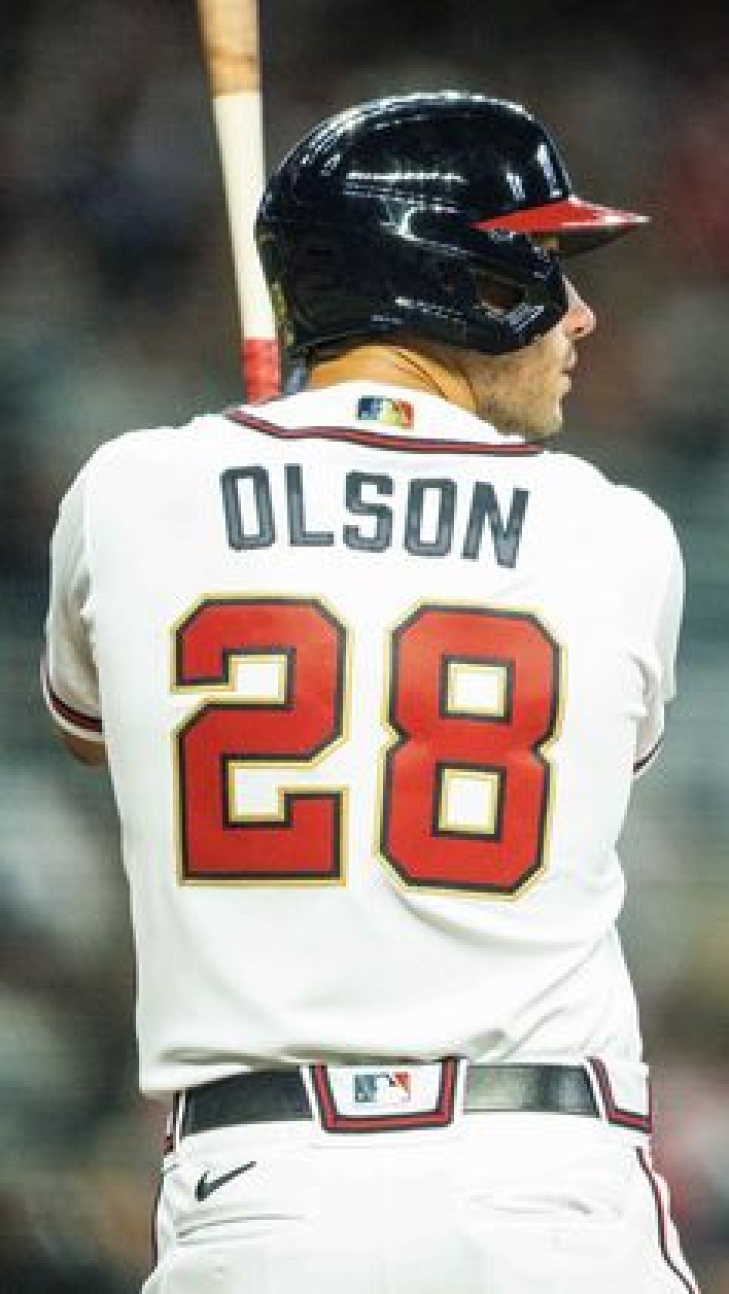
4. Matt Olson: Atlanta Braves, First Base: (Ranked #4 Last Week)
175 Cup Points, 156 Games, 1.12 Cup Points per Game, 53 Home Runs, 133 Runs Batted In, 1 SB, .281/.388/.606, 6.9 bWAR.
Olson has the National League lead in both Home Runs (53), RBIs (1333), and Slugging (.606), and is third in bWAR (6.9) and OPS (.994). He is enjoying the best year of his career.
5. Juan Soto: San Diego Padres, Outfield: (Ranked #7, Last Week)
172 Cup Points, 138 Games, 1.05 Cup Points per Game, 33 Home Runs, 105 Runs Batted In, 11 SB, .273/.408/.514, 5.1 bWAR.
Soto is the National League leader in Walks (137) and is third in OBP (.408), fifth in OPS (.922), and tenth in Slugging (.514). He has also moved up to fourth in RBIs (105) and tenth in Home Runs (33).
6. Freddie Freeman: Los Angeles Dodgers, First Base: (Ranked #6, Last Week)
163 Cup Points, 154 Games, 1.06 Cup Points per Game, 26 Home Runs, 96 Runs Batted In, 22 SB, .332/.408/.560, 6.2 bWAR.
Freeman has the NL lead in Doubles (57), while also currently placing third in Batting (.332) and fourth in OBP (.408), OPS (.968) and Slugging (.560). He is also second in Hits (203) and Runs (125).
7. Corbin Carroll: Arizona Diamondbacks, Outfield: (#8, Last Week)
153 Cup Points, 149 Games, 1.03 Cup Points per Game, 25 Home Runs, 73 Runs Batted In, 50 SB, .285/.361/.508, 5.3 bWAR.
The Diamondbacks have the likely National League Rookie of the Year in Carroll who is in the top ten in bWAR, Runs, Stolen Bases, Batting, OBP and Slugging and is first in Triples (9).
8. Kyle Tucker: Houston Astros, Outfield: (#6, Last Week)
151 Cup Points, 151 Games, 1.00 Cup Points per Game, 28 Home Runs, 109 Runs Batted In, 29 SB, .281/.367/.509, 4.9 bWAR.
Tucker took over the American League in RBIs (109), and in regards to the Slash Line, Tucker is seventh in OBP (.367), eighth in Slugging (.509) and sixth in OPS (.876). He is also in the top ten in Hits, Home Runs, Stolen Bases and Extra Base Hits.
9. Rafael Devers: Boston Red Sox, Third Base: (Ranked #7 Last Week)
150 Cup Points, 135 Games, 1.00 Cup Points per Game, 33 Home Runs, 98 Runs Batted In, 4 SB, .274/.354/.511, 3.6 bWAR.
Devers remains a surprise being so high as he was not in the All-Star Game, nor was considered a significant snub. He and is currently fourth in the AL in RBIs (98), fifth in Home Runs (33) and seventh in Slugging (.511) and OPS (.864).
10. Kyle Schwarber: Philadelphia Phillies, Outfield: (Ranked #9, Last Week)
146 Cup Points, 155 Games, 0.94 Cup Points per Game, 45 Home Runs, 100 Runs Batted In, 0 SB, .197/.345/.472, 0.6 bWAR.
Despite the very low bWAR (0.6) and Batting Average (.197), Schwarber gets on base, has power, and when it matters, he is often clutch. This is his first foray into the top ten, and Schwarber has always been a player that Managers love, providing there is only one of him on the team. He is second in Walks (124) and Home Runs (45) and ninth in RBIs (100). What a strange player to be ranked this high!
Nobody fell out of the top ten.
Our next update will be the final result
45. John David Crow
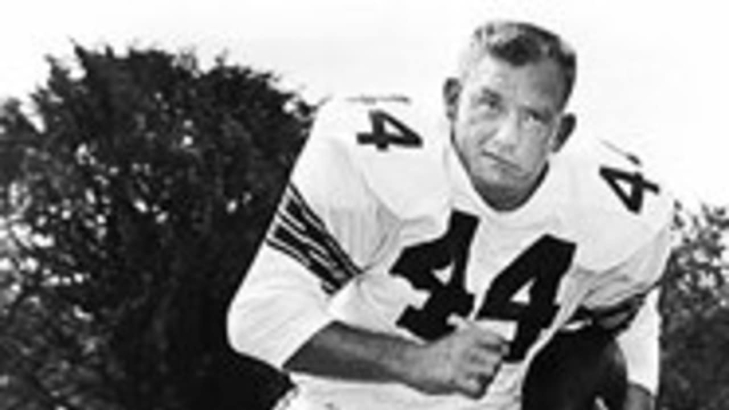
When Bear Bryant famously remarked that if voters didn't award John David Crow the 1957 Heisman Trophy, "they ought to do away with the thing," the college football landscape took notice. The Chicago Cardinals certainly did, selecting the Texas A&M star second overall in the 1958 NFL Draft. After a knee injury limited his rookie campaign to seven games, Crow quickly validated the hype, evolving into one of the most versatile backfield threats of his era.
At 6 feet 2 inches and 220 pounds, Crow possessed rare size and functional power for a 1960s halfback, combining a bruising inside running style with smooth hands out of the backfield and elite blocking ability. Beyond his primary duties, he stood as one of the most lethal halfback-passers in league history, completing 33 career passes for 759 yards and five touchdowns.
His initial breakout arrived in 1959, when he generated 994 scrimmage yards and seven touchdowns to secure his first Pro Bowl selection. However, his game reached legendary status during the franchise's inaugural season in St. Louis in 1960. Crow spearheaded the offense by rushing for a career-high 1,071 yards, averaging an astounding 5.9 yards per carry—while adding 462 receiving yards. His 1,533 yards from scrimmage led the entire NFL, earning him Second-Team All-Pro honors and his second Pro Bowl invitation.
Crow’s physical, violent running style frequently exposed him to severe injuries. He was restricted to eight games in 1961, but responded with a monster rebound in 1962. Pounding the rock in goal-line sets, Crow scored a league-leading 17 total touchdowns (14 rushing, 3 receiving) while racking up nearly 1,000 yards from scrimmage to capture his third Pro Bowl selection in St. Louis.
Crow’s 14 rushing touchdowns in 1962 set a single-season Cardinals record, showcasing the punishing goal-line efficiency that defined his prime years.
Plagued by a knee injury that limited him to three games in 1963 and a quiet 1964 season, Crow departed for San Francisco in 1965. He made one final Pro Bowl as a 49er before retiring in 1968. In seven years wearing the Big Red jersey, Crow compiled 5,450 scrimmage yards and 50 total touchdowns (33 rushing, 17 receiving), earning a spot on the NFL 1960s All-Decade Team.
41. Pat Fischer
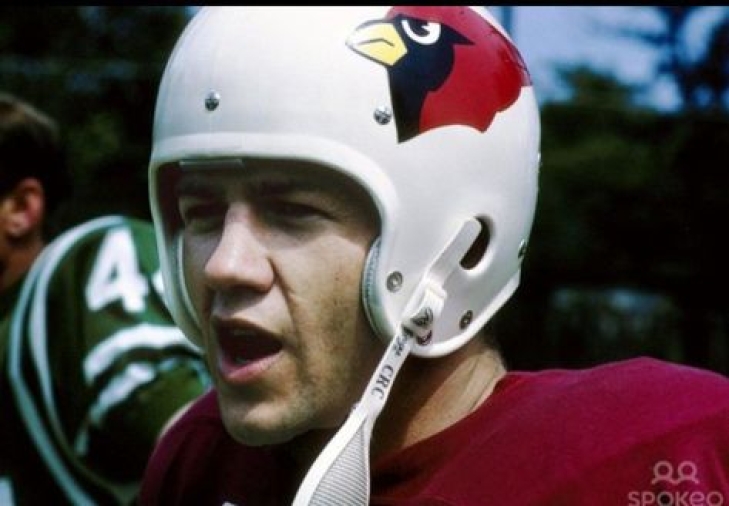
As good as Pat Fischer was at Nebraska, he stood at only 5' 9" and fell all the way to the 17th Round (232nd Overall) in the 1961 Draft. Fischer was barely expected to make the team, let alone win a starting job, but once he did, he would become one of the most seasoned Cornerbacks in NFL history.
Fischer saw more time as a Returner as a rookie, but by his third season, he was a full-time starter at Left Cornerback, pioneering the bump and run coverage and picking eight interceptions in 1963. Fischer had a career-best 10 Interceptions the season after, returning two for Touchdowns. The voters named him a First Team All-Pro, the first and only time that would happen in his career. Fischer would add a second Pro Bowl in 1965, but he was targeted far less after his explosive 1964 campaign, thus seeing his Interceptions drop.
Fischer signed with the Redskins after the 1967 Season and achieved far greater fame. Twenty-nine of his 57 Interceptions were as a Cardinal, though he is best remembered as a Redskin.
The Ethical Dilemmas of AI and Robotics: Navigating the Boundaries of Automation

Although AI is revolutionizing businesses and various management-related processes, it can also have a significant impact on our lives and the way we perform certain tasks. In key industrial domains, artificial intelligence is not only an academic or societal concern; it has also delved into reputational risk for companies.
Imagine you are taking some time off and checking into the Mr. Bet Casino Live action. While you may choose to play with AI-generated croupiers, the personalization that live croupiers offer can hardly be the same. There is always the possibility that Artificial Intelligence will improve your odds of winning. Yet, given that "the casino never loses," does it not offer a risk that AI will be utilized to boost the house edge instead?
Whether it is a leading casino brand, a bank, or any other company, none of them would allow themselves to risk their reputation through the faults of AI ethics. This article navigates the limitations of automation, requiring careful consideration of these ethical problems to enable responsible and inclusive advancement.
The Ethical Tightrope of Artificial Intelligence and How It Impacts People
AI is a big domain of multivariate principles and applications. The prime allure of it stems from its promise of efficiency, productivity, and the capacity to free humans from tedious and repetitive work. AI and robots have already proven their ability to simplify procedures and improve outcomes across several industries across the world, from manufacturing and healthcare to automation and space exploration. Sounds incredible? Maybe it's just because the whole idea of the artificial imitation of the human brain is incredible. No matter how much fascinating this innovation is, it entails several challenges:
- The Black Box Element: Artificial Intelligence is built on machine learning algorithms that process enormous volumes of text input and convert syntaxes into training patterns. This data is used to make predictions. That is not a spell. Because this data would lack human intellect and intuition, there would be nuances and subtleties in communication and language;
- Lack of Transparency: Understanding the logic behind AI systems' judgments is still difficult, and it can be quite complicated without human intervention. This lack of transparency can impede accountability, particularly in vital applications such as healthcare and banking;
- The Trolley Problem: There is a philosophical question behind the ethical dilemma of performing an action that harms someone to save more. It can be related to different subjects, from preventing an accident by robotic cars to managing sensitive content. The circumstances require moral ethics and decision-making, which often pose challenges in building systems based on human brain imitation. Finding a universal answer is the hardest part of addressing a contentious problem;
- Privacy and Surveillance: From security cameras to deep neural networks, as AI becomes capable of face recognition, predictive analytics, and similar roles, it raises concerns for privacy and ethical rights. These cameras won’t ask for permission to take a picture. It is high time to establish a balance between using Artificial Intelligence for security and protecting individual liberties. Strict rules and norms are essential for ensuring that Artificial Intelligence and robots do not breach people's private rights;
- Human-Machine Interactions: The advancement of AI and robotics ushers in a significant shift in human-machine interactions. Individuals may establish emotional ties to robots as they grow more sophisticated and lifelike. This raises ethical concerns regarding the nature of these interactions as well as the possibility of exploitation. These difficulties are addressed by the notion of "robotics;"
- Responsible Autonomy: The proliferation of sophisticated autonomy raises ethical questions about responsibility. It is more poignant in applications such as autonomous weapons and decision-making systems. The ethical dilemma here lies in defining the boundaries of human control over AI, as granting too much autonomy to machines can lead to unpredictable and potentially harmful outcomes. Striking the right balance between human oversight and AI autonomy is crucial to preventing unintended consequences and ensuring accountability.
While machines cannot have a creative or emotional intellect, their immeasurable capability to consume data and perform high-precision tasks can change the course of action. Combining the benefits of automation with the ethical duty to maintain human livelihoods necessitates careful analysis and, perhaps, the establishment of new job and social support models.
Will Machines Take Over Humans?
Even as artificial intelligence has transformed and revolutionized various industries and aspects of human life, it has also brought to the forefront several complex ethical quandaries. The core challenges are rooted in our understanding of autonomy, responsibility, and the very nature of human-robot interactions.
As the human brain imitating technologies and robotics become increasingly integrated into our lives, it invokes the common fear that they will pave the way for the displacement of jobs and a recession. Is that true?
On the one hand, feats of improved efficiency can enhance work experiences and job satisfaction, but the threats of socioeconomic inequality are a pressing concern.
But it is more of a rumor because machines don’t have that core capability to emulate human intelligence, logic, and reasoning. The equipment, hardware, or software can only do what they are programmed to do. This signifies the boundaries of automation.
