


Committee Chairman
Our All-Time Top 50 Boston Celtics have been revised to reflect the 2022-23 Season
Yes, we know that this is taking a while!
As many of you know, we here at Notinhalloffame.com are slowly generating the 50 of each major North American sports team. That being said, we have existing Top 50 lists out and we always consistently look to update them when we can and based on necessity. As such, we are very happy to present our post 2022/23 revision of our top 50 Boston Celtics.
As for all of our top 50 players in basketball we look at the following:
1. Advanced Statistics.
2. Traditional statistics and how they finished in the National Basketball Association.
3. Playoff accomplishments.
4. Their overall impact on the team and other intangibles not reflected in a stat sheet.
Last year, Boston made it to their second Eastern Conference Final, and they are legit contenders to make it there again. There were some significant jumps on the list based on last season.
As always, we present our top five, which was not affected by the last season:
1. Bill Russell
2. Larry Bird
4. Bob Cousy
5. Paul Pierce
You can find the entire list here.
Jayson Tatum only went up two spots to #15, despite a second consecutive First Team All-NBA, but that is more due to the incredible players the franchise has had.
Veteran Center, Al Horford, went up two spots to #22.
Jaylen Brown, who was named a Third Team All-NBA player last year, advanced five spots to #27.
Marcus Smart, who is now with Memphis did not jump from #29. This is not a reflection on Smart’s season, but more of a commentary on how loaded this list is and how hard it is to jump.
We welcome your input and comments and as always, we thank you for your support.
The best bookmakers: what criteria are used for rankings

Today, there are enough sites on the Internet that review the betting market. On these sites you can find a variety of information about individual bookmakers, useful materials for beginners, industry news and much more. Almost every portal offers its own ranking of offices based on various factors. Such lists are a good help for people looking for a reliable betting platform.
All compilers have their own approach to determining the best. A real bookmakers rank is the result of the scrupulous work of experts who have evaluated the advantages and disadvantages of each platform from their own experience. The following points must be taken into account during the analysis:
- quality of customer service on the site;
- accessibility and convenience of the mobile application;
- a variety of sporting events in the betting line;
- the level of odds compared to other bookmakers;
- additional gaming features, such as online casinos;
- bonuses and promotions for customers;
- choice of payment systems and the speed of withdrawal of funds;
- reputation of the company among the gamblers.
Estimates for these and other criteria become the basis for comparing the performance level of offices. Some ratings creators do it easier. They use the top lists of other sites, processing them at their own discretion. There is no particular harm from such “analytics” if a good primary source is processed correctly.
How much can you trust bookmaker ratings?
Any rating is subjective, even if its compilers approached the work as responsibly and impartially as possible. The fact is that everyone has their own priorities regarding key criteria. For example, one person is more interested in the overall diversity of the betting line, while the other looks for the choice of events for the most popular sports. For some, the conditions of the bonus program are of increased importance, while others definitely need access to live video broadcasts. And so on.
The authors of individual bookmakers' ranks depart from objectivity, including companies among the best not according to the “sports principle”. This is usually associated with a financial interest. It is almost impossible to determine whether the compiler resorted to such methods. Even well-known sites help partner bookmakers in this way, so it’s better not to limit yourself to one rating. Comparing several lists will help you immediately see companies that are not regulars in the tops.
Before registering on a selected site, it does not hurt to conduct a small check of your own. It is worth reading reviews about the office on the Internet. The activity of each bookmaker is accompanied by both negative and positive feedback. Studying the comments will help to find out if the office has recently had serious problems that could adversely affect the quality of its service.
The Essentials to be an NFL Fan
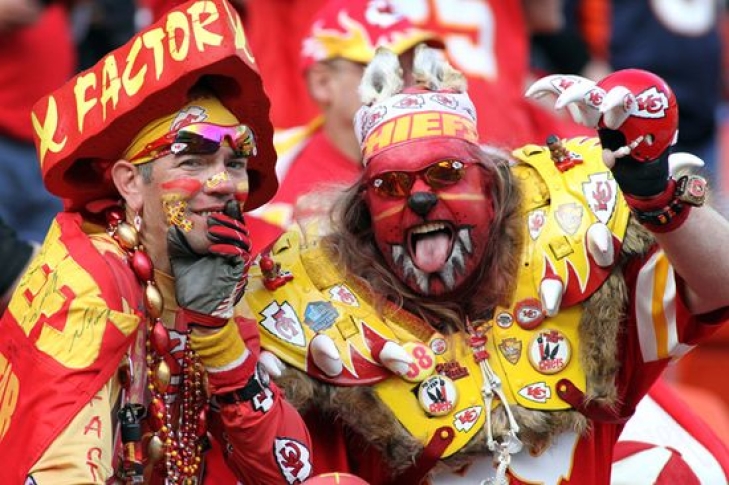
The USA loves sports of all kinds, and there are few competitions more American than the NFL. To hammer that point home, most of the world outside the US refers to the NFL as simply, American football.
It’s estimated almost 75% of US citizens regularly watch American football in some form, whether NFL or college-based competitions. When NFL games are broadcast live on television, audiences of around 16-17 million are commonly recorded.
Around the world, the figures are even higher and around 400 million people globally refer to themselves as NFL fans. When the season-ending showcase event, the Super Bowl, is broadcast, over 150 million people watch inside and outside the USA.
Though some sports do record higher global audiences, these are games played by athletes and teams across several nations. While some American football teams do exist outside the US, these are insignificant in comparison to those nation’s other sports.
While watching the NFL is a ritual ingrained in US culture, new fans around the world are often far less experienced. For true NFL fans, watching a game involves a little more preparation than simply turning on the TV.
Here is our beginner's guide to the essentials everyone needs to become a true NFL fan.
- The team
Don’t panic, we’re not suggesting you ask the bank for millions of dollars to start your own franchise. What we are saying is, you should find an existing club that you can adopt as your own.
Like many things in life, the more you put into sports, the more you get out. We can all appreciate the abilities of the athletes but, for the real experience, we need to be emotionally invested.
By choosing a team to support, we open ourselves up to the highs and lows of winning and losing. Choose based on location, color of jerseys, or some part of the team’s story but choose once, and never change.
- The knowledge
Once you have a team, you need to immerse yourself in the information that will keep you invested in them. Read the stats, learn about the legends, and research the stories, other fans will expect you to know this information.
Once you have the background and the history, you need to keep up to date with the current team news. By knowing the players, their talents, and their injuries, you can be ready for the next piece of the puzzle.
- The odds
Emotional involvement is one thing, but the more you have at stake, the more exciting an NFL game can be. By joining a sportsbook and placing wagers on your team’s games, the watching experience can be heightened even more.
To give this some context, spinning a roulette wheel is always more exciting when you have chips on the table. If you have doubts, try playing a few rounds of Lightning Roulette at Rainbow Riches and see for yourself.
- The merch
Once you know the team, the news, and the odds, you need to demonstrate your allegiance to other people. Pick up a club jersey, scarf, flag, or cap, or anything you can do to associate yourself with your team.
By doing this, you can ensure you’re quickly recognized by fellow fans and rivals so you can interact accordingly. The superstitious among us would also argue that wearing the right outfit is critical to aiding your team’s success.
- The crew
Watching the NFL can be a solo activity, and many people much prefer it that way, but not most. By assembling a crew of like-minded people with whom to watch games, you turn an activity into an event.
Gather together friends, family, or colleagues, and turn game viewing into a social occasion that everyone can enjoy together. This allows you to feed off each other’s energy, and gives you an audience for those witty and insightful observations.
- The set up
Before any game begins, you need to make sure you have everything you need to sustain yourself through it. Beers or sodas need to be in the cooler, snacks in the oven, on the grill, or ordered for delivery.
Chairs need to be positioned correctly around the screen and any mid-game errands should be scheduled for the half-time break. Of course, all this is irrelevant if you don’t have the most important ingredient, which we’ll come to next.
- The TV
If you’re going to watch NFL properly, it should be in HD, with surround sound, on the biggest possible screen. If you have a choice of venue, choose the one with the best TV technology for the greatest viewing experience.
You’ll also need to make sure you have the right broadcast or streaming service for your chosen game. Different matches are offered through different channels in different locations, do your research and preparation in advance to avoid disappointment.
Once you have all this in place, you’re ready to begin your career as a real NFL fan. Now all you need to do is learn to handle winning with humility and losing with grace, if you can.
Why is Don Mattingly not in the Hall of Fame?
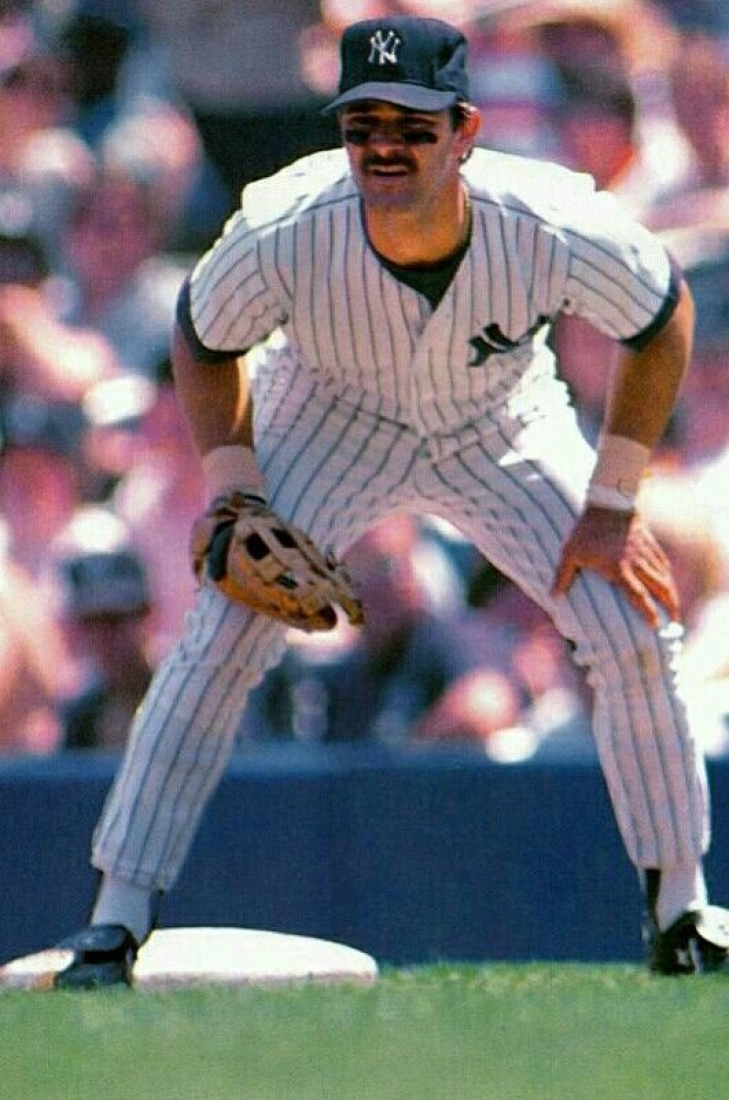
In December 2022, Don Mattingly was, once again, on the ballot to join other legends of the game in the Baseball Hall of Fame, but somewhat unsurprisingly, the former player, manager, and coach missed out yet again, the 15th time he has been on the ballot only to be passed over by those on the 16-strong committee.
On this latest occasion, Mattingly once again didn’t get enough of the required votes from the committee, and just Fred McGriff, 1995 World Series champion, and enjoyed a 19-year MLB career before calling it a day and retiring in 2005.
Despite the remarkable achievements Don Mattingly manifested throughout his career as a first baseman for the New York Yankees, he unfortunately does not grace the halls of the Hall of Fame. Although the MLB scores and standings he achieved, including a .307 lifetime batting average and ranking among the top 10 in the American League in hitting five times, are impressive, they may not meet the longevity and consistency standards typically valued by Hall of Fame voters. Mattingly's career, while stellar, was relatively short due to his injuries. In essence, a Hall of Fame award doesn't just look at the zenith of a player's career, but at the player's sustained performance over an extended period. So, despite Mattingly's undeniable talent and contribution to the game, his exclusion from the Hall of Fame is due to the brevity of his peak performance years.
Mattingly was up against a host of players who were up for a place in the Baseball Hall of Fame, including controversial nominees including Barry Bonds, Roger Clemons, and Rafael Palmeiro, who have all been linked with steroid use and any player who wants to get in, must receive a dozen votes from the 16-person committee.
Don Mattingly got eight, Schilling seven, Dale Murphy six, Bonds, Clemons, and Palmeiro all received less than four votes, as did Albert Belle. On the disappointment of missing out again, Mattingly commented;
“It’s a desire [to be a Hall of Famer],”
“I think every player, it would be something that if you felt like you knew you’ve done enough. Obviously, people look at it as being on the borderline, right? There’s people that voted for you, people that didn’t, different committees put you on, and things like that. So obviously, you’re one of those guys that’s on the borderline.’’
“I don’t know how else to look at it other than you played your cards, proud of my career to an extent,’’
“I know it didn’t end the way I wanted it to as far as production or time. But those are also cards that you’ve been dealt, and you do the best you can with it.” Mattingly added.
Mattingly was a six-time MLB All-Star pick before his career was ended abruptly due to back issues, and he also won nine Gold Gloves and was the American League MVP for 1985. His playing career ended in 1995, and he spent three years as a coach at the New York Yankees before a two-year spell with the Los Angeles Dodgers.
His first managerial role was at the Dodgers between 2011 and 2015 before he moved to join the Miami Marlins, where he enjoyed six seasons in charge, winning the National League Manager of the Year award in 2020.
He took over as coach of the Toronto Blue Jays in 2023, and they are currently third in the American League East with an 81-67 record, and he’ll be hoping to take the team deep into the post-season, something they haven’t managed since losing the American League Champion Series to the Cleveland Indians in 2016.
