


Committee Chairman
18. Al Horford
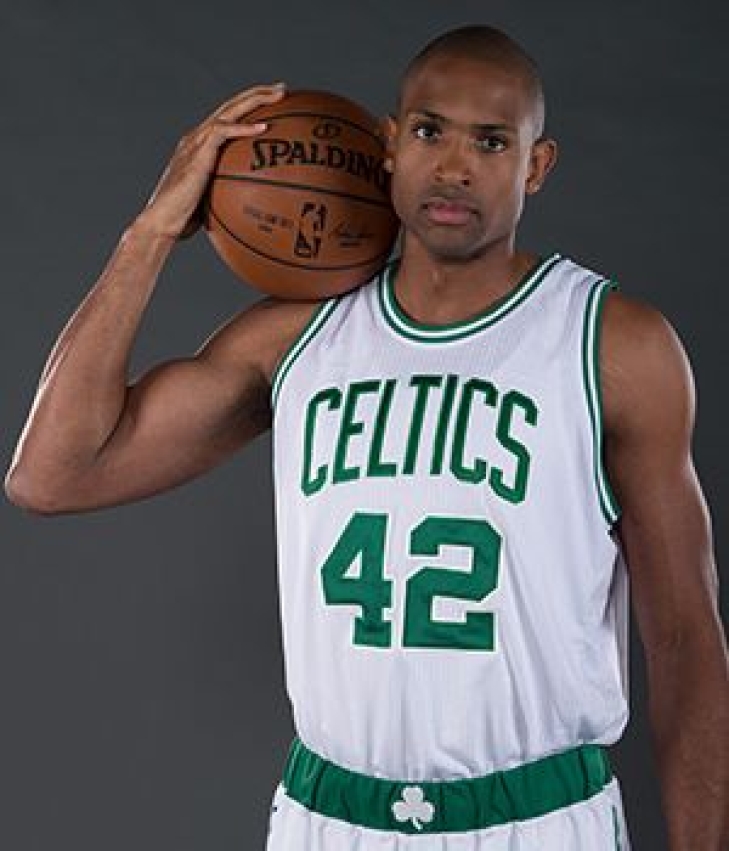
Four times an All-Star with the Atlanta Hawks, Al Horford signed with the Boston Celtics in 2016 with the hope that this would be the team that would earn him his first NBA Championship. It finally happened in 2024.
In Horford’s first season in Boston, he averaged 14 Points per Game. He was a solid defensive player, helping the Celtics push Cleveland to a seventh game in the Eastern Conference Finals. The year after, Horford added his fifth All-Star selection, won Second Team All-Defensive honors, and helped lead his team to the ECF, where they lost to the Cavaliers. After another solid season in 2018-19, where he averaged 12.6 Points and had a career-best .586 in Effective Shooting Percentage, Horford signed with division rival Philadelphia, but that did not end his story in Boston.
The Celtics reacquired Horford, who was now with Oklahoma City, in a trade before the 2021/22 Season, and though the Center was aging, he was still a valuable starter capable of big moments. Horford and the Celtics reached the 2022 Finals, and though he dipped below 10 Points per Game for the first time in 2022/23, his leadership still helped the Celtics make another deep playoff run.
In 2023-24, Horford started in only half of his games, but even with a reduced role, his veteran presence and defensive skills helped Jayson Tatum and Jaylen Brown win it all, with the trio winning their first NBA Championship. Horford played one more year with Boston before leaving for Golden State as a Free Agent.
48. Conrad Dobler
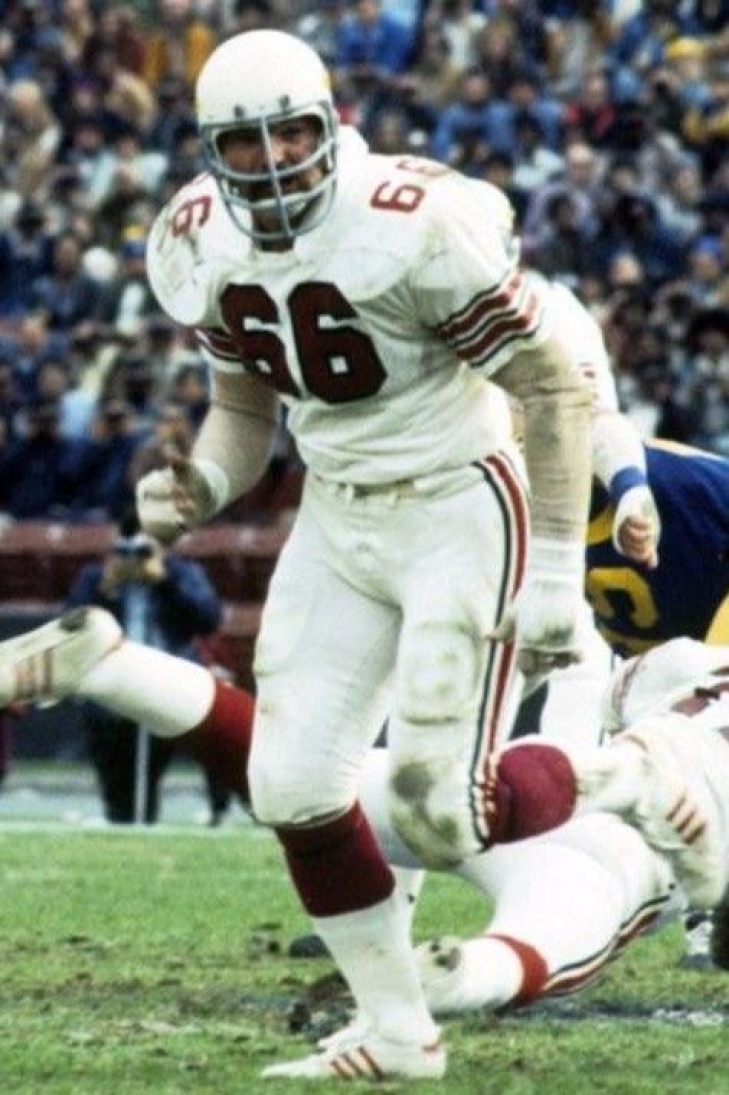
Selected in the fifth round of the 1972 NFL Draft out of Wyoming, Conrad Dobler entered the league as a defensive lineman before transitioning to right guard. Lined up alongside future Hall of Fame tackle Dan Dierdorf, Dobler weaponized mind games, brutal hand placement, and pure physical punishment to become the undisputed psychological villain of 1970s professional football.
Standing 6 feet 3 inches tall and weighing 255 pounds, Dobler approached offensive line play with the aggressive mentality typical of a linebacker. Opponents often accused him of biting, leg-whipping, twisting facemasks, and punching defenders in the pile. His intimidating reputation peaked on the July 25, 1977 cover of Sports Illustrated, which called him "Pro Football's Dirtiest Player.” Despite the controversy, Dobler was also one of the most technically skilled and fierce pass protectors of his time. He was the emotional driving force of the "Air Coryell" line that led St. Louis to consecutive NFC East titles in 1974 and 1975. In 1975, his unit set a then-NFL record by allowing only eight sacks in a 14-game season.
His outstanding performance on the field led to three straight Pro Bowl selections from 1975 to 1977, culminating in Second-Team All-Pro in 1977. Despite some beliefs that his teams faced difficulties, Dobler was a key contributor to the Big Red's impressive 31-11 record during their peak in the mid-70s.
Contract disputes and roster turnover led to a 1978 trade to New Orleans, followed by a final stint in Buffalo, after which he retired following the 1981 season. In six seasons with St. Louis, Dobler appeared in 77 games (73 starts), serving as the unyielding, mean-spirited anchor of the franchise's greatest offensive line.
50. Irv Goode
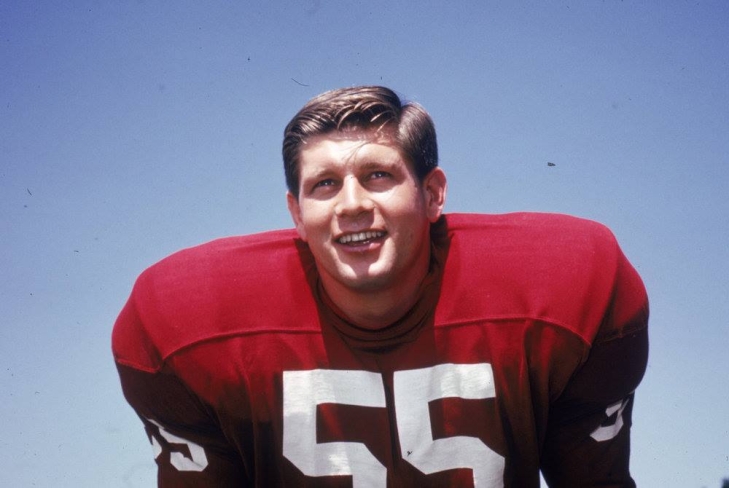
Irv Goode was a beast at the University of Kentucky, which led to his high selection by the St. Louis Cardinals, who nabbed him 12th Overall in 1961. Goode accomplished a rare feat as a rookie, earning Rookie of the Year votes (4th), and though St. Louis was not impressive in the 1960s, the versatile lineman (he played at Left Tackle, Left Guard, and Center) won Pro Bowl honors in both 1964 and 1967.
He would later win a Super Bowl in a reserve capacity with the Miami Dolphins at SB VIII.
47. Freddie Joe Nunn

Freddie Joe Nunn was selected 18th overall from Ole Miss in the 1985 NFL Draft, bringing exceptional speed and athletic flexibility to St. Louis. During his nine seasons with the Cardinals, he was frequently moved between a traditional 4-3 defensive end and a stand-up outside linebacker. This constant position switching, along with playing for struggling teams in St. Louis and Phoenix, kept him out of the national spotlight. However, when allowed to pursue pass rushes, Nunn proved to be extremely effective.
Nunn demonstrated exceptional quickness right from the start, often leveraging a fast first step to consistently beat boundary tackles and turn the corner. Whether he was positioned with his hand in the dirt or in space, his pure speed enabled him to make impactful tackles early, often before the offensive pockets were fully formed.
Nunn reached his peak in 1988 as the franchise moved across the country. During a season focused solely on rushing the quarterback, he achieved a career-high 14.0 sacks in Arizona's first desert season. He then continued with two solid years, recording 11.0 sacks in 1989 and 9.5 in 1990, cementing his role as the defense’s main disruptor.
Despite off-field legal distractions and a roster that struggled to contend in the NFC East, Nunn’s back-to-back-to-back sack totals anchored the franchise's front seven through the late 1980s and early 1990s.
When Nunn departed for Indianapolis in 1994, he held the Cardinals' official franchise record with 66.5 career sacks—a mark that stood for nearly three decades before Chandler Jones finally surpassed it in 2021.
