


Committee Chairman
RIP: Dick Butkus
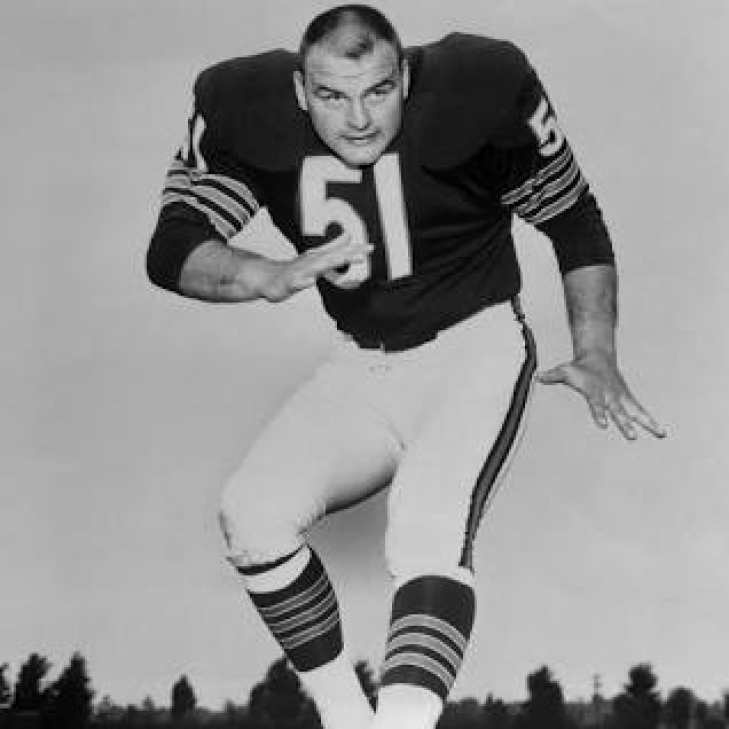
We lost a legend today
Chicago Bears icon, Dick Butkus, passed away today at the age of 80.
A beast at the University of Illinois, Dick Butkus was a two-time All-American who won the Big Ten MVP in 1963. Butkus stayed close to home as a pro, as he was taken with the third overall pick in 1965.
Chicago was not a powerhouse when Butkus played, but he was the reason to pay attention to the team. One of the most punishing tacklers in football history, offensive skill players were quaking with the knowledge that they could be on the end of a Butkus tackle. Butkus would define the middle linebacker position, and his versatility became a standard that only a few have come to match.
Butkus played in the NFL for nine seasons, and was a pro bowler for the first eight and a first team all-pro for five of them. He is also one of a handful of people who won the Defensive Player of the Year twice.
After Butkus retired, he would become a successful actor appearing in many commercials and television shows. He was chosen for the Pro Football Hall of Fame in 1979 and the College Football Hall of Fame in 1983. Butkus was also named to the 1960s and 1970s All-Decade Teams, and NFL 75th and 100th Anniversary Teams.
We here at Notinhalloffame.com would like to extend our condolences to the fans, friends and family of Dick Butkus.
Our All-Time Top 50 Brooklyn Nets Have Been Revised to Reflect the 2022-23 Season

Yes, we know that this is taking a while!
As many of you know, we here at Notinhalloffame.com are slowly generating the 50 of each major North American sports team. That being said, we have existing Top 50 lists out and we always consistently look to update them when we can and based on necessity. As such, we are very happy to present our post 2022/23 revision of our top 50 Brooklyn Nets.
As for all of our top 50 players in basketball we look at the following:
1. Advanced Statistics.
2. Traditional statistics and how they finished in the National Basketball Association.
3. Playoff accomplishments.
4. Their overall impact on the team and other intangibles not reflected in a stat sheet.
Last year, Brooklyn made it to the playoffs, but they lost both Kevin Durant and Kyrie Irving who wanted out, this ending what should have been an NBA contender. There is one new entrant and four elevations.
As always, we present our top five, which was not affected by the last season:
1. Jason Kidd
4. Brook Lopez
5. Vince Carter
You can find the entire list here.
Kevin Durant, who finished the year in Phoenix, went to #13 from #26, and the other of the departed, Kyrie Irving, rose to #17 from #25, which, yes, shocked us too. Remember, this plays more into the team in question and that with so few players who can make an impact, elevating is easy for stars…even disgruntled ones.
Shooting Guard, Joe Harris, who is now with Detroit, went up one spot to #33.
The returning Spencer Dinwiddie, who came back to the Nets in the Kyrie trade, went up two spots to #35.
The lone new entrant is Nic Claxton, who debuts at #40.
We welcome your input and comments and as always, we thank you for your support.
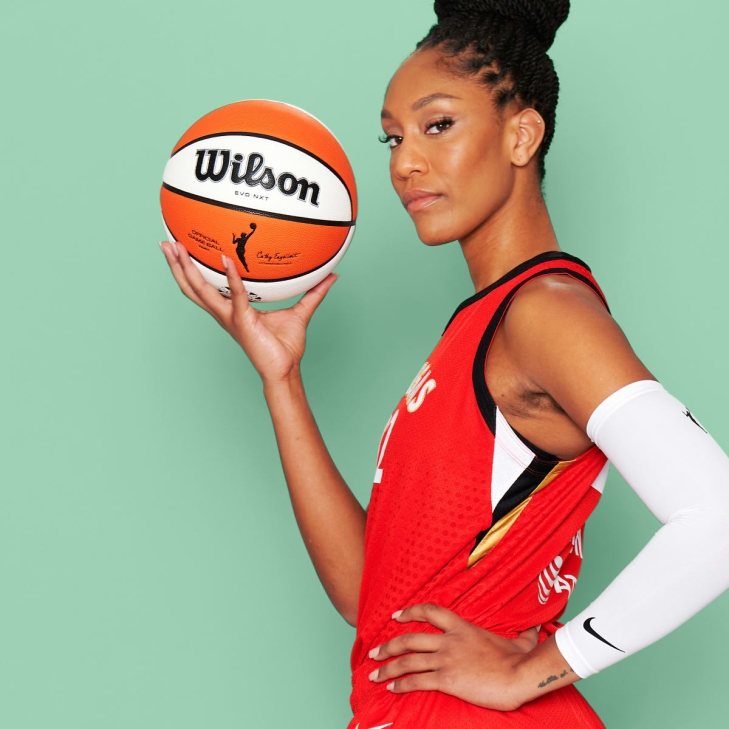
A'Ja Wilson wins the first ever Notinhalloffame.com WNBA Cup
For the last three seasons, we have awarded the NIHOF NBA Cup by awarding the best five players in the game with descending points, 5-4-3-2-1. Obviously, we can’t watch all the games, but box scores and write ups give an approximate idea as to who were each game’s top five.
This year, we decided to the same for the WNBA.
The top players for the WNBA NIHOF Cup are not always the best in the league, as injuries keep players out of games, and a premium on staying healthy can help pile up points. It also does not hurt to be a top player on an average or mediocre team, as they can amass Cup points easier that elite players on loaded squads.
Please remember, that this is NOT necessarily who we think were the best players this year, and does not reflect overall consistency, but snapshots of each game.
Treat this the way did, as a fun process and more of a compilation of temporary statistical domination.
So, like we said the last two years in other leagues, WNBA players! Get your agents to work winning this into your contracts!
Here are the final 2023 top ten rankings for the WNBA NIHOF CUP:
PLEASE NOTE THAT WE ARE INCLUDING THE COMMISIONERS CUP FINAL IN CUP POINTS.
1. A’Ja Wilson: Las Vegas Aces, Forward:
149 PTS, 41 Games*, 3.63 Cup Points per Game, 22.8 PPG, 9.5 RPG, 1.6 APG, 1.3 SPG, 2.2 BPG, 32.9 PER, 10.4 WS.
Wilson “only” finished third in MVP voting, preventing her a third win, but selfishly, we think she got a nice consolation in winning the inaugural Notinhalloffame.com WNBA Cup! Wilson also won her second straight Defensive Player of the Year, went to her fifth All-Star Game, was named a First Team All-WNBA player, and was the Player of the Month in June and July. She also led the league in Blocks per Game (2.2), PER (32.9), Win Shares (10.4), Defensive Win Shares (3.5), Defensive Rating (93.2) and was second in Rebounds per Game (9.5) and third in Points per Game (22.8). Wait, why didn’t she win the MVP?
2. Breanna Stewart: New York Liberty, Forward:
139 PTS, 41 Games*, 3.39 Cup Points per Game, 23.0 PPG, 9.3 RPG, 3.8 APG, 1.5 SPG, 1.6 BPG, 28.6 PER, 10.3 WS
Stewart was phenomenal in her first season in New York and she won the MVP, her second, with the first coming in 2018. Now a five-time All-Star, Stewart earned her third straight First Team All-WNBA honor and fourth overall, while also winning three Player of the Month Awards. Statistically, she was second in Points (23.0), third in Rebounds (9.3), fourth in Blocks (1.6) and eighth in Steals per Game (1.4), with a second-place spot in PER (28.6).
3. Alyssa Thomas: Connecticut Sun, Forward:
123 PTS, 40 Games, 3.08 Cup Points per Game, 15.6 PPG, 9.9 RPG, 7.9 APG, 1.8 SPG, 0.5 BPG, 20.8 PER, 6.1 WS.
Thomas had the season of her life, finishing second in MVP voting, was an All-Star for the fourth time and her the best numbers of her career. Thomas became the all-time leader in triple-doubles, and was a hair away from averaging a double-double this season. She also became an All-WNBA player for the first time, a second Team nod, and Thomas also won her first Rebounding Title. She was also second in Assists (7.9), third in Steals (1.8), and earned her second First Team All-Defensive Selection.
4. Napheesa Collier: Minnesota Lynx, Forward:
126 PTS, 37 Games, 3.41 Cup Points per Game, 21.5 PPG, 8.5 RPG, 2.5 APG, 1.6 SPG, 1.2 BPG, 24.9 PER, 5.2 WS
The 2019 WNBA Rookie of the Year had already been to two All-Star Games, but she added a third in what should be considered her true WNBA arrival. Collier was a Second Team All-Defensive Selection, was fifth in PER (24.9) and was fourth in Points per Game, the first time she broke the top ten.
5. Nneka Ogwumike: Los Angeles Sparks, Forward:
124 PTS, 36 Games, 3.44 Cup Points per Game, 19.1 PPG, 8.8 RPG, 2.7 APG, 1.7 SPG, 0.7 BPG, 25.3 PER, 5.6 WS
The 2018 MVP fought her way to the top in Cup Points at one point, but injuries cost her a handful of games. This year, she went to her eighth All-Star Game, was a Second Team All-Defensive player, and was sixth in Points, Rebounds and Steals per Game. Ogwumike was also third in PER (25.3).
6. Jewell Loyd: Seattle Storm, Guard:
112 PTS, 38 Games, 2.95 Cup Points per Game, 24.7 PPG, 4.7 RPG, 3.4 APG, 1.0 SPG, 0.4 BPG, 20.1 PER, 3.4 WS
Loyd was the All-Star Game MVP in her fifth trip, and she became the star of the Storm, though that did not translate into a lot of wins. She won he first Scoring Title (24.7), and also led the league in Usage Percentage for the first time (33.0).
7. Satou Sabally: Dallas Wings, Forward:
93 PTS, 38 Games, 2.45 Cup Points per Game, 18.6 PPG, 8.1 RPG, 4.4 APG, 1.8 SPG, 0.4 BPG, 21.9 PER, 5.9 WS
Sabally’s fourth season saw her net a second All-Star Game and win the Most Improved Player Award. She was also recognized for her philanthropy, winning the Community Assist Award. Sabally also finished in the top ten in Points per Game, Rebounds per Game and PER for the first time.
8. DeWanna Bonner: Connecticut Sun, Forward:
92 PTS, 40 Games, 2.30 Cup Points per Game, 17.4 PPG, 5.6 RPG, 2.2 APG, 1.1 SPG, 0.6 BPG, 20.7 PER, 5.4 WS
Bonner has the most years logged in the top ten, and the 14-year veteran added a fifth All-Star Game this year.
9. Arike Ogunbowale: Dallas Wings, Guard:
92 PTS, 40 Games, 2.30 Cup Points per Game, 21.2 PPG, 3.4 RPG, 4.5 APG, 1.7 SPG, 0.1 BPG, 16.7 PER, 4.2 WS
Ogunbowale is now on a three-year streak of All-Star Games, and is also now a two-time winner of the Community Assist Award. She logged more minutes (1,486) than any other player, and led the WNBA in Minutes per Game (37.2) with a fifth-place finish in PPG (21.2)
10. Jackie Young: Las Vegas Aces, Guard:
87 PTS, 41* Games, 2.12 Cup Points per Game, 17.6 PPG, 4.0 RPG, 3.8 APG, 1.3 SPG, 0.1 BPG, 22.6 PER, 7.5 WS.
Young added her second All-Star Game this season, and would lead the WNBA in Effective Field Goal Percentage (,617), and was third in Win Shares (7.5), Offensive Win Shares (5.5). She was also second in 3-Point Field Goal Percentage (.449) and True Shooting Percentage (.657).
A bit more on 11-25:
11. Natasha Howard: Dallas Wings, Forward:
83 PTS, 39 Games, 2.13 Cup Points per Game, 16.5 PPG, 8.0 RPG, 2.6 APG, 1.3 SPG, 1.2 BPG, 17.5 PER, 3.7 WS
This was Howard’s first year with the Wings and she had her best PPG (16.5) since 2019.
12. (TIE) Kahleah Copper: Chicago Sky, Guard-Forward:
82 PTS, 38 Games, 2.16 Cup Points per Game, 18.7 PPG, 4.4 RPG, 2.0 APG, 1.3 SPG, 1.2 BPG, 16.4 PER, 2.1 WS
Copper led the Sky in Cup Points, had her best year in the league, and is on a three-year run of All-Star Games.
12. (TIE) Kelsey Plum: Las Vegas Aces, Guard:
82 PTS, 40 Games, 2.05 Cup Points per Game, 18.7 PPG, 2.4 RPG, 4.5 APG, 1.1 SPG, 0.0 BPG, 20.3 PER, 6.3 WS
Plum did not secure her second straight 20-plus year in PPG, but did have a second All-Star Game appearance.
14. Sabrina Ionescu: New York Liberty, Guard:
81 PTS, 37 Games, 2.19 Cup Points per Game, 17.0 PPG, 5.6 RPG, 5.4 APG, 1.0 SPG, 0.3 BPG, 20.7 PER, 5.6 WS
Ionescu went to her second All-Star Game, and led the league in 3-Point Field Goals (128).
15. Cheyenne Parker: Atlanta Dream, Forward:
80 PTS, 40 Games, 2.00 Cup Points per Game, 15.0 PPG, 6.7 RPG, 1.8 APG, 1.1 SPG, 1.5 BPG, 21.0 PER, 3.7 WS
Parker was an All-Star for the first time in her nine-year career, and she had more Cup Points than any other Atlanta player.
16 (TIE). Chelsea Gray: Las Vegas Aces, Forward:
79 PTS, 41 Games, 1.93 Cup Points per Game, 15.3 PPG, 4.0 RPG, 7.3 APG, 1.4 SPG, 0.6 BPG, 21.8 PER, 7.0 WS
Gray added her fifth All-Star Game this season and was third in Assists per Game (7.3). This is a very good player on a loaded Aces team.
16 (TIE). Brittney Sykes: Washington Mystics, Guard:
79 PTS, 40 Games, 1.94 Cup Points per Game, 15.9 PPG, 5.0 RPG, 3.8 APG, 2.1 SPG, 0.3 BPG, 18.6 PER, 3.9 WS
Sykes had the most Cup Points of any player in Washington, and this was arguably her best season among the seven in the WNBA. She was second in Steals per Game (2.1), and was named a First Team All-Defensive player for the second time.
18. Exi Magbegor: Seattle Storm, Center:
72 PTS, 40 Games, 1.80 Cup Points per Game, 13.8 PPG, 8.1 RPG, 2.6 APG, 1.1 SPG, 1.9 BPG, 18.0 PER, 3.8 WS
Magbegor went to her first All-Star Game this year, and was a Second Team All-Defensive Player for the second straight year. She was also the runner-up in Blocks per Game (1.9).
19 (TIE). Allisha Gray: Atlanta Dream, Guard:
71 PTS, 38 Games, 1.87 Cup Points per Game, 17.1 PPG, 4.9 RPG, 3.1 APG, 1.1 SPG, 1.9 BPG, 18.8 PER, 5.0 WS
Gray went to his first All-Star Game in what was also his first year in Atlanta.
19 (TIE). Aliyah Boston: Indiana Fever, Forward-Center:
71 PTS, 40 Games, 1.87 Cup Points per Game, 17.1 PPG, 4.9 RPG, 3.1 APG, 1.3 SPG, 1.4 BPG, 18.8 PER, 5.0 WS
It was a great rookie season for Boston, who was an All-Star, led all Fever players in Cup Points, and topped the league in Field Goal Percentage (.578).
21. Kelsey Mitchell: Indiana Fever, Guard:
70 PTS, 40 Games, 1.85 Cup Points per Game, 18.2 PPG, 1.6 RPG, 3.1 APG, 0.9 SPG, 0.1 BPG, 16.6 PER, 3.3 WS
Mitchell was an All-Star for the first time in her six-year career.
22 (TIE). Brittney Griner: Phoenix Mercury, Center:
67 PTS, 31 Games, 2.16 Cup Points per Game, 17.5 PPG, 6.3 RPG, 2.2 APG, 0.5 SPG, 1.6 BPG, 25.1 PER, 3.1 WS
Griner returned after a year in Russian prison, and when healthy, was still one of the best players in the league.
22 (TIE). Rhyne Howard: Phoenix Mercury, Guard:
67 PTS, 39 Games, 1.72 Cup Points per Game, 17.5 PPG, 4.9 RPG, 3.5 APG, 1.3 SPG, 0.6 BPG, 16.7 PER, 3.5 WS
Only in the WNBA for two years, Howard has been an All-Star in both of them. The 2002 Rookie of the Year is a player on the rise.
24. Jonquel Jones: New York Liberty, Forward:
64 PTS, 40 Games, 1.60 Cup Points per Game, 11.3 PPG, 8.4 RPG, 1.8 APG, 1.8 SPG, 0.6 BPG, 20.1 PER, 4.7 WS
Like Breanna Stewart, Jones is in her first year in New York, though she did not add another All-Star to her resume this season.
25. Elena Delle Donne: Washington Mystics, Forward-Guard:
56 PTS, 23 Games, 2.00 Cup Points per Game, 16.7 PPG, 5.4 RPG, 2.1 APG, 0.8 SPG, 0.9 BPG, 23.0 PER, 2.9 WS
Injuries prevented her from being higher on this list, as she was in the top ten early in the season.
The stats of 26-50:
26. Teiira McCowan: Dallas Wings, Center:
54 PTS, 30 Games, 1.80 Cup Points per Game, 11.9 PPG, 9.1 RPG, 1.5 APG, 0.5 SPG, 1.2 BPG, 20.7 PER, 3.2 WS
27 (TIE). NaLyssa Smith: Connecticut Sun, Forward:
49 PTS, 31 Games, 1.58 Cup Points per Game, 15.5 PPG, 9.2 RPG, 1.4 APG, 0.3 SPG, 0.3 BPG, 16.5 PER, 1.2 WS
27 (TIE). Natasha Cloud: Washington Mystics, Guard:
49 PTS, 37 Games, 1.32 Cup Points per Game, 12.7 PPG, 3.7 RPG, 6.2 APG, 1.1 SPG, 0.3 BPG, 14.2 PER, 2.6 WS
29. Courtney Vandersloot: New York Liberty, Guard:
47 PTS, 39 Games, 1.21 Cup Points per Game, 10.5 PPG, 3.5 RPG, 8.1 APG, 1.3 SPG, 0.6 BPG, 16.7 PER, 4.5 WS
30. Marina Mabrey: Chicago Sky, Guard:
46 PTS, 39 Games, 1.21 Cup Points per Game, 15.0 PPG, 3.7 RPG, 3.6 APG, 0.7 SPG, 0.5 BPG, 15.9 PER, 2.6 WS
31. Jordin Canada: Los Angeles Sparks, Guard:
42 PTS, 38 Games, 1.10 Cup Points per Game, 13.3 PPG, 3.1 RPG, 6.0 APG, 2.3 SPG, 0.2 BPG, 16.9 PER, 3.4 WS
32. Tiffany Hayes: Connecticut Sun, Guard:
41 PTS, 40 Games, 1.01 Cup Points per Game, 12.1 PPG, 3.0 RPG, 2.6 APG, 0.9 SPG, 0.1 BPG, 16.0 PER, 4.2 WS
33. Courtney Williams: Chicago Sky, Guard:
40 PTS, 40 Games, 1.00 Cup Points per Game, 10.4 PPG, 6.0 RPG, 6.3 APG, 1.0 SPG, 0.3 BPG, 15.4 PER, 2.4 WS
34. Diana Taurasi: Phoenix Mercury, Guard:
38 PTS, 26 Games, 1.46 Cup Points per Game, 16.0 PPG, 3.6 RPG, 4.6 APG, 0.9 SPG, 0.6 BPG, 17.8 PER, 1.1 WS
35. Alanna Smith: Chicago Sky, Forward:
37 PTS, 38 Games, 0.98 Cup Points per Game, 9.2 PPG, 6.6 RPG, 1.8 APG, 1.3 SPG, 1.3 BPG, 17.8 PER, 1.1 WS
36. Kayla McBride: Minnesota Lynx, Guard:
35 PTS, 38 Games, 0.92 Cup Points per Game, 14.3 PPG, 3.2 RPG, 2.2 APG, 1.2 PG, 0.2 BPG, 14.5 PER, 2.2 WS
37 (TIE). Elizabeth Williams: Chicago Sky, Center-Forward:
30 PTS, 40 Games, 0.75 Cup Points per Game, 9.8 PPG, 5.8 RPG, 2.5 APG, 1.3 PG, 1.5 BPG, 16.8 PER, 3.7 WS
37 (TIE). Azura Stevens: Los Angeles Sparks, Center:
30 PTS, 35 Games, 0.85 Cup Points per Game, 10.8 PPG, 5.9 RPG, 1.1 APG, 1.2 SPG, 0.9 BPG, 13.8 PER, 1.2 WS
39 (TIE). Dearica Hamby: Los Angeles Sparks, Forward:
29 PTS, 40 Games, 0.73 Cup Points per Game, 8.9 PPG, 5.9 RPG, 1.8 APG, 0.9 SPG, 0.3 BPG, 12.8 PER, 1.6 WS
39 (TIE). Betnijah Laney: New York Liberty, Guard-Forward:
29 PTS, 40 Games, 0.73 Cup Points per Game, 12.8 PPG, 3.3 RPG, 2.4 APG, 0.9 SPG, 0.1 BPG, 13.8 PER, 3.4 WS
41. Tianna Hawkins: Washington Mystics, Forward:
26 PTS, 40 Games, 0.65 Cup Points per Game, 8.2 PPG, 5.0 RPG, 1.4 APG, 0.8 SPG, 0.4 BPG, 14.5 PER, 2.8 WS
42. Breonna Jones: Connecticut Sun, Forward:
24 PTS, 13 Games, 1.85 Cup Points per Game, 15.9 PPG, 8.2 RPG, 2.4 APG, 1.8 SPG, 0.5 BPG, 22.9 PER, 2.3 WS
43 (TIE) Shakira Austin: Washington Mystics, Center-Forward:
23 PTS, 19 Games, 1.21 Cup Points per Game, 10.0 PPG, 7.0 RPG, 0.9 APG, 0.8 SPG, 0.9 BPG, 15.6 PER, 0.9 WS
43 (TIE) Ariel Atkins: Washington Mystics, Guard:
23 PTS, 27 Games, 0.85 Cup Points per Game, 11.5 PPG, 3.1 RPG, 2.3 APG, 1.2 SPG, 0.9 BPG, 16.0 PER, 2.1 WS
45 (TIE) Layshia Clarendon: Los Angeles Sparks, Guard:
22 PTS, 24 Games, 0.92 Cup Points per Game, 11.1 PPG, 3.0 RPG, 3.4 APG, 1.1 SPG, 0.0 BPG, 14.7 PER, 1.9 WS
45 (TIE) Sophie Cunningham: Phoenix Mercury, Guard:
22 PTS, 31 Games, 0.71 Cup Points per Game, 11.3 PPG, 2.8 RPG, 2.1 APG, 0.6 SPG, 0.4 BPG, 12.1 PER, 1.3 WS
45 (TIE) Moriah Jefferson: Phoenix Mercury, Guard:
22 PTS, 39 Games, 0.56 Cup Points per Game, 10.5 PPG, 2.0 RPG, 3.6 APG, 1.1 SPG, 0.2 BPG, 14.0 PER, 0.8 WS
48 (TIE) Azura Stevens: Los Angeles Sparks, Center:
20 PTS, 35 Games, 0.57 Cup Points per Game, 10.8 PPG, 5.9 RPG, 1.1 APG, 1.1 SPG, 1.2 BPG, 13.8 PER, 1.2 WS
48 (TIE) Michaela Onyenwere: Phoenix Mercury, Forward:
20 PTS, 40 Games, 0.50 Cup Points per Game, 8.9 PPG, 3.7 RPG, 1.3 APG, 1.3 SPG, 0.8 BPG, 9.4 PER, -0.7 WS
50 (TIE) Natisha Hiedeman: Connecticut Sun, Guard:
19 PTS, 40 Games, 0.48 Cup Points per Game, 8.5 PPG, 2.1 RPG, 2.7 APG, 0.9 SPG, 0.1 BPG, 9.3 PER, 1.5 WS
50 (TIE) Erica Wheeler: Indiana Fever, Guard:
19 PTS, 40 Games, 0.48 Cup Points per Game, 9.9 PPG, 3.0 RPG, 5.0 APG, 1.1 SPG, 0.1 BPG, 13.6 PER, 1.4 WS
50 (TIE) Jordan Horston: Seattle Storm, Guard-Forward:
19 PTS, 36 Games, 0.53 Cup Points per Game, 6.9 PPG, 5.1 RPG, 1.6 APG, 1.2 SPG, 0.6 BPG, 9.1 PER, -0.7 WS
The rest of the list:
53. 16 Points: Dorka Juhasz: Minnesota Lynx, Forward
53. 16 Points: Sami Whitcomb: Seattle Storm, Guard
55. 15 Points: Dana Evans, Chicago Sky, Guard
55. 15 Points: Megan Gustafson, Phoenix Mercury, Center
55. 15 Points: Sug Sutton, Phoenix Mercury, Guard
58. 14 Points: Jessica Shepard, Minnesota Lynx, Forward
58. 14 Points: Dulcy Fankam Mendjiadu, Seattle Storm, Forward-Center
60. 13 Points: Kalani Brown, Dallas Wings, Center
60. 13 Points: Karlie Samuelsson, Los Angeles Sparks, Guard
62. 12 Points: Olivia Nelson-Ododa, Connecticut Sun, Center
63. 11 Points: Rebecca Allen, Connecticut Sun, Guard
63. 11 Points: Emma Cannon, Indiana Fever, Forward
63. 11 Points: Marine Johannes, New York Liberty, Guard
66. 10 Points: DiJonai Carrington, Connecticut Sun, Guard-Forward
66. 10 Points: Queen Egbo, Washington Mystics, Forward-Center
68. 9 Points: Victoria Vivians, Indiana Fever, Guard
68. 9 Points: Lexie Brown, Los Angeles Sparks, Guard
70. 8 Points: Nia Coffey, Atlanta Dream, Forward
70. 8 Points: Chiney Ogwumike, Los Angeles Sparks, Forward-Center
70. 8 Points: Diamond Miller, Minnesota Lynx, Guard
70. 8 Points: Gabby Williams, Seattle Storm, Forward
74. 7 Points: Monique Billings, Atlanta Dream, Forward
74. 7 Points: Tyasha Harris, Connecticut Sun, Guard
74. 7 Points: Candace Parker, Las Vegas Aces, Forward-Center
77. 6 Points: Danielle Robinson, Atlanta Dream, Guard
77. 6 Points: Lindsay Allen, Minnesota Lynx, Guard
77. 6 Points: Tiffany Mitchell, Minnesota Lynx, Guard
80. 5 Points: Aeriel Powers, Minnesota Lynx, Forward-Guard
80. 5 Points: Shey Peddy, Phoenix Mercury, Guard
82. 4 Points: Haley Jones, Atlanta Dream, Forward-Guard
82. 4 Points: Crystal Dangerfield, Dallas Wings, Guard
82. 4 Points: Kristy Wallace, Indiana Fever, Guard
82. 4 Points: Kiah Stokes, Las Vegas Aces, Center
82. 4 Points: Brianna Turner, Phoenix Mercury, Forward
82. 4 Points: Shatori Walker-Kimbrough, Washington Mystics, Guard
88. 3 Points: Morgan Bertsch, Chicago Sky, Forward
88. 3 Points: Lexie Hull, Indiana Fever, Guard
88. 3 Points: Kierstan Bell, Las Vegas Aces, Guard
88. 3 Points: Bridget Carleton, Minnesota Lynx, Forward
88. 3 Points: Rachel Banham, Minnesota Lynx, Guard
93. 2 Points: Naz Hillmon, Atlanta Dream, Forward
93. 2 Points: AD Durr, Atlanta Dream, Guard
93. 2 Points: Aari McDonald, Atlanta Dream, Guard
93. 2 Points: Destanni Henderson, Los Angeles Sparks, Guard
93. 2 Points: Li Meng, Washington Mystics, Guard
93. 2 Points: Myesha Hines-Allen, Washington Mystics, Forward
102. 1 Point: Rebekah Gardner, Chicago Sky, Guard
102. 1 Point: Kristine Anigwe, Chicago Sky, Forward-Center
102. 1 Point: Robyn Parks, Connecticut Sun, Forward
102. 1 Point: Grace Berger, Indiana Fever, Guard
102. 1 Point: Alysha Clark, Las Vegas Aces, Forward
102. 1 Point: Nikolina Millc, Minnesota Lynx, Forward
102. 1 Point: Stefanie Dolson, New York Liberty, Center
102. 1 Point: Kayla Thornton, New York Liberty, Forward
102. 1 Point: Jocelyn Willoughby, New York Liberty, Forward-Guard
102. 1 Point: Kia Nurse, Seattle Storm, Guard
102. 1 Point: Mercedes Russell, Seattle Storm, Center
Thank you for making it all the way through!
More Than a Game: The Cultural Impact of NFL Football
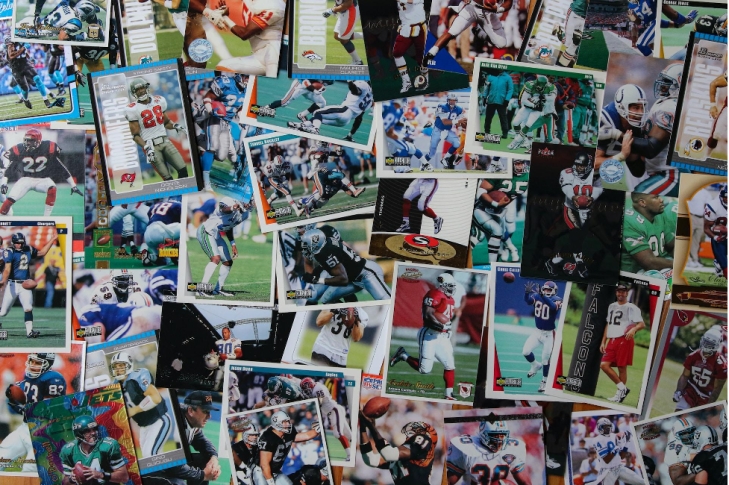
In the heartland of America, where autumn winds carry whispers of age-old rivalries, the National Football League (NFL) is more than just a game. It's a cultural spectacle, a binding fabric of society, reverberating through time with tales of heroism, fellowship, and the ceaseless pursuit of victory. Here, NFL football isn't merely a sport; it's a legacy carried through generations, a Sunday ritual, a topic of daily discourse.
The Social Glue
The NFL acts as a social adhesive, bringing together diverse groups under a common banner. Whether it's the communal exhilaration in a winning touchdown or the shared agony of defeat, these emotional roller-coasters cultivate a sense of belonging. This camaraderie is often most apparent in the allegiance to teams, with entities like the Dallas Cowboys not only representing a city but embodying a collective identity. The Dallas Cowboys odds of winning on any given Sunday, for instance, becomes a matter of civic pride and social conversation, intertwining the fate of a football team with the hopes of a community.
A Mirror to Society
The NFL has often mirrored societal changes and issues, becoming a stage where national dialogues unfold. Players taking a knee to protest racial injustice or the league's evolving stance on player safety amidst the growing number of concussions reflect broader societal concerns. Through these actions and reactions, the NFL serves as a microcosm of larger societal dynamics, shedding light on the evolving national narrative.
Economic Juggernaut
The financial impact of NFL football is undeniable. From ticket sales and merchandise to billion-dollar broadcasting deals, the sport is a financial powerhouse. The ripple effects extend to local economies, with game-day festivities fueling business for local bars, restaurants, and retail outlets. The financial symbiosis between the NFL, its cities, and the national economy is a testament to the sport's integral role in the economic landscape.
The Legacy of Competition
The competitive spirit that the NFL epitomizes is emblematic of the broader American ethos. The hard-fought battles on the gridiron echo the nation's values of perseverance, teamwork, and the relentless pursuit of excellence. The legacies created by iconic rivalries, momentous victories, and heart-wrenching defeats transcend the game, entering the realms of folklore and national identity.
Educational Catalyst
The NFL also plays a part in educational endeavors. Through scholarship programs and initiatives aimed at promoting physical fitness and discipline among the youth, the NFL contributes to the holistic development of individuals. Moreover, college football acts as a springboard for both athletic and academic opportunities, underlining the educational facet of the sport's cultural footprint.
Conclusion
As the final whistle echoes through the crisp autumn air, one can't help but reflect on the enthralling journey through the heartbeats of communities, the conscience of a nation, the bustling economy, the valor of competition, and the informative spirit of the game. The NFL is not merely a game but a narrative that encapsulates myriad facets of American life, each touchdown a page in the unfolding saga of a culture intertwined with pigskin. Through the cacophony of cheers, the highs and lows, the NFL continues to be a poignant emblem of America's cultural tapestry.
