


Committee Chairman
25. John Collins
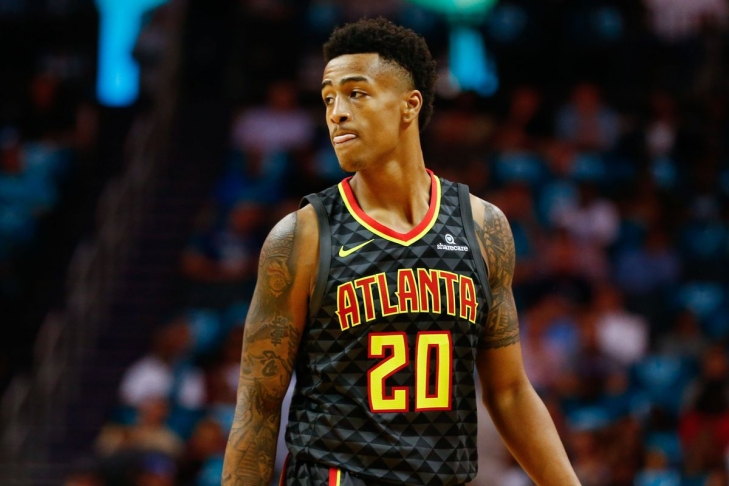
John Collins showed tremendous progress at Wake Forest, so much so that he earned a First Round Pick (19th Overall) in 2017 by Atlanta.
The Power Forward was a Second Team All-Rookie Selection, starting 26 of his 74 Games, and averaging 10.5 Points per Game. He shot that number up to 19.5 points as a sophomore and was now in the starting five. Collins continued his upward trajectory, posting a PER over 20 over three years in a row (2018-19 to 2020-21)
Collins was less featured in his last two seasons, and his PPG in 2022-23 (13.1) was his lowest since his rookie year. The Hawks traded Collins to Utah in 2023, thus ending his run with Atlanta.
The Middle Tennessee State Athletic Hall of Fame announces the Class of 2021
Regular visitors of Notinhalloffame.com know that we are slowly working on the top 50 of every major team in the NHL, NBA, NFL and MLB. Once that is done, we intend to look at how each team honor their past players, coaches and executives. As such, it is news to us that Middle Tennessee State has announced six new members of their Hall of Fame.
The Class will be formally introduced on October 2, before their home game against Marshall
The new members are:
Rawley Bishop, Baseball, Class of 2009: Bishop was a two-time All-Sun Belt Selection and is the school’s all-time leader in RBIs, Runs Scored and Total Bases. He is also second in Home Runs.
Nathaniel Claybrooks, Football, Class of 1995. Claybrooks was a First Team All-American in 1995, and was a two-time All-Ohio Valley Conference Selection at Linebacker. He had 270 career Tackles.
Jason Millard, Golf, Class of 2011. Millard was a two-time All-American.
Patrick Simpson, Men’s Wrestling, Class of 1979. Simpson becomes the first Blue Raider to make the MTSU Hall of Fame, and he was also the first to qualify for the NCAA Tournament, which he did in 1979.
Jamie Thornatis, Women’s Basketball, Class of 2001. Thornatis became the first women’s basketball player in school history to make All-Conference in two different regions (OVC and Sun Belt). She had 1,971 career Points.
Desmond “Boogie” Yates, Men’s Basketball, Class of 2010. Yates was the first (and to date only) men’s player in school basketball history to be a three-time All-Conference Selection. Yates is the all-time Blue Raider leader in Points (1,775).
We would like to congratulate the newest members of Middle Tennessee State Athletic Hall of Fame for earning this prestigious honor.
Major Announcement: Our Fictitious Rock and Roll Hall of Fame Announces the 2021 Semi-Finalists
One of our pet projects, the Fictitious Rock and Roll Hall of Fame is pleased to announce the Semi-Finalists for the Class of 2020, which will be the 7th full class.
The Semi-Finalists were decided by all of you, after being pared down from other 500 Preliminary Nominees.
Whoever gets inducted this year, will join previous inductees:
The Fictitious Rock and Roll Semi-Finalists are: Spinal Tap, The Monkees, The Blues Brothers, Gorillaz, Tenacious D, Dr. Teeth and the Electric Mayhem, Wyld Stallyns, Alvin and the Chipmunks, The Wonders, Bleeding Gums Murphy, Otis Day and the Nights, Stillwater, Josie and the Pussycats, Marvin Berry and the Starlighters and the Rutles.
To mix things up, just like or Fictitious Athlete Hall of Fame, we have created a contributor’s section.
This year’s Fictitious Rock and Roll Semi-Finalists are:
5 Neat Guys (SCTV): This is the first Semi-Finalist appearance for the throwback group who were…well…neat.
Alice Bowie (Cheech and Chong): From the minds of Cheech Marin and Tommy Chong first appeared in the comedy duo’s first film. They have been a Semi-Finalist twice before.
Ally Maine (A Star is Born): From the nightclub to country stardom to pop superstardon, Ally Maine, seems to be as popular as Lady Gaga.
Arthur Ewing and his Musical Mice (Monty Python): Another surprise Semi-Finalist, the mice were hit by Ewing to illicit shrieks in musical form.
Axel Steel (Guitar Hero): Sooner or later, someone from the Guitar Hero world would make it to the Semi-Finals. Here we are!
Bart Simpson (The Simpsons): Leading a boy band, and also performing on his own when he was part of the Krusty the Clown show, we have heard Bart sing for decades. Amazingly, he is still ten.
Buckaroo Banzai and the Hong Kong Cavaliers (The Adventures of Buckaroo Banzai Across the Eighth Dimension): What couldn’t these renaissance men do? This is their fourth time reaching the Semi-Finals, and they were Finalists last year.
Big Mountain Fudgecake (King of the Hill): Fronted by John Redcorn, we think the biggest gig they ever played was in a pizza joint in Arlen, Texas. This is their first time appearing as Semi-Finalists.
Dethklok (Metalocalypse): In their realm, this is the most important heavy metal band of all-time. This is their return to the Semis after missing out last year.
Dogs in Space (Dogs in Space): The lead singer of this band looks an awful lot like the guy who used to front INXS. Hmmmm .
Eddie and the Cruisers (Eddie and the Cruisers): A previous multi-time Finalist, Eddie and the Cruisers were on the cusp of something great, until the lead singer grew frustrated when management rejected his new sound…so he faked his death.
Figrin D’An and the Modal Nodes (Star Wars): The house band at the Mos Eisley Cantina was a finalist the last two years. No band can bounce back after seeing a fatality better than this one.
Fingerbang (South Park): We can argue that this is the most successful boy band of all time…from South Park, Colorado. It was not until they were joined by 30-something Randy Marsh that they really made it “big”…meaning that they played the mall. This is their first time as a Semi-Finalist.
Ganstalicious (The Boondocks): The favorite rapper of Riley Freeman, was very successful, very misogynistic and very closeted. He is a first time Semi-Finalist.
Gene Frenkle (Saturday Night Live): Frenkle had the cure for more cowbell, and his work with the Blue Oyster Cult can never be forgotten. He is another first-time Semi-Finalist.
Hannah Montana (Hannah Montana): Monatna returns to the Semi-Finals, and she was one of the biggest stars in the world, yet lived a double-life as a regular teenager.
Jem and the Holograms (Jem and the Holograms): They played pop music and had a huge hologram machine. Enough said. They were a finalist last year.
Jesse and the Rippers (Full House): For the first time, Jesse and the Rippers have made the Semi-Finals and the family friendly group who was centered around the Tanner household in San Francisco finally has a shot at the big time.
Jessica Rabbit (Who Framed Roger Rabbit?): The wife of Roger Rabbit was as sultry as any drawing could be. Rabbit was a semi-finalist last year.
Jet Screamer (The Jetsons): Eep Opp Ork Ah Ah! Another first-time Semi-Finalist comes from the future in teen idol, Jet Screamer.
Leather Tuscadero (Happy Days): Do the Fonzie! This is the secpnd Semi-Finalist appearance for the Milwaukee based rocker from the late 1950s, who was a surprise Finalist last year.
Lurleen Lumpkin (The Simpsons): Lumpkin was struggling in a country dive before she was rescued by Homer Simpson, who recognized her talent, and took her on the first step to the country stratosphere.
Michigan J. Frog (Looney Toons): This frog would perform classic showtunes, as long as there was no audience. He has been a Finalist before.
Ming Tea (The Austin Powers Trilogy): Fronted by Austin Powers himself, this was the band that everyone swinging baby!
Nick the Lounge Singer (Saturday Night Live): If ever there was a lounge act that could crack the doors of the Fictitious Rock Hall, it is Nick.
Randy Watson (Coming to America & Coming 2 America): With his band, Sexual Chocolate, he was a part of the Black Awareness Event in Queens, New York. He is a former four-time Semi-Finalist.
Ricky Ricardo (I Love Lucy): He never le Lucy make it to the club but he was a superstar Cuban bandleader. Ricardo is also a one-time Finalist.
Schroeder (Peanuts): The piano-playing devotee of classic music has been a Semi-Finalist three times before.
Sex Bob-Omb (Scott Pilgrim VS The World: Sex Bob-Omb is a two-time Finalist who competed in the Toronto International Battle of the Bands. They are two-time Finalists.
Steel Dragon (Rock Star): Loosely based on Judas Priest, Steel Dragon changed lead singers when a superfan and cover singer takes over. This is their first time as a Semi-Finalist.
The Archies (The Archies): In 1970, they had a number 1 hit in the “Real World” with “Sugar Sugar”. They have been Finalists three times before.
The Be Sharps (The Simpsons): Former Grammy winners, the Be-Sharps were on top of the world for a brief period of time. Comprised of Homer, Barney, Apu and Principal Skinner, they are four-time Finalists.
The California Raisins (The California Raisins): The raisins from California wanted you to eat them, and they sang to old soul songs for your “comsumption”.
The Commitments (The Commitments): Dublin, Ireland produced one of the greatest soul groups ever, and they have been a Finalist once before.
The Oreos (A Star Is Born ‘76): Esther Hoffman sings in the middle of two black women...oreos! Get it? Like another character from a film of the same, she bolts into stardom, and a legit hit song comes from it. This is their first time as a Semi-Finalist.
The Partridge Family (The Partridge Family): The Southern California family of musicians (except the young kids, who couldn’t do anything) played gigs all over the state in the early 70s and got there on the most amazingly painted bus. They have been Semi-Finalists four times before.
The School of Rock (The School of Rock): Dewey Finn pretended to be a substitute teacher and used his class as a band to perform at the Battle of the Bands. How did he not get in more trouble? This is their fourth time as a Semi-Finalist.
This year’s Fictitious Rock and Roll Semi-Finalists Contributors are:
Alan M. Mayberry (Josie & The Pussycats): Mayberry was little more than a roadie in terms of what he did for the band, but he was the devoted boyfriend of Josie. Doesn’t that type of support matter?
Alexandra Cabot (Josie & The Pussycats): Alexandra didn’t help Josie & The Pussycats, the band her brother Alexander managed. In fact, she sought to sabotage them anyway she could, though it rarely worked.
Bill & Marty (The Simpsons): From Springfield’s #1 radio station, KBBL, Bill & Marty is the top morning team in this radio market. We think.
Bruce Dickinson (Saturday Night Live): Dickinson needed more cowbell. He had a fever for it. He got it, and the Blue Oyster Cult were forever grateful.
Burton Mercer (The Blues Brothers): He was the cop who wanted to hear the Blues Brothers perform at the Palace Ballroom. Perhaps, this wasn’t the best performance of his duties.
Colonel Homer Simpson (The Simpsons): Homer is nominated in both categories, here for his discovery and early management of country singer, Lurleen Lumpkin.
Curtis (The Blues Brothers): Had it not been for the mentorship of Curtis, the Blues Brothers would not have become the iconic band that they were.
Dr. Johnny Fever (WKRP in Cincinnati): John Caravella’s career was resurrected when Andy Travis came in and changed the format to rock and roll. He renamed himself, Dr. Johnny Fever, and he would eventually become the top morning man in the city.
Gideon “G-Man” Graves (Scott Pilgrim Vs the World): Graves was the seventh evil ex-boyfriend of Ramona Flowers, and the leader of the League of Evil Exes.
Marty Di Bergi (This is Spinal Tap): Di Bergi is the man whose love of the British band, Spinal Tap, and gave us one of the deepest looks ever at the trials and tribulations of a rock group.
Rufus (Bill & Ted’s Excellent Adventure): From the future, Rufus provides Bill S. Preston and Ted “Theodore” Logan a time travelling device so that they can learn history and pass their class. This allowed them to stay together so that they could unite the world with their music.
Ramona Flowers (Scott Pilgrim Vs the World): Why was Scott Pilgrim fighting the world? For the love of Ramona Flowers of course!
Unnamed Security Guard (Wayne’s World): He had one scene, no name, and helped move the plot.
Venus Flytrap (WKRP in Cincinnati): The greatest hire of Andy Travis’ career at WKRP, was Gordon Sims, who became Venus Flytrap, their nighttime DJ, who told stories of love in between R&B songs.
Wayne Campbell & Garth Algar (Saturday Night Live, Wayne’s World and Wayne’s World 2): The hosts of Wayne’s World on Aurora Public Access, Wayne and Garth loved rock, promoted their own concert, and became icons in their own right.
You can vote for them here.
When you can, please support our site and cast your vote for the Class of 2020!
As always, we here at Notinhalloffame.com thank you for your support.
Major Announcement: Our Fictitious Athlete Hall of Fame Announces the 2021 Semi-Finalists
One of our pet projects, the Fictitious Athlete Hall of Fame is pleased to announce the Semi-Finalists for the Class of 2020, which will be the 7th full class.
The Semi-Finalists were decided by all of you, after being pared down from other 500 Preliminary Nominees.
There are three wings in the Fictitious Athlete Hall of Fame:
The Fictitious Athlete wing, whose members are: Rocky Balboa (The Rocky series), Roy Hobbs (The Natural), Crash Avis (Bull Durham), Ricky “Wild Thing” Vaughn (Major League), Happy Gilmore (Happy Gilmore), Reggie Dunlop (Slap Shot), The Hanson Brothers (Slap Shot), Charlie Conway (The Mighty Ducks) Benny “The Jet” Rodriguez (The Sandlot), Apollo Creed (Rocky), Willie “Mays” Hayes (Major League), Forrest Gump (Forrest Gump), Bobby Boucher (The Waterboy), Paul “Wrecking” Crewe (The Longest Yard), Dottie Hinson (A League of Their Own), Daniel LaRusso (The Karate Kid), Clubber Lang (Rocky), Ivan Drago (Rocky), “Fast” Eddie Felson (The Hustler & The Color of Money, Al Bundy (Married...with Children), Homer Simpson (The Simpsons) and Johnny Lawrence (The Karate Kid and Cobra Kai.
The Fictitious Contributor wing, whose members are: Harry Doyle (Major League), Carl Spackler (Caddyshack), Mr. Miyagi (The Karate Kid), Chubbs Peterson (Happy Gilmore), Gordon Bombay (The Mighty Ducks), Mickey Goldmill (Rocky), Morris Buttermaker (The Bad News Bears), Coach Ernie Pantusso (Cheers), Adrian Balboa (Rocky), Jimmy Dugan (A League of Their Own), and the Gopher (Caddyshack)
The Fictitious Veteran wing, whose members are: Andy “Champ” Purcell (The Champ), Dennis Ryan (Take Me Out to the Ball Game), Guffy McGovern (Angels in the Outfield), Huxley College (Horse Feathers), Sport Goofy (Disney) and Joe Hardy/Joe Boyd (Damn Yankees).
The Fictitious Athlete Semi-Finalists are:
A.C. Slater (Saved by the Bell). The former amateur wrestling star at Bayside High has been a Semi-Finalist every year, but a Finalist only once. Slater also played for Bayside’s football team.
Adonis Creed (Creed and Creed II). The son of former World Heavyweight Boxing Champion, Apollo Creed, Adonis became the World Heavyweight Champion himself. This is the most “recent” Semi-Finalist.
Al Czervik (Caddyshack). Czervik was a Finalist last year for the first time, and his win over the “snobs” at Bushwood Country Club is still golf legend.
Alex Moran (Blue Mountain State). Moran was a rare breed of Quarterback, as he was a pivot who loved being the backup. He returns to the semi-finals after being absent last year.
“All the Way” Mae Mordabito (A League of Their Own). Mordabito played at Centerfield for the Rockford Peaches, and was the team’s leadoff hitter.
Amanda Whurlitzer (The Bad News Bears). Whurlitzer was the star pitcher for Morris Buttermaker’s little league team in California. Whurlitzer was a Finalist last year.
Anakin Skywalker (Star Wars: The Phantom Menace). Skywalker is here for his youthful prowess as a pod racer. This unique sport is one that he would finally win in what we assume was his last race.
Anne Marie Chadwick (Blue Crush). This is the first time that Chadwick has made the list of Semi-Finalists, and is the lone surfer to make it this far this year.
“Big Ern” Ernie McCracken (Kingpin). “Big Ern” was the most recognized bowler in the circuit. McCracken has been a multi-time Semi-Finalist.
Billy Bob (Varsity Blues). Billy Bob was the Offensive Lineman for West Canaan (Texas) and is a Semi-Finalist for the second straight time.
Billy Chapel (For Love of the Game). As a veteran with the Detroit Tigers, Chapel pitched a perfect game. He has always been a Semi-Finalist.
Billy Hoyle (White Men Can’t Jump). Hoyle was a street basketball hustler who has the on-court skills but not necessarily the mind of a hustler.
Bud (Air Bud). What sport could this golden retriever not do? He did it all, and he returns as a Semi-Finalist for the sixth time.
Bugs Bunny (Space Jam & Space Jam: A New Legacy). Bugs Bunny teamed with Michael Jordan to defeat the Monstars, and has now reappeared with LeBron James to take on the Goon Squad.
Cal Naughton Jr. (Talladega Nights: The Legend of Ricky Bobby). Naughton Jr. returns to the Semi-Finals after a two-year absence. He wasn’t always first, so was he mostly last?
Charles Jefferson (Fast Times at Ridgemont High). We always wondered if Jefferson got those Earth, Wind and Fire tickets from Damone. Regardless, Jefferson might have given the best defensive performance ever in California High School Football.
Chazz Michael Michaels (Blades of Glory). CMM was a star solo figure skater who found a second life as a pair skater with his former adversary. This is also a former Finalist.
Danny Noonan (Caddyshack). Noonan might not have been close to the most colorful or quotable character in the film, but he sank the winning putt that won it at the end of the flick. He returns to the Semi-Finals.
Drederick Tatum (The Simpsons). Springfield’s top boxer has a striking resemblance to Mike Tyson.
Ebby Calvin “Nuke” Laloosh (Bull Durham). Nuke was mentored by longtime minor league Catcher, Crash Davis, and he parlayed his million dollar arm to a spot in the “show”.
Flash Gordon (Flash Gordon). Before he saved the galaxy, he was the Quarterback for the New York Jets. He was a Semi-Finalist for the first time two years ago.
Greg Goldberg (The Mighty Ducks Trilogy). Every great hockey dynasty needs a great Goalie. Goldberg was good enough, and great at the one-liners.
Hamilton Porter (The Sandlot). Porter played on his local sandlot baseball team, though he was more known for his comedic stylings then his hitting acumen.
Henry Rowengartner (Rookie of the Year). A freak arm injury turned the 12-year old’s arm into a fastball machine. He played briefly for the Chicago Cubs and is a four-time Semi-Finalist.
Ignacio/Nacho (Nacho Libre). Ignacio wrestled professionally in Mexico, and he is a multi-time Semi-Finalist.
Ishmael (Kingpin). Ishmael learned to bowl in Amish country and almost competed in the Reno Open. While he didn’t bow in that tournament, he had a lot of fun along the way.
Jack Elliott (Mr. Baseball). Elliott was a fading star for the Detroit Tigers and was traded to the Tokyo Giants, where he had last kick at the can. This is the second time he has been a Semi-Finalist.
Jackie Moon (Semi-Pro). Moon was the player/owner for the Flint Tropics and has been a past Finalist.
Jake Taylor (Major League). Taylor was the hero with a bunt in the first Major League, where the veteran Catcher of the Cleveland Indians was the on-field leader of the rags to riches story. He would later become their interim manager, and he is a five-time Semi-Finalist.
Jeff “The Dude” Lebowski (The Big Lebowski). A pot smoking slacker who loves bowling? Sounds good to us! The Dude has been a previous Semi-Finalist.
Jesus Shuttlesworth (He Got Game). Shuttlesworth was a highly recruited basketball player at Lincoln High. Amazingly, he has only reached the Semi-Finals three times.
Jimmy Chitwood (Hoosiers). Chitwood was the star basketball player at Hickory High whom without the Norman Dale led team would not have won the Indiana State tournament in 1957. Chitwood has been a Finalist once.
Lee (Enter the Dragon). Lee qualifies as he participates in what was the most unorganized martial arts tournament in memory. This is his fourth time as a Semi-Finalist.
Lincoln Hawk (Over the Top). Surprisingly, this is the first time that the arm wrestler from the Trucker’s Division has made the Semi-Finals.
Mighty Steel Leg Sing (Shaolin Monk). For the first time, Sing is a Semi-Finalist, and the addition of this soccer phenom makes it a truly international affair.
Pedro Cerrano (Major League). The Cleveland Indians outfielder and voodoo master was known for his booming Home Runs. Cerrano is a two-time Finalist.
Peter Griffin (Family Guy). While he is rotund and middle-aged, he became a star briefly for the New England Patriots, that is until Tom Brady’s jealousy resulted him in being traded to the London Sillynannies. This is his first foray into the Semi-Finals.
Peter LaFleur (Dodgeball). LaFleur led his Average Joe’s Gym team to a win in the Dodgeball Open in Las Vegas. He is a two-time Finalist.
Quick Rick Roberts (Body Slam). A surprise first-time Semi-Finalist, Roberts brought rock and wrestling together, an anthesis of his portrayer, “Rowdy” Roddy Piper.
Randy “The Ram” Robinson (The Wrestler). Robinson is an aging pro wrestler barely hanging on. He was a Finalist three years ago.
Ricky Bobby (Talladega Nights: The Ballad of Ricky Bobby). NASCAR legend, Ricky Bobby has been a Finalist two times.
Rip (No Holds Barred): In this universe, Rip is not only the biggest wrestler in the world, but the biggest television star in the world.
Roy McAvoy (Tin Cup): A three-time Semi-Finalist, McAvoy is a club pro who finally made it to a PGA event.
Sam Malone (Cheers): Malone pitched for the Boston Red Sox for five seasons in a relief pitcher capacity. “Mayday” is a three-time Finalist.
Scott Howard (Teen Wolf): When Howard transformed into the “Wolf” he was the top basketball star in High School. He has been a semi-finalist twice.
Shane Falco (The Replacements): A former two-time Finalist, the former Ohio State Buckeye was a replacement player Quarterback for the Washington Sentinels.
White Goodman (Dodgeball): Every sports hero needs a counterpart, and White Goodman is better than you, and you know it.
The Fictitious Athlete Contributors are:
Annie Savoy (Bull Durham): Savoy was the longtime muse for many a minor league baseball player who was played for the Durham Bulls. She is a former Finalist, and had at least been a Semi-Finalist every year.
April Buchanan (Eastbound and Down): April is the loving ex-wife of former baseball reliever, Kenny Powers.
Arliss Michaels (Arliss): Arliss was the super sports agent for many years, and he represented many all-stars from multiple sports.
Ben Wightman (Fever Pitch): Wightman owns premium season tickets at Fenway, and could be the biggest Red Sox fan.
Caretaker (The Longest Yard ’74): This was the man who made the Mean Machine possible, and is also a former Semi-Finalist.
Caretaker (The Longest Yard ’05): See above. The same applies.
Charlie Kenton (Real Steel): A first-time semi-finalist, Kenton helps robots box.
Chester Lee (Ladybugs): Lee would briefly coach a youth girls soccer team. Why? We don’t remember.
Coach Klein (The Waterboy): The Head Coach of South Central Louisiana State was a play-making genius and a previous Finalist.
Darcy Sears (Varsity Blues): Who was the hottest woman at West Canaan? It was Darcy Sears. She is a two-time Semi-Finalist.
Frank Drebin (The Naked Gun): The. Detective from the Police Squad in L.A. pretended to be a Major League Umpire, while on the case. He was a Semi-Finalist last year.
Frankie Dunn (Million Dollar Baby): Dunn trained many a boxer, and he broke his own rules to coach his first female.
George Costanza (Seinfeld): Costanza shockingly became an executive with the New York Yankees and is a two-time Semi-Finalist.
Hayden Fox (Coach): Fox is a three-time Finalist and the former Head Coach at Minnesota State.
Irv Blitzer (Cool Runnings): While there was a Jamaican Bobsled Team at the 1988 Olympics, there was no Irv Blitzer, but in the world of film, he existed, and coached them to respectability in Calgary.
Jerry Maguire (Jerry Maguire): The most known sports agent In the fictitious world has been a Finalist twice.
John Kreese (The Karate Kid): Kreese is a two-time Semi-Finalist and was the leader of the Cobra-Kai. This is his second straight year as a Semi-Finalist.
Lou Brown (Major League): Brown went from managing the Toledo Mudhens and landed the job as the Cleveland Indians Manager. He has been a Finalist once.
Norman Dale (Hoosiers): Dale is a three-time Finalist and he led the small town Hickory High to a state championship in 1957.
Patches O’Houlihan (Dodgeball): O’Houlihan was a former dodgeball star who trained the Average Joe’s Gym for their tournament in Las Vegas. He was a Finalist last year.
Paulie Pennino (Rocky): Paulie is a friend, cornerman and brother-in-law to former Heavyweight Boxing Champion, Rocky Balboa. He is a two-time Finalist.
Terrence Mann (Field of Dreams): An important counter-culture writer of the 1960s, Mann is a disaffected baseball fan who travels with Kinsella to his Iowa baseball diamond. This is his second time as a Semi-Finalist.
The Fictitious Athlete Veterans are:
Frank Capua (Winning): Capua was racing in the Indianapolis 500 amidst the backdrop of a love triangle.
Harold Lamb (The Freshman): Lamb played college football for Tate University, and the undersized talent got the girl at the end.
Greta Muller (One in a Million): Muller was an Olympic figure skater, which had to be a stretch for Sonja Henie to play.
Velvet Brown (National Velvet): Brown won the steeplechase but sexism of her day meant she had to pretend to be male.
Ward “Kid Galahad” Guisenberry (Kid Galahad ‘37): Guisenberry went from the farm to become a top contender in the world of boxing.
Walter “Kid Galahad” Gulick (Kid Galahad ‘61): See above, only substitute mechanic for farm boy.
When you can, please support our site and cast your vote for the Class of 2020!
As always, we here at Notinhalloffame.com thank you for your support.
