


Committee Chairman
48. Chris Paul
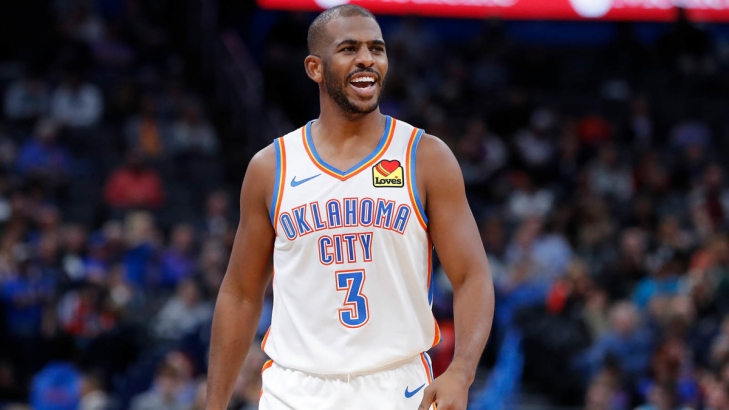
Chris Paul only played one season (2019-20) with Oklahoma City, and while it was near the end of his career, make no mistake, he was still a star, and a player who led them to the playoffs.
Paul was an All-Star and All-NBA player (Second Team) for the first time in four years, and in his lone OKC season, he was rejuvenated and developed his already strong leadership skills. The Point Guard averaged 17.7 Points per Game, and brought back his .550 eFG% over .550. In terms of his advanced numbers, his PER went back over 20 (21.7) after dipping below that mark the year before with Houston.
Paul, who had been traded to Oklahoma City in a transaction that sent Russell Westbrook the other way, was shipped to Phoenix the year after, making CP3 a one-and-done with the Thunder.
Again, if this seems strange, remember that in basketball, a single player makes more impact than in any other team sport.
The Kansas City Chiefs - The NFL’s Next Ruling Dynasty

There have been some incredible franchises over the years. The Pittsburgh Steelers were the most successful team in history, the Green Bay Packers swapped one Hall of Fame quarterback for another, and the New England Patriots were hated across the country.
Success breeds jealousy, but it also encourages head coaches and players to up their expectations. The Kansas City Chiefs are the franchise that has stepped up to the plate in the last five years due to their incredible performances. They have been so good that they are now the NFL’s next ruling dynasty and may sit on the throne for decades.
No Letting Up
Like all the great locker rooms, Kansas City has no desire to ease off the throttle and lose momentum. Sure, the Chiefs lost the Super Bowl to Tampa Bay, yet you can be sure they’ll try and rewrite that mistake this time out. The American football odds already rank them as the +450 favorites ahead of the Buccaneers at +700.
When you look at what Andy Reid’s men have achieved since 2016, it’s an inevitable conclusion. The Chiefs added a fifth consecutive AFC West title in 2020, around six weeks before losing out in Super Bowl LV. The season before, Patrick Mahomes famously led a revival to beat the San Francisco 49ers 31-20 and claim Super Bowl LIV.
Add the 2019 AFC Championship game to that and it’s clear that Kansas City has the drive to challenge for honors for the foreseeable future. Recent history proves it beyond doubt.
Hall of Famers
What makes the Chiefs a fantastic football team is the people they have in the most important places of the franchise. NFL franchises always need to be loaded in offense and defense, as Green Bay highlighted last term, and patient owners are always welcome. However, the key positions are head coach and QB.
In Kansas City and the entire state, supporters look at the two men and see greatness. Andy Reid is already a Hall of Famer in everyone’s eyes, even if the NFL hasn’t made it official yet. Mahomes, on the other hand, has transcended the quarterback position with his incredibly powerful arm and ability to hit moving targets on the run.
Of course, Mahomes is a legacy quarterback with a full career at his mercy. However, Reid is only 63 and may easily have another decade at the top level, health permitting. To put it into perspective, Mahomes is the +450 favorite for the MVP award, while Reid is +2200 to be the Coach of the Year.
Strong Competition
Competition is what forces franchises like the Kansas City Chiefs to milk every ounce of talent out of the roster. Tom Brady and Aaron Rodgers are legends of the game that lead the chasing pack, but it’s the host of young players that will ensure Reid and Mahomes keep their eyes on the ball.
The Buffalo Bills, who are +1100 third favorites for the Super Bowl title, have Josh Allen and will be contenders for years because of him. Lamar Jackson’s combination of throwing and rushing skills has the Ravens holding their breath this season, whereas Kyler Murray could transform the Arizona Cardinals’ fortunes.
These men are threats to the dominance of Patrick Mahomes, yet you can bet the Chiefs won’t shirk the responsibility. Instead, they’ll rise to the pressure and take on every contender that steps up to the plate.
The NFL has an array of excellent football teams, many of which can string together a Super Bowl-winning run. Overall, though, it’s the current Chiefs’ roster that appears as if it’ll go down in the annals of history.
The St. Louis Cardinals to retire Ted Simmons' number 23.
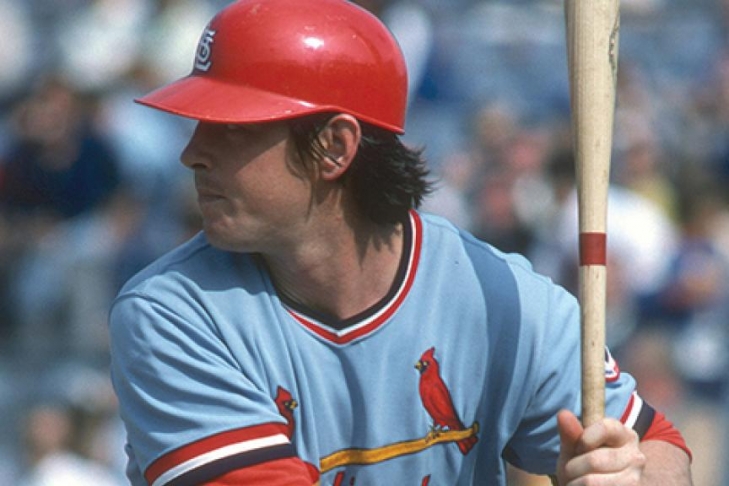
Regular visitors of Notinhalloffame.com know that we are slowly working on the top 50 of every major team in the NHL, NBA, NFL and MLB. Once that is done, we intend to look at how each team honor their past players, coaches and executives. As such, it is news to us that the St. Louis Cardinals have announced that they will be retiring the number 23 of Ted Simmons, and unveiling a statue in his honor.
The Cardinals have specific guidelines as to whose numbers they will retire, specifically those who have been inducted into the Baseball Hall of Fame who spent time in St. Louis for a significant part of their career.
Simmons was elected via the Veteran’s Committee Class of 2020.
Playing for St. Louis for 13 of his 21 years, Simmons went to six All-Star Games, collected 1,704 Hits, belted 172 Home Runs and batted .298.
Simmons joins Ozzie Smith (#1), Red Schoendienst (#2), Stan Musial (#6), Enos Slaughter (#9), Tony LaRussa (#10), Ken Boyer (#14), Dizzy Dean *#17), Lou Brock (#20), Whitey Herzog (#24), Jackie Robinson (#42), Bruce Sutter (#42), Bob Gibson (#45) and August Busch (#85).
We would like to congratulate the Ted Simmons for earning this prestigious honor.
Could It Be the Blue Jays’ Year?
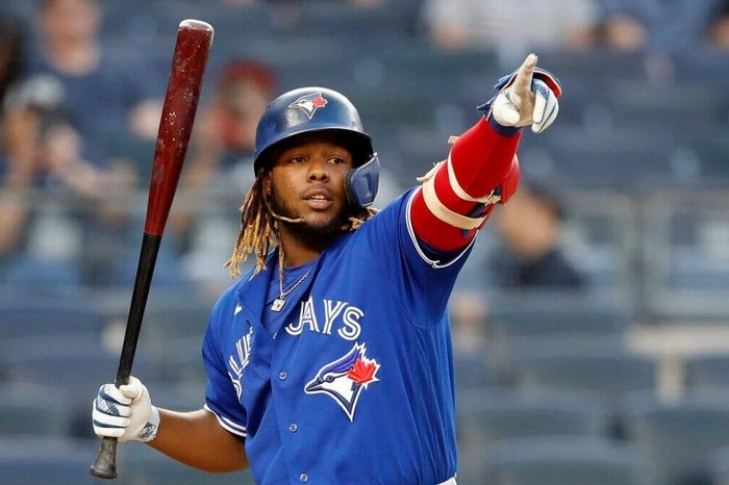
The Toronto Blue Jays are bidding for their first World Series title since 1993. There is confidence within the Canadian city that their long wait for the major prize could end this year.
The Blue Jays, the only team from Canada playing in the Major League Baseball (MLB), have been performing impressively in the American League (AL). They have a winning record of 45-42 (.517), which gives them a strong chance of reaching the playoffs.
Toronto supporters will be hoping their team can go further than they did in 2020. Their World Series dream fell at the first hurdle in the postseason as they were beaten by the number one seeds in the AL, Tampa Bay. The team from Florida went all the way to the World Series where they lost to the LA Dodgers.
The regular season is now well underway and the Blue Jays have MLB odds on bet365 of +2200. Those odds indicate Toronto are not one of the frontrunners for the title. The Dodgers are the favorites in the betting to defend their crown, however, as recent results show, it is no easy feat.
Toronto may enjoy being the underdogs this year. There will be less pressure on their shoulders if they do reach the playoffs. When successful in 1992 and 1993, they were the fourth seeds in the AL, so maybe avoiding one of the top seeds could prove advantageous.
Stats Suggest Toronto Are Better Than Record Indicates
Home runs have not been a problem for the Blue Jays so far in 2021. As of the halfway stage in the regular season, no team in the AL has scored more. If that continues, they are going to prove a dangerous match for any team in the MLB.
Another strong guide for assessing a team's performance on the field is the difference between home runs scored and conceded. Toronto has a +79 record. This would indicate they are a little unfortunate to have a .517 record. If they continue to score so strongly, that percentage should improve.
Their first aim will be to try to win the AL East division. They currently trail Boston Red Sox (604) and Tampa Bay (.589). The series against those two rivals will prove crucial in determining who lands the title.
Vladimir Guerrero Jr Is the Man Who Can Fire Toronto To Success
The standout performer for Toronto in 2021 has been Vladimir Guerrero Jr. He has had an outstanding season with the bat. He was named in the AL’s All-Star team where he was the starting first baseman.
Guerrero Jr, a son of the MLB’s Hall of Famer Vladimir Guerrero Sr, leads the league in On-Base Plug Slugging (OBS). He is one of only three players who are over 1.0 in 2021 along with Shohei Ohtani and Fernando Tatis Jr.
The 22-year-old has an exciting future in the league. Blue Jays fans will be hoping he helps deliver a lot of success with the Canadian franchise, including at the end of the current campaign.
This year’s World Series begins on October 26 and if a seventh game of the series is needed, that will take place on November 3.
