


Committee Chairman
19. Red Horner
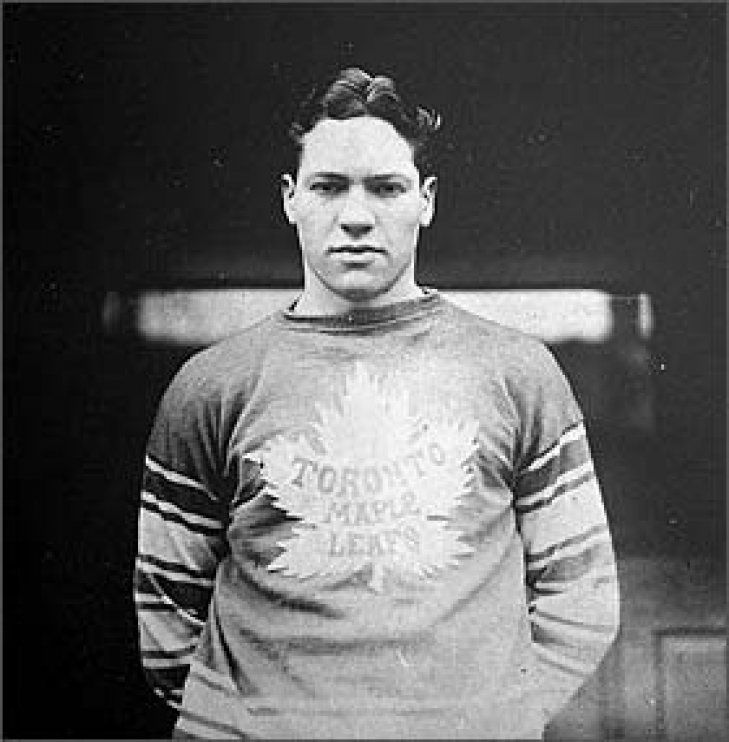
Playing at Defense, Red Horner was an 11-year veteran of the National Hockey League, all of which was as a Toronto Maple Leaf.
Horner was a meat-and-potatoes type of player who had no grace on the ice but effortlessly found teammates with precision passing. His actual calling card was his toughness, as evidenced by leading the NHL in Penalty Minutes seven times. Horner helped the Maple Leafs win the 1932 Stanley Cup, and his rock-solid defensive skills were a tremendous asset to Toronto.
Horner was chosen for the Hockey Hall of Fame in 1965.
18. Doug Gilmour
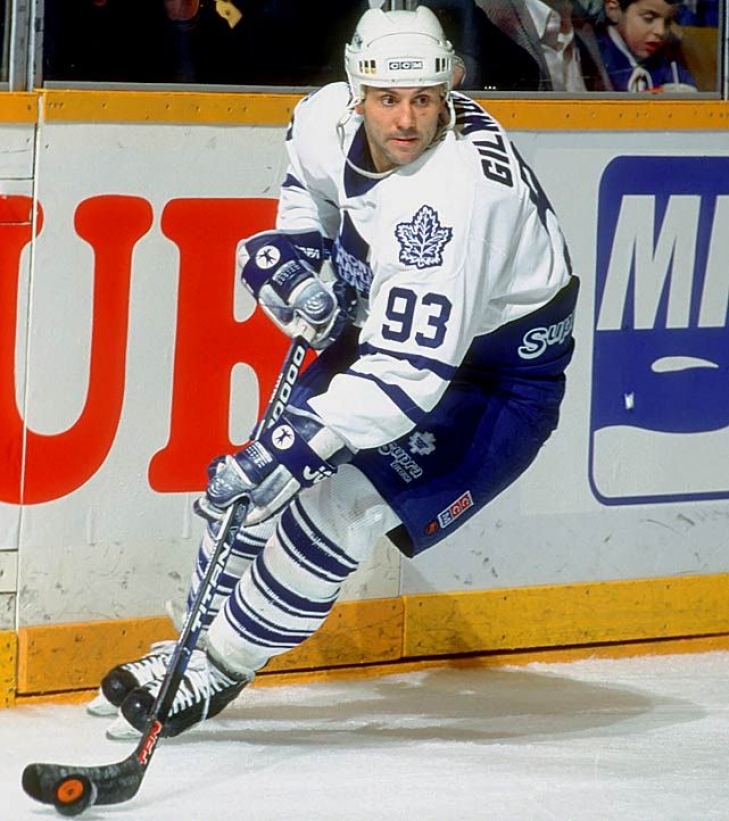
Doug Gilmour was already an established star in hockey before he arrived in Toronto, as he had a 105-Point season with St. Louis, and he later helped the Calgary Flames win the 1989 Stanley Cup. While Gilmour did not win a Cup as a Maple Leaf, he became their leader and led them to their best success in years.
Gilmour was the best player in the ten-player trade he was involved in during the 1991-92 Season, and he brought a culture that immediately turned the team around. The following year, Gilmour had his best year in hockey, scoring a career-high 127 Points. Despite being an offensive dynamo, he was equally gifted on the defensive side, as he won the Frank J. Selke Trophy as the NHL's top defensive forward. Gilmour, who was second for the Hart, led the Leafs to the Western Conference Final, where they came close to upending Wayne Gretzky and the Los Angeles Kings. Toronto may not have made the Finals, but “Dougie” was installed as an iconic figure in the city.
Gilmour followed that with his second consecutive 100-Point year (111) and was fourth in Hart voting. This ended Gilmour's apex, but he was still a Point-per-game player, and the two-time All-Star averaged 1.15 Points per Game during his time in Toronto. That period ended when he was dealt to New Jersey in 1997, but he played one final game in Toronto in 2003, when he was reacquired at the trade deadline. His return to the Leafs was brief, as a collision tore his ACL, and he never played professional hockey again.
The Hockey Hall of Fame inducted Gilmour in 2011, two years after the Leafs elevated a banner in his honor. His number 93 was retired in the mass group in 2016.
17. Allan Stanley
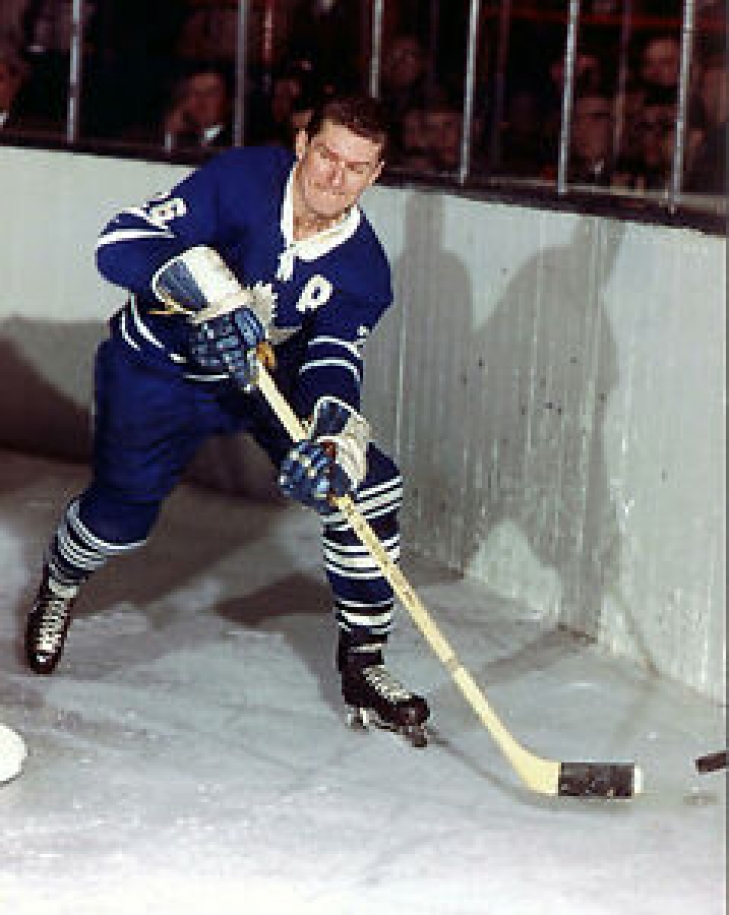
The first half of Allan Stanley's career was decent, but it wasn't spectacular. The Defenseman played for New York (1948-54), Chicago (1954-56), and Boston (1946-58), and while he was good, he was approaching 30, and hockey pundits thought they knew what Stanley was, but a trade to the Toronto Maple Leafs placed him in the best light possible.
Stanley was a slow and plodding skater (so much so that he was called "snowshoes"), but he was a master of positioning and an expert passer, which made him an asset on the power play. Stanley's true strength was as a lockdown defender, and he played a massive role in the Maple Leafs’ success in the 1960s, winning four Stanley Cups. Individually, Stanley was a three-time Second Team All-Star and was the runner-up for the Norris Trophy in 1959-60.
In 1968, Stanley was claimed by the Philadelphia Flyers, where he played one year before retiring.
Stanley was inducted into the Hockey Hall of Fame in 1981.
16. Babe Dye
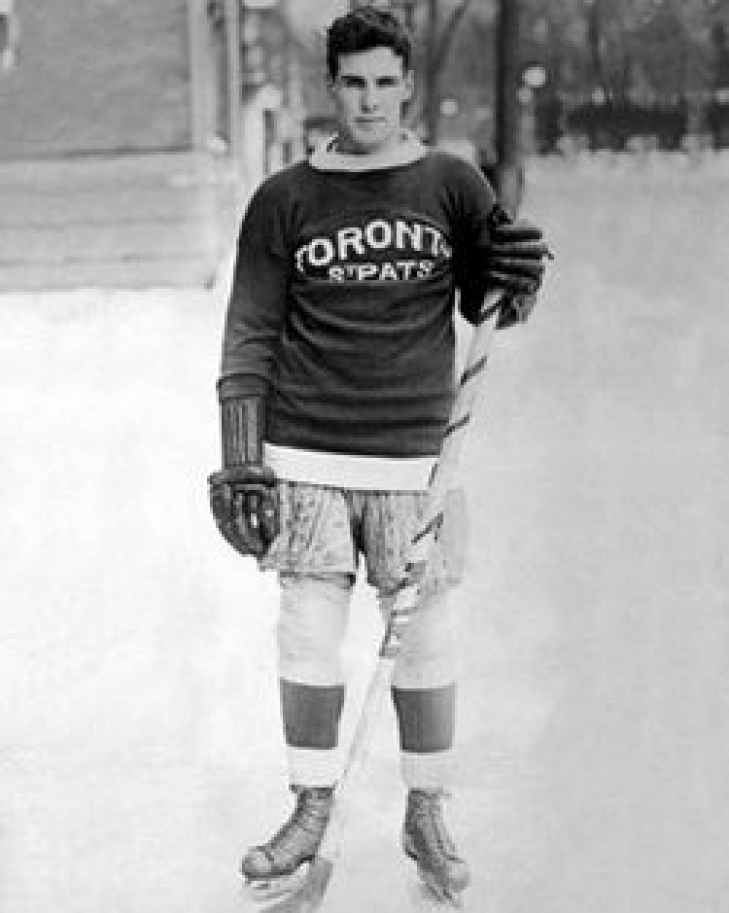
One of the most prolific Canadian athletes of the 1920s was Cecil "Babe" Dye, who played hockey, was a football player for the Toronto Argonauts, and was an outstanding minor league baseball player. Dye was at his best in hockey, of which the then-named Toronto St. Patricks was the beneficiary of.
Dye signed with Toronto in 1919, and in his second season, he led the NHL in Goals. Two seasons later, Dye led the St. Patricks to a Stanley Cup while again leading the NHL in Goals (31), while doing so again the following season (27). Dye became the first player to lead the NHL in Goals four times, achieving his career-high 38 to lead the league in 1924-25.
As athletic as the forward was, Dye was not a great skater and relied on an incredible shot and unequaled stickhandling. There were few players in his era or any other era who could score but couldn't playmake, but goals are the arbiter of wins.
Dye’s play plummeted after that season, and he was traded a year later. He returned to play six final games in the NHL for Toronto in 1930-31. With the Maple Leafs, Dye had a phenomenal 1.24 Points per Game Average and put the puck in the net 175 times in 177 Games.
Dye entered the Hockey Hall of Fame in 1970.
