


Committee Chairman
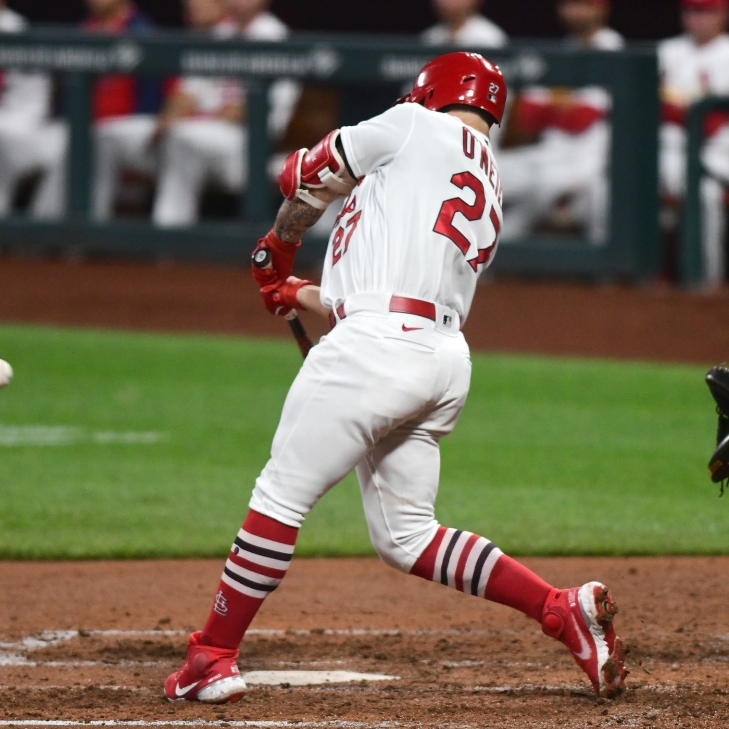
Notinhalloffame names Tyler O'Neill the 2021 Leftfielder of the Year
The process continues.
We here are Notinhalloffame.com have plans to create our own set of post-season awards, which we will look back and retroactively present from 1901 on. That will take a while, but it has never stopped us before!
Our awards are not league specific.
Now it is time for our 2021 positional awards.
We will be awarding a positional player of the year, but not only that, offer up the runner-up and second runner-up, meaning that we will have First, Second, and Third All-MLB players.
Let’s work our way around the diamond and award the best of the best in Baseball!
*Please note that to qualify, a player must appear in that position at least 50% of the time.
Leftfielder of the Year (First Team All-MLB): Tyler O’Neill, St. Louis Cardinals. 6.3 bWAR, 5.4 fWAR, 138 H, 34 HR, 89 R, 80 RBI, 15 SB, .286/.352/.560/.912.
We are saying this a lot, but O’Neill is another player who had a breakout campaign in 2021, especially offensively as his previous high in Home Runs in a season was only nine.
Second Team All-MLB: Leftfield: Randy Arozarena, Tampa Bay Rays. 4.2 bWAR, 3.3 fWAR, 145 H, 20 HR, 94 R, 69 RBI, 20 SB, .274/.356/.459/.815.
Arozarena is the likely American League Rookie of the Year, and Rays fans have to be thrilled with the expected future of the 24-year-old.
Third Team All-MLB: Leftfield: Kyle Schwarber, Boston Red Sox and Washington Nationals. 3.2 bWAR, 3.1 fWAR, 106 H, 32 HR, 76 R, 71 RBI, 1 SB, .266/.374/.554/.928.
A hamstring injury cost Schwarber a myriad of games this year, but in his first tear away from the Cubs, he split his time between Boston and Washington, raised his Batting Average, reduced his Strikeouts, and put up his best OPS to date.
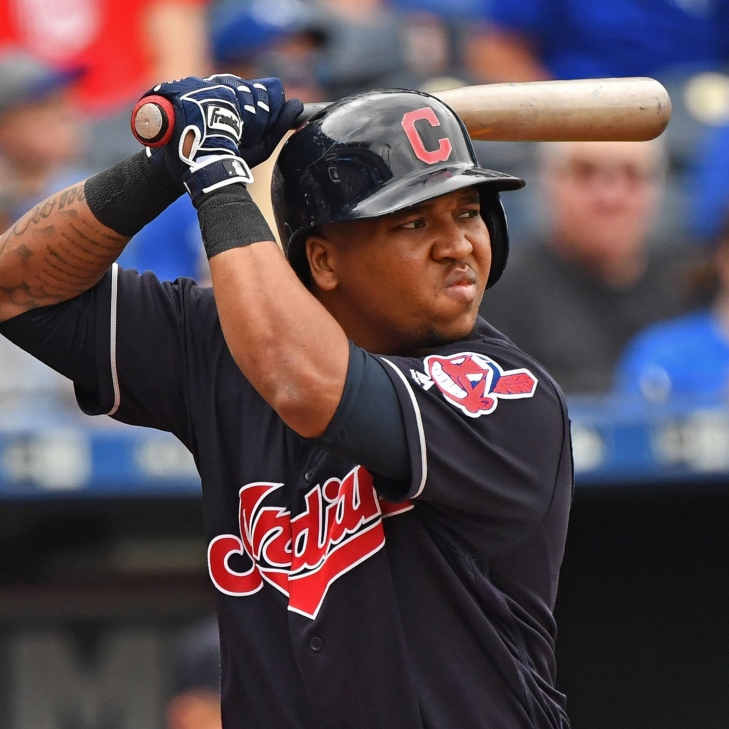
Notinhalloffame names Jose Ramirez the 2021 Third Baseman of the Year
The process continues.
We here are Notinhalloffame.com have plans to create our own set of post-season awards, which we will look back and retroactively present from 1901 on. That will take a while, but it has never stopped us before!
Our awards are not be league specific.
Now it is time for our 2021 positional awards.
We will be awarding a positional player of the year, but not only that, offer up the runner-up and second runner-up, meaning that we will have First, Second and Third All-MLB players.
Let’s work our way around the diamond and award the best of the best in Baseball!
*Please note that to qualify, a player must appear in that position at least 50% of the time.
Third Baseman of the Year (First Team All-MLB): Jose Ramirez, Cleveland Indians. 6.7 bWAR, 6.3 fWAR, 147 H, 36 HR, 111 R, 103 RBI, 27 SB, .266/.355/.538/.893.
This was the second time that Ramirez had a 35 HR/100 RBI season, and it was the third time that he batted over .300 in RISP. Ramirez, who led the American League in Power-Speed # in 2018 and 2020, was second this year, and was sixth in OPS.
Second Team All-MLB: Third Base: Austin Riley, Atlanta Braves. 6.1 bWAR, 4.1 fWAR, 179 H, 33 HR, 91 R, 107 RBI, 0 SB, .303/.367/.531/898.
Riley completed his third season, and it was his clear breakout campaign.
Third Team All-MLB: Third Base: Manny Machado, San Diego Padres. 5.1 bWAR, 4.1 fWAR, 165 H, 28 HR, 92 R, 109 RBI, 12 SB, .282/.364/.611/975.
Machado narrowly beat Rafael Devers of Boston, with Devers poor defense pulling him slightly below Machado.
Louisville will retire Lamar Jackson's number
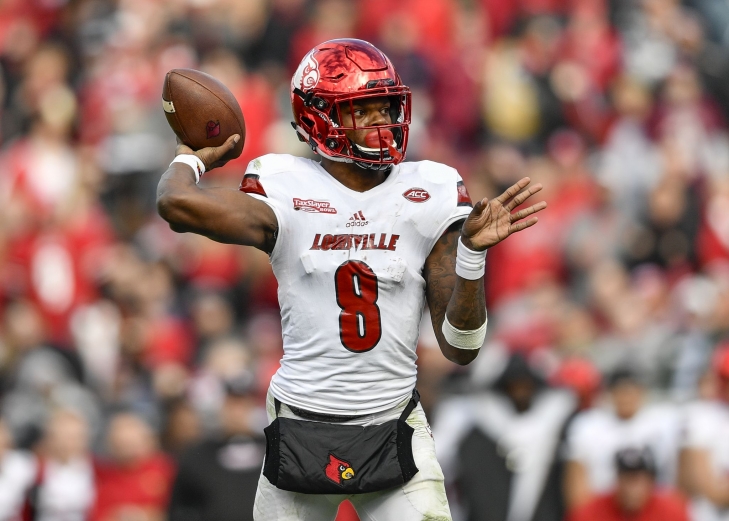
Regular visitors of Notinhalloffame.com know that we are slowly working on the top 50 of every major team in the NHL, NBA, NFL and MLB. Once that is done, we intend to look at how each team honor their past players, coaches and executives. As such, it is news to us that the University of Louisville have announced that they will be retiring the number 8 of former Quarterback, and current Baltimore Ravens star, Lamar Jackson.
Jackson becomes only the second former Cardinal to have his number retired, joining fellow former QB, Johnny Unitas, whose number 16 was taken out of circulation in 2003.
Jackson played three years at Louisville, debuting in 2015 when he led the Cardinals to a win at the Music City Bowl. He was untouchable as a sophomore, throwing for 3,543 Yards and 30 Touchdowns while rushing for 1,571 Yards and 21 Touchdowns. Jackson not only won the Heisman, he was the recipient of the Maxwell Award, Walter Camp Award, AP Player of the Year, and the ACC Player of the Year. He had another good year in 2017, his junior year, with 3,660 Passing Yards, 27 Touchdown Passes, and 1,601 Rushing Yards with 18 Rushing TDs. Jackson would repeat as the ACC Player of the Year.
We here at Notinhalloffame.com would like to congratulate Lamar Jackson for earning this prestigious honor.
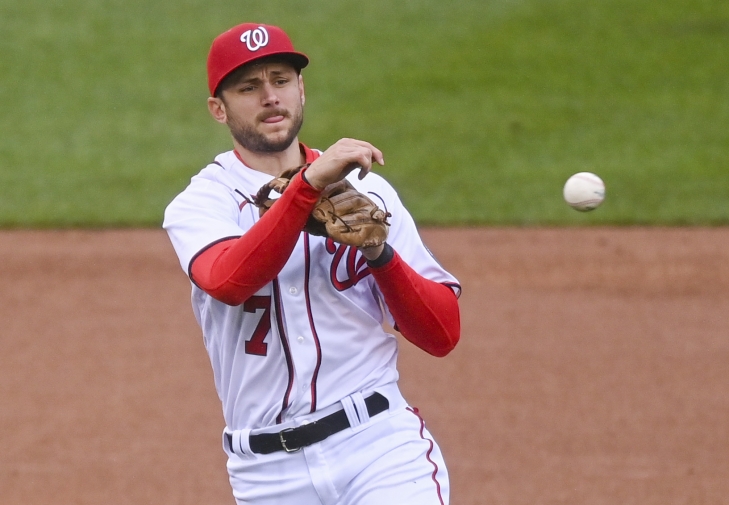
Notinhalloffame names Trea Turner the 2021 Shortstop of the Year
The process continues.
We here are Notinhalloffame.com have plans to create our own set of post-season awards, which we will look back and retroactively present from 1901 on. That will take a while, but it has never stopped us before!
Our awards are not be league specific.
Now it is time for our 2021 positional awards.
We will be awarding a positional player of the year, but not only that, offer up the runner-up and second runner-up, meaning that we will have First, Second and Third All-MLB players.
Let’s work our way around the diamond and award the best of the best in Baseball!
*Please note that to qualify, a player must appear in that position at least 50% of the time.
First Team All-MLB: Shortstop of the Year: Trea Turner, Los Angeles Dodgers & Washington Nationals. 6.5 bWAR, 6.9 fWAR, 195 H, 28 HR, 107 R, 77 RBI, 32 SB, .328/.375/.536/911.
Turner was traded to the Dodgers from the rebuilding Nationals, and he qualifies here, as even though he moved to Second Base in L.A., he played more than 60% of the season at Short. Turner led the National League in Hits (his second year in a row), Stolen Bases, Batting Average and Total Bases (319). He was also an All-Star for the first time this year.
Second Team All-MLB: Shortstop: Carlos Correa, Houston Astros. 7.2 bWAR, 5.8 fWAR, 155 H, 26 HR, 104 R, 92 RBI, 0 SB, .279/.366/.485/850.
Correa easily could have been our winner, and it was a last-minute decision to go with Turner. The Astro is an All-Star for the second time and set a career-high in Home Runs.
Third Team All-MLB: Shortstop: Fernando Tatis Jr., San Diego Padres. 6.6 bWAR, 6.1 fWAR, 135 H, 42 HR, 99 R, 97 RBI, 25 SB, .282/.364/.611/975.
Like Correa, Tatis was in serious consideration for the Shortstop of the Year, and this year he won his first of what could be many Home Run Titles. Had he been better defensively, he might have won this.
