


Committee Chairman
2. Drew Doughty
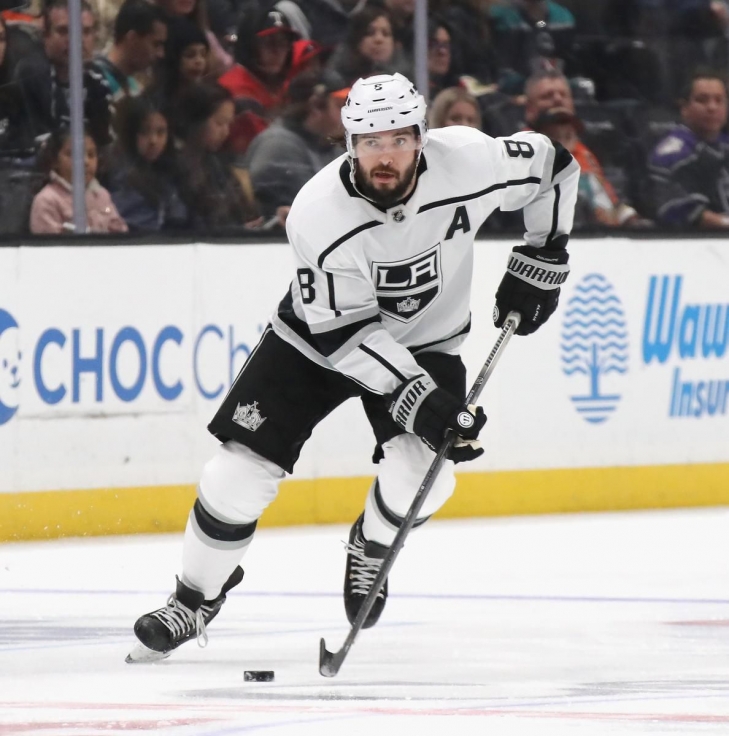
Drew Doughty was taken Second Overall in the 2008 Draft, and the Defenseman instantly went to work for the team that chose him, Los Angeles.
An All-Rookie in 2008-09, Doughty was a Second Team All-Star as a sophomore and the second runner-up for the Norris. Doughty established himself as the linchpin for the Kings' defensive corps and did so at age 20!
With the equal ability to lock down attackers and become one himself, Doughy anchored the Kings to Stanley Cup wins in 2012 and 2014 and began a six-year streak of finishing in the top ten in Norris voting in 2012-13. Doughty won the coveted Norris as the NHL's top Defenseman in 2016 and finished second in 2015 and 2018. Naturally, in all three of those years, he was named a postseason All-Star.
Doughty is still a King and is by far the best Defenseman in franchise history. His Norris runs might be behind him, but his leadership, experience, and passion make him valuable to keep around.
5. Wayne Gretzky

Edmonton Oilers' owner, Peter Pocklington, had a dynasty, but he also had a problem; he was hemorrhaging money through his other failed projects. His biggest asset was Wayne Gretzky, the best player and most prominent name in the sport. He engineered a trade, sending his superstar to Los Angeles, and in the process, shifting the hockey world to Southern California.
With all due respect to all the Kings players before Gretzky, they didn't make Los Angeles a must-watch team. Gretzky did. In his first season in L.A., Gretzky won what would be his final Hart Trophy. Hockey became hugely popular in California, and arguably because of Gretzky, two more teams (Anaheim and San Jose) would enter the league.
The Kings would not reach the Stanley Cup Finals, but again, people were watching. Pittsburgh's Mario Lemieux would become the NHL's best player, but Gretzky was still the "Great One" and the game's top draw. Following that first year with the Kings, where he led the NHL in Assists for what was the tenth straight year, he did so again the following three years and again in 1993-94. Lemieux's illness allowed Gretzky to win the Art Ross as the game's leading scorer in 1989-90 and 1990-91, and he won it a final time in 1993-94. Still one of the cleanest players in hockey, Gretzky won three Lady Byngs as a King.
The Kings were struggling in the standings, and while Gretzky was still a draw, he was set to become a free agent. L.A. traded him to St. Louis, and he would leave the team to finish his career with the Rangers.
With L.A., Gretzky scored 918 Points, 672 being Assists. The Hockey Hall of Fame inducted Gretzky immediately, waiving the three-year rule when he retired in 1999. Three years later, his #99 was forever hung to the rafters in Los Angeles.
4. Luc Robitaille
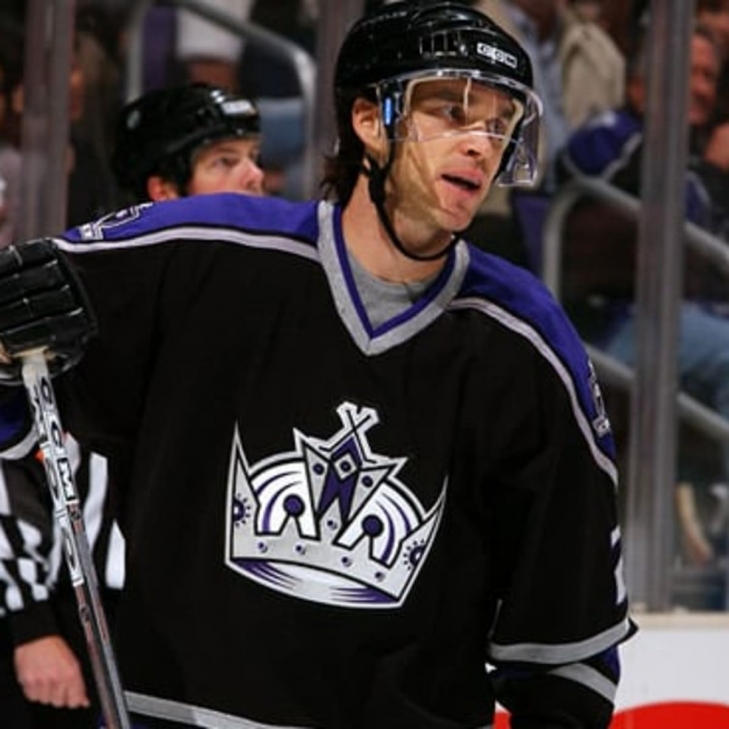
In the late 80s and early 90s, there was no question that Luc Robitaille was the top Left Wing in the National Hockey League, and it took him very little time to establish that title. What made it all the more impressive was that Robitaille turned out to be a steal as a Ninth Round Pick.
Two years after the Kings selected him, Robitaille made the team out of training camp and had an unexpected season, scoring 84 Points, earning Second Team All-Star accolades, and winning the Calder. This was no fluke, and he only got better, scoring over 100 Points in four of the next seven seasons, with his bottom only being 86 Points. Wayne Gretzky had arrived in 1988, and Robitaille would be a five-time First Team All-Star, four of which with Gretzky as his linemate. The Kings became contenders, largely thanks to Robitaille.
As Los Angeles began to slump, he was traded to Pittsburgh, but he returned three years later as a Free Agent. Robitaille was older but still a potent scorer, winning his third Second Team All-Star Selection. He left L.A. again, this time on his own accord, joining Detroit as a Free Agent. Robitaille finally got that elusive Stanley Cup (2002) but returned to the Kings to finish his career for two final seasons.
Robitaille is the franchise leader in Goals (557) and was enshrined in the Hockey Hall of Fame in 2009, two years after his #20 was retired by the team.
1. Marcel Dionne
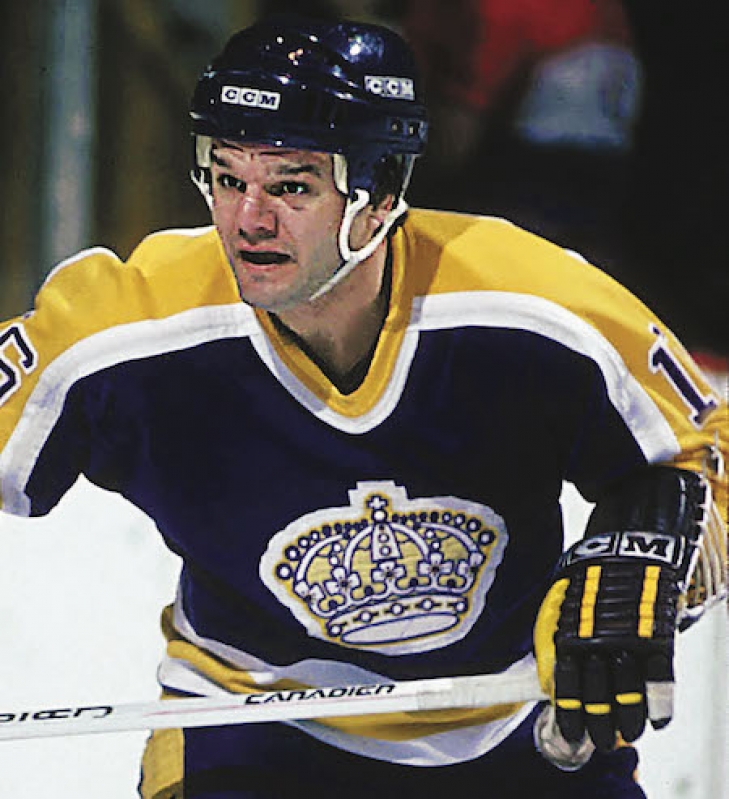
Marcel Dionne played his first four seasons for Detroit, where he emerged as their brightest star, but the team itself was abysmal. His agent orchestrated a trade to Los Angeles, where in the bright lights, he became their first bona fide superstar.
Dionne had 94 Points in his debut season as a King, but he shot that up to 122 in his second campaign wearing the crown. The French-Canadian Center was a First Team All-Star, won the Lady Byng, and the best was yet to come.
He would eventually be joined by wingers Charlie Simmer and Dave Taylor, dubbed "The Triple Crown Line," arguably the first star threesome in Kings' history. Dionne scored 130 Points 1978-79, finishing third in Hart Trophy voting but winning the Ted Lindsay Award (then named the Lester B. Pearson Award) as the MVP as voted on by his peers. He missed out on the Hart again in 1979-80, losing to Edmonton's Wayne Gretzky, but Dionne beat him for the Art Ross (he tied Gretzky in Points with 137, but had more Goals) and won his second Ted Lindsay Award.
Gretzky would then eclipse Dionne as the premier Center in hockey, but Dionne was still a potent player. He would have four more 100-plus Point campaigns for Los Angeles, and in six of his 11 years as a King, he eclipsed 50 Goals.
History repeated itself as Dionne grew frustrated with the Kings' inability to go deep in the playoffs or even make it at all. He requested a trade to a contender, which he got late in the 1986-87 Season to the Rangers, where he would finish his career.
With the Kings, Dionne scored 1,307 Points and is the all-time leader in franchise history. He entered the Hockey Hall of Fame in 1992 in his first year of eligibility, and in 1990, his number 16 became the second jersey retired by the team.
